Hail Damage Roof Repair
Slope-by-slope hail inspection with marked test squares, soft-metal checks and photos that show exactly where the stones hit.
How we handle itRoof & Home Tips
A day after the hail, trucks with out of state plates start knocking. Here is how to tell a real local roofer from a storm chaser, and what to check before signing anything.
By Lonnie Gatlin, Roof & Home Tips EditorUpdated October 11, 20267 min read
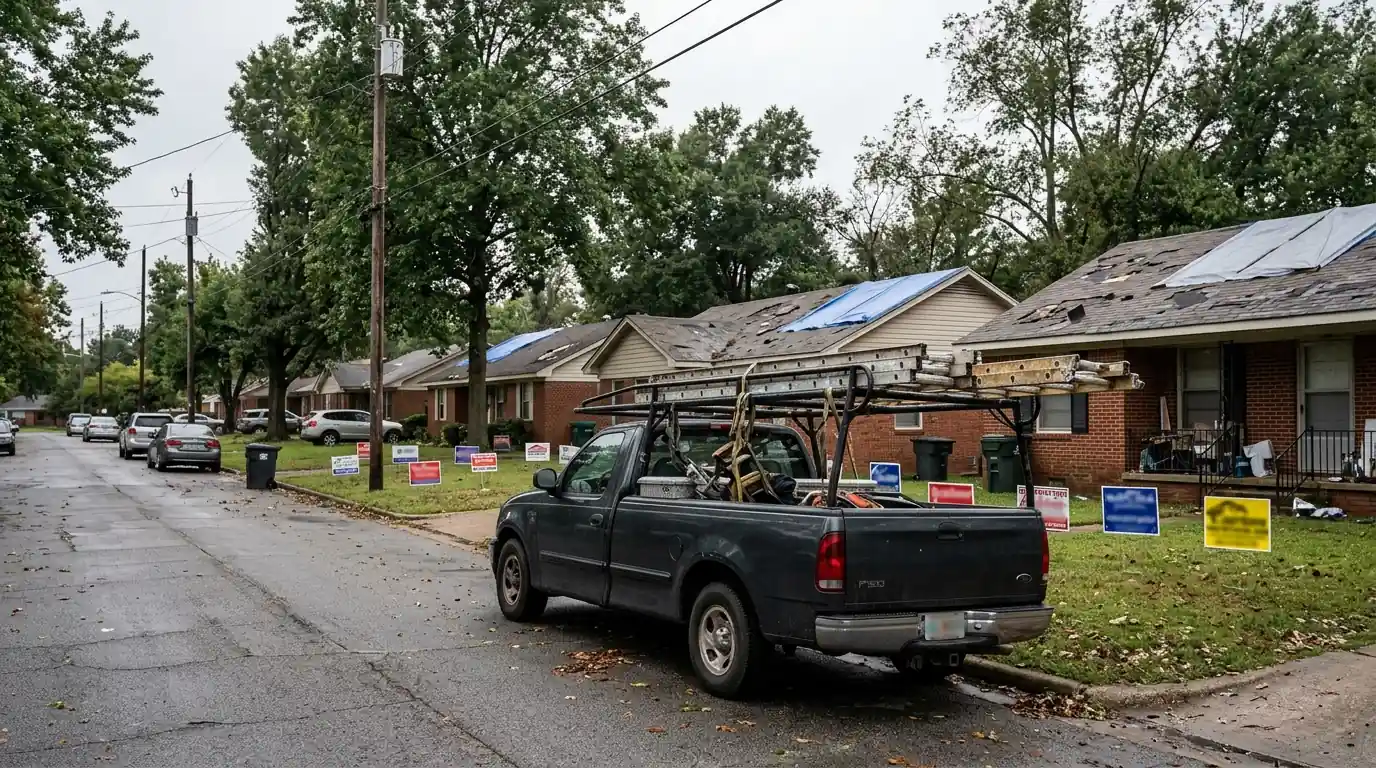
After a big hail storm in central Arkansas, the knocks on the door often start within a day or two. Some come from honest crews passing out cards. Others come from storm chasers who follow hail across the country, sign as many roofs as they can and move on before the first leak shows up. Knowing the warning signs can save you money, headaches and a roof that fails long before it should.
Storm chasers are roofing outfits that travel from one hail event to the next. They set up in a motel or a rented lot, knock doors in the hardest hit neighborhoods and work fast while insurance money is flowing.
The trouble usually comes later. When a flashing detail leaks the next spring, the company has gone home, the phone number is disconnected and the workmanship promise means nothing. Manufacturer warranties can also be harder to use when the installer cannot be found to confirm how the roof was put on.
They are not always out of state. Some set up a local phone number and a rented office for a few months. The real test is whether the company will still be here, answering the same phone, two or three years after the storm.
Not every door knocker is a storm chaser, but these signs should make you slow down. Two or three together are a strong reason to say no thanks.
Watch for yard signs as well. Some crews put a sign in one yard, then tell everyone on the street they are already working there. A sign is not proof of anything; a finished roof you can look at a year later is.
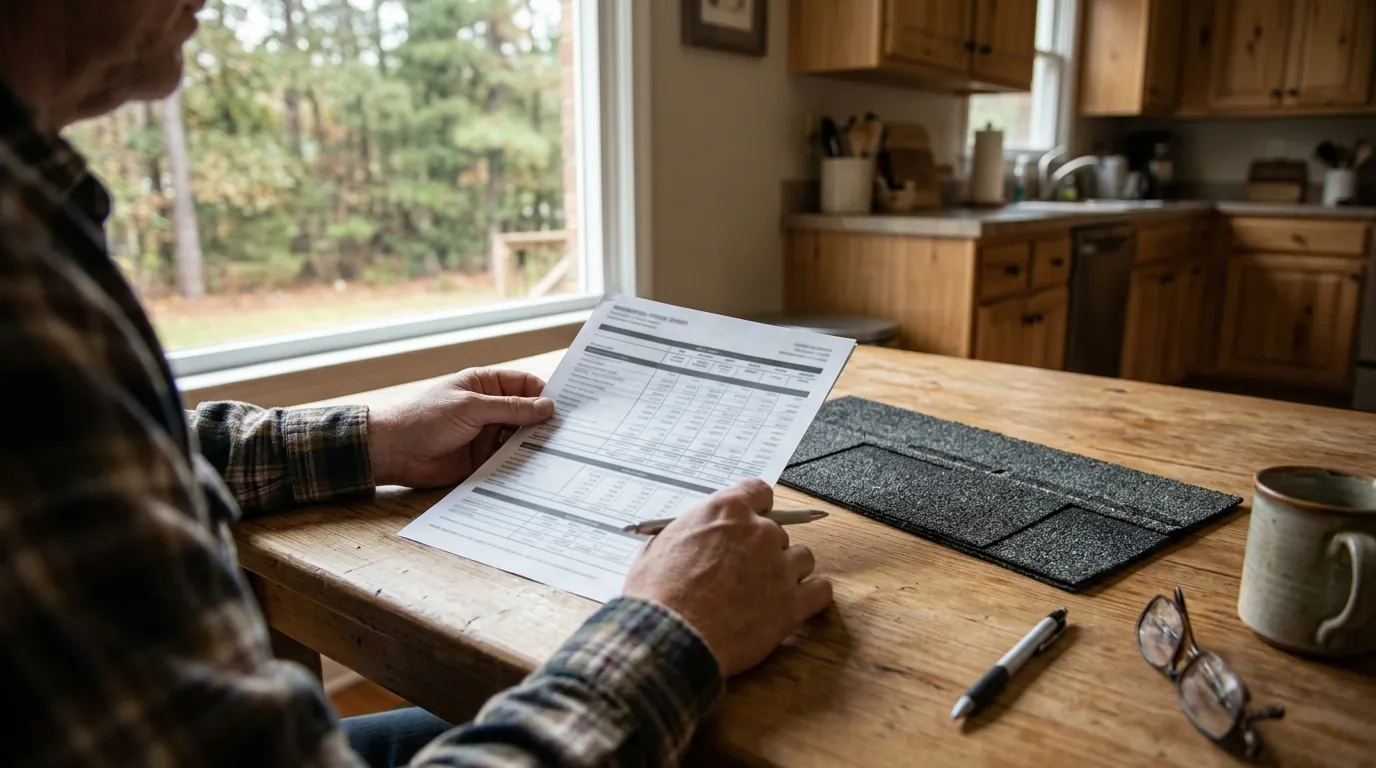
Some door knockers hand homeowners a short form they call an inspection agreement or authorization. Read it closely. Some of these papers commit you to having that company do the work if insurance approves the claim, and some include an assignment of benefits that hands control of your claim to the contractor.
Never sign anything on the doorstep that you have not read in full. Take it inside, read it and ask your insurer or an attorney about anything unclear. A real roofer will leave a business card and a written price and let you decide on your own schedule.
Federal rules give buyers a short window to cancel many sales made at the home, but there are exceptions, including some emergency repairs. Do not count on canceling later; read before you sign.
A few simple checks weed out most problems. They take an hour or two and can save you thousands.
Workmanship coverage is another question to ask. Get the company's promise about its own labor in writing, and ask how they handle a leak in the first few years. A promise is only worth something if the company is still around to keep it.
A contractor who offers to cover or waive your deductible is asking you to misrepresent the cost of the job to your insurer. The deductible is your share of the loss under the policy. Hiding it can put your claim at risk, and in some situations it can be treated as insurance fraud.
The money has to come from somewhere, too. A roofer who absorbs a deductible often makes it back by cutting corners: reusing old flashing, skipping drip edge, using cheaper underlayment or covering rotten decking. You save on day one and pay later in leaks.
An honest roofer prices the whole job in writing, shows the full number and leaves the policy questions between you and your insurer.
Some contractors also suggest inflating the claim, for example by adding damage that is not there. Any roofer who suggests that is asking you to take a real legal risk for their benefit.
A local roofer is easy to find after the job. You can drive past the office, call the same number next year and get the same crew back if something needs attention. That alone removes most of the risk storm chasers bring.
Real roofers also slow the process down instead of rushing it. They inspect the roof, take photos, show you what they found and tell you if the damage is not worth a claim. They give a written price before work starts and explain how they handle decking and flashing.
At O'Dell Roofing, our own crews do the work and our office is at 318 W 2nd Street in downtown Little Rock. We photograph damage, walk you through it and clean up with a magnet sweep for nails when the job is done.
A local roofer also knows the housing stock. They know which subdivisions have shallow pitches, which older neighborhoods have plank decking and how wind tends to hit homes on exposed ridges. That knowledge shows up in a quote that fits your house instead of a generic one.
Write down the date of the storm and photograph damage from the ground: dented gutters, AC fins, siding and any shingle pieces in the yard. Read your policy for your deductible and reporting rules. If water is coming in, have the leak tarped and keep the receipt.
Then take your time choosing a roofer. A week spent checking companies is worth it on a roof that should last 20 years or more. Call (501) 387-1152 any time, day or night, and we will inspect the roof, photograph what we find and give you a written price with no pressure to sign on the spot.
If someone pressured you into signing already, do not panic. Read what you signed, call your insurer and ask what it means for your claim. If needed, talk to an attorney about your options before any work starts.
Ask for a local office address, a business card and a written price, then check them on your own time. Search the company name for complaints and ask for addresses of roofs they finished a year or more ago. Be wary of out of state plates, pressure to sign that day, cash deals or offers to cover your deductible.
Read it carefully before signing anything. Some inspection agreements commit you to using that company if your claim is approved, and some assign claim rights to the contractor. You do not need to sign anything for a roofer to look at your roof. Take time to read and ask your insurer about any terms you do not understand.
Central Arkansas sees frequent spring hail, and a single storm can damage thousands of roofs at once. Traveling crews follow those storms because insurance claims create a sudden rush of work. Many leave once the work slows, which makes it hard for homeowners to get repairs or warranty help later.
Slope-by-slope hail inspection with marked test squares, soft-metal checks and photos that show exactly where the stones hit.
How we handle itWe document storm damage, meet your adjuster on the roof and write a line-item scope, while you keep control of your own claim.
How we handle itA hands-on roof and attic check with labeled photos, an honest remaining life estimate and a written price for any repair needed.
How we handle it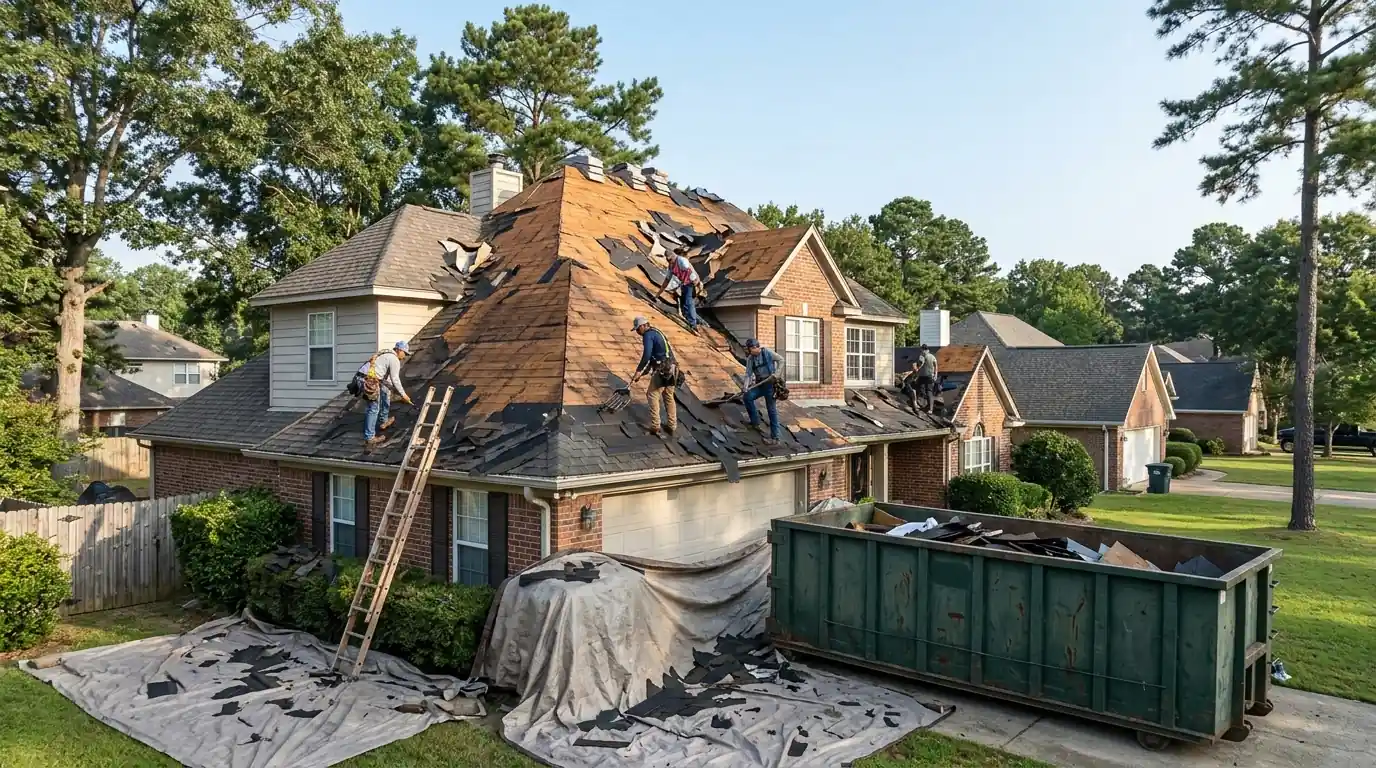
Permit rules for a new roof in Little Rock are not spelled out in one simple public line. Here is what we confirmed, what we could not, and how to get a clear answer for your address.
October 18, 2026 · 7 min read
Class 4 shingles hold up better to hail, but the discount question is more tangled in Arkansas. Here is what the rating means, what state law covers and what to ask your agent.
October 17, 2026 · 7 min read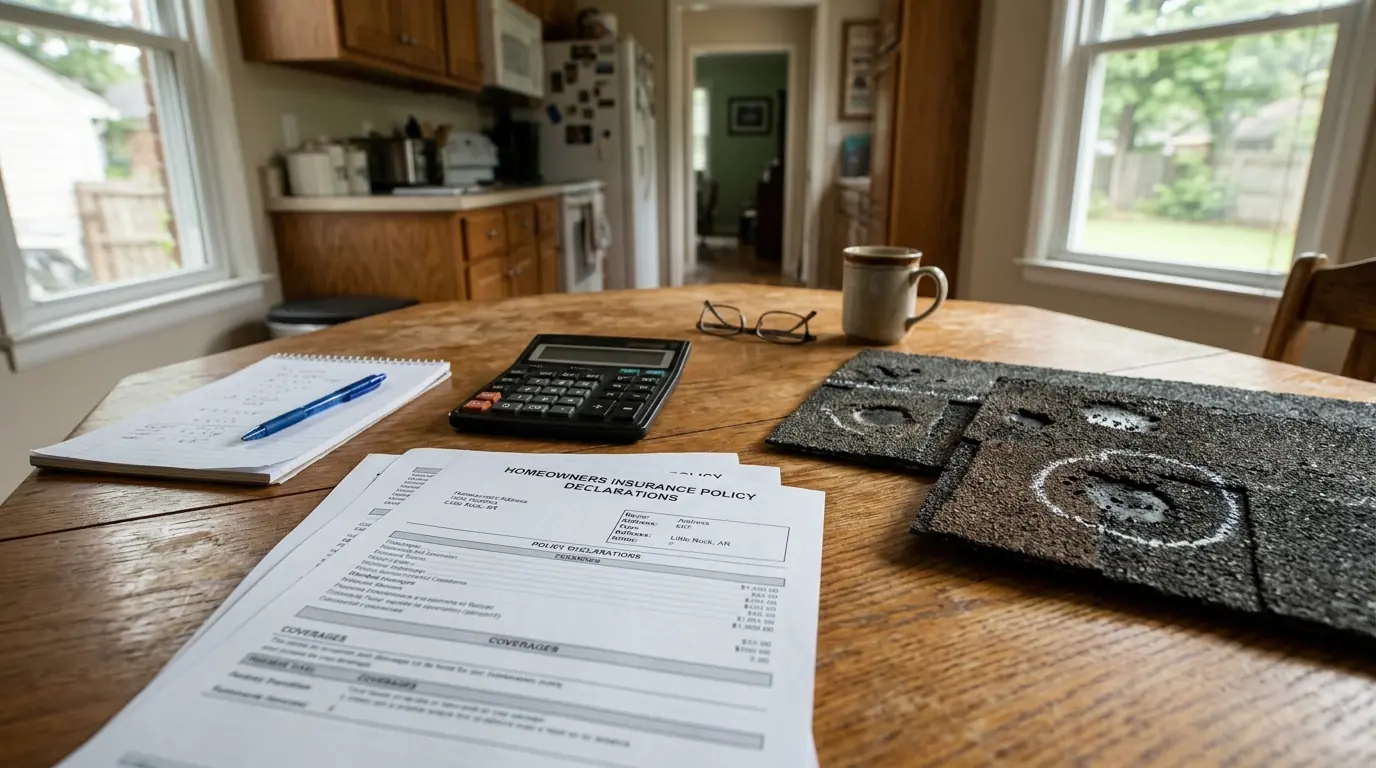
A 2% wind and hail deductible can mean thousands out of pocket on a roof claim. Here is how flat and percentage deductibles work and how to find yours before the next storm.
October 16, 2026 · 7 min readWant a roofer to look at it?Call any hour. We inspect, photograph and give you a written price.
Call (501) 387-1152