Hail Damage Roof Repair
Slope-by-slope hail inspection with marked test squares, soft-metal checks and photos that show exactly where the stones hit.
How we handle itNew roofs & materials
Hail is a fact of spring in central Arkansas. Class 4 impact-resistant shingles are built and tested to hold up better against it, and our crew installs them with the care the rating depends on.
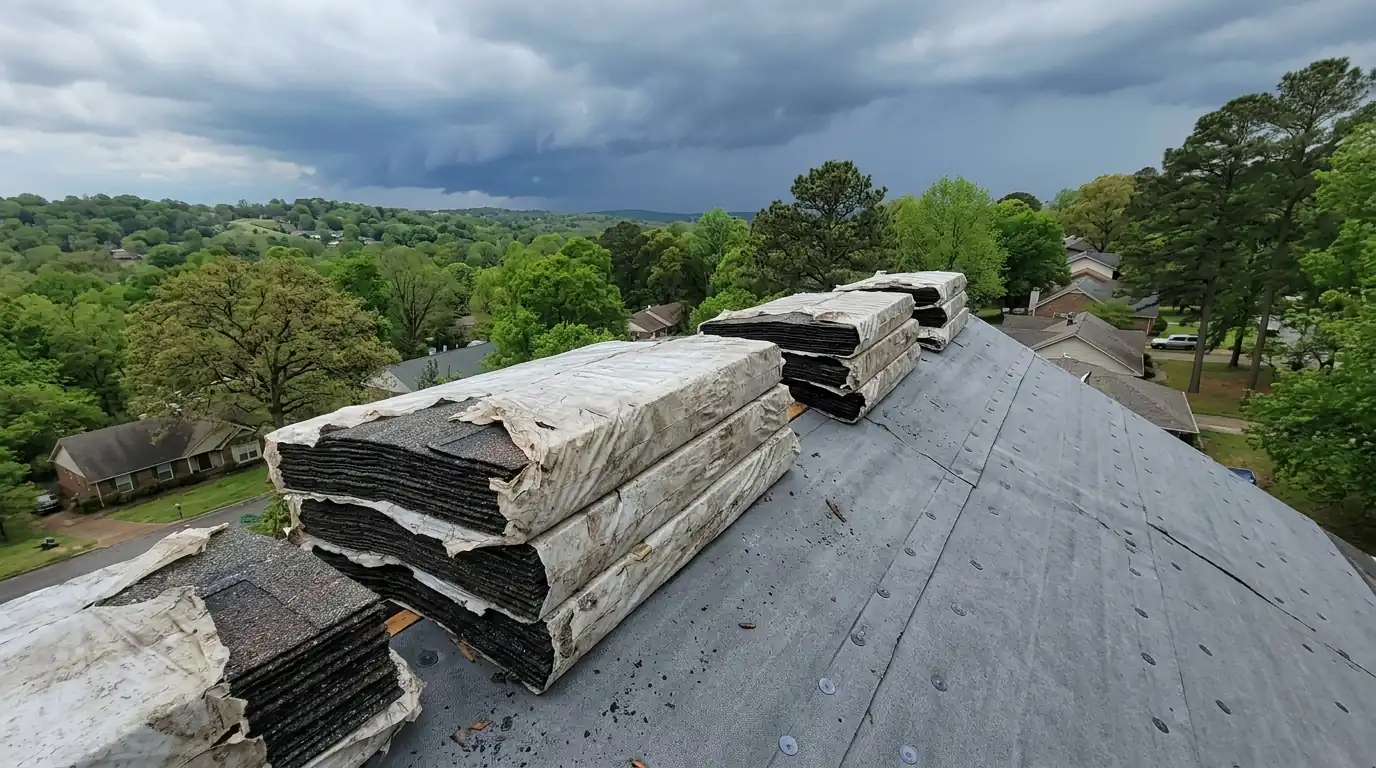
Impact-resistant shingles are asphalt shingles that pass the UL 2218 Class 4 test, the top rating for resisting cracks from steel ball impacts. In Little Rock, a Class 4 roof on a typical home runs $12,300 to $21,600, usually 15 to 30 percent more than standard architectural shingles. Installation takes one to two days, and some insurers offer premium discounts, so ask yours.
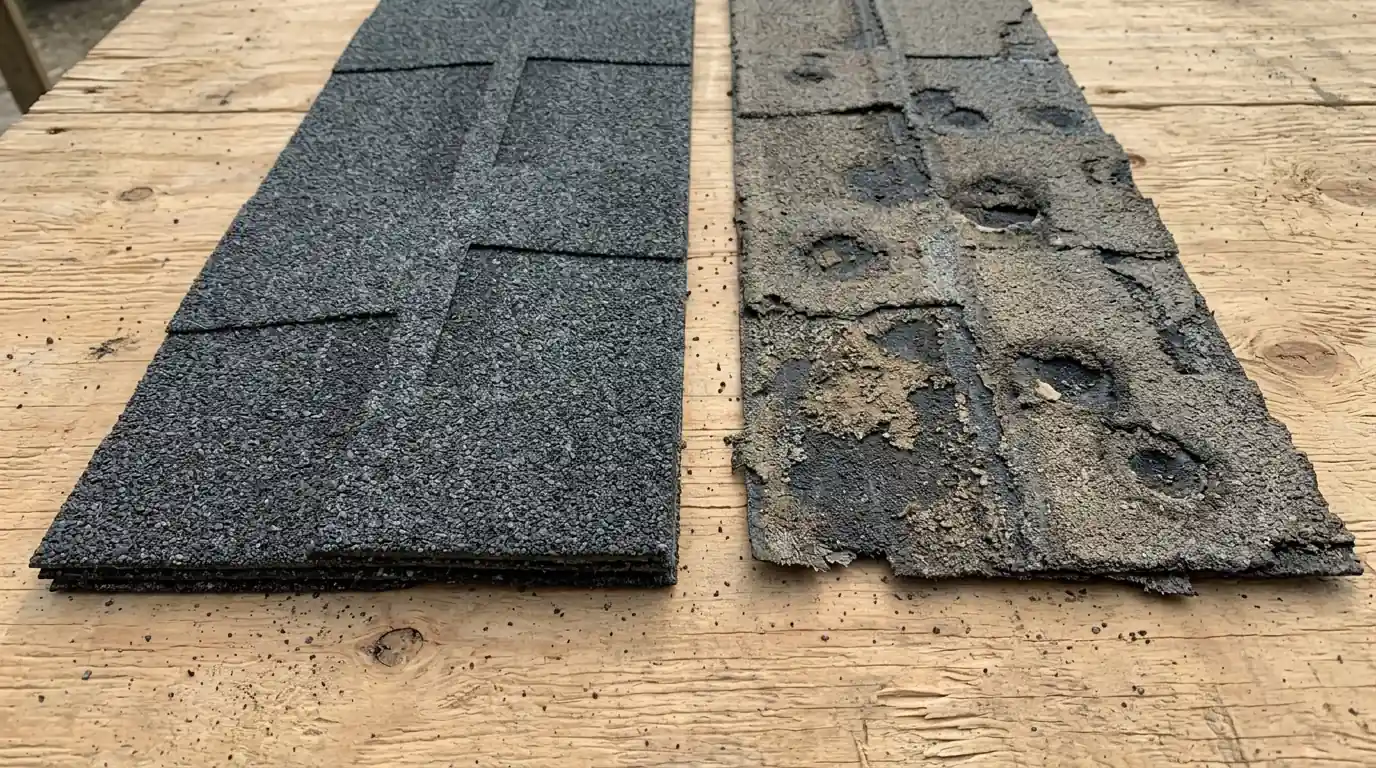
UL 2218 is a lab test for roofing impact resistance. Testers drop steel balls of increasing size from set heights onto the roofing, striking the same spot twice. Class 4 is the highest level, using a two-inch ball, and the product passes if it shows no cracks or tears afterward.
The rating tells you the shingle resists cracking from that kind of impact. It does not mean the roof is hailproof. Very large hail can still damage a Class 4 roof, and some hits may leave cosmetic dents or granule loss even when the shingle holds together.
Look for the rating printed on the bundle wrapper or in the product data sheet. We leave a wrapper with you so the details are on hand if your insurer asks.
Most Class 4 asphalt shingles use a polymer-modified asphalt, often called SBS modified, that stays flexible instead of turning brittle. When hail strikes, the shingle gives slightly and rebounds rather than fracturing. Others use reinforced backing layers or a heavier mat.
That flexibility has a side benefit in cold weather. The shingles are less likely to crack when walked on or handled in winter, and they tend to seal well.
They also tend to be heavier than standard architectural shingles. That extra weight is fine for nearly every home we see, but on older roofs with undersized rafters, we check the framing before recommending them.
Some Class 4 lines are also rated for high winds and come with algae-resistant granules, so a single product can cover the three biggest threats to a roof in this part of Arkansas. We show you the wind rating, weight and algae protection on each line alongside the impact rating, since the best choice for your home depends on all four.
Spring brings the heaviest hail risk here, roughly March through June, when severe thunderstorms track across the state. Neighborhoods across Pulaski, Saline, Faulkner and Lonoke counties have all seen roofs replaced after hail, sometimes more than once in a decade.
If your home has already had a hail claim, or your street sits in a path storms seem to favor, Class 4 shingles are worth pricing. The cost difference is easier to justify when you consider deductibles, the disruption of a second tear-off and the leaks that bruised shingles cause months after a storm.
They also hold up better against the smaller hits most homeowners never notice, like falling pine cones, acorns and twigs whipped around by straight-line winds.
Some insurance companies offer a premium discount for roofs with Class 4 shingles. Others do not, and the size of any discount varies by company and policy. We cannot promise a specific number, so the best step is to call your agent before you choose a shingle.
Ask whether they discount Class 4 roofs, what proof they need, and whether the discount applies to the wind and hail portion of your premium. Some want a copy of the invoice listing the product, some want a photo of the bundle wrapper, and some want a signed statement from the installer.
When the work is done, we give you an invoice naming the exact product line and rating, plus photos of the bundles and the finished roof. A discount, where it exists, can help offset the higher upfront cost over the years you own the home.
A Class 4 shingle only performs as rated when it is installed the way the manufacturer specifies. Poor nailing, a soft deck or missing starter strips can let hail and wind do damage the shingle itself would have resisted.
Our crews follow the product's installation instructions on every Class 4 job, including nail placement, starter strips, ridge caps from the same impact-resistant line and proper underlayment.
After a storm, a Class 4 roof still deserves a look. We can inspect it, mark any hits that broke through the surface and photograph them for your records. Many storms leave a Class 4 roof with nothing more than a few scuffs, and knowing that for certain is worth the short visit.
It depends on your budget, how long you plan to stay and your hail history. For a home you plan to keep for many years, the upgrade often pays its way. For a home you plan to sell soon, it can still help in a listing, since buyers in hail country ask about roofs.
We price Class 4 and standard architectural shingles side by side so you can see the real difference on your roof. Manufacturer warranty terms depend on the product and registration, and we walk you through them. Call (501) 387-1152 any time to talk it through.
Class 4 pricing depends on the product line, roof size and pitch. These are typical 2026 Little Rock ranges.
| Job | Typical range | What drives it |
|---|---|---|
| Class 4 shingle roof, 1,600 to 2,200 sq ft home | $12,300 to $21,600 | Product line, pitch and number of valleys |
| Class 4 shingles, per square installed | $545 to $865 | Shingle line and tear-off layers |
| Upgrade over standard architectural shingles | $1,840 to $4,650 | Roof size and product chosen |
| Impact-rated hip and ridge cap, per linear foot | $11 to $21 | Cap style and ridge length |
Steep slopes, decking repairs and premium designer Class 4 lines move the price up. See the full roof pricing guide.
How the job goes
We inspect the current roof, look for past hail damage and check the framing for the added weight.
You ask your agent about Class 4 discounts and the proof they need before you choose a product.
We show you rated product lines, colors and matching ridge caps with written prices for each.
Our crew tears off, repairs decking and installs every component to the maker's instructions.
You get the invoice naming the rated product, bundle wrapper photos and finished roof photos.
Some insurers offer discounts for Class 4 roofs and some do not, and the amount varies by company and policy. Call your agent before choosing a shingle and ask what discount applies and what proof they need. We provide an invoice naming the rated product plus photos to support your request.
No roof is hailproof. Class 4 means the shingle passed the UL 2218 test with two-inch steel balls and showed no cracking. Very large hail can still cause damage, and some hits may leave cosmetic marks. They do hold up much better than standard shingles in typical central Arkansas hail.
On a typical Little Rock home, the upgrade usually adds about $1,840 to $4,650 over standard architectural shingles, depending on roof size and product line. We price both options side by side on your roof so you can weigh the difference against your hail history and how long you plan to stay.
Most look nearly the same from the street. They come in similar colors and dimensional profiles, and some designer lines imitate slate or shakes. Up close, they can feel more rubbery because of the modified asphalt. Your neighbors likely will not notice a difference.
Most homes with a pitch suited for shingles can take them. They are often heavier than standard shingles, so on older homes we check rafter size and decking before recommending them. Low-slope sections still need a flat roofing material instead of shingles, whatever the rating.
Related work
Slope-by-slope hail inspection with marked test squares, soft-metal checks and photos that show exactly where the stones hit.
How we handle itA complete tear-off to the deck with new underlayment, flashing, vents and shingles, finished in a day or two on most homes.
How we handle itArchitectural and designer asphalt shingles installed by our own crew, with color, wind rating and algae resistance chosen for your home.
How we handle itWe document storm damage, meet your adjuster on the roof and write a line-item scope, while you keep control of your own claim.
How we handle itTalk to a roofer nowCall and describe what you are seeing. We answer around the clock.
Call (501) 387-1152