TPO Roofing
White single ply TPO membrane with hot air welded seams for low slope homes, additions and commercial roofs facing hot Arkansas summers.
How we handle itFlat & commercial
Building owners need a roofer who shows up, finds the leak and explains the fix in plain terms. Our own crews repair and replace commercial roofs across Little Rock and central Arkansas.
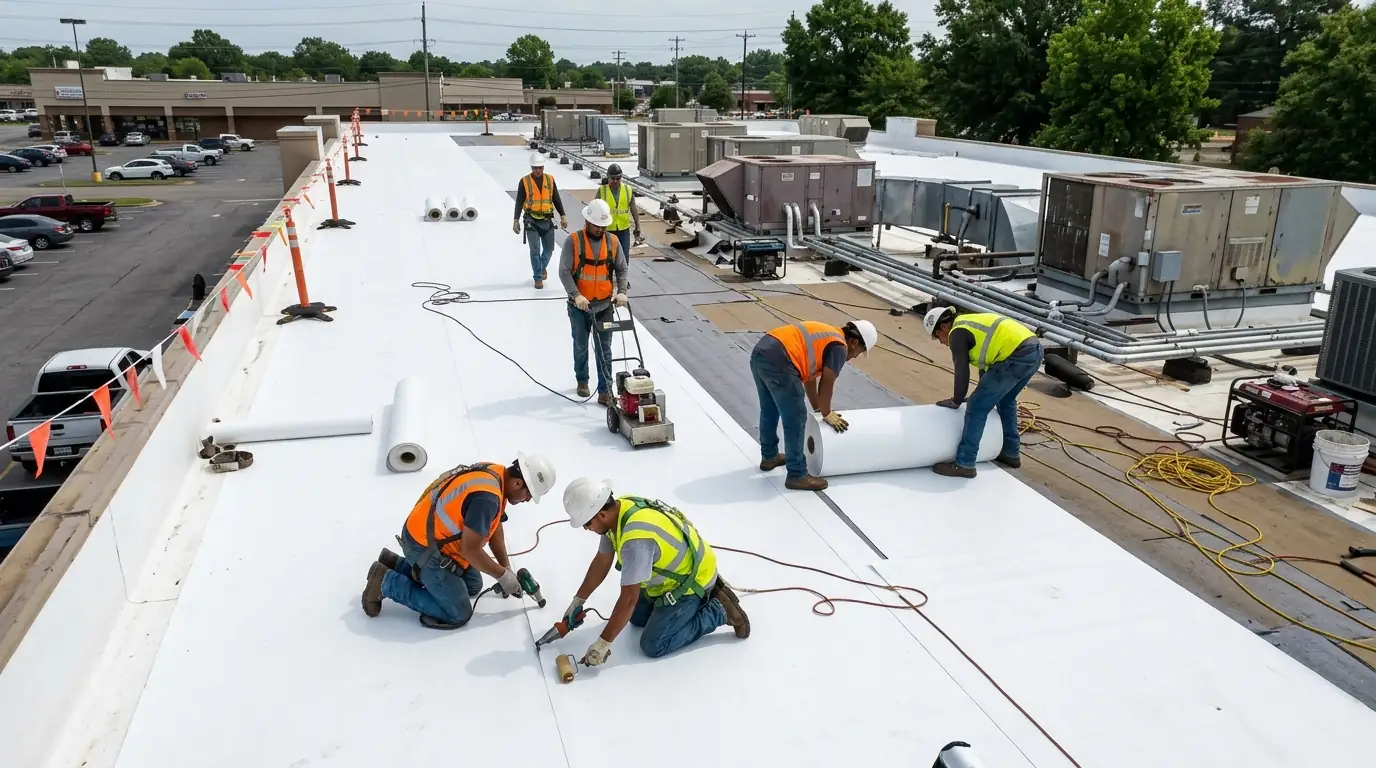
Commercial roofing covers repair, replacement and upkeep of low-slope and metal roofs on business buildings. Typical Little Rock costs run $485 to $2,350 for a repair visit and $7.80 to $13.40 per square foot for a new TPO or modified bitumen system. Emergency leak calls are answered 24/7, and planned replacements are scheduled around your business hours.
Commercial roofs around Little Rock come in a handful of common types, and each has its own weak points. Strip centers and office buildings often carry TPO or older modified bitumen. Warehouses and shops lean toward exposed-fastener or standing seam metal. Churches and schools frequently mix steep shingle sections with flat roofs over fellowship halls and gyms.
We repair, replace and maintain all of these, so you are not juggling a different contractor for every roof on the property.
We also handle the parts of the roof system people forget about: coping caps, parapet walls, roof hatches, internal drains, overflow scuppers and the downspouts that carry all of that water off the building.
A leak over a sales floor, server closet or classroom is not something that can wait for next week. We answer 24/7, and our first goal on an emergency call is to stop the water and protect what is inside.
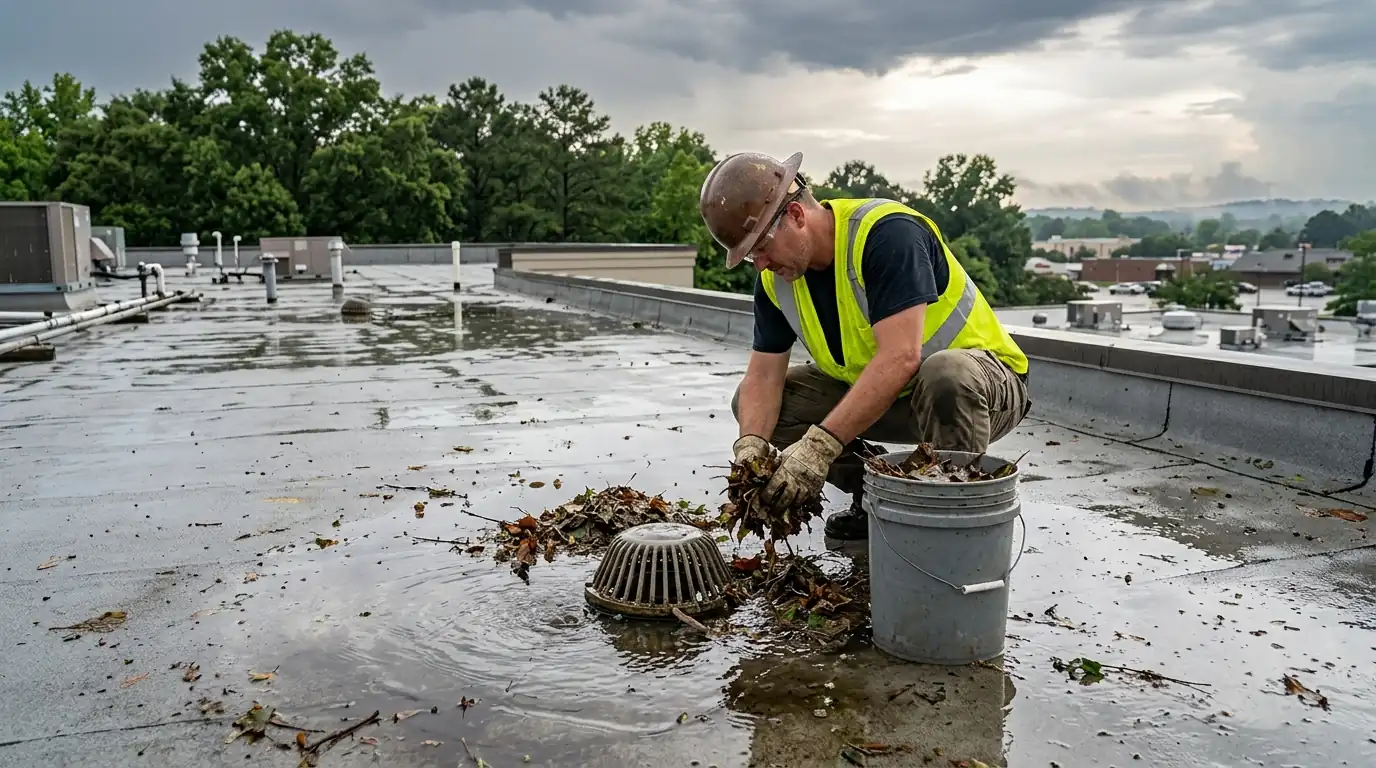
That might mean clearing a clogged drain, sealing an open seam with temporary material, or tarping a damaged section after wind. Once the building is dry, we come back to trace the true source, photograph it and give you a written price for the permanent repair.
We keep notes and photos from every emergency visit with the building address, so if a second leak shows up during the same storm season, the next crew already knows the roof layout, drain locations and past repair spots.
Large flat roofs collect weather in ways a house never does. Spring hail from March through June can puncture older membranes and dent metal panels, while straight-line winds pull at perimeter edge metal and peel back seams that were already tired.
Summer heat is the slow problem. Months of strong sun and humidity break down dark membranes, dry out sealants at curbs and pitch pans, and make thermal movement work fasteners loose on metal buildings. Heavy rain bursts then find every low spot and slow drain at once.
Trees around office parks and churches add needles, leaves and sweetgum balls that pack into internal drains and scuppers. A drain that clogs during a summer downpour can put inches of water on the roof surprisingly fast.
Older buildings near downtown Little Rock and in established commercial strips often have had several roofs layered over the years, which adds weight and hides wet insulation. Finding that early changes both the scope and the price of any repair.
Not every aging roof needs to come off. If the membrane is still attached and the insulation is mostly dry, targeted repairs or a restoration coating can add useful years at a fraction of replacement cost.
We start with a full walk of the roof and, where needed, cores or moisture readings to see what is wet below the surface. You get photos, a marked roof plan of problem areas and a written price for each option, so you can weigh budget, lease terms and how long you plan to hold the building.
When replacement makes sense, we lay out the system, insulation, drainage changes and edge details in writing before the job starts.
We also look ahead. If a building is nearing the end of a lease cycle, a solid repair now and a replacement planned for a slower budget year can make more sense than tearing off a roof in the middle of a busy season. Our job is to give you the facts to make that call.
Replacing a roof over an open business takes planning. We stage materials to keep parking and entrances clear, set work hours that suit your tenants, and dry-in each section at the end of the day so an evening storm does not become an inside problem.
Rooftop HVAC units, exhaust fans and satellite equipment get protected and reflashed properly. We keep the property manager or owner updated with photos as work moves across the roof.
Safety on commercial roofs is part of the plan. We mark roof edges, set up warning lines where needed and keep ladders and hoists secured, so your staff and customers stay clear of the work area while the crew moves material.
Most commercial leaks start small: a split at a pitch pan, a loose piece of coping, a drain strainer packed with leaves. A planned visit in spring and again in fall finds those before they reach the ceiling tiles.
Each visit includes clearing drains and gutters, checking seams, flashing and curbs, tightening loose metal and sending you a short photo report. It is a modest cost compared with the interior damage a slow leak can cause over a wet season.
Owners with more than one building often find a combined plan easier to budget. One schedule, one set of photo reports and one contact for every roof on the property cuts down on surprises at budget time.
Commercial roofing prices vary widely with size, access and system type. These typical 2026 ranges reflect work around Little Rock.
| Job | Typical range | What drives it |
|---|---|---|
| Leak repair visit with materials | $485 to $2,350 | Roof access, number of leak sources and system type |
| Spring or fall maintenance visit | $395 to $1,160 | Roof size, number of drains and rooftop units |
| Restoration coating per sq ft | $3.15 to $6.20 | Wet areas to replace and seam reinforcement needed |
| New TPO or mod bit system per sq ft | $7.80 to $13.40 | Tear-off layers, insulation thickness and edge details |
| Metal roof fastener and seam rework per sq ft | $1.65 to $3.90 | Panel condition and number of fasteners replaced |
Wet insulation, crane or lift access and the number of rooftop penetrations change commercial prices the most. See the full roof pricing guide.
How the job goes
We answer 24/7 and stop active water first with drain clearing, temporary seals or tarping.
Seams, flashing, drains and curbs are checked, with moisture readings or cores where needed.
You receive photos, a marked roof plan and written prices for repair, restoration or replacement.
Work hours, staging and daily dry-in are set to keep the building running.
Final walk, debris removal and a magnet sweep of the lot, plus a maintenance plan if you want one.
Yes. We answer 24/7, and on an emergency commercial call our first priority is stopping water from reaching inventory, equipment or occupied rooms. That can mean clearing drains, sealing open seams or tarping damaged areas. Once the roof is stable, we return in daylight to trace the source and give you a written price for the permanent repair.
It comes down to how much of the roof is wet and whether the membrane is still attached. A dry, sound roof with surface wear is often a good coating candidate. If moisture readings show large saturated areas or the deck is damaged, replacement is the smarter spend. We show you the readings and photos so the decision is clear.
In most cases, yes. We stage materials away from entrances, set working hours around your customers or tenants and dry-in each section before leaving for the day. Noisy tear-off can be planned for slower hours. Occasionally a small area inside needs to be cleared below the work zone, and we tell you that well ahead of time.
Around Little Rock we see a lot of TPO and modified bitumen on offices and retail centers, metal on warehouses, shops and agricultural buildings, and mixed shingle and flat roofs on churches and schools. Older buildings downtown may still have built-up tar and gravel. Each type wears differently in our heat and hail, so the repair approach changes too.
Twice a year is a good rhythm, once in spring after hail season gets going and once in fall after leaves drop. It is also smart to have the roof checked after any major hail or wind event. Those visits catch clogged drains, loose edge metal and small seam splits before they turn into ceiling and inventory damage.
Related work
White single ply TPO membrane with hot air welded seams for low slope homes, additions and commercial roofs facing hot Arkansas summers.
How we handle itSilicone and acrylic coatings that restore sound flat and metal roofs, applied by our crews after proper cleaning and repairs.
How we handle itLeaks, ponding water, split seams and failed drains fixed on low slope roofs for homes, porches, offices and small commercial buildings.
How we handle itFixing leaks on existing metal roofs: backed-out screws, cracked washers, loose seams, rust spots and failed flashing or trim.
How we handle itTalk to a roofer nowCall and describe what you are seeing. We answer around the clock.
Call (501) 387-1152