Roof Ventilation
Balanced ridge and soffit ventilation that lets hot, damp attic air out and helps shingles, decking and AC systems last longer.
How we handle itGutters, siding & exterior
Many central Arkansas attics have thin, settled insulation and open gaps that let heat pour into the rooms below. We air seal and add insulation on homes across Little Rock while keeping roof ventilation working.
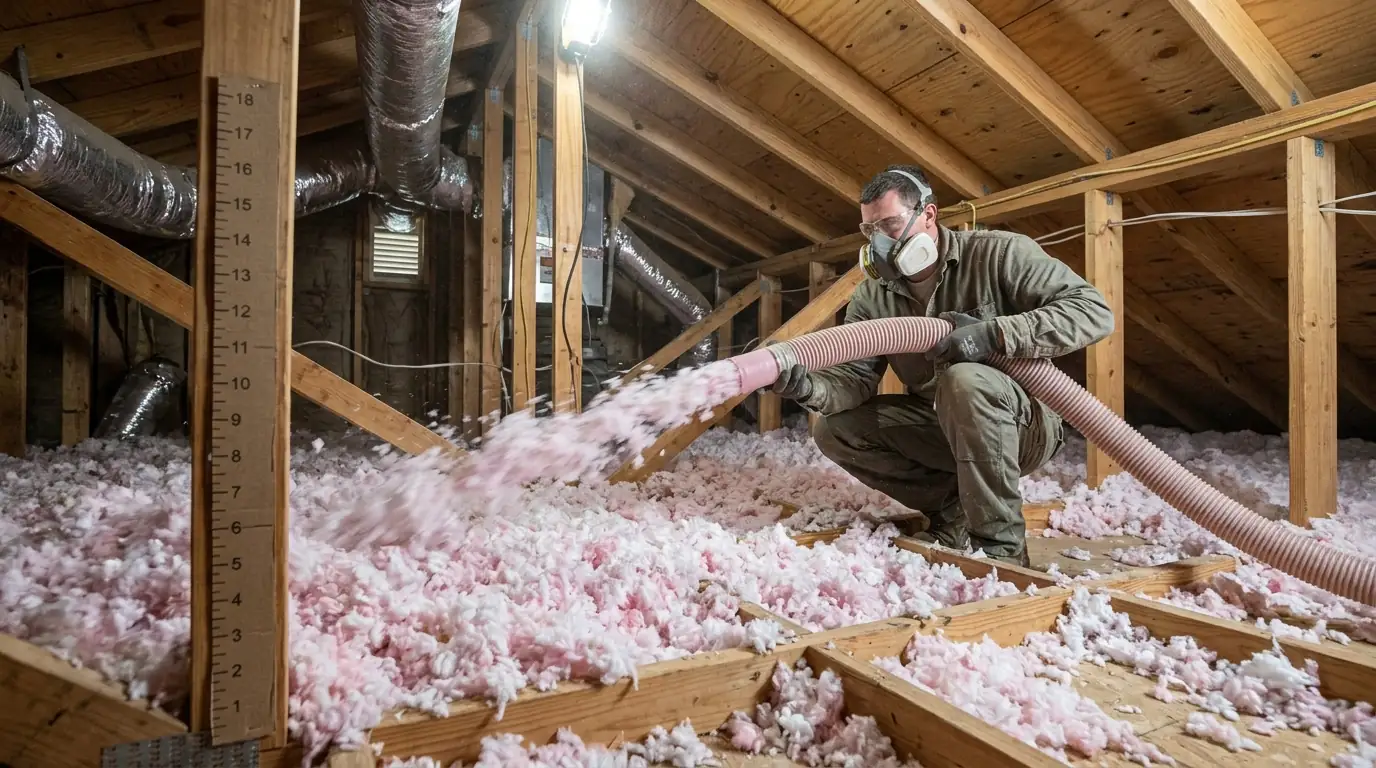
Attic insulation work tops up or replaces the insulation on your attic floor, usually with blown-in fiberglass or cellulose, after sealing air leaks. Typical Little Rock costs run $1.45 to $2.90 per square foot, or about $1,480 to $3,640 for many homes. Most attics are finished in one day.
On a July afternoon in Little Rock, attic air can get far hotter than outdoors. That heat radiates down through the ceiling, and thin or uneven insulation lets more of it into the rooms below. Upstairs bedrooms and rooms under low-pitched roofs feel it most.
Many homes built before the 1990s started with less insulation than today's guidance calls for, and older loose fill settles over the years. We often find attics where the tops of the ceiling joists are fully exposed, which means there is less insulation than the joists are tall.
Ductwork in the attic makes this more important. Most central Arkansas homes run their supply ducts through the attic, so the cool air from the air conditioner travels through the hottest space in the house before it reaches the rooms. Better attic insulation and sealed duct connections help keep that air cooler on its way.
Little Rock and most of central Arkansas sit in IECC climate zone 3A. ENERGY STAR guidance for this zone points to roughly R38 to R49 in the attic, depending on how much insulation is already there. In loose-fill terms, that is often well over a foot of depth.
We measure what you have now in several spots, since depth can vary a lot from one side of the attic to the other. Then we show you the gap between current depth and the target, and price the work in writing. Results depend on the home, ductwork and HVAC system, so we do not promise a set drop in your bills.
Older homes sometimes have vermiculite insulation, which can contain asbestos. If we see it, we stop and recommend testing before anyone disturbs it. New insulation can be installed safely once that question is answered.
Insulation slows heat, but it does not stop air. Gaps around light fixtures, plumbing pipes, wiring holes, chimney chases and the attic hatch let conditioned air leak up and attic air push down. Adding insulation on top of those leaks leaves a lot of the problem in place.
Before we add insulation, we seal the common leaks with foam, caulk and fire-rated materials where needed. The attic hatch gets weatherstripping and an insulated cover. This step costs a little more, but it is usually where much of the comfort improvement comes from.
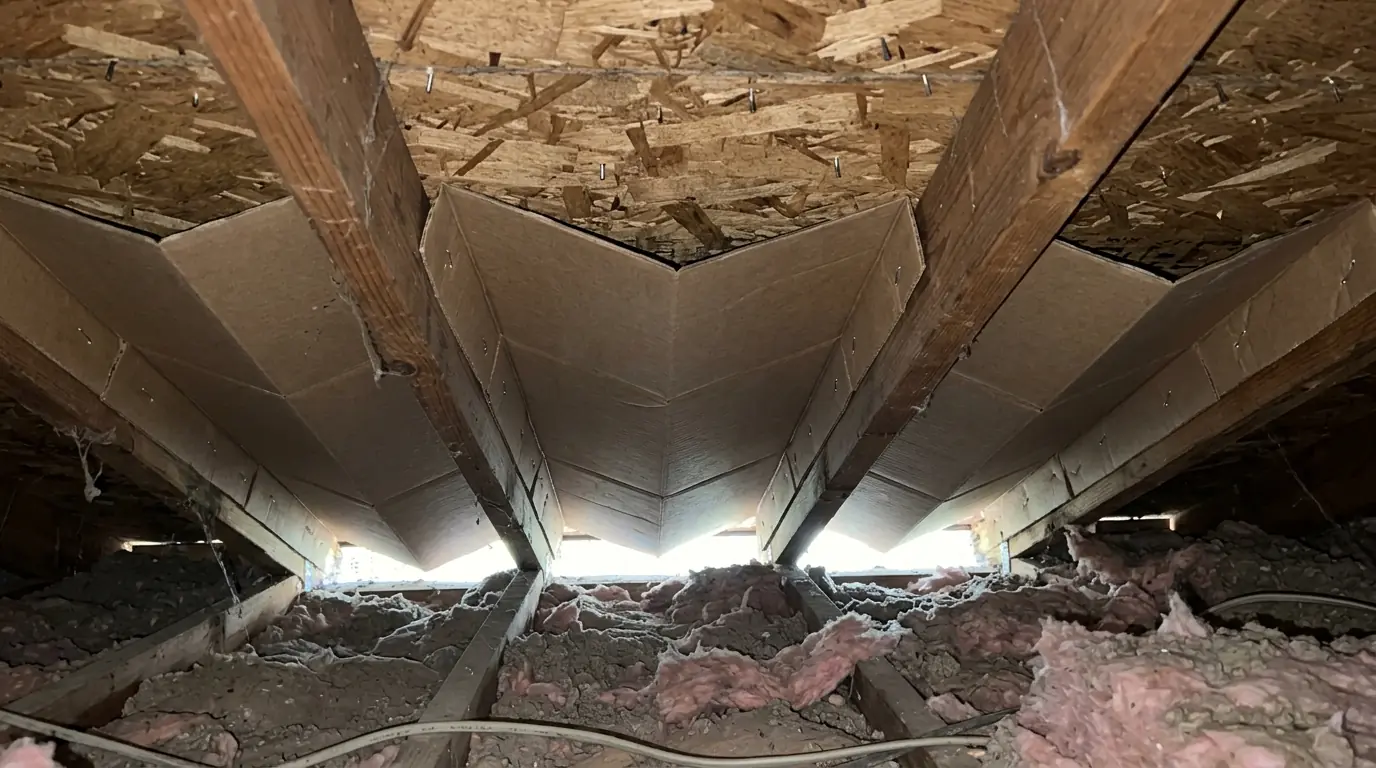
Attic ventilation and insulation have to cooperate. Soffit vents bring cool air in at the eaves, and ridge or roof vents let hot, humid air out at the top. When insulation is blown right up to the roof deck at the eaves, it blocks those soffit vents and the attic runs hotter and damper.
We install baffles at each rafter bay along the eaves to keep an open air channel from the soffit up to the attic. That lets us bring insulation all the way out to the edge of the ceiling without choking the vents. If your attic has no soffit intake at all, we can talk about adding vents as part of the job.
In our humid climate, airflow also helps keep moisture from building up on the underside of the roof deck, which protects the decking and shingles over time.
Most attic jobs we do use blown-in insulation, because it fills around joists, wires and pipes without the gaps that batts can leave. Blown fiberglass is lightweight and resists moisture. Cellulose is denser, contains recycled paper and treats the attic with a fire retardant, and it fills small gaps well.
Batts still have a place on attic knee walls and around hatches, where loose fill would not stay. We help you choose based on your attic, budget and preference, and we mark the attic with depth rulers so you can see how much was installed.
Radiant barriers come up often in our hot summers. A foil radiant barrier stapled under the rafters can reduce some heat radiating down from the roof deck, but it does not replace insulation on the attic floor. We explain where it can help and where it adds little.
While we are in the attic, we look for problems that affect the roof and the insulation. Bathroom fans venting into the attic, roof leaks staining the decking, signs of rodents or birds, and disconnected ductwork all show up regularly.
We photograph anything we find and explain what it means. Some fixes, like extending a bath fan duct to an exterior vent, can be done during the same visit. Others, like a roof leak or ductwork repair, are priced separately so you can decide.
If old insulation is wet, moldy or contaminated by animals, it should come out before new insulation goes in. We will tell you plainly if removal is needed.
Many homeowners also ask about walking in the attic after insulation is added. We can install a raised walkway or storage platform over the new insulation so you can reach stored items and HVAC equipment without compressing it.
These typical 2026 attic insulation ranges reflect work around Little Rock. Attic size, access and air sealing needs set the total.
| Job | Typical range | What drives it |
|---|---|---|
| Blown-in fiberglass top-up per sq ft | $1.45 to $2.35 | Depth to add and attic access |
| Blown-in cellulose top-up per sq ft | $1.65 to $2.90 | Target depth and attic layout |
| Air sealing package | $385 to $1,140 | Number of penetrations and chimney or flue work |
| Vent baffles installed, whole attic | $215 to $640 | Number of rafter bays at the eaves |
| Old insulation removal per sq ft | $1.20 to $2.60 | Contamination and attic access |
Attic size, the amount of air sealing and whether old insulation must come out move the price most. See the full roof pricing guide.
How the job goes
We check depth in several spots, look at vents and photograph the attic.
You see the target R-value, the depth to add and a written price.
Wiring holes, top plates, fixtures and the hatch are sealed first.
Vent baffles go in at each rafter bay so soffit airflow stays open.
Insulation is blown to the target depth and depth markers are left so you can verify it.
Little Rock sits in IECC climate zone 3A, and ENERGY STAR guidance for this zone points to roughly R38 to R49 in the attic, depending on what is already there. For blown-in insulation, that often means more than a foot of depth. We measure your current depth in several spots and show you how much needs to be added.
Yes. Air leaks around wiring, plumbing, fixtures and the attic hatch let conditioned air escape and hot attic air push into the house. Insulation alone does not stop that air movement. Sealing those gaps first is usually where much of the comfort gain comes from, and it is much harder to do after new insulation is blown in.
It can if it is installed without baffles. Loose insulation blown to the eaves can bury the soffit vents and cut off attic airflow. We install baffles in each rafter bay first, which keeps a clear channel from the soffit up to the attic so insulation and ventilation both work as intended.
Both work well when installed to the right depth. Fiberglass is lighter and resists moisture. Cellulose is denser, fills small gaps well and is treated with a fire retardant. Cost is similar. We help you choose based on your attic, the existing insulation and your preference, and either way we mark the final depth so you can check it.
In many central Arkansas homes, adding insulation and sealing air leaks helps upstairs rooms feel more comfortable in summer. Results depend on ductwork, ventilation and the HVAC system too. We do not promise a specific temperature drop or bill savings, but we explain what we see in your attic and what each improvement is designed to do.
Related work
Balanced ridge and soffit ventilation that lets hot, damp attic air out and helps shingles, decking and AC systems last longer.
How we handle itRotted fascia and soffit boards replaced, vents restored and gaps sealed so water, squirrels and birds stay out of the roof edge.
How we handle itInsert and full-frame window replacement with careful flashing, foam sealing and trim work for central Arkansas homes.
How we handle itA hands-on roof and attic check with labeled photos, an honest remaining life estimate and a written price for any repair needed.
How we handle itTalk to a roofer nowCall and describe what you are seeing. We answer around the clock.
Call (501) 387-1152