Roof Flashing Repair
Replacement of failed step, apron, counter and vent flashing where roofs meet walls, dormers, skylights and pipes.
How we handle itNew roofs & materials
Most skylight leaks are flashing leaks, not glass leaks. Because we are roofers first, we install and repair skylights with the step flashing, membrane and curb details that keep water on top of the roof.
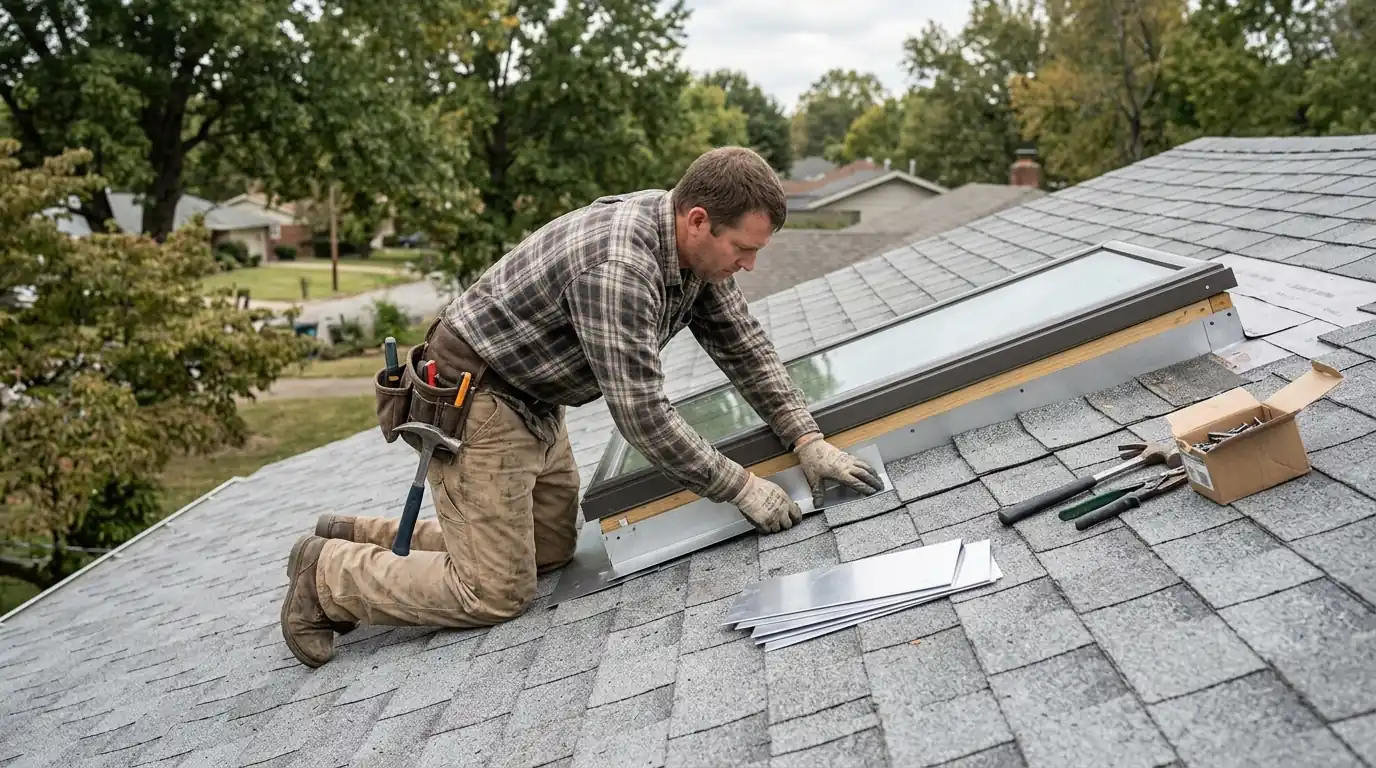
Skylight installation and repair covers new skylights, replacing old or cracked units, and fixing leaks by rebuilding the flashing around the curb. In Little Rock, reflashing an existing skylight typically runs $485 to $1,240, a replacement unit installed runs $1,350 to $3,600, and a new opening with light shaft costs more. Most skylight jobs take one day, weather permitting.
A skylight is a hole in the roof, and every hole depends on flashing. Water that runs down the slope has to be steered around the curb by step flashing on the sides, a head flashing on top, and an apron at the bottom. If any piece is missing, bent or sealed with caulk instead of lapped, water finds its way in.
Other leaks come from the unit itself. Old plastic domes crack and craze in the sun, seals between glass panes fail and fog the glass, and frame joints open up as the unit ages. Condensation can also look like a leak when warm, damp room air hits cold glass in winter.
We sort out which one you have before suggesting a fix. That means looking at the flashing from the roof, the curb and drywall from inside, and the timing of the drips. Water that only shows during wind driven rain points to a different problem than water that appears on cold mornings.
When the unit is sound but the flashing is failing, reflashing is the right fix. We remove the shingles around the curb, pull the old flashing, add ice and water membrane up the curb walls, and install a new flashing kit before relaying the shingles.
Cracked domes, broken glass and fogged panes usually mean replacing the unit. If the curb is in good shape and the size matches, a new unit can go on the existing opening, which keeps the cost and the interior work down.
Rotted curbs are the hidden part of many skylight repairs. Years of small leaks soften the wood frame the unit sits on, and setting new flashing against a soft curb does not hold. If the curb gives under a probe, we rebuild it from new lumber, wrap it in membrane, and then flash it properly.
A new skylight starts inside. We look at the attic framing between the roof and the ceiling, find where rafters and ceiling joists fall, and plan the opening so as few framing members are cut as possible. Where a rafter has to be cut, headers carry the load around the opening.
On the roof, we cut the opening, frame or set the curb, wrap it in membrane, and install the flashing kit matched to the unit and your roof material. The light shaft between the roof and the ceiling is framed, insulated and drywalled so warm attic air does not radiate into the room.
Tubular skylights are a smaller option for halls, bathrooms and closets. They bring in daylight through a reflective tube with a small roof dome and need far less framing work than a full skylight.
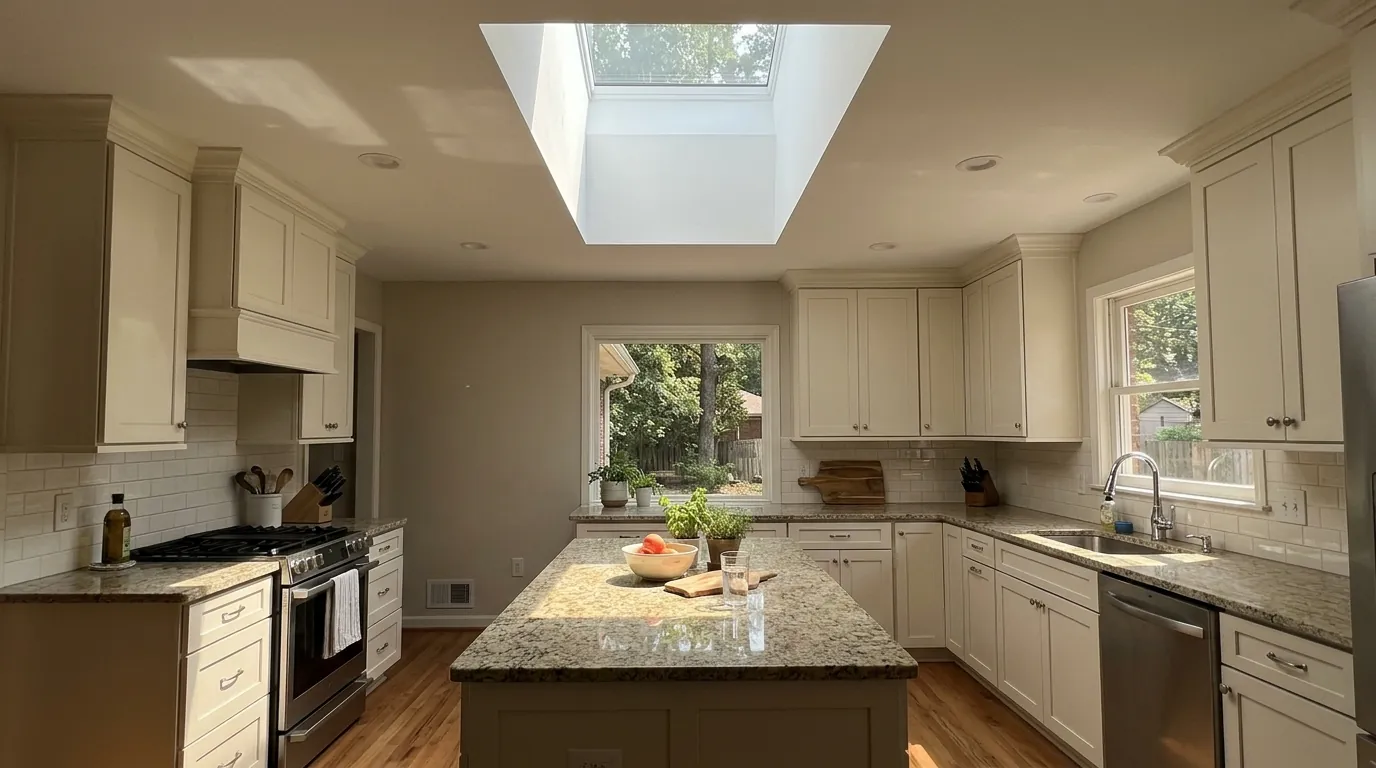
Skylights in central Arkansas face strong summer sun, which yellows and cracks older acrylic domes and heats rooms below. Units with low-E coated glass cut heat gain noticeably, and many newer models offer built-in shades.
Hail is the other concern. Laminated or tempered glass holds up far better than plastic domes during spring hail season, and we point out the difference when you are choosing a unit. After a hailstorm, we check skylights along with the rest of the roof.
Leaves, pine needles and debris tend to collect on the uphill side of a skylight curb, where they hold water against the head flashing. A cricket or careful head flashing detail helps shed that debris, and a quick cleanout during roof maintenance keeps the area draining.
If your skylights are more than fifteen to twenty years old and you are replacing the roof, it usually makes sense to replace or at least reflash them at the same time. New flashing ties in with the new underlayment, and you avoid tearing into a new roof later to fix an old skylight.
Many homeowners also use a re-roof to remove skylights they no longer want. We frame in the opening, deck it, and roof over it so it blends with the rest of the roof, and the interior opening can then be closed and finished.
Older units on many central Arkansas homes were installed with a single bead of tar around the curb rather than a flashing kit. A re-roof is the cleanest chance to correct that, because the shingles around the opening are already off and the deck is exposed.
Before we pack up, we water test or visually check the flashing, clean the glass, and show you photos of the membrane and flashing details that end up hidden under the shingles. You get a written price before work starts, and any changes found once the roof is open are priced before we do them.
Manufacturer warranty terms on skylight units depend on the product and registration. We hand over the paperwork for any new unit we install so you have it if a question comes up later.
Skylight pricing depends on whether you need new flashing, a new unit, or a brand new opening.
| Job | Typical range | What drives it |
|---|---|---|
| Reflash existing skylight | $485 to $1,240 | Skylight size, roof pitch and shingle type |
| Replace skylight on existing curb | $1,350 to $3,600 | Unit type, glass, size and any built-in shade |
| New skylight with light shaft | $2,950 to $6,800 | Framing changes, shaft length and drywall finish |
| Tubular skylight installed | $745 to $1,690 | Tube length, number of bends and roof type |
| Remove skylight and roof over | $865 to $2,140 | Opening size and interior ceiling patch |
Steep roofs, venting or powered units, and rotted curbs that need rebuilding are the main things that raise a skylight price. See the full roof pricing guide.
How the job goes
We check flashing on the roof, the curb and drywall inside, and when the drips appear to separate leaks from condensation.
We explain whether reflashing, a new unit, or removal makes sense, and give a written price.
Shingles around the curb come up, old flashing is removed, and membrane is wrapped up the curb walls.
The skylight is set level and the step, head and apron flashing are installed and lapped correctly.
Shingles are relaid, the work is checked for water tightness, and we clean up and share photos.
Condensation tends to show on cold mornings as droplets on the inside of the glass, with no connection to rain. A true leak usually appears during or just after rain, and often during wind driven storms. We check the flashing from the roof and the curb from inside to tell the two apart before suggesting any skylight repair.
Yes, if the unit itself is in good shape. Most skylight leaks come from flashing, so we remove the shingles around the curb, add membrane, install new flashing, and relay the shingles. If the glass is cracked, the dome is crazed, or the panes are fogged, replacing the unit is usually the better choice.
Units with tempered or laminated glass handle hail far better than older acrylic or plastic domes. Laminated glass also holds together if it does crack. During spring hail season, skylights are one of the items we check closely after a storm, and we can walk you through glass options when choosing a replacement skylight.
If they are more than fifteen to twenty years old, it usually makes sense. New flashing ties in with the new underlayment, and you avoid cutting into a new roof later. If the units are newer and in good shape, we can reflash them with new kits instead, which still gives the openings a fresh start with the roof.
Yes. We remove the unit and flashing, frame the opening, install new decking and underlayment, and roof over it to blend with the surrounding roof. The interior opening can then be closed with drywall. It is a common request during a re-roof, when the shingles around the skylight are already coming off.
Related work
Replacement of failed step, apron, counter and vent flashing where roofs meet walls, dormers, skylights and pipes.
How we handle itWe follow the water back to where it actually gets in, fix that spot and stop the stain from coming back.
How we handle itA complete tear-off to the deck with new underlayment, flashing, vents and shingles, finished in a day or two on most homes.
How we handle itBlown-in insulation, air sealing and vent baffles that help attics in hot, humid central Arkansas summers.
How we handle itTalk to a roofer nowCall and describe what you are seeing. We answer around the clock.
Call (501) 387-1152