Roof Maintenance
A yearly or twice-yearly tune-up that clears debris, reseals weak spots and fixes small problems before they turn into ceiling stains.
How we handle itInspections & care
Those black streaks on your roof are a living algae, not dirt. We remove them with a gentle soft-wash treatment and a low-pressure rinse, never a pressure washer pointed at your shingles.
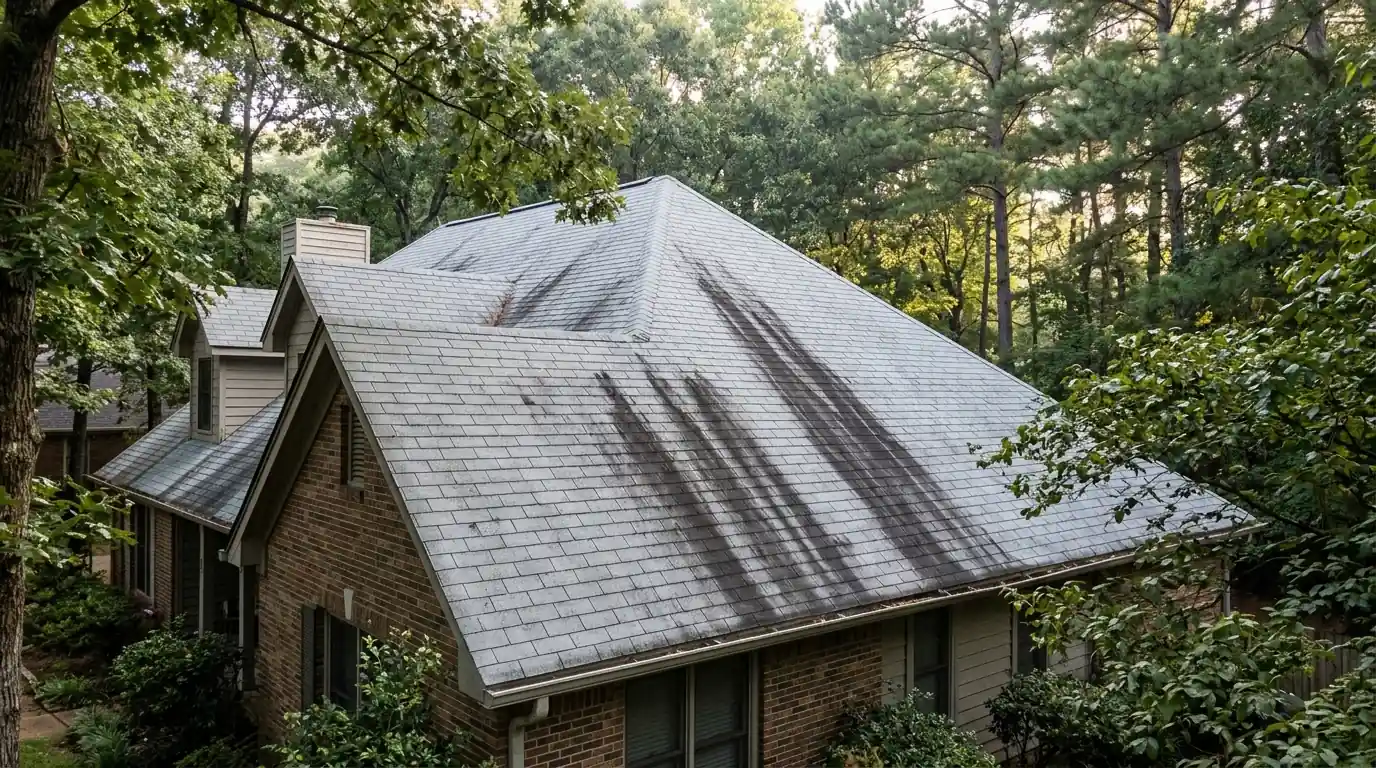
Roof cleaning removes the black streaks caused by Gloeocapsa magma algae, plus moss and lichen, using a low-pressure soft-wash solution that kills the growth at the root. In Little Rock, most homes cost $385 to $890 to clean. The work takes two to four hours, and streaks keep fading over the following weeks as rain rinses the dead algae away.
The dark stripes running down so many Arkansas roofs come from Gloeocapsa magma, a type of cyanobacteria often just called roof algae. It spreads by airborne spores and feeds on the limestone filler found in many asphalt shingles. As it grows, it builds a dark protective coating that shows up as streaks, usually starting on the north and shaded slopes.
Moss and lichen are different growths that often show up alongside it. Moss holds water like a sponge and can lift shingle edges. Lichen grips the granules tightly and leaves spots behind when it is pulled off the wrong way.
From the street, the streaks are often mistaken for soot, mold or worn shingles. A close look usually settles it, and we confirm what is growing before we price the job.
A pressure washer will take streaks off a roof, but it also blasts away the granules that protect asphalt from the sun. Shingle makers and roofing trade groups advise against it for exactly that reason. A roof that looks clean after a pressure wash can lose years of life in an afternoon.
High-pressure water can also drive under shingle tabs, break the seal strips and push water into the decking. On older roofs, it can tear brittle tabs right off. We skip scrub brushes and stiff brooms on asphalt too, since they grind granules loose in the same way, just more slowly.
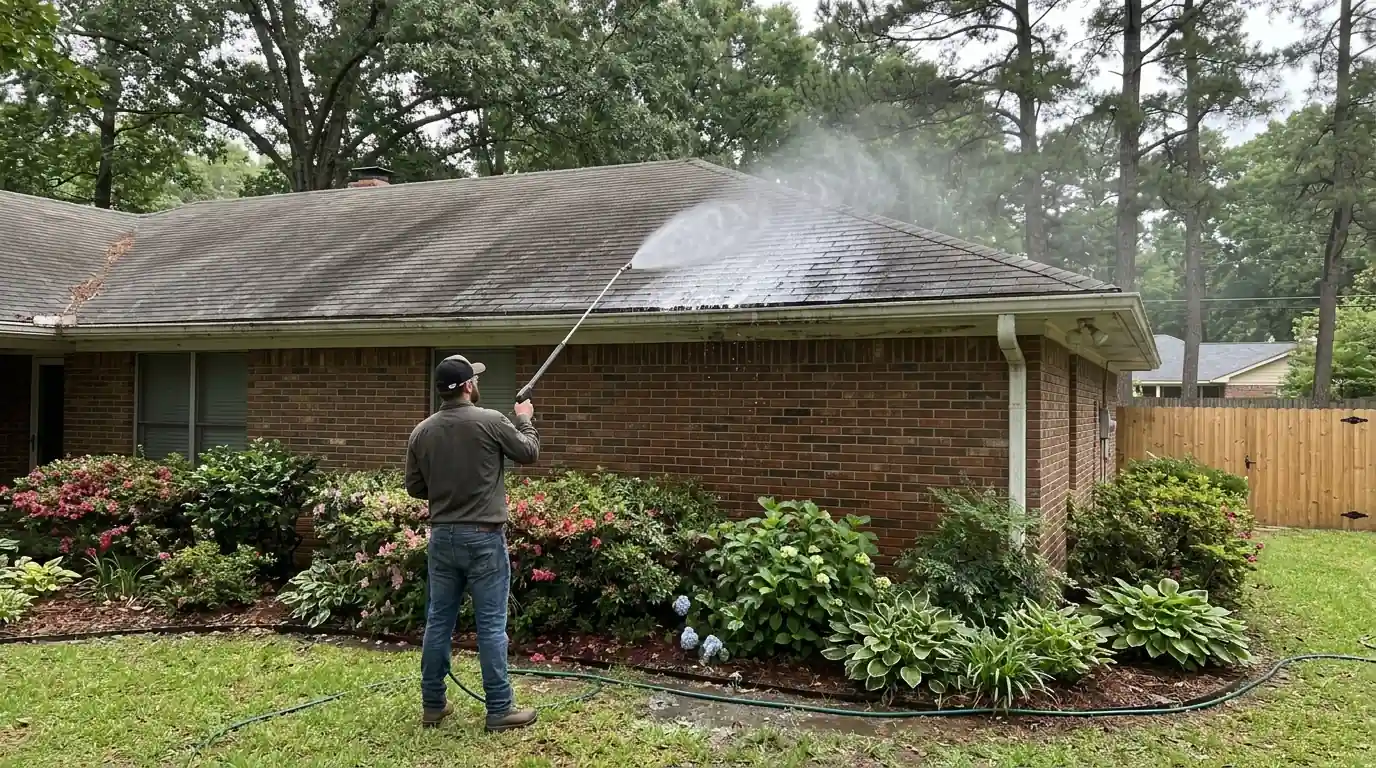
Soft washing works the other way. We apply a cleaning solution at garden hose pressure, let it work on the algae, then rinse at low pressure. The chemistry does the work, so the shingles do not take a beating.
If someone pressure washed your roof in the past, we check for bare spots and loose granules and tell you whether any shingles need replacing.
Cleaning solutions strong enough to kill algae need care around landscaping. Before we start, we soak shrubs, flower beds and grass below the drip line with plain water so they absorb less runoff. We cover delicate plants when needed and rinse them again when we finish.
We also check the gutters and downspouts first. Clear drainage carries the runoff away instead of letting it pool near the foundation or splash onto siding.
The solution breaks down fairly quickly after it is rinsed, but common sense still applies: keep pets and kids inside or away from the drip edge until the final rinse is done.
Humidity is the main reason. Long, warm, damp summers and mild winters give algae a long growing season, and shade from oaks and pines keeps north slopes wet well into the afternoon. Homes near creeks and lakes, or on wooded lots, tend to streak first.
In most cases, algae is a cosmetic problem rather than a structural one. Heavy growth does hold moisture against the roof, though, and moss in particular can lift shingle edges where wind-driven rain gets underneath. Lighter colored roofs also lose some of their reflectivity once streaks spread, which can mean a warmer attic in July.
Homes with shingles installed before algae-resistant granules were common usually show the heaviest growth. Metal and tile roofs can grow algae and lichen too, and we clean them with the same low-pressure approach, adjusted for the surface.
Cleaning kills the current growth, but spores keep landing. Most roofs in our area start to show faint streaks again within a few years, faster under heavy shade.
Strips of zinc or copper installed near the ridge help slow regrowth. When rain washes over the metal, it carries small amounts of it down the roof, and algae does not tolerate it well. Trimming branches back to let in more sun helps too.
Many homeowners in shaded neighborhoods book a light treatment every two to three years instead of waiting for heavy streaks. Lighter growth takes less solution and less time.
If you are planning a new roof, algae-resistant shingles with copper-containing granules are a good choice for this climate, and we can walk you through the options during a visit.
Sometimes a roof is too far gone to clean. If the shingles are brittle, curling or missing granules across large areas, cleaning will not change what is underneath, and we will tell you that rather than charge you to wash a roof that needs replacing.
We also check for loose flashing, cracked boots and damaged shingles while we are up there. Anything that needs repair gets photographed and priced in writing. Cleaning before you list a home is common too, since streaks make a sound roof look old in listing photos.
Call (501) 387-1152 to set up a roof cleaning, and ask about adding zinc strips on the same visit.
Roof cleaning cost depends mostly on roof size, pitch and how heavy the growth is. These are typical 2026 Little Rock ranges.
| Job | Typical range | What drives it |
|---|---|---|
| Soft-wash cleaning, single-story home | $385 to $640 | Roof area and algae coverage |
| Soft-wash cleaning, two-story or steep roof | $565 to $890 | Pitch, height and safety setup |
| Heavy moss and lichen treatment | $145 to $360 | Extent of growth and need for a second application |
| Zinc or copper strip installation | $295 to $680 | Ridge length and metal type |
Very steep roofs, heavy moss and homes with large landscaped beds below the eaves take more time and cost more. See the full roof pricing guide.
How the job goes
We check whether it is algae, moss or lichen and look for any damage that cleaning would not fix.
We clear gutters, pre-wet landscaping and cover delicate plants and outdoor items.
The cleaning solution goes on at low pressure and sits long enough to kill the growth at the root.
We rinse the roof at low pressure, then rinse plants, siding and windows below.
If you want slower regrowth, we install zinc or copper strips near the ridge on the same visit.
Yes, when it is done at low pressure with the right solution. Soft washing relies on the cleaning chemistry to kill algae instead of water force, so the granules stay on the shingles. That is the method shingle makers and roofing trade groups point to, rather than pressure washing.
Most roofs stay clear for about two to four years here before faint streaks return, depending on shade and humidity. Roofs under heavy oak or pine cover tend to streak sooner. Zinc or copper strips near the ridge and trimming back branches both help stretch the time between cleanings.
We take steps to prevent it. We soak plants and grass with water before applying the solution, cover delicate shrubs, keep gutters flowing and rinse everything again at the end. Plants that are watered and rinsed this way usually come through with no visible effect.
The soft-wash solution kills the algae right away, but some of the dark coating stays stuck to the granules for a while. Over the next few rains, that dead material washes off and the roof keeps getting lighter. Most of the change shows within a few weeks.
Yes. We treat moss with the soft-wash solution, let it die back and loosen, then rinse it off at low pressure. We never scrape or pry thick moss mats, since that can lift or tear shingle edges. Stubborn spots may need a second light treatment.
Related work
A yearly or twice-yearly tune-up that clears debris, reseals weak spots and fixes small problems before they turn into ceiling stains.
How we handle itA hands-on roof and attic check with labeled photos, an honest remaining life estimate and a written price for any repair needed.
How we handle itArchitectural and designer asphalt shingles installed by our own crew, with color, wind rating and algae resistance chosen for your home.
How we handle itTalk to a roofer nowCall and describe what you are seeing. We answer around the clock.
Call (501) 387-1152