Flat Roof Repair
Leaks, ponding water, split seams and failed drains fixed on low slope roofs for homes, porches, offices and small commercial buildings.
How we handle itFlat & commercial
EPDM rubber has covered flat roofs for decades. It stretches with temperature swings, installs in wide sheets with few seams, and repairs cleanly when seams or flashing age out.
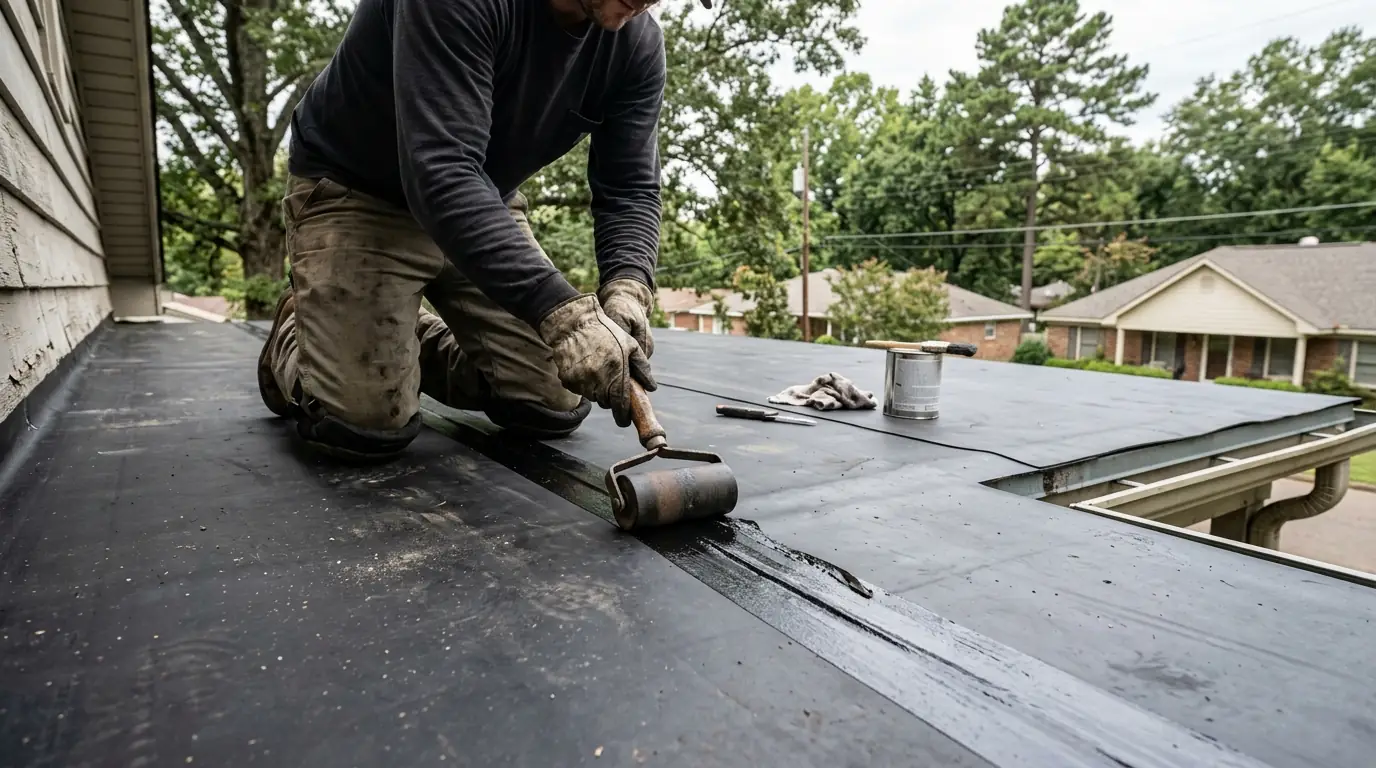
EPDM roofing is a synthetic rubber membrane, usually black, installed in large sheets over insulation with taped or adhered seams. In Little Rock, a new EPDM roof typically runs $6.90 to $10.70 per square foot installed, and seam or patch repairs run $345 to $1,090. Small porches and additions take a day or two, while commercial roofs take longer depending on size.
EPDM is a synthetic rubber membrane made for roofs. It comes in wide, long sheets, so a typical residential flat roof may need only one or two seams, and a commercial roof far fewer than narrower membranes. Fewer seams mean fewer places for water to get in.
Rubber stays flexible across a wide temperature range. It handles the daily swing between hot afternoons and cool nights, the occasional central Arkansas freeze, and building movement without cracking. That flexibility is a big reason EPDM has a long track record on low slope roofs.
Most EPDM is black, though white versions exist. On many buildings, especially those with good attic or ceiling insulation, black EPDM is still a practical, durable choice.
Membrane thickness matters. Thicker rubber resists punctures and foot traffic better and holds up longer under strong sun, so we usually suggest the heavier sheet on roofs that get service traffic or sit under trees that drop limbs.
EPDM can be fully adhered, mechanically fastened, or ballasted with stone. On homes and most smaller buildings around Little Rock, we fully adhere the membrane to insulation board with bonding adhesive, which gives a smooth roof that resists wind uplift and is easy to inspect.
Seams are joined with primed seam tape, which is more reliable than older liquid adhesive seams. Each seam is rolled firmly to set the tape, and edges are sealed with lap sealant. Flashing at walls, curbs and pipes uses uncured EPDM that molds around corners and penetrations.
Before the membrane goes down, we check the deck, replace wet insulation, and add tapered insulation where water pools. A rubber roof over a soft or sagging deck will not perform well no matter how carefully the seams are taped.
Seam failure is the top issue. Older EPDM roofs often have seams joined with liquid adhesive, which can dry out and let the laps open. Water slips in, runs along the insulation, and shows up as a stain somewhere else inside.
Shrinkage is the next. Over time, EPDM can shrink slightly, pulling away from walls and edges and tenting up at corners. The membrane stretches tight across inside corners, and flashing tears or pulls loose at the top.
Punctures from hail, dropped tools and fallen branches round out the list. Black EPDM also absorbs a lot of heat, and on roofs that see heavy foot traffic for HVAC service, wear paths eventually thin the membrane.
Ballasted EPDM roofs held down with river stone add another wrinkle, because the stone hides the membrane. Leaks under ballast take longer to find, since the stone has to be moved aside in sections to see the rubber.
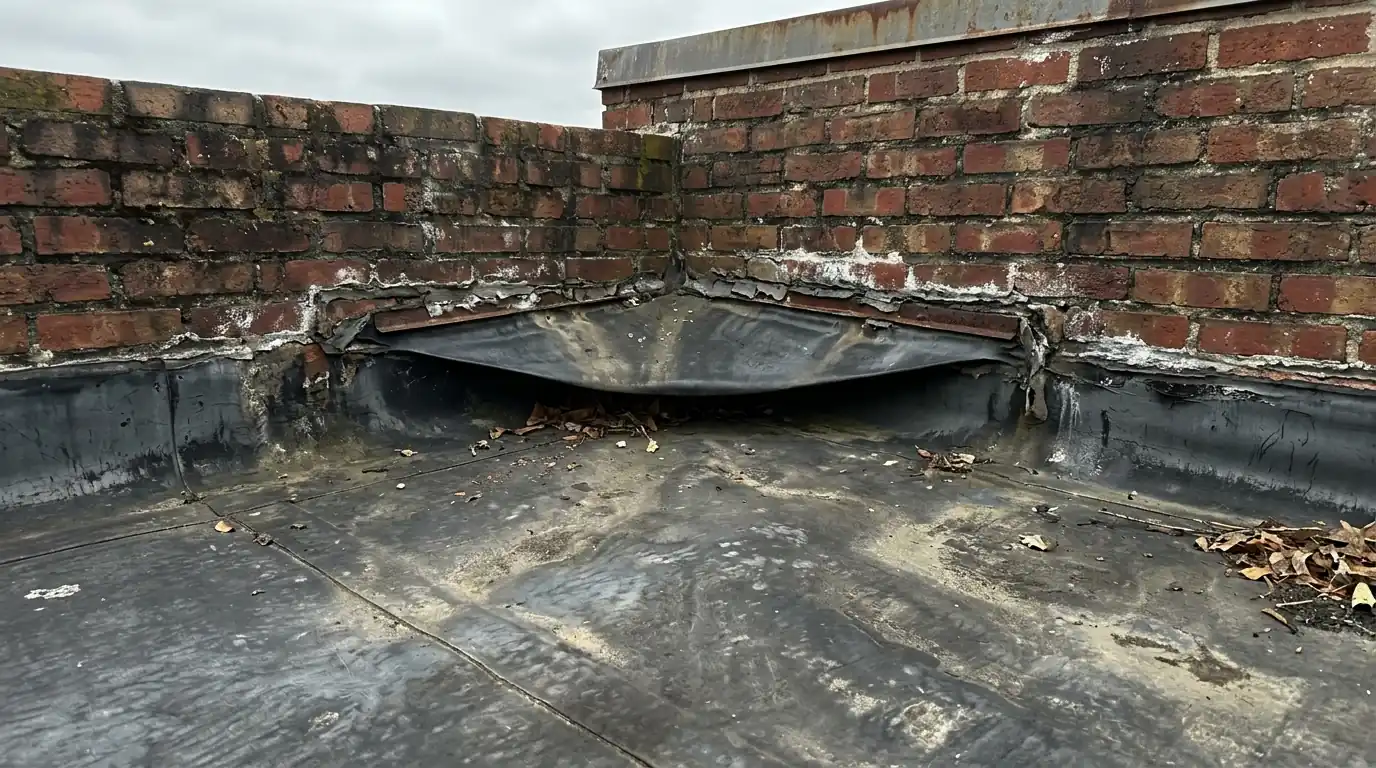
EPDM repairs only last when the surface is properly cleaned and primed. Rubber develops a chalky, oxidized layer over the years, and patches stuck to that layer peel off. We clean the area, apply primer made for EPDM, and set cured rubber patches or seam tape, then roll them firmly.
Shrinkage repairs involve releasing tension at corners and edges, adding new membrane strips, and reflashing walls. Asphalt cement and generic sealants should never go on EPDM, because petroleum products soften the rubber and fail quickly. We see that mistake often on older central Arkansas flat roofs, and fixing it means cutting out the damaged rubber first.
Where the roof is sound but aging, an EPDM compatible coating can add reflectivity and some extra life. We only suggest coating when seams and flashing have been repaired first.
Hot, humid summers and strong sun are the main stress on rubber roofs here. A black membrane can get very hot on a July afternoon, so good insulation below and proper ventilation of any attic or plenum space matter more than they would in a cooler climate.
Spring storms bring hail and heavy rain bursts. Thicker EPDM handles hail impact well because the rubber flexes, though large stones can still bruise or puncture it. After a big storm, it is wise to have a rubber roof checked for punctures and lifted edges, especially where straight-line winds hit the edge metal hardest.
Winter freeze and thaw is usually less of a problem for EPDM than for rigid roof systems, since the rubber stays flexible in cold weather. Debris is the steady year-round issue, as leaves and pine needles clog drains and hold water against seams.
If seams are opening in many places, insulation is wet across large areas, or the membrane has shrunk and torn at several walls, a new roof usually costs less over time than chasing leaks. If the problems are limited and the rubber is still soft and flexible, targeted repairs are often the smarter spend.
We show you photos of what we found, explain the choice in plain terms, and give a written price before work starts. Manufacturer warranty terms depend on the product, membrane thickness and registration, and we hand over the paperwork for any new system we install.
EPDM pricing depends on whether the roof needs repair or replacement, the membrane thickness, and the insulation below.
| Job | Typical range | What drives it |
|---|---|---|
| New EPDM roof with tear-off, per sq ft | $6.90 to $10.70 | Membrane thickness, insulation and number of penetrations |
| Seam or puncture repair | $345 to $1,090 | Number of failed spots and surface prep needed |
| Shrinkage repair and wall reflashing | $865 to $2,640 | Length of walls and corners affected |
| Residential porch or addition in EPDM | $2,180 to $5,750 | Size, edge metal and tie-in to shingle roof |
| EPDM compatible coating after repairs, per sq ft | $2.35 to $4.10 | Surface condition and number of coats |
Wet insulation, tall parapet walls and old asphalt patches that must be cut out are the main things that raise an EPDM price. See the full roof pricing guide.
How the job goes
We check every seam, corner and wall flashing, look for shrinkage, and probe for wet insulation.
We explain what the roof needs, show photos, and give a written price for each option.
For new roofs, old material comes off, damaged decking and wet insulation are replaced, and slope is added.
EPDM is fully adhered, seams are primed and taped, and flashing is molded around every detail.
Edge metal and lap sealant finish the perimeter, and we share photos and clean the site.
If the rubber is still soft and flexible and the problems are limited to a few seams, punctures or corners, repair is often the better value. If seams are opening all over, the insulation underneath is wet across large areas, or shrinkage has torn flashing at several walls, a new EPDM roof usually costs less over time than chasing leaks.
No. Asphalt based tar and roofing cement soften EPDM rubber and fail quickly, often making the leak worse. EPDM repairs need the surface cleaned and primed with products made for rubber, then cured patches or seam tape applied and rolled. If an old asphalt patch is already on your roof, we cut out the damaged rubber before repairing it properly.
Black EPDM absorbs more heat than white membranes, but with good insulation below it performs well in central Arkansas. If heat in the rooms below is a concern, white EPDM or an EPDM compatible reflective coating can help. We can talk through which fits your building and how the space under the roof is used.
Older EPDM can shrink slightly over many years, which pulls the membrane tight at inside corners and drags flashing down from walls. You may see the rubber tenting at corners or gaps at the top of wall flashing. We release the tension, add new membrane strips, and reflash the walls so water cannot get behind them.
A small flat porch or addition is usually finished in one to two days in dry weather, including tear-off, insulation, membrane and edge metal. Larger residential flat roofs or roofs with many penetrations may take a little longer. Adhesives need dry conditions, so we plan installation days around the forecast.
Related work
Leaks, ponding water, split seams and failed drains fixed on low slope roofs for homes, porches, offices and small commercial buildings.
How we handle itWhite single ply TPO membrane with hot air welded seams for low slope homes, additions and commercial roofs facing hot Arkansas summers.
How we handle itTwo-ply modified bitumen for porches, additions, carports and small commercial roofs, installed and repaired by our own crews.
How we handle itSilicone and acrylic coatings that restore sound flat and metal roofs, applied by our crews after proper cleaning and repairs.
How we handle itTalk to a roofer nowCall and describe what you are seeing. We answer around the clock.
Call (501) 387-1152