Emergency Roof Repair
Round-the-clock help when a tree limb, torn roof section or active leak puts water inside your home right now.
How we handle itRoof repair
A tarp that flaps loose in the next storm does more harm than good. Proper emergency roof tarping uses heavy material, wood battens and a ridge wrap so the cover holds through wind and rain for weeks if needed.
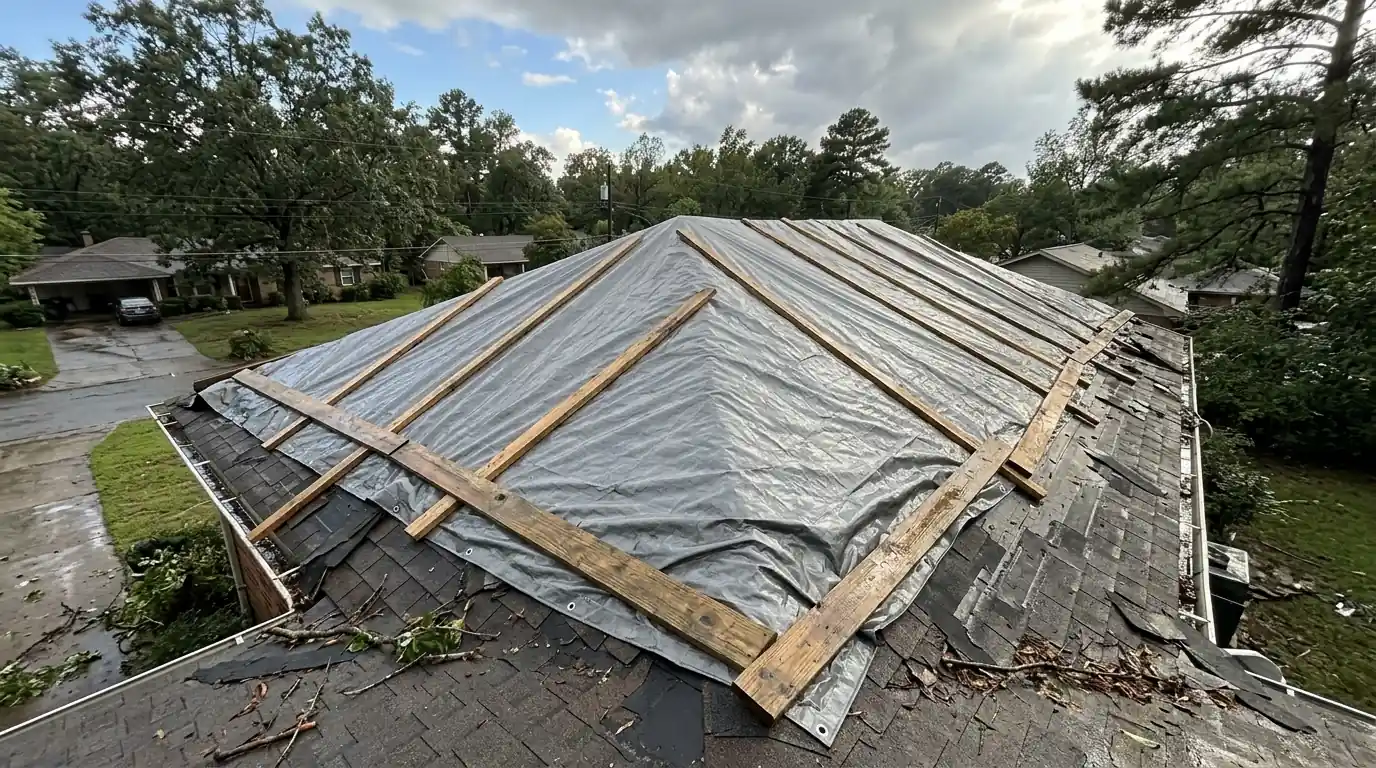
Emergency roof tarping covers a damaged roof section with a heavy-duty tarp anchored by wood battens and wrapped over the ridge, keeping water out until permanent repairs can be made. In Little Rock, tarping typically costs $485 to $1,860 depending on size and pitch. We answer 24/7 and usually tarp within hours once storms have passed.
Tarping is for damage too large or too risky to repair in one quick visit. A tree impact that cracked the decking, a section of shingles and underlayment torn off by wind or a roof opened up by a fire all need cover before anything else can happen. So does any repair that cannot be finished before the next rain arrives.
It is also the right move when the permanent fix depends on something outside your control, like an insurance adjuster's visit, a backordered shingle color or a crew schedule packed after a regional storm. A well-installed tarp buys time without letting the damage spread.
If the problem is a single cracked pipe boot or a small flashing gap, a tarp is usually overkill. In those cases a direct repair is faster, cheaper and permanent, and we will tell you that when you call.
The details are what keep a tarp on the roof. We use heavy, reinforced polyethylene tarps, sized to cover the damaged area with plenty of overlap on every side. Where possible, the tarp runs up and over the ridge so water sheds down both slopes instead of getting under the top edge.
Instead of nailing straight through the tarp, which tears it at every nail in the first strong gust, we roll the edges around wood battens, typically two-by-fours, and fasten the battens to the roof. That spreads the hold along the whole edge and keeps wind from catching the corners.
Before the tarp goes down, we clear loose debris, cut back any jagged decking that could puncture the plastic and check that no limbs are left hanging above the area.
After big storms we get many calls to redo tarps put up in a hurry. The same problems come up again and again, and most of them let water in within days.
Tarps held down with bricks or sandbags slide off in the first wind. Tarps that stop just short of the ridge funnel water straight under the top edge. Light blue tarps from a hardware store shred in the sun within a few weeks. Tarps nailed directly through the plastic tear outward from every hole. Each of those can turn a manageable repair into a ceiling replacement.
We also see well-meant tarps laid over gutters, which traps water and pulls the gutter loose under the weight. A tarp should end above the gutter line so rain drains off naturally.
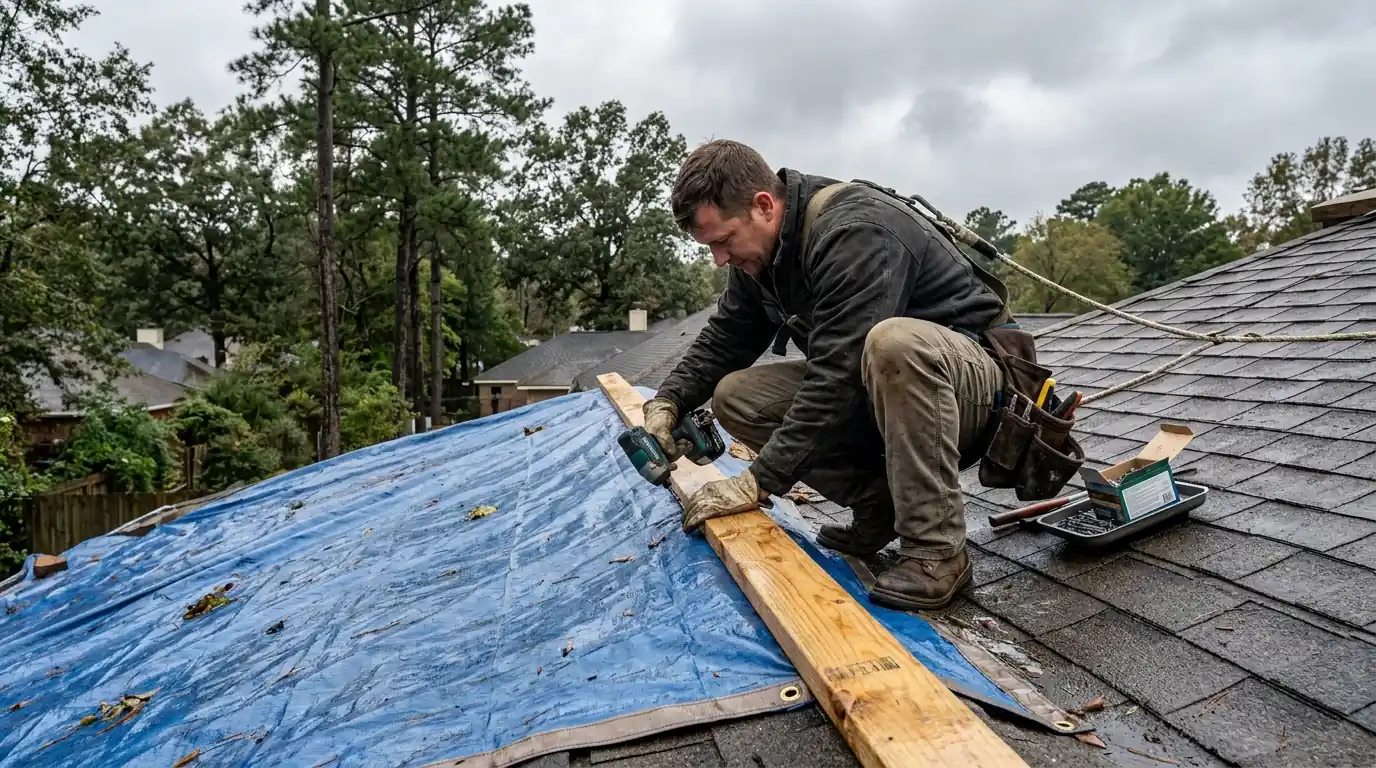
Weather here is tough on temporary covers. Spring storm season, roughly March to June, often brings repeated rounds of severe storms days apart, so a tarp installed after the first one may face strong straight-line winds again within the week. That is why we fasten every edge with battens instead of relying on weight.
Summer sun is the other enemy. A tarp on a Little Rock roof in July and August takes intense UV and heat that break down cheaper plastic quickly. Heavy-duty tarps last much longer, but no tarp is meant to be a permanent roof. We recommend planning the permanent repair within weeks, not months.
Winter ice storms bring a different risk. The weight of ice on a tarp and on overhanging branches can pull it loose or tear it, so tarps in cold months need extra attention at the edges and a quick check after any icing event.
Most homeowners policies expect you to take reasonable steps to prevent further damage after a covered event, and a professional tarp is often the clearest example of that. Keep the receipt and the photos, because emergency mitigation costs are commonly part of the claim. Coverage depends on your policy, so check with your carrier.
Our photos show the damage before the tarp went on, the tarp after installation and the inside of the home where water entered. That record helps the adjuster understand what happened even if they arrive days later, after the damage is already covered.
Once the tarp is secure and the house is dry, we return in daylight to assess the full damage. We check the decking and framing under the tarp from the attic side, trace any water that traveled inside and decide whether the fix is a repair, a slope replacement or a full new roof.
You get a written price for the permanent work. Because our own crew installs the tarp and does the repair, we already know the roof when we come back. When the permanent work starts, we remove the tarp and battens, fill and seal any fastener holes left in the decking and haul everything away.
If the permanent repair is delayed, we can check and re-secure the tarp after major storms so it keeps doing its job.
Tarping costs depend on the size of the opening, roof pitch and the time of the call. These are typical 2026 Little Rock ranges.
| Job | Typical range | What drives it |
|---|---|---|
| Small tarp, single damaged area | $485 to $890 | Tarp size and roof height |
| Large tarp over the ridge | $860 to $1,860 | Square footage and pitch |
| After-hours or storm-night tarping | $640 to $2,140 | Time of call and conditions once safe |
| Re-securing an existing tarp | $235 to $590 | How much of the tarp must be reset or replaced |
Steep or multi-story roofs, tree debris that must be cleared first and tarps spanning multiple slopes raise the price most. See the full roof pricing guide.
How the job goes
We answer 24/7, confirm the damage size and plan the tarp before the crew heads out.
Our crew clears debris, trims sharp decking edges and checks for hanging limbs above.
We lay a heavy tarp over the ridge and roll its edges around battens fastened to the roof.
We photograph the damage, the finished tarp and any interior water for your adjuster.
We return in daylight to assess underneath and give a written price for the repair.
A heavy-duty tarp anchored with battens can last weeks and sometimes a few months, but it is not built to replace a roof. Little Rock summer sun breaks down plastic over time, and spring storms test every edge. We recommend scheduling the permanent repair as soon as possible and can check the tarp after major storms in the meantime.
Often it does, because most policies expect you to prevent further damage after a covered event. Tarping is one of the most common mitigation steps. Coverage still depends on your policy, so call your carrier. Keep our receipt and photos, which show the damage before the tarp, the finished installation and any interior water.
Nails driven through the plastic become tear points. In a strong gust the tarp rips outward from each nail and can blow off entirely. We roll the tarp edges around wood battens and fasten the battens instead, which spreads the hold along the whole edge and keeps wind from catching corners and lifting the cover.
Yes. We often replace tarps held down with bricks, tarps that stop short of the ridge and light tarps that have shredded in the sun. We remove the old tarp, check for water that got under it and install a heavy tarp anchored with battens. Photos of the old and new tarp go into your records.
We answer 24/7 and send our crew as soon as it is safe to work, which can include nights once lightning and high wind have passed. We will not put anyone on a roof during an active storm. Until we arrive, we help you protect the rooms below with buckets, towels and by moving belongings.
Related work
Round-the-clock help when a tree limb, torn roof section or active leak puts water inside your home right now.
How we handle itFull roof assessment after a severe storm, covering debris impacts, mixed hail and wind damage, gutters and the attic below.
How we handle itRepairs for shingles that were lifted, creased, unsealed or blown off by straight-line winds and storm gusts.
How we handle itWe document storm damage, meet your adjuster on the roof and write a line-item scope, while you keep control of your own claim.
How we handle itTalk to a roofer nowCall and describe what you are seeing. We answer around the clock.
Call (501) 387-1152