Siding Repair
Hail holes, wind-blown panels, rotted boards and leaks around trim fixed and matched so the wall looks whole again.
How we handle itGutters, siding & exterior
New siding should look sharp and keep water out for decades. Our crews install vinyl, fiber cement and engineered wood siding over a proper weather barrier on homes across Little Rock and central Arkansas.
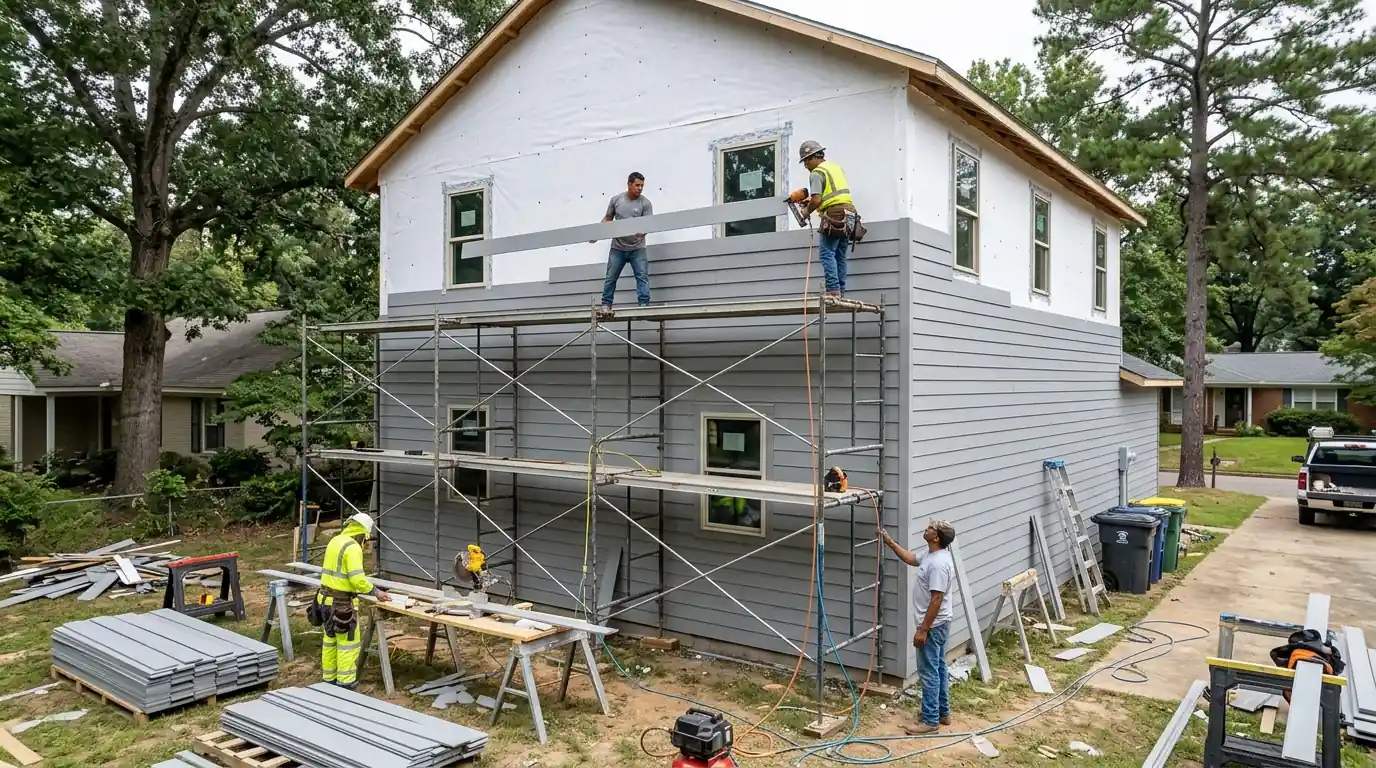
Siding installation means removing old cladding, checking the wall sheathing, adding a weather barrier and installing new siding with flashed windows, doors and trim. Typical Little Rock costs run $6.85 to $15.40 per square foot of wall depending on material, or about $11,800 to $27,600 for many homes. Most installs take one to two weeks.
Most homeowners in central Arkansas choose between three materials, and each has a clear place. Vinyl is the most affordable and needs no painting. Fiber cement is heavier, holds paint well and gives a crisp painted-wood look. Engineered wood, the LP SmartSide type of product, is lighter than fiber cement, cuts like lumber and comes primed or prefinished.
Budget, the look of the neighborhood and how long you plan to stay all factor in. We bring samples, explain the tradeoffs and let you see them against your brick, roof and trim before you decide.
Color and profile choices matter as much as material. Lap siding, board and batten, shakes in the gables and different trim widths can change the look of a house a lot. Many ranch homes around Little Rock look sharp with lap siding on the body and a contrasting accent on the gable ends.
Siding is the rain screen, not the last line of defense. The weather-resistant barrier behind it, often called house wrap, is what actually keeps wind-driven rain off the sheathing. Many older homes have none, or have felt that has dried out and torn.
When the old siding comes off, we inspect the sheathing and framing for soft spots, especially below windows and at the bottom of walls. Rotted sheathing is replaced and priced for you before we move on. Then the wall gets new house wrap, lapped correctly so water runs down and out instead of behind it.
Insulated siding and foam backer board are options with vinyl. They stiffen the panels, help them sit flatter on uneven walls and add a modest layer of insulation. They are not a replacement for attic or wall insulation, but they can make the walls a bit more comfortable.
Most siding leaks start at openings. Windows and doors need flashing tape and head flashing installed in the right order, with each layer overlapping the one below so water is always directed outward.
Where a wall meets a roof, such as above a porch or a garage, kick-out flashing at the bottom edge sends water into the gutter instead of down the wall. Missing kick-out flashing is one of the most common causes of hidden wall rot we find on Little Rock homes. We install it on every roof-to-wall joint we touch.
Penetrations for dryer vents, hose bibs, lights and electrical boxes get mounting blocks so the siding fits tightly around them without gaps.
Brick homes with siding only on gables, dormers or the back wall need the same care. Where siding meets brick, the transition is flashed so water running down the siding lands on top of the brick ledge and drains away, rather than slipping behind it.
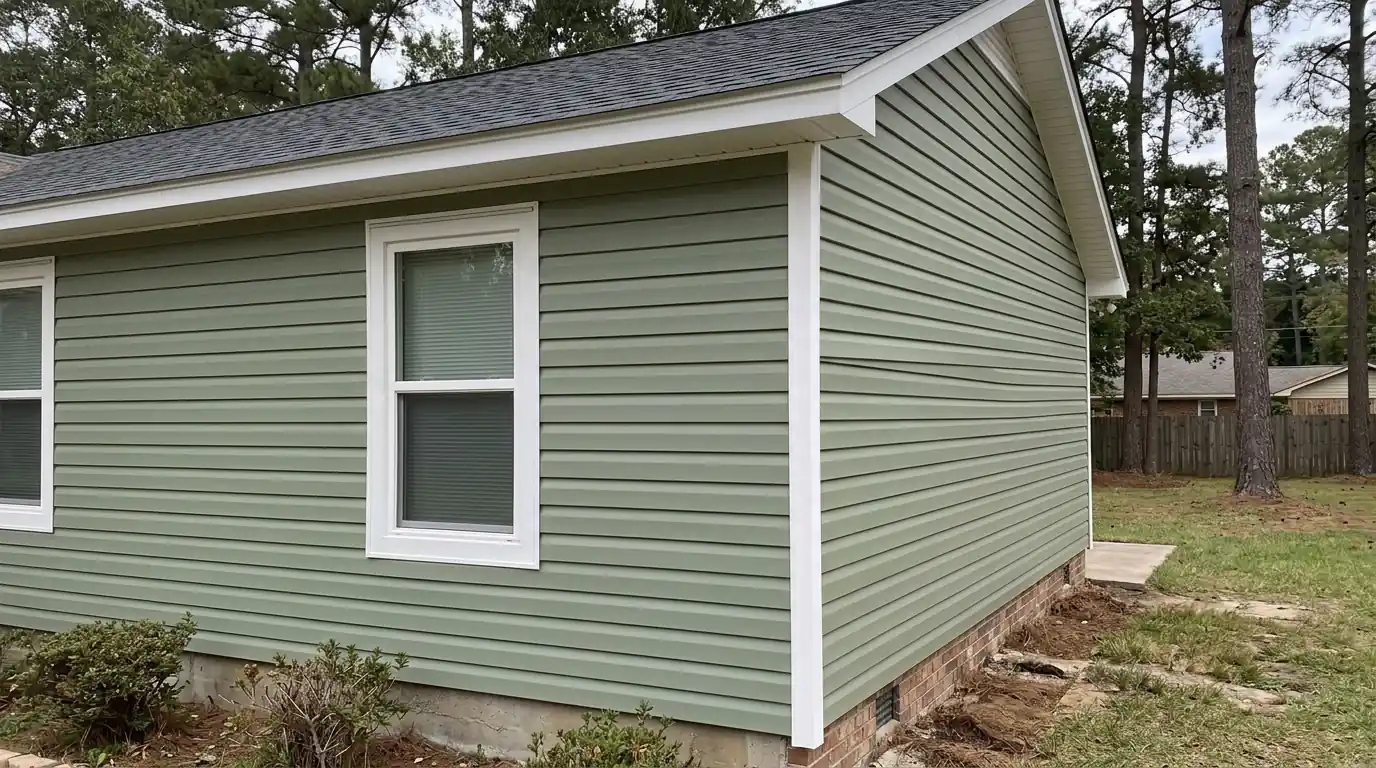
Our hot, humid summers favor siding systems that let walls dry. A good weather barrier and proper gaps at trim and the bottom course help moisture escape rather than stay trapped against the sheathing.
Heat also matters for vinyl. It expands and contracts more than the other materials, so it has to be nailed loosely in the center of the slots with room at each end. Siding nailed too tight buckles and waves after the first hot summer.
Spring hail and straight-line winds are the other test. Fiber cement and thicker engineered wood products handle hail well, and vinyl with a higher wind rating and correct nailing stays put better in storms. We explain how each choice holds up to the weather we see from March through June.
Good siding starts straight. We set a level starter strip, check each course as we go and keep reveal lines consistent so the walls read clean from the street. Corner posts, J-channel and trim are installed so water sheds over every joint.
Fiber cement and engineered wood need specific clearances above roofs, decks and the ground, plus sealed or primed cut ends. Following the manufacturer's installation instructions matters, because manufacturer warranty terms depend on the product and correct installation. We share the product details with you so you know what applies to your siding.
Nail spacing and type matter too. We use corrosion-resistant fasteners sized for the product and the sheathing, and we keep them at the spacing the manufacturer specifies, which matters most on walls that take the brunt of spring storm winds.
Siding, roof edge and gutters all work together. If your roof or gutters are due soon, doing them in the right order saves money and avoids damage to new work. Roofing usually comes first, then siding and trim, then gutters.
We can price all three together and plan the sequence so ladders and scaffolding do not scuff fresh siding. Every job ends with debris hauled away and a magnet sweep of the yard and driveway for nails.
If your home was built before 1980, old paint on wood siding may contain lead. We follow safe work practices for that removal and explain what that means for setup and cleanup before work starts.
Siding prices around Little Rock depend on material, wall area and how much repair the walls need. These are typical 2026 ranges.
| Job | Typical range | What drives it |
|---|---|---|
| Vinyl siding installed per sq ft | $6.85 to $9.70 | Panel thickness, trim and number of stories |
| Engineered wood siding per sq ft | $9.40 to $13.20 | Prefinished or primed, plus paint |
| Fiber cement siding per sq ft | $10.60 to $15.40 | Painting, trim style and cutting detail |
| Old siding removal per sq ft | $1.15 to $2.40 | Number of layers and old material type |
| Sheathing repair per sheet | $85 to $165 | Number of sheets and framing repairs behind |
Wall area, the number of windows and corners, and hidden sheathing rot change the final price the most. See the full roof pricing guide.
How the job goes
We measure every wall, show samples and give a written price for each siding option.
Old cladding comes off one section at a time and the sheathing is checked and photographed.
Rotted sheathing is replaced, then new house wrap is lapped and taped correctly.
Windows, doors and roof joints are flashed, then siding and trim go up course by course.
We walk the house with you, seal cut ends, haul debris and run a magnet sweep.
There is no single best choice. Vinyl offers the lowest cost and no painting. Fiber cement resists rot and insects and holds paint well in our sun. Engineered wood gives a real wood look at lighter weight. The right pick depends on budget, how the home looks, and how long you plan to stay. We show samples on your house.
Most single-story homes take about one to two weeks, depending on wall area, material and how much sheathing repair is needed. Fiber cement takes a little longer because it is heavier and needs painting. Rain days can push the schedule, but we keep the walls covered with house wrap each night so the home stays dry.
Yes, on every siding installation. The weather barrier behind the siding is what keeps wind-driven rain off the sheathing. We lap it so water runs down and out, tape the seams and flash every window and door in the correct order. Skipping or rushing this step is a leading cause of hidden wall rot.
Sometimes it can, but we usually recommend removing the old siding. Covering it hides rot, makes it impossible to add a proper weather barrier, and can throw off window and trim depths. Removal lets us check and repair the sheathing first. If you want to keep costs down, we can discuss where an overlay might be reasonable.
Fiber cement and thicker engineered wood products generally resist hail better than standard vinyl, which can crack in cold weather or dent from large stones. Thicker premium vinyl helps too. Any siding can be damaged by severe hail, so we photograph your walls after storms if you need documentation for a claim.
Related work
Hail holes, wind-blown panels, rotted boards and leaks around trim fixed and matched so the wall looks whole again.
How we handle itInsert and full-frame window replacement with careful flashing, foam sealing and trim work for central Arkansas homes.
How we handle itRotted fascia and soffit boards replaced, vents restored and gaps sealed so water, squirrels and birds stay out of the roof edge.
How we handle itNew aluminum gutters roll-formed on site in one continuous piece per run, with downspouts placed to move heavy rain away.
How we handle itTalk to a roofer nowCall and describe what you are seeing. We answer around the clock.
Call (501) 387-1152