Siding Installation
New vinyl, fiber cement and engineered wood siding installed over a proper weather barrier with flashed windows and trim.
How we handle itGutters, siding & exterior
A few damaged boards do not mean the whole house needs new siding. We repair hail holes, blown-off panels, rot and leaks around trim on homes across Little Rock and central Arkansas.
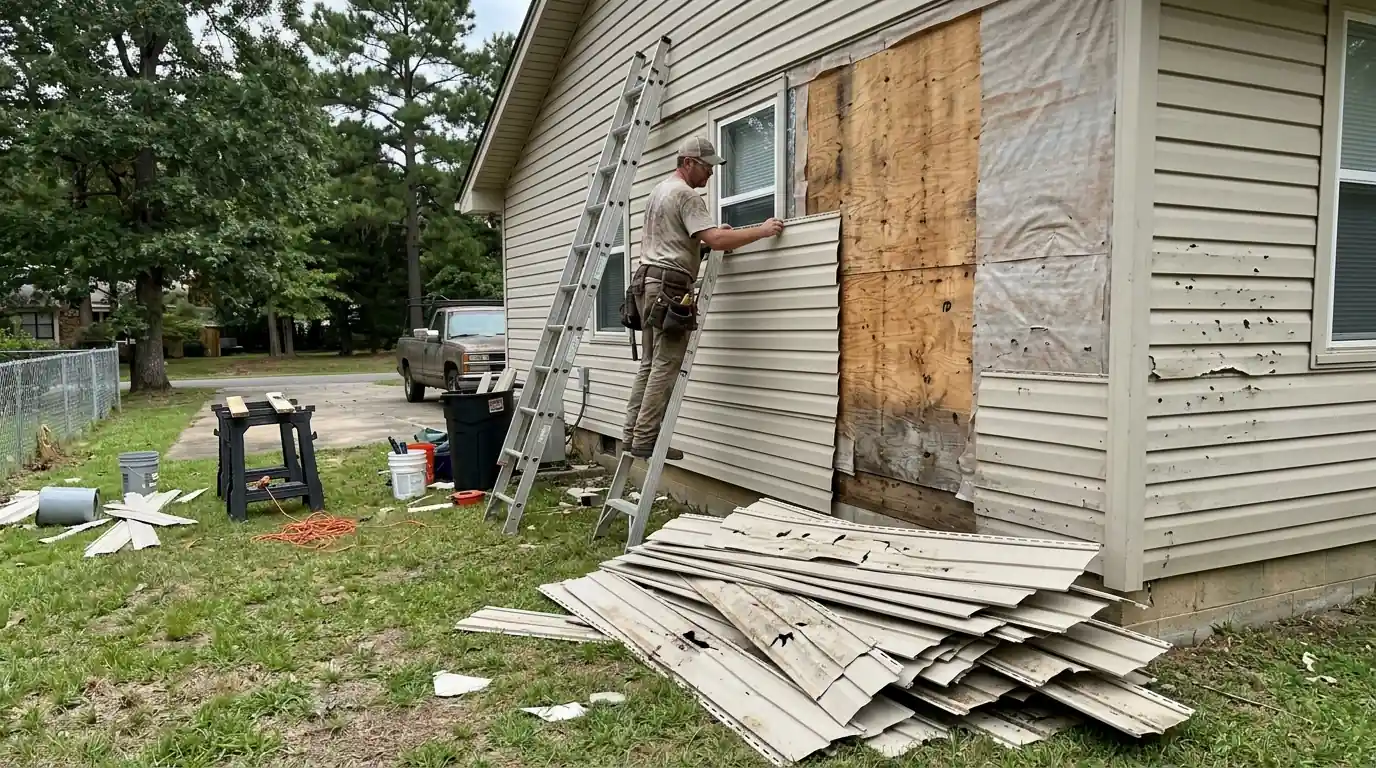
Siding repair replaces or reattaches damaged sections of vinyl, fiber cement or wood siding and fixes the water problems behind them. Typical Little Rock repairs run $285 to $960 for a small area and $1,140 to $3,480 for a full wall section. Most repairs are done in a day, though color matching older siding can add time.
Siding takes a beating on the storm side of a house. After a spring hail event, we see cracked and holed vinyl, dented aluminum and chipped fiber cement. After straight-line winds, it is panels unzipped from the wall and corner posts torn loose.
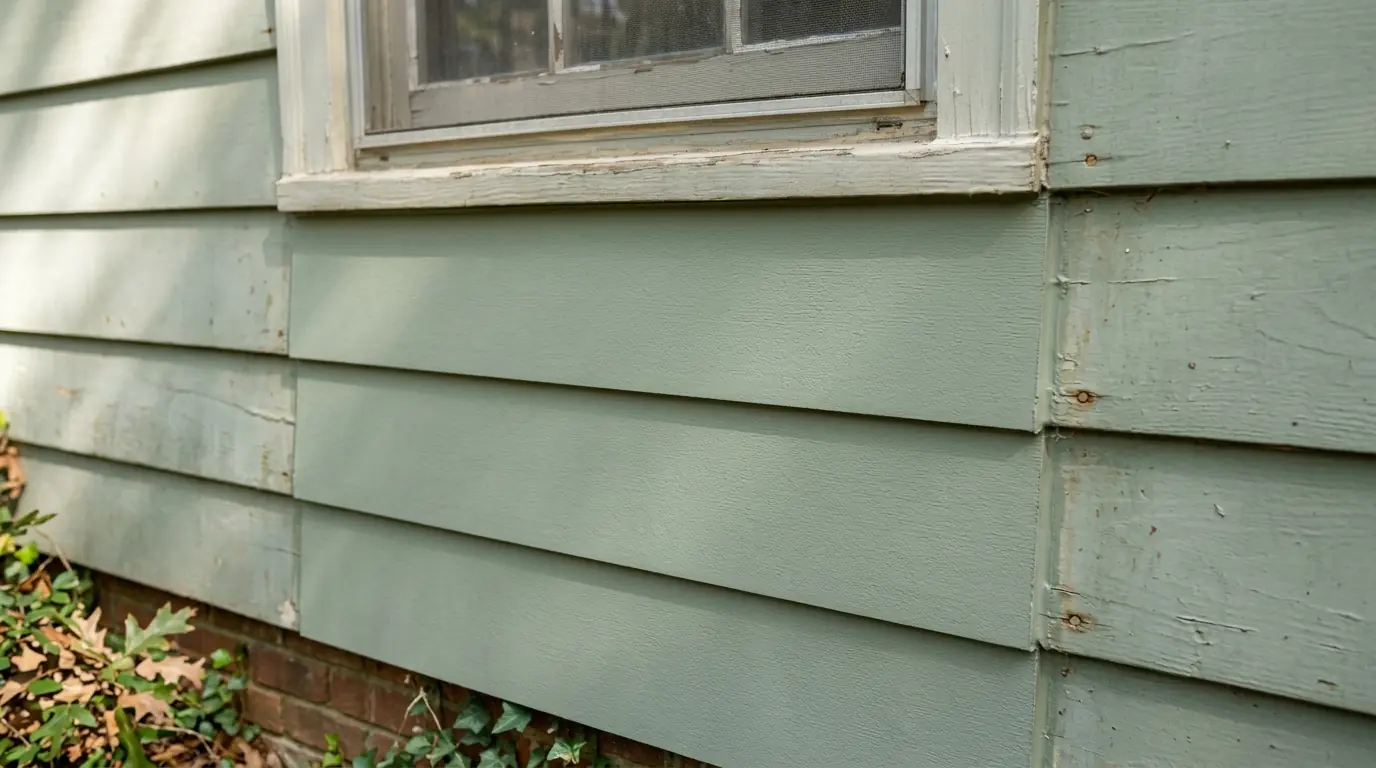
Then there is slow damage. Wood and older hardboard siding rot at the bottom edge and below windows, paint fails and lets water into the grain, and caulk joints at trim dry out and open up. Each of these is repairable when caught early.
Aluminum siding still shows up on a fair number of older homes around central Arkansas. It dents rather than cracks, and new matching panels are hard to find, so repairs there often involve careful straightening, salvaged panels or a planned move to a different material on one wall.
The hardest part of siding repair is often making it disappear. Vinyl colors fade over years of Arkansas sun, and profiles change as manufacturers update their lines. A brand new panel can look noticeably brighter than the wall around it.
We start by identifying the profile, reveal and brand if we can. When an exact match is not available, we have a few options: borrow matching panels from a hidden wall such as behind a deck or on the back of the garage and put the new panels there, or repair a full wall from corner to corner so any small shade difference falls at a natural break.
Painted fiber cement and wood are easier. New boards are primed and painted, and we can repaint the full wall face so the color reads evenly.
A rotted board is usually a symptom. Water got in somewhere above it, often at a window head with no flashing, a roof-to-wall joint without kick-out flashing, or a gutter that overflows onto the wall.
When we remove damaged siding, we look at the house wrap and sheathing behind it. Soft sheathing gets replaced, torn wrap is patched and lapped correctly, and the flashing problem that let water in is fixed. You see photos of what is behind the wall before we close it up.
Skipping this step is how a homeowner ends up paying for the same repair twice. A new board over a wet wall rots just like the old one did.
Termites are worth a mention here. Rotted wood siding near the ground can also hide termite damage in the sill plate and studs, and if we see mud tubes or hollow framing, we stop and show you so a pest professional can look before we close the wall.
From roughly March through June, central Arkansas sees its main run of severe thunderstorms, hail and straight-line winds. Vinyl becomes more brittle in cool weather, so an early spring hailstorm can crack panels that would only dent in summer.
After a storm, we walk the exterior and photograph siding damage along with any roof and gutter damage, since adjusters usually look at the whole property. If you are filing a claim, those photos and measurements help show what the storm actually did.
Wind damage often starts at a weak spot. Panels that were nailed too tight or too far apart are the first to unzip, so we check nailing on the surrounding area and fix it while we are there.
Repair is the right call when damage is limited to a few areas and the rest of the siding is sound. Once the damage is spread across several walls, the siding is brittle with age, or rot shows up in many places, a full replacement may cost less over time.
We give you a written price for the repair and, if it makes sense, a comparison price for residing that wall or the whole house. You decide with the numbers and photos in front of you.
Age of the siding counts too. Vinyl that cracks when you press it gently, or wood siding that needs paint every two or three years, is telling you it is near the end. Repairs still help, but they buy less time.
Some of the best siding repairs are small. Recaulking trim joints, resetting a loose corner post or adding a kick-out flashing at a roof line can stop years of hidden damage for a modest cost.
We also look at clearances. Siding that runs down into mulch or soil wicks water and invites termites. Pulling soil back or trimming the bottom course to leave a gap, along with keeping sprinklers from spraying the wall, helps any siding last longer in our humid climate.
If you notice a single panel loose after a storm, it is worth a call before the next wind lifts its neighbors too. A loose panel lets rain hit the wall behind it every time a storm comes from that direction.
These typical 2026 ranges cover most siding repairs around Little Rock. Matching older siding can add to the total.
| Job | Typical range | What drives it |
|---|---|---|
| Small vinyl repair, a few panels | $285 to $690 | Color match and height of the wall |
| Wood or fiber cement board replacement | $345 to $960 | Number of boards and painting needed |
| Full wall section repair | $1,140 to $3,480 | Wall size, sheathing repairs and material |
| Kick-out or window head flashing fix | $195 to $585 | Siding removal and trim work around it |
| Sheathing replacement per sheet | $85 to $165 | Framing damage found behind the sheathing |
Hidden rot behind the siding and how hard the existing color is to match are the main price drivers. See the full roof pricing guide.
How the job goes
We walk every wall, note the damage and photograph it for you or your adjuster.
Siding profile, color and brand are identified, and matching options are explained.
Damaged siding comes off and the wrap, sheathing and flashing behind are inspected.
Wet sheathing is replaced, flashing problems fixed and wrap lapped correctly.
New siding goes up, trim is sealed, painted products are painted and the yard is swept for nails.
Often we can get close, but years of sun fade vinyl, so a new panel may look brighter. One common fix is moving original panels from a hidden wall to the repair area and putting new panels where they will not be seen. Another is repairing a full wall so any difference falls at a corner. We show you options first.
Many homeowner policies cover sudden hail damage to siding, but coverage, deductibles and how matching is handled depend on your policy. We photograph and measure the damage after a storm, along with any roof and gutter damage, so you have clear documentation. Your insurance company makes the coverage decision, and we explain what we found plainly.
Usually because the bottom course sits too close to soil, mulch or a roof, so it wicks water, or because water is entering higher up and running down behind it. Sprinklers spraying the wall make it worse. We fix the clearance, check the flashing above and replace the damaged boards so the new ones stay dry.
If only a few panels blew loose and the rest are in good shape, repair is usually the better value. If damage covers several walls or the siding is old and brittle, replacement may make more sense. We give written prices for both and show you photos of every wall so you can compare honestly.
Yes. We replace damaged fiber cement and engineered wood boards with matching profiles, prime and seal cut ends, and paint them to match. Swollen engineered siding near the ground usually points to a clearance or water problem, so we fix that as part of the repair to keep the new boards from failing the same way.
Related work
New vinyl, fiber cement and engineered wood siding installed over a proper weather barrier with flashed windows and trim.
How we handle itFull roof assessment after a severe storm, covering debris impacts, mixed hail and wind damage, gutters and the attic below.
How we handle itSlope-by-slope hail inspection with marked test squares, soft-metal checks and photos that show exactly where the stones hit.
How we handle itRotted fascia and soffit boards replaced, vents restored and gaps sealed so water, squirrels and birds stay out of the roof edge.
How we handle itTalk to a roofer nowCall and describe what you are seeing. We answer around the clock.
Call (501) 387-1152