Attic Insulation
Blown-in insulation, air sealing and vent baffles that help attics in hot, humid central Arkansas summers.
How we handle itNew roofs & materials
An attic that cannot breathe cooks shingles from below and traps moisture against the wood. We measure your attic, find where air is stuck, and set up intake and exhaust that work together.
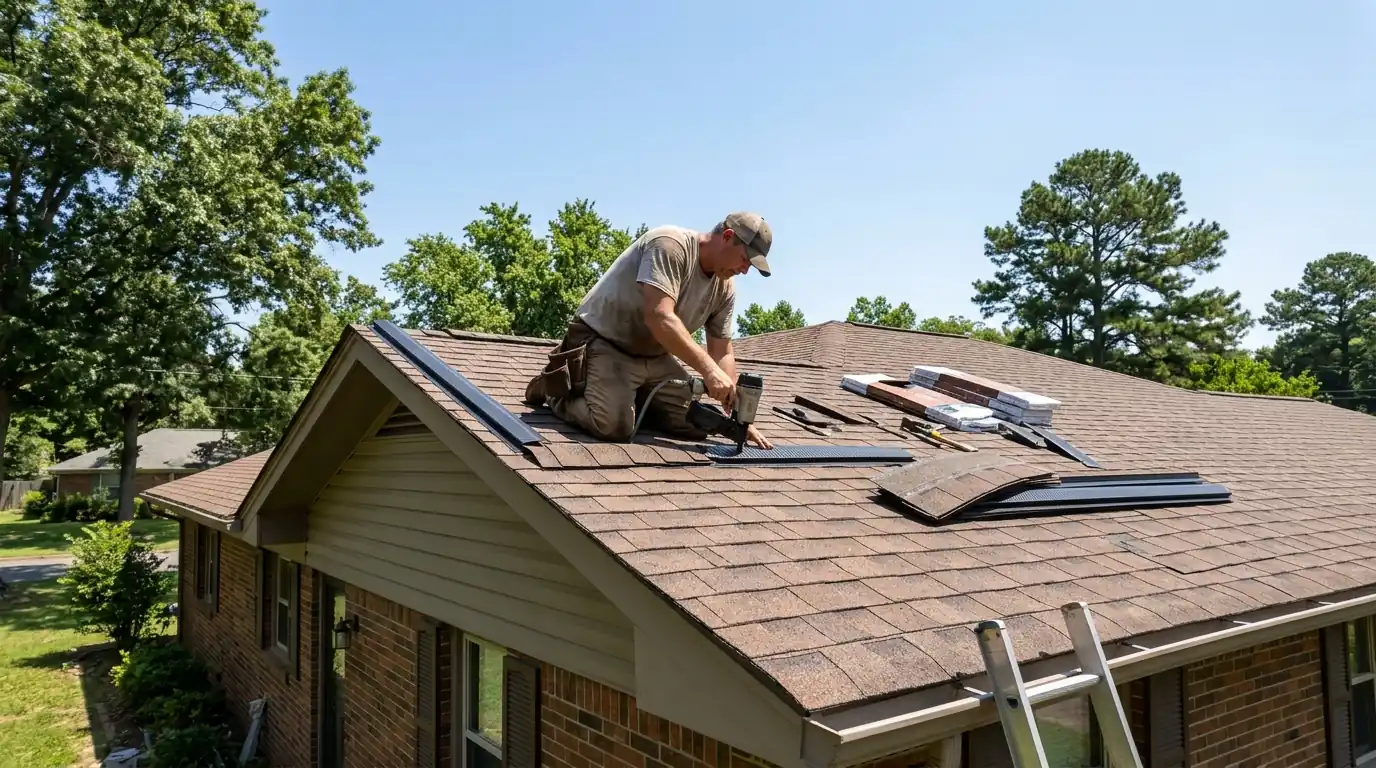
Roof ventilation is the system of intake vents at the eaves and exhaust vents near the ridge that moves air through the attic. In Little Rock, adding ridge vent typically costs $520 to $1,380, and a full balanced system with soffit intake runs $1,150 to $3,400. Most ventilation upgrades take one day, or are done during a re-roof at lower added cost.
Central Arkansas summers are long, hot and humid. A dark roof sitting in direct sun heats the attic well above outdoor temperature, and without a way to vent that heat, it radiates down into ceilings and pushes the AC to run longer.
That same trapped heat bakes shingles from underneath. Shingles on a poorly vented roof can curl, blister and lose granules earlier than shingles on a roof with good airflow, and many manufacturers list proper ventilation as a condition in their warranty terms.
Humidity is the other half of the problem. Warm, moist air from the house rises into the attic, and when the deck cools at night, that moisture condenses on the wood. Over time you get mold, rusted nails and soft sheathing.
Good ventilation is a loop. Cooler air enters low at the soffits or eaves, moves up along the underside of the roof deck, and exits high at the ridge. Warm air rises on its own, so a balanced system keeps air moving with no motors.
Balance is the key word. If a roof has plenty of exhaust but blocked or missing intake, the vents pull air from the house instead, drawing conditioned air into the attic. If there is intake but no exhaust, heat simply builds up at the peak.
We figure the net vent area your attic needs based on its floor size, then split it between intake and exhaust. Building code commonly calls for a ratio tied to attic area, and we work to that standard as a starting point.
The most frequent issue is blocked soffits. Blown insulation gets pushed into the eaves and seals off the intake, or the soffit was solid vinyl or wood with no vents at all. From the outside the house looks vented, but no air actually comes in.
Mixed exhaust is the next. A roof with a ridge vent, a few box vents and a gable vent can short-circuit, with the vents pulling air from each other instead of from the soffits. Removing the extra exhaust often improves airflow even though it means fewer vents.
We also see bathroom and dryer fans that dump into the attic instead of venting outside. That adds a steady stream of moisture right where it does the most harm, and rerouting those ducts through a proper roof or wall cap is often a quick, inexpensive fix.
Ridge vents that were installed over a slot that was never cut are more common than you might think. The vent sits on the peak and looks right from the driveway, but the decking underneath is solid, so no air moves at all. We check from the attic side for daylight along the ridge.
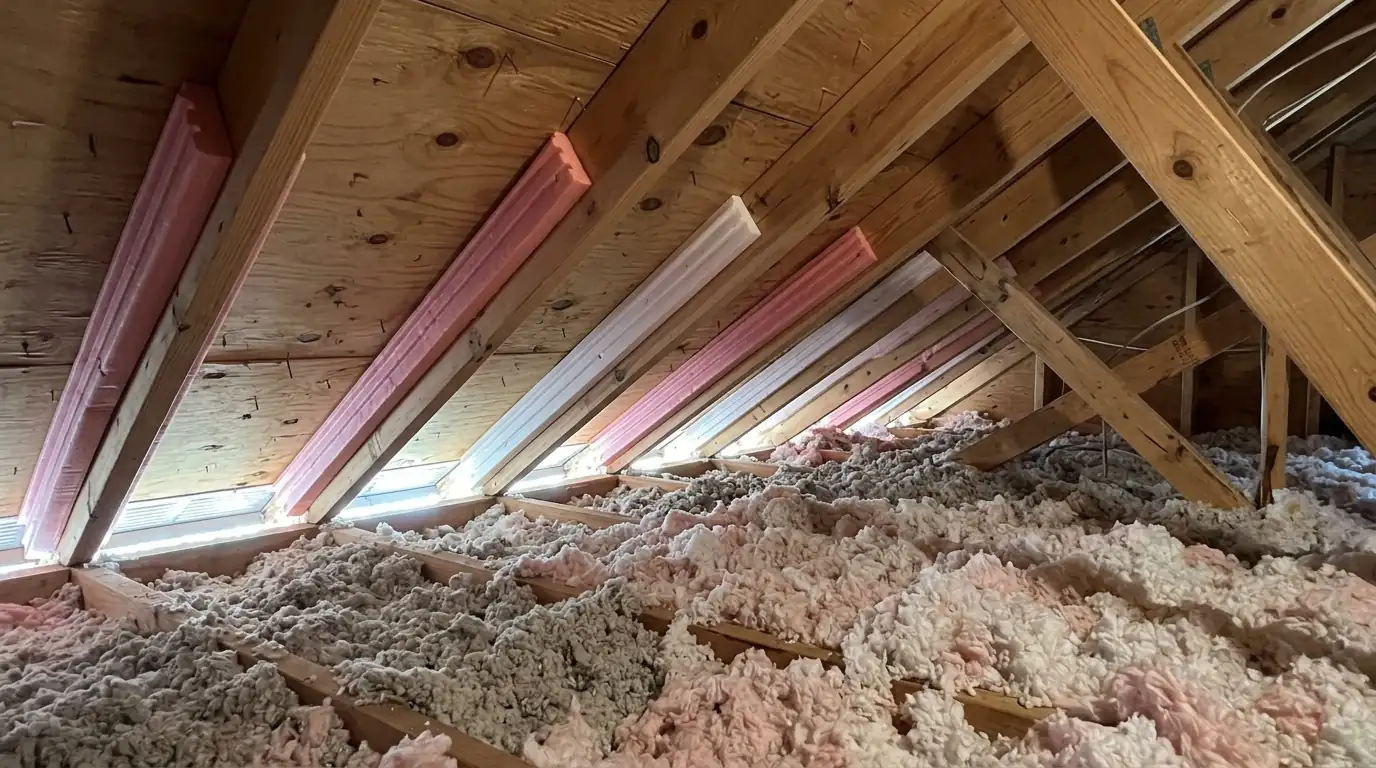
For most pitched roofs with a continuous ridge, a shingle-over ridge vent is the cleanest option. It runs the length of the peak, blends in with the cap shingles, and exhausts evenly across the whole attic.
Hip roofs with short ridges sometimes need box vents or hip vents to reach enough exhaust area. We lay those out so they sit high on the roof and are spread across the attic spaces they serve.
Powered attic fans and solar fans can help in certain cases, but they can also pull conditioned air out of the house through ceiling gaps. We usually recommend a passive balanced system first, and we will explain plainly if a fan makes sense for your attic.
The best time to fix ventilation is when the roof is already being replaced. Cutting a ridge slot, adding intake vents at the edge, and removing old box vents are simple tasks once the shingles are off, so the added cost is lower.
If your home has little or no soffit overhang, edge intake vents installed under the first course of shingles can bring air in at the eaves. That option has helped many older Little Rock homes with short overhangs get proper intake for the first time.
A re-roof is also when we can see the decking from above and spot any condensation damage the old ventilation caused. Soft or stained sheets get replaced at that point, and the new airflow keeps the fresh wood dry going forward.
Homeowners usually notice that upstairs rooms are a bit easier to cool in summer and that the attic feels less stuffy. In winter, the attic stays closer to outdoor temperature, which helps prevent ice dams during the occasional central Arkansas ice storm.
Over the years, the bigger payoff is in materials. Drier decking, less nail rust and cooler shingles all add up to a roof that lasts closer to its full rated life. We show you photos of the soffits, baffles and vents when the job is done.
Ventilation costs depend on roof shape, how much intake is missing, and whether the work happens during a re-roof.
| Job | Typical range | What drives it |
|---|---|---|
| Add shingle-over ridge vent | $520 to $1,380 | Ridge length and whether the slot must be cut fresh |
| Add soffit intake vents and baffles | $640 to $1,850 | Number of rafter bays and soffit material |
| Full balanced ventilation system | $1,150 to $3,400 | Roof size, hip versus gable, and edge intake needs |
| Reroute bath or dryer duct outside | $245 to $590 | Duct length, roof cap versus wall cap |
| Ventilation added during a re-roof | $385 to $1,240 | Added cost over the re-roof price for the same work |
Homes with no soffit overhang or several separate attic spaces usually land toward the top of these ranges. See the full roof pricing guide.
How the job goes
We measure attic floor area, check existing intake and exhaust, and look for moisture, mold and blocked soffits.
We calculate how much intake and exhaust the attic needs and choose the vent types that fit your roof shape.
Soffit vents are added or cleared, and baffles are set so insulation cannot block the airflow path.
We cut and install ridge vent or high vents, remove conflicting exhaust, and seal old openings.
Bath and dryer ducts that end in the attic are routed outside, and we show you photos of the finished work.
It depends on the attic floor area and whether there is a vapor barrier at the ceiling. A common building code standard ties vent area to attic size and splits it between intake and exhaust. We measure the attic, calculate the net vent area needed, and lay out vents that hit that number without mixing exhaust types that fight each other.
Yes. We can cut a ridge slot and install ridge vent, add soffit intake, or reroute bath fans on an existing roof. It costs a little more than doing it during a re-roof because shingles near the ridge have to be removed and replaced, but it is a one day job on most homes.
Not usually. Powered fans can pull conditioned air from the house through ceiling gaps and light fixtures, which can work against your AC. A balanced passive system with good soffit intake and ridge exhaust handles most attics well. We will tell you if your attic is one of the cases where a fan actually helps.
Many shingle manufacturers list proper attic ventilation as part of their warranty terms, because heat and moisture from a poorly vented attic can shorten shingle life. Terms depend on the product and registration, so we suggest checking the paperwork for your shingles. Proper intake and exhaust protects the roof whether or not a claim ever comes up.
Good airflow is one of the main ways to keep attic moisture down, so it helps prevent new mold growth. It will not remove mold that is already there. We also look for bath fans venting into the attic and air leaks from the house below, since those add moisture that ventilation alone cannot fully handle.
Related work
Blown-in insulation, air sealing and vent baffles that help attics in hot, humid central Arkansas summers.
How we handle itA complete tear-off to the deck with new underlayment, flashing, vents and shingles, finished in a day or two on most homes.
How we handle itRotted, soft or delaminated roof sheathing cut out and replaced so new shingles or metal have a solid base to fasten into.
How we handle itRotted fascia and soffit boards replaced, vents restored and gaps sealed so water, squirrels and birds stay out of the roof edge.
How we handle itTalk to a roofer nowCall and describe what you are seeing. We answer around the clock.
Call (501) 387-1152