Roof Flashing Repair
Replacement of failed step, apron, counter and vent flashing where roofs meet walls, dormers, skylights and pipes.
How we handle itNew roofs & materials
A slate roof that leaks rarely needs to come off. Most problems trace to a few broken stones, rusted nails or tired flashing, and our crews fix those without trampling the rest of the roof.
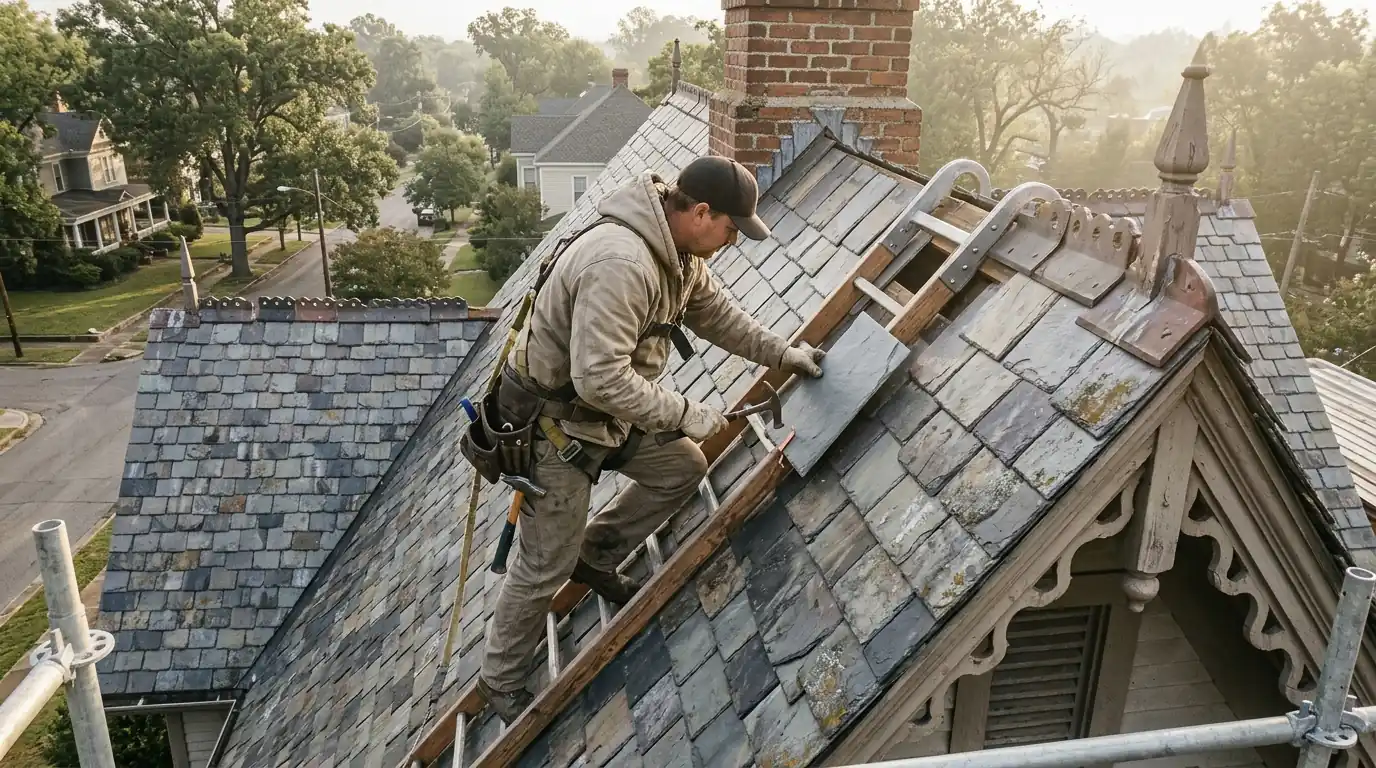
Slate roof repair means replacing broken or slipped slates with matched stone, refastening loose pieces with copper hooks, and rebuilding worn flashing at chimneys, valleys and walls. Typical Little Rock repairs run $385 to $960 for a handful of slates and $1,850 to $5,400 for larger sections or flashing work. Small repairs usually take one day once matched slate is on hand.
Good slate can outlast the house it sits on. What gives out first is everything around the stone: the iron nails that held each piece, the flashing at the chimney, and the felt underneath. When a nail rusts through, the slate slides down and leaves a gap that lets water reach the deck.
That is why a slate roof with a leak is usually a repair job. We look for the specific pieces that moved, cracked or broke, and we check the metalwork that ties the roof to chimneys, dormers and walls. On most older roofs we find that 95 percent of the stone is still sound and worth keeping.
Replacing a sound slate roof with shingles throws away material that still has years left in it. Repair keeps the look of the house and usually costs a fraction of a new roof.
Slate shows up most on the older housing stock in neighborhoods like the Quapaw Quarter and Hillcrest, where steep roofs, turrets and dormers were built to carry heavy stone. Some of these roofs are original, and some have been patched over the years with whatever was handy, including asphalt shingles, roofing cement and mismatched slate.
Those old patches are often the source of today's leak. Tar smeared over a cracked slate holds for a season or two, then shrinks and lets water track under the stone beside it. We remove the patch, set a proper slate, and leave the surface clean so the next inspection is easy.
If a home sits in a local historic district, exterior changes may need review before work starts. Matching the existing slate in color, size and thickness keeps a repair in character with the house, and we can talk through what that looks like before any stone goes up.
Spring hail is the biggest threat. Large stones can crack slate, especially thinner pieces or ones already weakened by age. After a hailstorm we look for fresh breaks with clean, bright edges, which are easy to tell apart from old weathered cracks.
Summer heat and humidity are hard on the parts under the stone. Old felt dries and crumbles, and moisture trapped against the deck speeds up nail rust. Pine and oak limbs that fall during straight-line winds can shatter several slates in a row and dent the copper or galvanized valleys below.
Winter freeze and thaw does its damage slowly. Water that gets into a crack expands when it freezes and splits the slate further, so a hairline crack in January can become a missing piece by April.
A repair only looks right if the new stone matches the old in color, thickness and length. We measure the exposure on your roof and look for salvaged or new slate that fits. Some colors weather over time, so a close match today blends in further as it ages.
Each replacement piece is set with a copper slate hook or a copper nail and strap method, depending on the roof. We do not face nail slates and smear them with caulk, because that method fails early and makes the next repair harder.
Crews work from roof ladders and hooks rather than walking on the stone. Slate breaks under boots, and a careless crew can turn a five slate repair into a fifty slate repair in an afternoon.
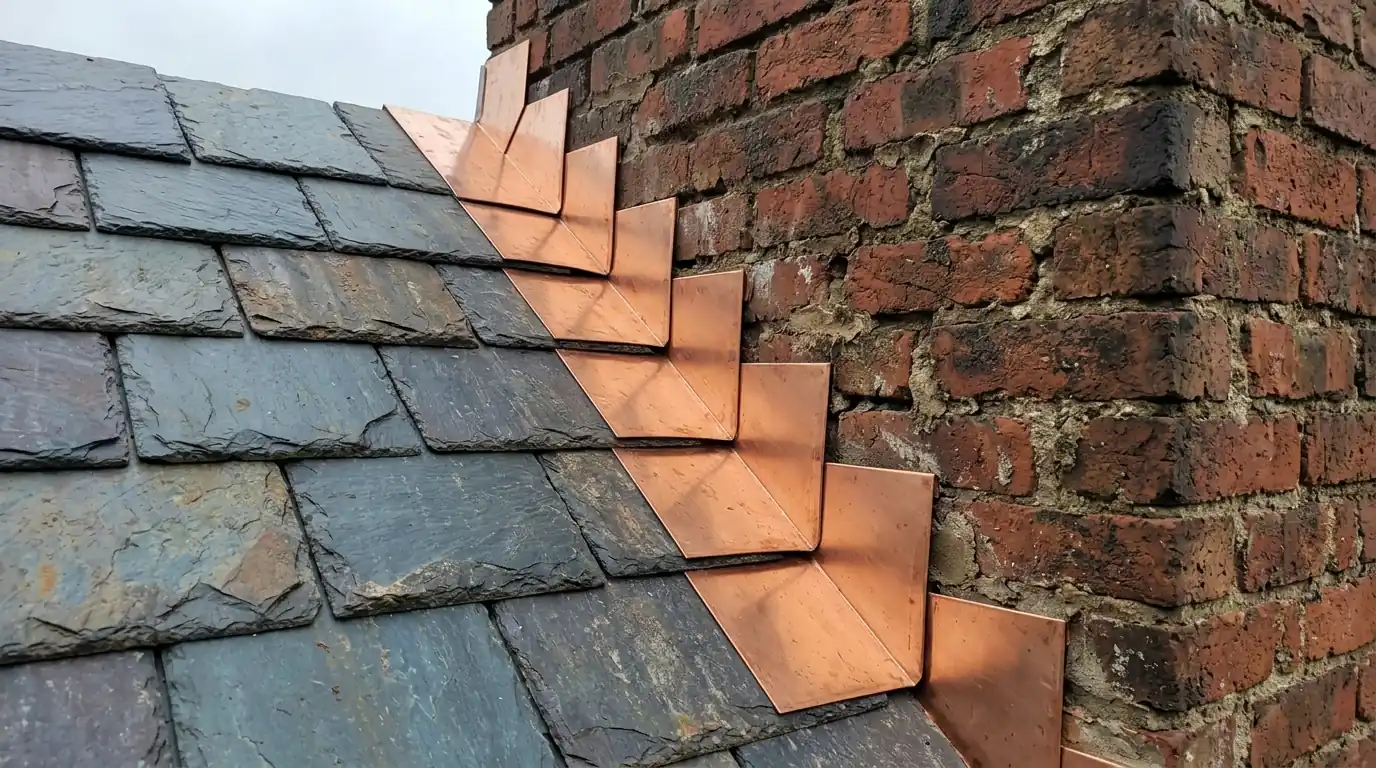
Many slate leaks are really flashing leaks. Chimney step flashing, counterflashing and open valleys were often built from copper or terne metal, and decades of expansion, acid rain and old repairs can wear holes in them.
Rebuilding flashing on slate means lifting stones carefully around the area, replacing the metal, and resetting the same slate where possible. We photograph the old metal before it comes out so you can see the holes and the reason for the work.
Ridge caps also need attention. Mortar or old cement on the ridge cracks over time and lets water run straight down into the attic, and a clean ridge rebuild is often a modest fix that stops a stubborn leak.
There is a point where a slate roof needs more than repair. If the stone itself is flaking, turning soft or delaminating across large areas, new pieces will keep failing around it. Soft slate sounds dull when tapped instead of ringing, and that is one of the checks we make.
Even then, the decision is yours. We show you photos of what we found, explain what a repair buys you and what a replacement would involve, and give a written price before work starts. Most of the time, a well kept slate roof still has plenty of life left once the failed pieces and flashing are dealt with.
Slate repair is priced by how many stones are involved, how hard they are to reach, and whether flashing has to be rebuilt.
| Job | Typical range | What drives it |
|---|---|---|
| Replace 3 to 10 broken slates | $385 to $960 | Roof pitch, access and how easy the slate is to match |
| Section repair with underlayment | $1,850 to $5,400 | Size of the area and whether deck boards need work |
| Chimney flashing rebuild on slate | $1,240 to $3,180 | Chimney width, copper versus other metal, slate to lift |
| Open valley replacement | $1,680 to $4,350 | Valley length and how many courses come up on each side |
| Ridge rebuild or reset | $640 to $1,780 | Ridge length and the type of cap on the roof |
Matched slate availability and steep, tall roofs with turrets or dormers are the two things that move these numbers the most. See the full roof pricing guide.
How the job goes
We inspect from roof ladders and hooks so the stone is not stepped on, and we photograph every broken, slipped or patched slate.
We measure thickness and exposure and find new or salvaged slate that matches your roof in color and size.
Broken pieces come out with a slate ripper, and new stone is set with copper hooks or copper nails and straps.
Worn chimney, valley or wall flashing is replaced with new metal and the original slate is reset around it where possible.
We clear shards and old patch material, run a magnet sweep, and show you before and after photos of each area.
Usually, yes. We measure the thickness and exposure of your slate and look for new or salvaged stone in the same color family. Some slates weather and shift color over the years, so a close match blends further with time. If an exact match is hard to find, we can pull matching pieces from a hidden spot and use the new stone there instead.
Steel nails rust, and rusted nails are the most common reason slate slips off older roofs in the first place. Copper hooks and copper nails resist corrosion and let us install a single slate without disturbing the pieces around it. Face nailing with caulk over the head is a shortcut that tends to leak within a few years.
It can if the crew walks on the stone. Our crews work from roof ladders and hooks that spread the weight and keep boots off the slate. That is slower than walking a shingle roof, but it keeps a small repair from turning into a big one and protects stone that still has decades left in it.
In most cases it is. The stone on many older roofs is still sound, and the leaks come from slipped pieces, worn flashing or old tar patches. Fixing those keeps the original character of the house and costs far less than a full replacement. We show you photos of what we find so you can weigh the choice yourself.
A handful of broken slates can usually be replaced in a single day once matched stone is on hand. Flashing rebuilds at a chimney or a long valley may take two to three days because slate has to come up and go back down carefully. Finding matched slate sometimes adds a short wait before the work date.
Related work
Replacement of failed step, apron, counter and vent flashing where roofs meet walls, dormers, skylights and pipes.
How we handle itWe find whether the water comes through chimney flashing, the crown, the brick or a missing cricket, then fix that source.
How we handle itRebuilding worn or leaking roof valleys with fresh underlayment, valley metal and properly cut shingles that handle heavy downpours.
How we handle itA hands-on roof and attic check with labeled photos, an honest remaining life estimate and a written price for any repair needed.
How we handle itTalk to a roofer nowCall and describe what you are seeing. We answer around the clock.
Call (501) 387-1152