Roof Replacement
A complete tear-off to the deck with new underlayment, flashing, vents and shingles, finished in a day or two on most homes.
How we handle itNew roofs & materials
Shingles are only as good as the wood they are nailed to. When decking goes soft from leaks or attic moisture, we cut out the bad sections, install new sheathing, and give you a clear count of what was replaced.
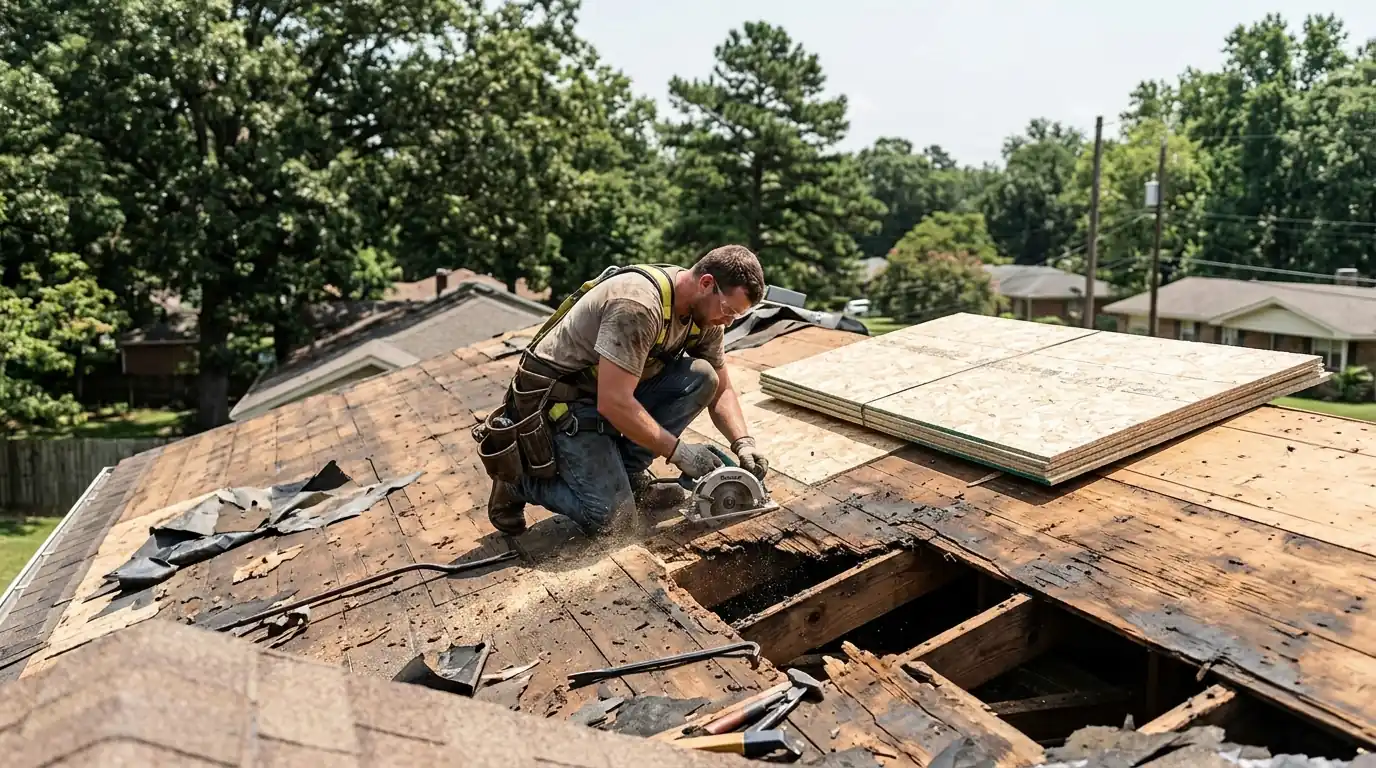
Roof decking replacement means removing rotted, soft or damaged plywood, OSB or plank sheathing and installing new panels before the roof covering goes back on. In Little Rock, replacement typically runs $78 to $124 per 4 by 8 sheet installed during a re-roof, and $1,450 to $3,900 for a stand-alone repair of a damaged section. Most decking work is finished the same day as the tear-off.
Decking, also called sheathing, is the layer of plywood, OSB or wood planks that spans the rafters and holds every nail in your roof. It carries the weight of crews, snow and ice, and it keeps the roof covering flat and tight.
Wood fails when it stays wet. A slow leak at a pipe boot, a missing flashing piece or a clogged valley can soak one area for months before a ceiling stain shows up. Poor attic ventilation does the same thing more slowly, letting warm moist air condense on the underside of the deck every cool night.
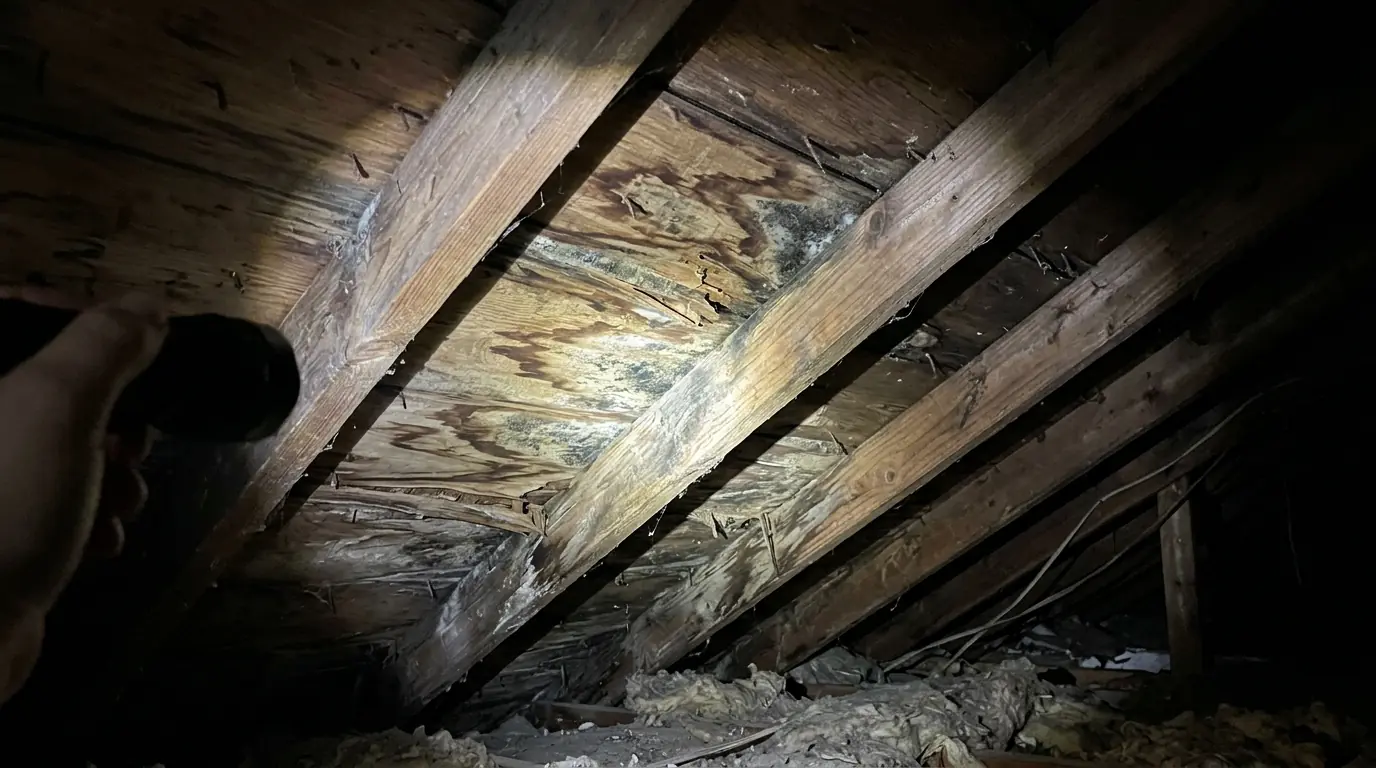
OSB swells and loses strength when wet, and the edges start to crumble. Plywood tends to delaminate, with the layers separating and bubbling. Old plank decks can rot at the board ends or split where nails have been driven too many times over several re-roofs.
Termites and carpenter ants sometimes find wet roof wood as well, especially along eaves where fascia and decking meet. If we see insect damage while the roof is open, we photograph it and suggest you have a pest company look before the new roof goes on.
Some decking problems show from the outside. A roof that dips between rafters, a wavy line across the shingles, or spots that feel spongy underfoot all point to wood that has lost strength. From the attic, dark staining, mold spots and daylight at sheet edges tell the same story.
The full picture comes once the old roof is off. Our crew walks every sheet, probes suspect areas, and marks anything soft, broken or delaminated. We photograph those areas and show you the count before we cut, so you are never surprised by a number on the final bill.
This is why a good re-roof price lists decking as a per sheet line rather than burying it. You know the rate up front, and you only pay for what actually needed replacement.
Hot, humid summers in central Arkansas are hard on roof decks. Attics can get very hot during the day, then moisture condenses as the house cools at night. Without good intake and exhaust ventilation, that cycle repeats for months and leaves the underside of the deck damp.
Spring storm season adds direct water damage. Hail can crack shingles and let water reach the wood, and straight-line winds can tear off shingles and expose bare sheathing to heavy rain. If a damaged roof sits for weeks waiting on an insurance decision, the deck under it can go soft.
Trees add their own share. Pine needles and oak leaves pack into valleys and behind chimneys, holding water against the roof long after a storm passes. Those are the exact spots where we most often find rotted decking on older Little Rock homes.
Most homes built in recent decades have OSB or plywood sheathing, and we replace bad sections with new panels of matching thickness so the roof stays flat. Panels are fastened to the rafters on the proper nailing schedule, with spacing at the edges to allow for expansion in our humid summers.
Many older Little Rock houses have plank decks made of individual boards. These often hold up well, but gaps between boards can be too wide for modern shingles. In those cases we either replace failed boards and fill gaps, or overlay the planks with new sheathing so shingle nails have solid wood to grab.
When the rafters themselves show damage, we tell you. Sistering a cracked rafter or reinforcing a sagging section is sometimes needed before new decking can go down, and we price that separately so the scope stays clear.
Replacing rotted decking without fixing the reason it rotted only buys time. Before the new roof goes on, we look at what caused the damage, whether that was a bad flashing detail, a failed pipe boot, a valley that never drained right, or an attic with no real airflow.
Common fixes include adding ice and water membrane in valleys and around chimneys, reworking flashing at walls, and balancing ridge and soffit vents. These are small additions during a re-roof that protect the new wood for the life of the roof.
Ventilation is the fix homeowners most often skip, because it is out of sight. Yet an attic that stays damp every summer night will rot new sheathing just as surely as a leak. We check the soffits for blocked intake and look at where bath fans actually end before we call a decking job finished.
When storm damage soaks the decking, the replacement wood may be part of the claim. We photograph each bad sheet, note the count, and keep those records together so you can share them with your adjuster.
What a policy covers depends on the policy and the cause of damage. Wood that rotted slowly from an old leak is often treated differently from wood soaked by a recent storm, so we keep the photos clear and dated.
Decking is priced per sheet during a re-roof, or as a section repair when only one area is damaged.
| Job | Typical range | What drives it |
|---|---|---|
| OSB sheet replaced during re-roof | $78 to $112 | Per 4 by 8 sheet, thickness and roof pitch |
| Plywood sheet replaced during re-roof | $89 to $124 | Per 4 by 8 sheet, thickness and access |
| Stand-alone section repair | $1,450 to $3,900 | Includes removing and reinstalling the roof covering over the area |
| Overlay old plank deck with sheathing | $2,850 to $6,700 | Roof size and how many boards are already failed |
| Sister a damaged rafter | $265 to $640 | Per rafter, length and attic access |
The final decking number depends on how many sheets are actually bad once the old roof is off, which is why we show you the count before cutting. See the full roof pricing guide.
How the job goes
We look for staining, sagging and soft areas from both the attic and the roof surface, and note what likely caused them.
After the old roof comes off, the crew walks every sheet and marks anything soft, broken or delaminated.
We show you photos and the sheet count at the per sheet rate before any wood is cut.
Bad sections are removed back to solid rafters and new sheathing is fastened on the proper nailing schedule.
Membrane, flashing or ventilation fixes go in, then underlayment and the new roof covering.
Signs include sagging between rafters, soft spots underfoot, and dark staining or mold on the attic side of the sheathing. The full answer comes once the old shingles are removed and the crew can walk every sheet. We list decking as a per sheet price in the written estimate, so you know the rate before work starts.
Yes, when the damage is limited to one area. We remove the shingles or metal over the bad section, replace the decking, add underlayment and reinstall or replace the covering to blend in. If the damage is spread across several areas or the roof is near the end of its life, a full replacement often makes more sense.
Both work when the attic is well ventilated and the roof is properly flashed. Plywood tends to handle brief wetting a little better and dries faster, while OSB costs less and is very common on newer homes. We usually match the existing sheathing thickness so the roof stays flat where old and new panels meet.
Plank decks on older Little Rock homes are often still solid. We replace rotted or split boards, and if gaps between planks are too wide for modern shingles, we overlay the boards with new sheathing. That gives shingle nails solid wood to hold and keeps the original structure in place underneath.
It depends on your policy and the cause. Decking soaked by a recent storm is often handled differently than wood that rotted slowly from an old leak. We photograph each damaged sheet with a clear count so you have solid records to share with your adjuster and can ask them how your coverage applies.
Related work
A complete tear-off to the deck with new underlayment, flashing, vents and shingles, finished in a day or two on most homes.
How we handle itBalanced ridge and soffit ventilation that lets hot, damp attic air out and helps shingles, decking and AC systems last longer.
How we handle itWe follow the water back to where it actually gets in, fix that spot and stop the stain from coming back.
How we handle itWe document storm damage, meet your adjuster on the roof and write a line-item scope, while you keep control of your own claim.
How we handle itTalk to a roofer nowCall and describe what you are seeing. We answer around the clock.
Call (501) 387-1152