Gutter Guards
Micro-mesh, perforated and screen gutter guards matched to the pines, oaks and sweetgums around your home.
How we handle itGutters, siding & exterior
Gutters formed on site in one continuous length per run have no joints to drip or rust. We measure, form and hang new aluminum gutters on homes across Little Rock and central Arkansas.
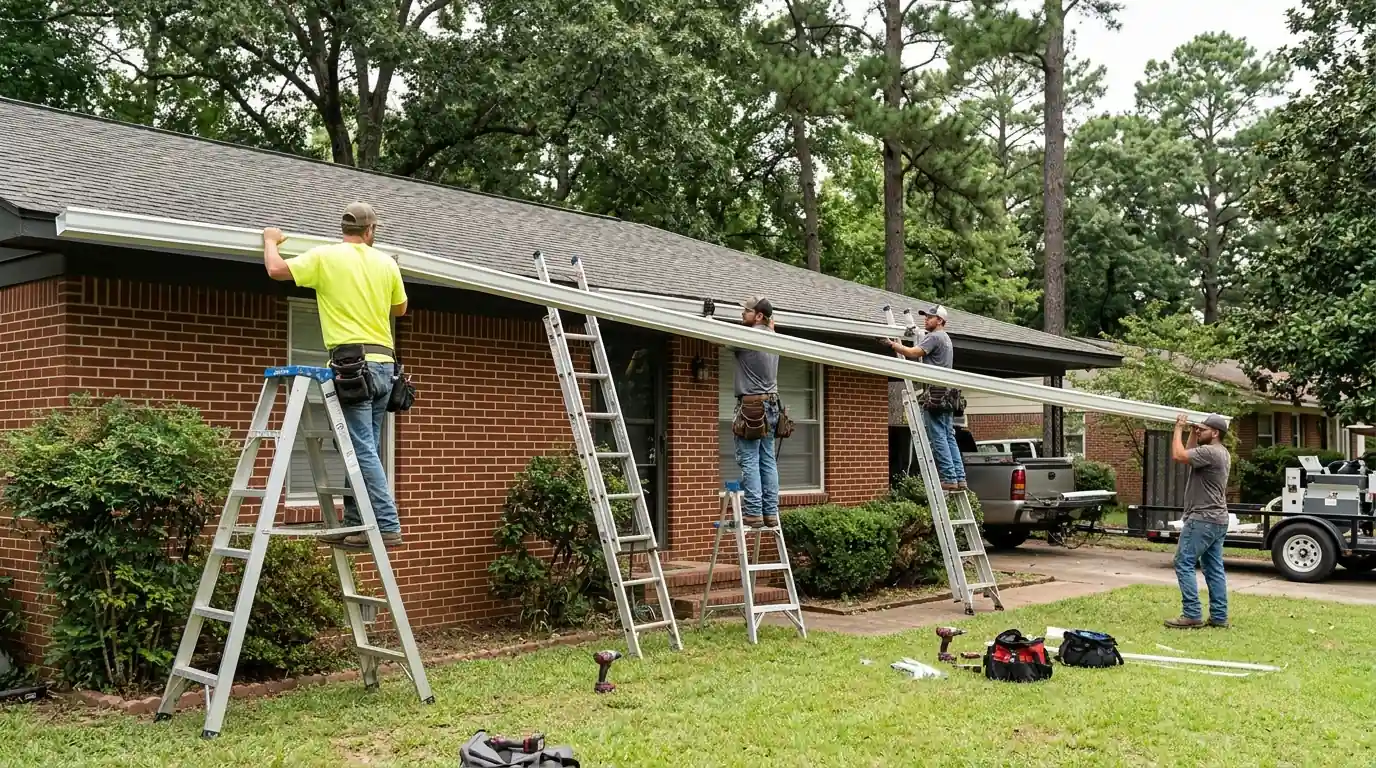
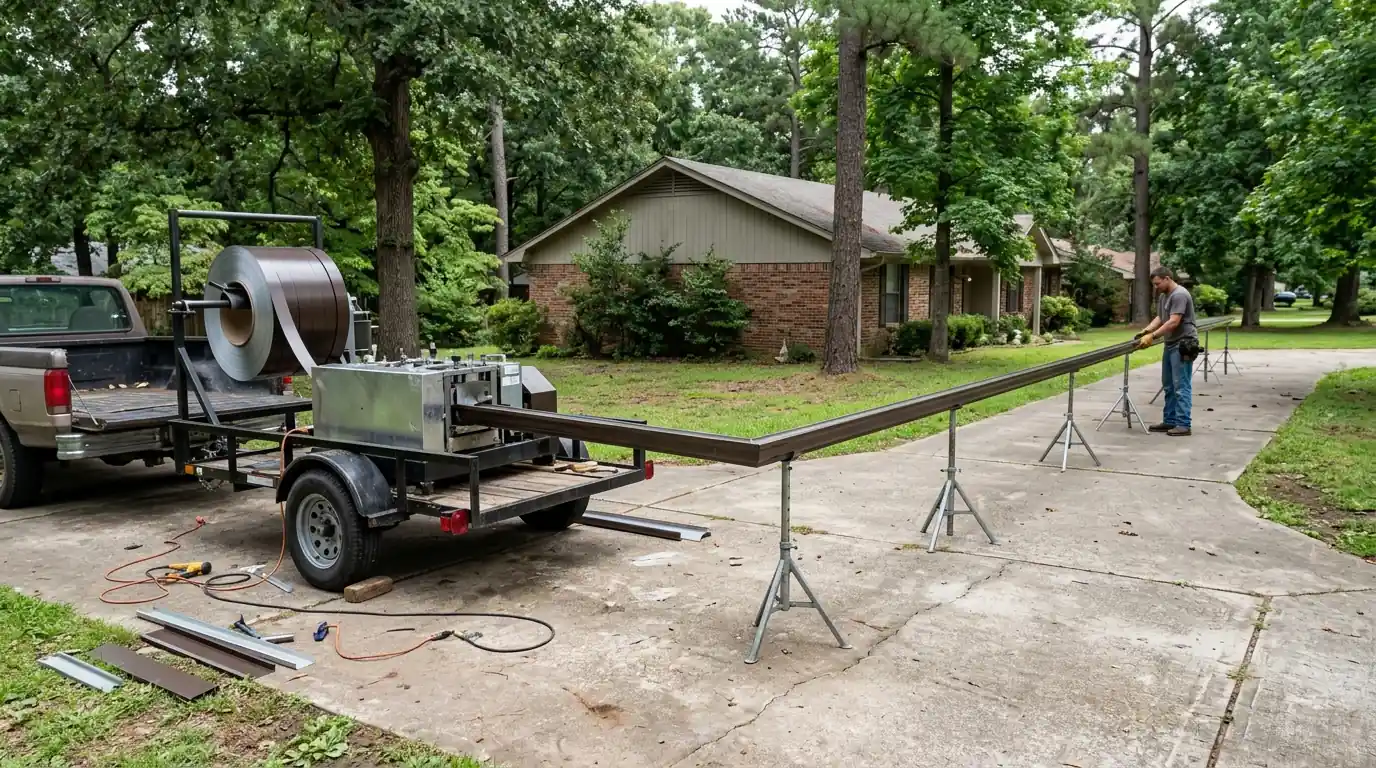
These gutters are roll-formed from a coil of aluminum right at your home, so each run is one piece with no joints except at corners. Typical Little Rock installs run $7.85 to $15.60 per linear foot, or about $1,640 to $3,870 for most homes including downspouts. Most houses are finished in a single day.
Big-box sectional gutters come in ten-foot pieces joined with connectors and sealant. Every one of those joints is a spot that can drip, separate or collect debris, and after a few Arkansas summers the sealant usually gives up.
With continuous runs, a 40-foot front wall gets one 40-foot gutter. The only joints left are at the corners and end caps, where we seal and rivet them carefully. Fewer joints means fewer leaks, less ice and debris catching, and a cleaner line along the roof edge.
There is also a cleaner look to one-piece runs. Without seams every ten feet, the gutter reads as a single line of trim, which suits the long low rooflines of ranch homes in Little Rock neighborhoods from Cloverdale to Pleasant Valley.
Little Rock storms can dump a lot of water in a short burst, especially in spring and early summer. Gutters that were fine for light rain overflow in those downpours, and the water drops straight onto foundations, flower beds and walkways.
Many homes do well with standard 5-inch K-style gutters. Steep roofs, long valleys that concentrate water at one corner, and large two-story roof planes often need 6-inch gutters with 3 by 4 inch downspouts. We look at roof area, pitch and where valleys empty before choosing a size, not just the length of the wall.
Tree cover matters too. Homes under pines and oaks fill gutters faster, so we may suggest larger downspouts that pass needles and leaves more easily, or plan for gutter guards from the start.
Gutters also protect more than the foundation. Water that pours off a roof edge without a gutter splashes mud onto siding, rots the bottom edge of doors and soaks porch steps, and in clay soils common around central Arkansas it can keep a crawlspace damp for days after a storm.
Most of our installs use painted aluminum. It does not rust, handles our humidity well and comes in a wide range of colors to match trim, brick and siding. Heavier gauge aluminum resists dents from ladders and falling limbs better than the thinnest stock.
K-style is the common profile on Little Rock homes and holds more water for its size. Half-round gutters suit some older homes in historic neighborhoods, and we can discuss that look if it fits the house.
Color choice matters more than many people expect. A gutter that matches the fascia disappears into the roofline, while a contrasting color draws the eye to every corner and downspout. We help you decide which look suits the house before the coil is loaded.
A gutter that looks level is wrong. It needs a gentle slope toward each downspout so water moves instead of sitting and breeding mosquitoes. We snap a line along the fascia and set the pitch before the first hanger goes in.
Hidden hangers screw through the gutter into the fascia and rafter tails, spaced close enough to carry the weight of wet leaves and a full load of water. Downspouts go where they move water away from the foundation without dumping it onto a driveway or a neighbor's yard, and we add extensions or splash blocks so it lands well clear of the house.
Where a roof valley pours water into one corner, we may add a small diverter or a second downspout so the gutter does not overshoot during a hard rain. These small details prevent the common problem of water jumping the gutter right above a back door.
Old gutters that overflowed for years often leave soft or rotten fascia behind them. Hanging new gutters on bad wood means the hangers pull loose within a season or two.
When we take the old gutters down, we check every board. Rotten sections are replaced before the new gutters go up, and you see photos of what we find and the price for that wood work before we do it. We also check that the drip edge on the roof extends over the back of the gutter so water does not run behind it.
Our crew arrives with the gutter machine and coils, removes the old gutters, and makes any fascia repairs you approved. Then each run is formed to length on site, lifted into place, pitched and fastened.
Downspouts, elbows and extensions follow, and we run water through the system with a hose to check flow and look for drips at corners. Old gutters and scraps are hauled away and the yard gets a magnet sweep for screws and nails.
Before we leave, we walk the house with you, point out where each downspout drains and show you any spots where we recommend splash blocks or future grading work. Gutter guards can be added the same day if you planned for them.
These typical 2026 ranges reflect new aluminum gutter installs around Little Rock. Two-story homes and heavy fascia repairs sit at the higher end.
| Job | Typical range | What drives it |
|---|---|---|
| 5-inch aluminum gutter per linear foot | $7.85 to $12.40 | Color, home height and number of corners |
| 6-inch aluminum gutter per linear foot | $10.30 to $15.60 | Larger downspouts and heavier hangers on steep roofs |
| Downspout with elbows and extension, each | $145 to $310 | Height of the wall and length of extension |
| Old gutter removal and haul-off | $185 to $560 | Total footage and whether old gutters are steel |
| Typical single-story home, complete | $1,640 to $3,870 | Total footage, gutter size and fascia condition |
Rotten fascia, second-story runs and extra downspouts are the main things that move the price. See the full roof pricing guide.
How the job goes
We measure each run, check roof area and valleys, and mark downspout spots that move water away from the foundation.
Existing gutters come down, and fascia boards are checked and photographed for rot.
Any rotten wood you approved is replaced so new hangers bite into solid boards.
Gutters are roll-formed to length on site, pitched toward downspouts and fastened with hidden hangers.
We run water through every run, seal corners, haul away old material and sweep for fasteners.
Painted aluminum gutters that are properly pitched and hung commonly last 20 years or more in central Arkansas. They do not rust, so the usual failures are loose hangers, dents from limbs or ladders, and corner seals that dry out over time. Keeping them clear of pine needles and leaves helps them carry less weight and last longer.
Many single-story homes with moderate roof pitch do well with 5-inch gutters. Steep roofs, large roof areas draining to one side, and valleys that dump water at a corner usually need 6-inch gutters with bigger downspouts. We measure roof area and look at where water concentrates before recommending a size, since our spring downpours can overwhelm undersized gutters quickly.
Yes, and we check every board as the old gutters come down. New gutters need solid wood behind them or the hangers loosen within a season or two. Any rotten fascia is photographed and priced for you before we replace it, so you know the cost of that wood work before install day continues.
Yes. Painted aluminum coil comes in a wide range of colors, including several whites, tans, browns, grays and darker tones that suit brick homes. We bring samples so you can hold them against your trim and fascia in daylight. Downspouts are usually matched to the wall color so they blend in rather than stand out.
Downspouts should discharge water well away from the foundation, ideally several feet, so it does not soak the soil beside a crawlspace wall. We place them at corners where the ground slopes away and add extensions or splash blocks. If a spot has nowhere good to drain, we talk through options before installation rather than guessing.
Related work
Micro-mesh, perforated and screen gutter guards matched to the pines, oaks and sweetgums around your home.
How we handle itRehang sagging runs, seal dripping corners, reset pitch and reattach downspouts so your existing gutters work again.
How we handle itRotted fascia and soffit boards replaced, vents restored and gaps sealed so water, squirrels and birds stay out of the roof edge.
How we handle itA complete tear-off to the deck with new underlayment, flashing, vents and shingles, finished in a day or two on most homes.
How we handle itTalk to a roofer nowCall and describe what you are seeing. We answer around the clock.
Call (501) 387-1152