Hail Damage Roof Repair
Slope-by-slope hail inspection with marked test squares, soft-metal checks and photos that show exactly where the stones hit.
How we handle itInspections & care
After hail or wind, a clear record of the damage matters. We photograph it, meet the adjuster on site and write a detailed scope, and you handle every conversation with your insurer.
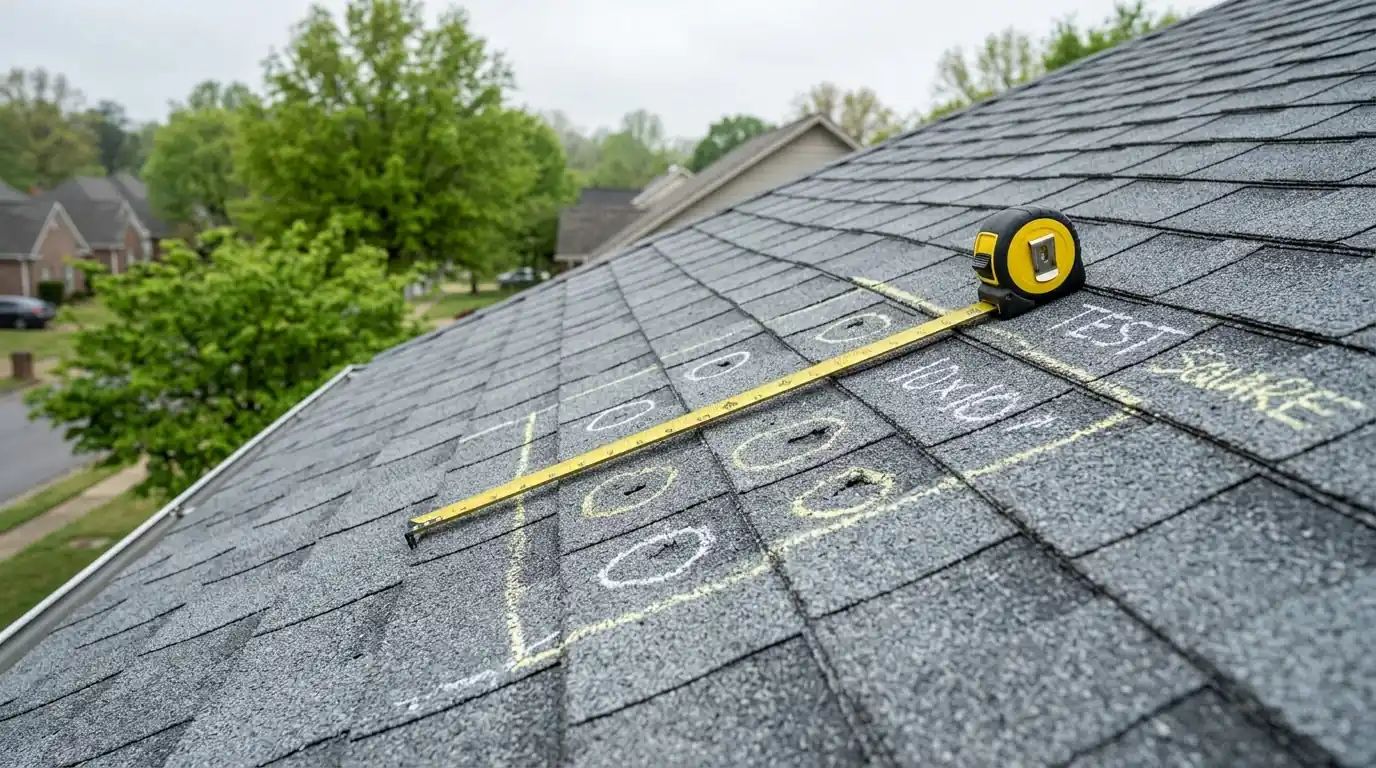
Roof insurance claim help means we inspect and photograph storm damage, meet your adjuster on the roof and write a line-item repair or replacement scope. We do not file, negotiate or decide your claim. In Little Rock, the documentation visit typically runs $135 to $260, and we can usually be on site within one to three days of your call.
Storm claims go smoother when the facts are clear and easy to check. Our part is the roofing side: finding the damage, recording it carefully and explaining it to the adjuster in roofing terms.
You get copies of everything. The photos and notes belong to you, and you can send them to your insurer however you choose.
We are roofers, not public adjusters, and we do not act as one. We do not file your claim, speak for you in coverage discussions, negotiate your settlement or interpret your policy. Those conversations happen between you and your insurance company.
We also cannot promise that a claim will be approved or what it will pay. Coverage depends on your policy, your deductible, the age of the roof and the adjuster's findings. What we can offer is accurate documentation and a straight answer about what we see.
One more line we hold: we do not waive, cover or rebate your deductible. The deductible is your share under the policy, and the written price you get from us reflects the real cost of the work.
Spring is the busy season here. From about March through June, central Arkansas sees hail and severe thunderstorms, and straight-line winds can peel shingles off a whole slope in minutes. Many homeowners do not notice hail damage at all because bruised shingles look normal from the ground.
That delay can matter. Most policies expect damage to be reported within a set period, and that window varies by insurer. Check your own policy, and if a storm has passed through your part of Pulaski, Saline or Faulkner County, a prompt inspection gives you the facts before the deadline gets close.
Many policies also carry a separate wind and hail deductible, often a percentage of your dwelling coverage instead of a flat amount. Knowing that number before you file helps you decide whether a claim makes sense.
Write down the date and rough time of the storm, and save any photos you took of hail on the lawn or the deck. Local news reports and your own phone pictures help tie the damage to a specific event. If water is coming in, protect the inside first and keep receipts for buckets, tarps or drying equipment, since your insurer may ask about them.
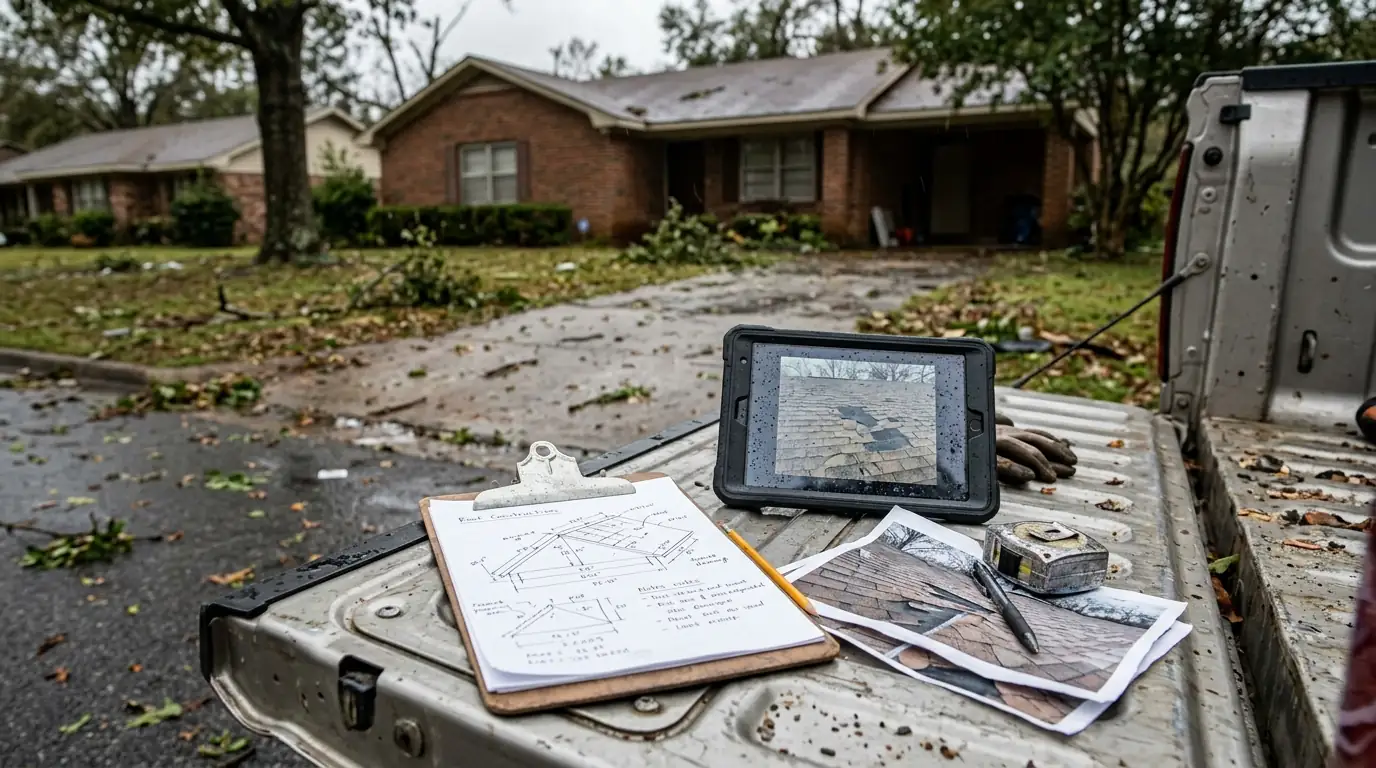
When your insurer schedules the inspection, tell us the date and time and we will try to have a crew member there. Adjusters often have a full day of roofs, and walking the slopes together makes it less likely that a damaged area gets missed.
On the roof, we point out the hits we marked, show the creased tabs and talk through anything else we found, such as dented vents, split pipe boots or damaged drip edge. We stay factual. If the adjuster sees something differently, we note it and move on rather than argue.
If you cannot be home for the visit, let your insurer know a roofer will be there to show the roof. After the visit, the insurer sends you their estimate. That paperwork comes to you, not to us.
Insurance estimates list every item separately: tear-off, shingles, underlayment, starter strip, ridge cap, drip edge, pipe boots, disposal and more. When you get yours, we can sit down and compare it with our scope so you can see whether anything a proper job needs appears to be missing.
If a line item is missing or a measurement looks short, we explain why in writing with photos. You decide whether to send that to your insurer and ask them to review it. Any change to the claim is between you and the company.
Common gaps we see include steep pitch charges, a second layer of old shingles, replacement decking and the extra material waste on complex roofs.
Once you know what your policy covers, you choose who does the work. If you choose O'Dell Roofing, you get a written price before we start, our own crew on the roof and a photo record of the finished job for your insurer's file.
Some insurers pay in two parts, an initial payment and then recoverable depreciation after the work is done. If yours does, we provide the final invoice and completion photos you need to request the second payment.
If the damage turns out to be below your deductible or not covered, we can still repair what needs repair at a fair written price. Call (501) 387-1152 after any storm, and we answer 24/7.
Claim help costs depend on the size of the roof and how much documentation is needed. These are typical 2026 Little Rock ranges.
| Job | Typical range | What drives it |
|---|---|---|
| Storm damage inspection and photo file | $135 to $260 | Roof size, pitch and exterior items documented |
| Adjuster meeting on site | $85 to $175 | Length of the visit and any return trips |
| Emergency tarp before the adjuster visit | $345 to $985 | Size of the opening and roof pitch |
| Written line-item scope with measurements | $95 to $215 | Roof complexity and number of slopes |
Steep, multi-story roofs and storms that also damaged gutters and siding take longer to document and cost more. See the full roof pricing guide.
How the job goes
We inspect every slope and the exterior, mark hail hits and photograph creased or missing shingles.
You receive dated photos, test square counts and roof measurements to share with your insurer as you choose.
When your insurer sets the date, a crew member meets the adjuster on the roof and walks through each damaged area.
We compare the insurer's estimate with our scope and explain any gaps in writing so you can raise them.
If you choose us, the work starts after you approve a written price, and we photograph the finished roof.
No. You handle every conversation with your insurer, including filing, coverage questions and settlement. We provide the roofing facts: photos, measurements, a line-item scope and our presence at the adjuster's roof inspection. Keeping those roles separate keeps the claim clean and keeps you in control of your own policy.
We cannot, and anyone who says they can is guessing. Approval depends on your policy terms, deductible, roof age and the adjuster's findings. We can tell you honestly whether we see hail or wind damage on the roof and how much, which helps you decide whether filing makes sense.
It often helps. A roofer who has already marked the damage can point to each hit and creased shingle, which reduces the chance of a slope being missed. We stay factual and do not argue. You or the adjuster can ask us questions about anything we documented.
We compare the insurer's estimate to our line-item scope and write up any gaps, such as missing drip edge, decking or steep pitch charges, with photos. You decide whether to send it to your insurer and request a review. Changes to the claim are between you and the company.
No. Your deductible is your share of the cost under your policy, and we do not waive, absorb or rebate it. The written price we give you reflects the real cost of the work, and the invoice we provide for your insurer matches what you actually pay.
Related work
Slope-by-slope hail inspection with marked test squares, soft-metal checks and photos that show exactly where the stones hit.
How we handle itFull roof assessment after a severe storm, covering debris impacts, mixed hail and wind damage, gutters and the attic below.
How we handle itA hands-on roof and attic check with labeled photos, an honest remaining life estimate and a written price for any repair needed.
How we handle itHeavy-duty tarps anchored with wood battens and wrapped over the ridge to keep rain out until permanent repairs are done.
How we handle itTalk to a roofer nowCall and describe what you are seeing. We answer around the clock.
Call (501) 387-1152