Roof Repair
Targeted fixes for worn shingles, failed flashing, cracked pipe boots and soft spots, priced in writing before our crew touches the roof.
How we handle itRoof repair
Sometimes the problem really is just the shingles. A handful of cracked, curled or missing pieces can be replaced cleanly, with a close color match and proper nailing, without opening up the whole roof.
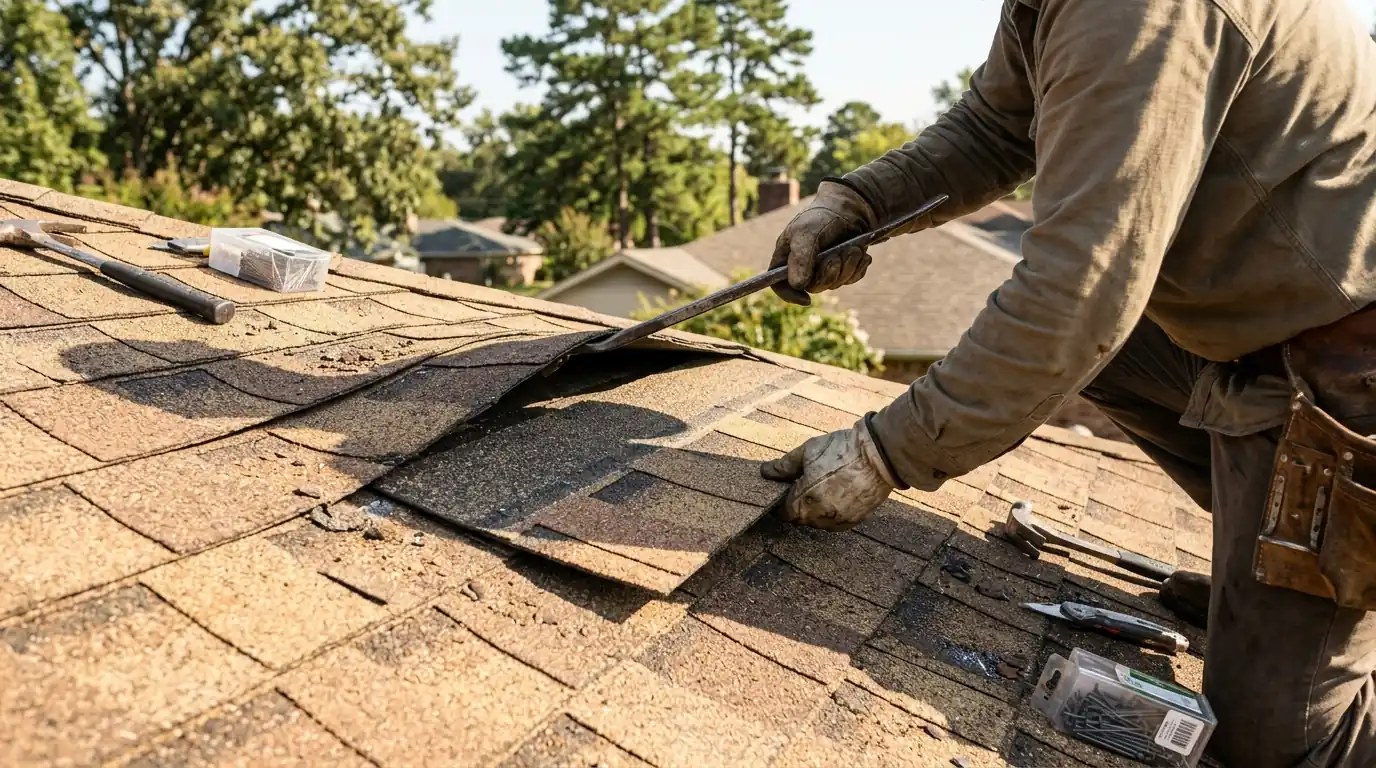
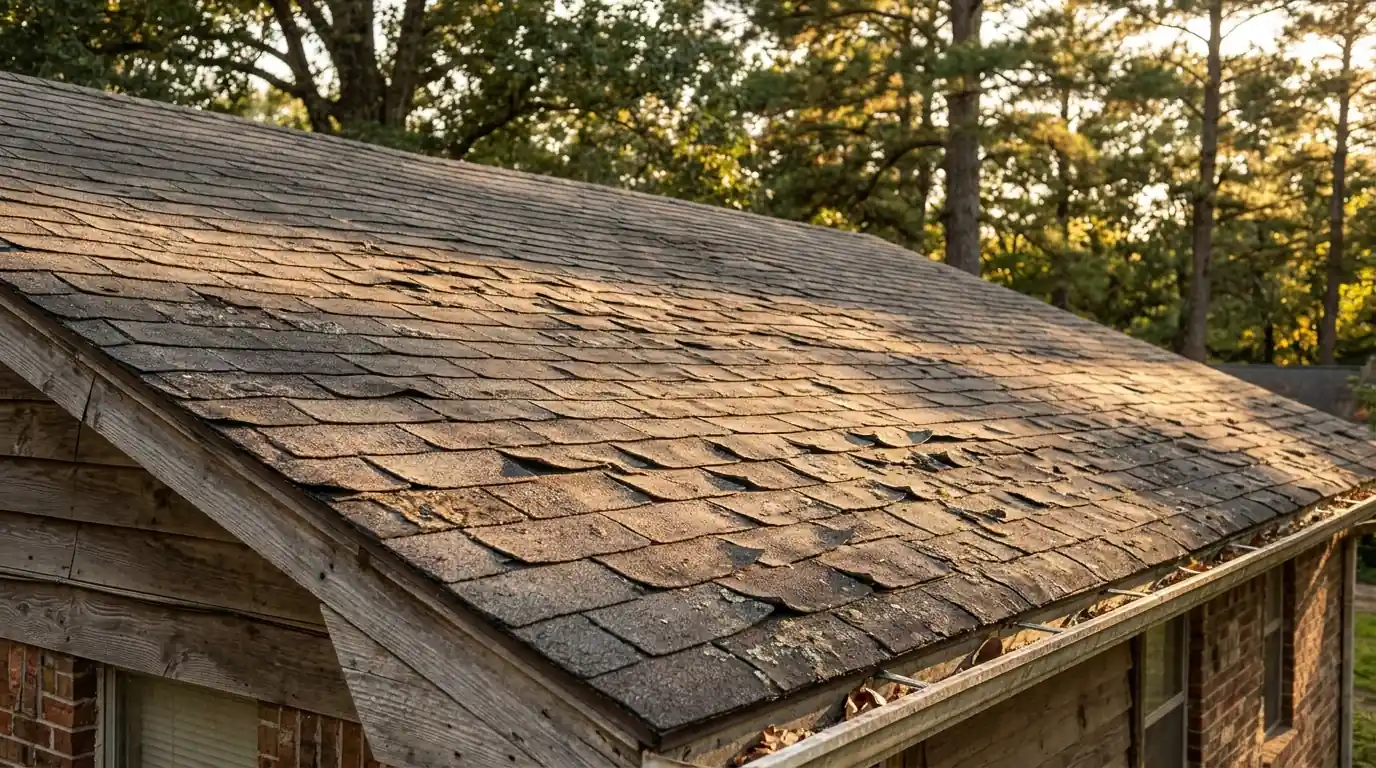
Shingle repair replaces individual damaged asphalt shingles, such as cracked, curled, blistered or missing ones, while leaving the rest of the roof in place. Typical Little Rock shingle repairs cost $225 to $780 for small areas and up to $1,690 for larger sections. Most are done in a few hours once a matching shingle is sourced.
Shingle repair is the right fix when damage is limited to individual pieces and the rest of the roof is still flexible and well covered with granules. A falling limb that cracked a few tabs, a small area of curled shingles near a vent or a couple of pieces missing after a gust are all good candidates.
It is not the right fix when the shingles across the roof are brittle, bald or curling everywhere. In that case, replacing a few pieces only disturbs neighbors that are ready to fail too. We test shingle flexibility on site so you get an honest answer either way.
Location matters as well. A shingle repair near the ridge on a back slope is a different decision than one in the middle of the front of the house where every neighbor can see it. We factor in how visible the repair will be when we talk through options.
Different damage points to different causes, and the cause affects whether a simple swap will last.
Little Rock homes carry a mix of shingle types. Many older homes have three-tab shingles, the flat, single-layer style with evenly spaced cutouts. Most roofs installed in recent decades use architectural, or dimensional, shingles that are thicker and layered for a textured look.
The two do not mix well visually, so matching type matters as much as color. Architectural shingles also come in many profiles that vary by manufacturer, and some lines have been discontinued. We identify your shingle on the roof and bring physical samples rather than guessing from a photo.
On very old roofs, we sometimes find shingle styles no longer made at all. For those, we show you the closest available option and talk through whether a full slope replacement would look better than a patch.
Replacing a shingle is more involved than it looks. Each shingle is held by its own nails and by the nails of the shingle above it, so we carefully break the sealant bond and lift the course above with a flat bar. The damaged shingle is removed, the old nails are pulled and the new shingle is slid into place.
New shingles are nailed in the manufacturer's nailing zone, with the right number of nails, so the course above covers them. Then we hand-seal the lifted tabs with roofing sealant so the repair area does not lift in the next wind.
We also check the underlayment beneath any missing shingle. If it is torn or the decking is soft, that gets fixed first, because a new shingle over a hole only hides the problem.
On hot days, shingles become soft and easy to tear, so we time repairs for cooler hours when possible. In cold weather, the opposite happens: shingles turn stiff and can crack when lifted, so we warm the sealant and work the course above slowly to avoid breaking good pieces.
Shingles in central Arkansas age faster on south and west slopes, where afternoon sun bakes them hardest during long summers. Heat dries out the asphalt, the shingles stiffen and edges begin to curl. A roof can look fine on its north side while the south side is wearing out years early.
Humidity brings its own visible change. The dark streaks common on Little Rock roofs are usually algae, which thrives in warm, humid weather. Algae is mostly cosmetic, but heavy moss growth under shaded trees can hold moisture and lift shingle edges over time.
Hot attics also play a part. Poor ventilation lets attic temperatures climb in summer, cooking shingles from below. If we see widespread curling, we check the attic ventilation, because fixing the shingles without addressing the heat source means the problem will come back.
Pine needles are another local factor. Needles collect along the upslope side of chimneys, in valleys and behind vents, holding moisture against shingles for weeks. Shingles in those spots often wear out well before the rest of the roof, and clearing the buildup is part of a lasting repair.
Even with the exact same shingle line, new shingles will look a bit brighter than ones that have weathered for years. That difference usually softens within a season or two as the new granules weather in. We tell you plainly how close the match will be before you decide.
Where possible, we place repairs on less visible slopes or blend them along natural lines in the roof. If a front slope has damage and the match is poor, we price both a patch and a slope replacement so you can choose what you are comfortable with. Manufacturer warranty terms depend on the product and registration, and we can look at your paperwork with you.
Shingle repair is one of the more affordable roof fixes. These are typical 2026 Little Rock ranges based on area and shingle type.
| Job | Typical range | What drives it |
|---|---|---|
| Replace a few shingles, single spot | $225 to $480 | Number of pieces and roof access |
| Small area repair, three-tab | $345 to $780 | Square footage and color match |
| Small area repair, architectural | $385 to $890 | Profile availability and pitch |
| Larger section with underlayment | $860 to $1,690 | Underlayment or decking repair needed |
Roof pitch, story height, discontinued shingle lines and hidden decking damage change the price most. See the full roof pricing guide.
How the job goes
We find your shingle type and profile on the roof and bring physical samples to match.
We inspect underlayment and decking under damaged or missing shingles before replacing them.
We lift the course above, swap the damaged shingle and nail it in the manufacturer's zone.
We hand-seal lifted tabs, clean up debris and run a magnet sweep for nails.
Yes, if the leak is coming through that missing or cracked shingle and the underlayment beneath it. Many leaks, though, come from flashing, pipe boots or exposed nails rather than shingles. We trace the water from the attic first. If shingle repair is the right fix, we replace the damaged piece and check the underlayment below it.
South and west slopes in Little Rock take the hardest afternoon sun, which dries out shingles and makes them curl faster. Poor attic ventilation adds heat from below. If curling is limited to a small area, shingle repair works. If the whole slope is curling, it usually means that slope is near the end of its life.
We aim for the closest match possible by identifying your shingle line and bringing samples. New shingles look slightly brighter at first and usually soften as they weather over a season or two. If your shingle has been discontinued or the match will be noticeable on a front slope, we tell you upfront and price options.
Usually not. Dark streaks on central Arkansas roofs are most often algae, which grows well in humid weather and is mostly cosmetic. Shingle repair is needed when shingles are cracked, curled, missing or losing granules. If you want the streaks gone, our roof cleaning service handles that with methods that do not damage shingles.
We recommend staying off the roof. Freshly repaired areas need time for hand-applied sealant to bond, and hot shingles in summer scuff and lose granules easily under foot traffic. If you need to check something, look from a ladder at the edge or call us and we will take photos for you.
Related work
Targeted fixes for worn shingles, failed flashing, cracked pipe boots and soft spots, priced in writing before our crew touches the roof.
How we handle itRepairs for shingles that were lifted, creased, unsealed or blown off by straight-line winds and storm gusts.
How we handle itBalanced ridge and soffit ventilation that lets hot, damp attic air out and helps shingles, decking and AC systems last longer.
How we handle itLow-pressure soft washing that removes black algae streaks, moss and lichen without stripping the protective granules from your shingles.
How we handle itTalk to a roofer nowCall and describe what you are seeing. We answer around the clock.
Call (501) 387-1152