Hail Damage Roof Repair
Slope-by-slope hail inspection with marked test squares, soft-metal checks and photos that show exactly where the stones hit.
How we handle itRoof repair
A central Arkansas storm rarely does just one thing. Hail, wind, falling limbs and sheets of rain can all hit the same roof in twenty minutes, and the repair plan has to account for all of it.
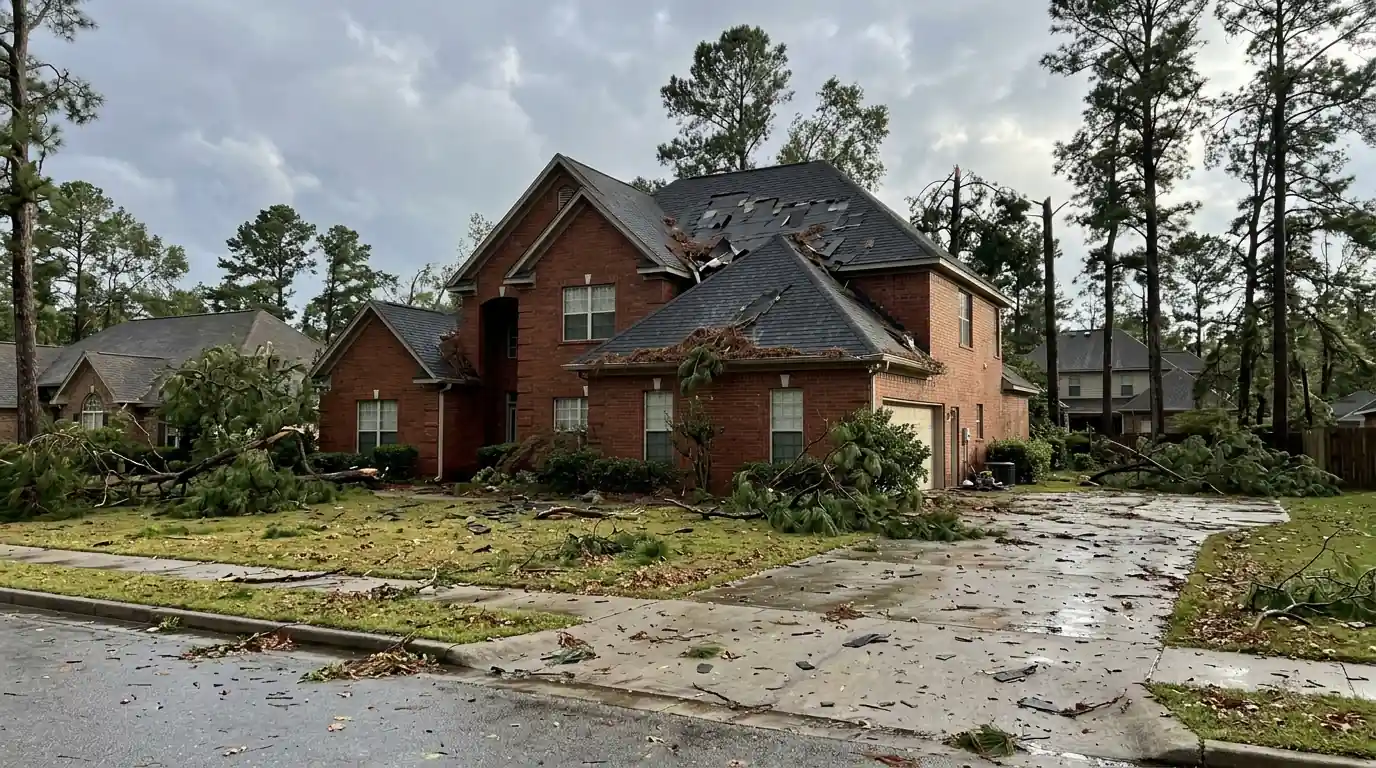
Storm damage roof repair covers the combined effects of a severe weather event: debris impacts, lifted or missing shingles, dented metal, clogged drainage and water intrusion. Typical Little Rock storm repairs range from $420 for minor fixes to $5,800 for multi-slope work. We usually assess within a few days of the storm and repair once your scope is agreed.
After a big storm, homeowners usually notice one thing: a limb on the roof, shingles in the yard or a new drip in the hallway. That obvious damage is real, but it is rarely the whole story. The same storm that dropped a limb on the back slope may have pushed hail across the front and loosened shingles along the rakes.
We treat a storm call as a whole-house exterior check. That means every slope, the ridge, the gutters and downspouts, the vents and flashing, the window screens and siding on the side facing the storm, and the attic underneath. Finding all of it at once keeps you from discovering more damage after a claim is closed.
Each type of storm damage leaves its own marks. Sorting them out matters, because the repair method and the insurance conversation are different for each.
Some of these show up right away. Others, like loosened shingle seals or hairline cracks in flashing, only become obvious after the next few rains, which is one reason we look closely at areas that seem fine from the ground.
Anything letting water in gets handled first, sometimes the same day with a patch or tarp. After that, we map the rest of the damage slope by slope and separate what is cosmetic from what is functional. A dented gutter is not the same priority as a cracked rafter.
Your written scope lists each item, where it is, what caused it and what the fix involves. If the damage on one slope is bad enough that a slope replacement makes more sense than spot repairs, we say so and price both.
We also note anything that is not storm damage. Old wear, earlier poor repairs and aging pipe boots are part of the honest picture, and keeping them separate from storm damage in your scope avoids confusion later with an adjuster.
Timing matters on the order of repairs. Gutters, for example, should usually go back on after roof edges are repaired, so the fascia and drip edge can be checked and fixed while they are exposed.
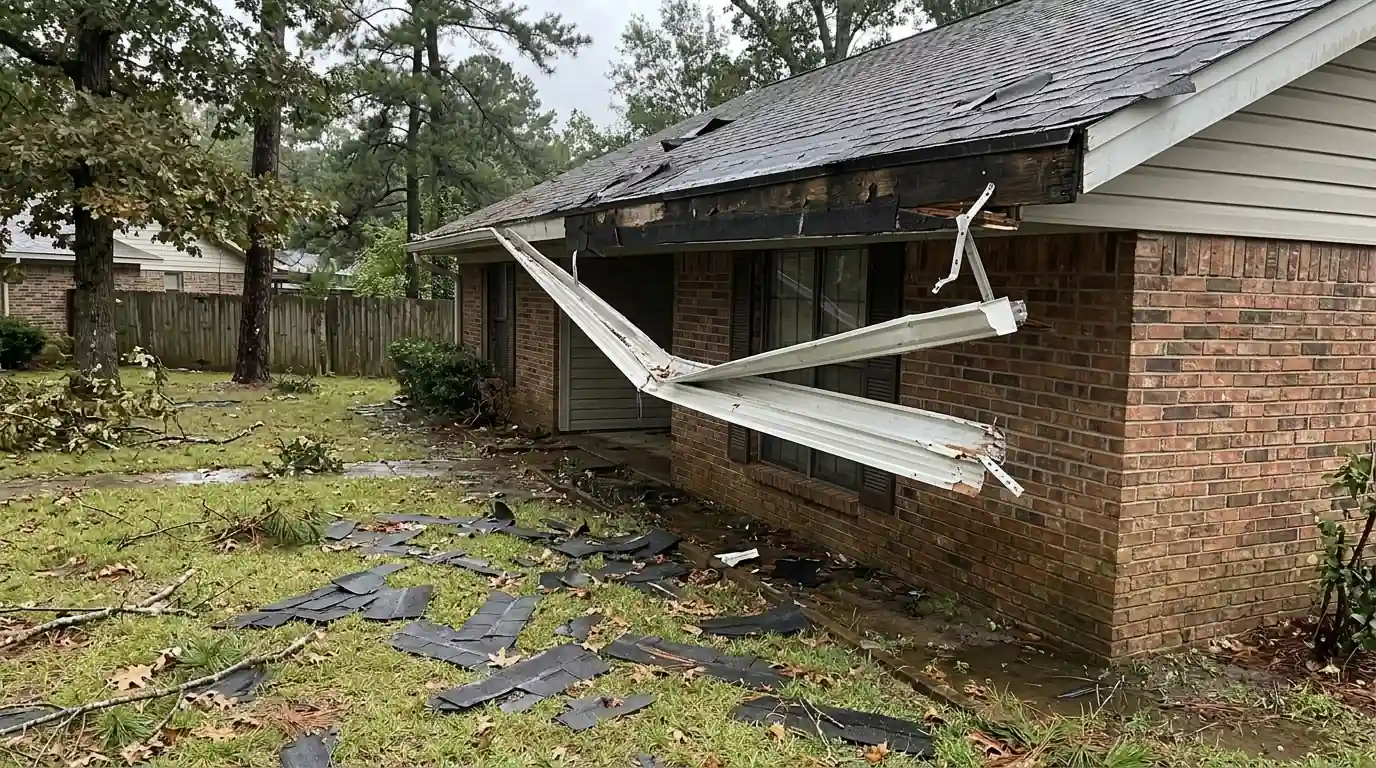
Little Rock sits in a part of the country that sees regular severe weather, especially from roughly March to June. Supercell thunderstorms can bring hail, straight-line winds and tornado warnings in a single evening, and fall can bring a second, smaller round of severe storms.
Mature trees are a big factor here. Neighborhoods with tall pines and old oaks see more limb impacts than newer subdivisions with young trees. Long, hot summers also leave shingles drier and more brittle by the next spring, so a storm that an eight-year-old roof would shrug off can do real damage to a roof that has already been through a decade of Arkansas heat.
Heavy rain bursts are the part people underestimate. Even without hail or wind damage, a storm that drops a lot of water in a short time can overwhelm valleys and gutters clogged with spring pollen and needles.
After a storm passes, walk the yard before mowing. Shingle tabs, ridge cap pieces and small chunks of flashing in the grass are a quick clue to which side of the roof took the worst of it, and they are worth a photo before they get cleared away.
Storm damage claims often cover more than the roof. Gutters, siding, screens, fences and outdoor equipment may all be part of the same event. Our photos and written scope cover the roof and exterior items we handle, which gives you one organized record instead of a pile of phone pictures.
Report the damage to your carrier promptly, and write down the date and time of the storm. Many homeowners policies in Arkansas carry a separate wind and hail deductible, sometimes a percentage of the dwelling value instead of a flat amount, so it is worth checking your declarations page before deciding how to proceed.
If you would like help understanding the claim side, our insurance claim help page explains what we provide and what the adjuster usually looks for.
Big storms bring a wave of door knockers and trucks with out-of-state plates. Some do fine work, but many are gone by summer, and that leaves nobody to call if a repair fails. Take your time, ask for a written price, and make sure whoever you hire will still answer the phone next spring. We are based at 318 W 2nd Street in downtown Little Rock and answer 24/7.
A good question to ask anyone offering storm work is simple: where is your office, and who will answer if this repair leaks in a year? The answer tells you more than any sales pitch.
Storm repairs vary more than any other roof work because each storm hits each house differently. These are typical 2026 Little Rock ranges before any insurance involvement.
| Job | Typical range | What drives it |
|---|---|---|
| Minor storm repairs, single area | $420 to $1,140 | Number of shingles and flashing points affected |
| Limb impact repair with decking | $980 to $3,460 | Size of the impact and any rafter damage |
| Single slope replacement | $2,350 to $5,800 | Slope size, pitch and layers removed |
| Gutter section repair or rehang | $265 to $940 | Linear footage and fascia condition |
Price moves most with the number of damage types on the same roof and whether framing, not just shingles, was hit. See the full roof pricing guide.
How the job goes
Any opening or active leak gets patched or tarped before anything else.
We check every slope, gutters, flashing, siding and the attic for every type of storm damage.
You get organized photos and a written scope listing each damaged item and its fix.
Our crew handles structural and water issues first, then shingles, gutters and exterior items.
We review the finished work with you, clean up debris and run a magnet sweep for nails.
As soon as practical, ideally within days. Some damage, like loosened shingles or cracked flashing, gets worse with each rain that follows. Many insurance policies also have time limits on reporting. If anything is actively leaking, call us right away and we will treat it as an emergency, then come back for the full assessment once the house is protected.
Yes. Our own crews handle roofing, gutters, siding, soffit and fascia, so one storm assessment covers all of it. We list each item separately in the written scope with photos, which helps keep a claim organized. Fences, outdoor equipment and other items outside our work are noted so you can mention them to your adjuster.
The repair itself is the same no matter whose tree it was. Insurance handling varies, and often your own homeowners policy covers damage to your house from a falling tree. Take photos of the tree and where it came from before it is cleared. We document the roof impact and give you a written scope either way.
Storm repair covers whatever the event did, which is often a mix of hail, wind, debris and water. We sort each type of damage separately because the fix and the claim discussion differ. If your roof only shows one type, our hail damage or wind damage pages go deeper into how we inspect and repair that specific problem.
Not always. Many roofs come through a storm needing targeted repairs to a few slopes or flashing lines. Replacement becomes the better choice when damage is spread across most slopes, when shingles are already brittle from age or when matching is impossible. We show you the photos, price the options and let you decide.
Related work
Slope-by-slope hail inspection with marked test squares, soft-metal checks and photos that show exactly where the stones hit.
How we handle itRepairs for shingles that were lifted, creased, unsealed or blown off by straight-line winds and storm gusts.
How we handle itWe document storm damage, meet your adjuster on the roof and write a line-item scope, while you keep control of your own claim.
How we handle itRehang sagging runs, seal dripping corners, reset pitch and reattach downspouts so your existing gutters work again.
How we handle itTalk to a roofer nowCall and describe what you are seeing. We answer around the clock.
Call (501) 387-1152