Roof Repair
Targeted fixes for worn shingles, failed flashing, cracked pipe boots and soft spots, priced in writing before our crew touches the roof.
How we handle itInspections & care
Find out exactly what shape your roof is in. Our own crew checks every slope and the attic, photographs what we find and explains it in plain terms for Little Rock homeowners.
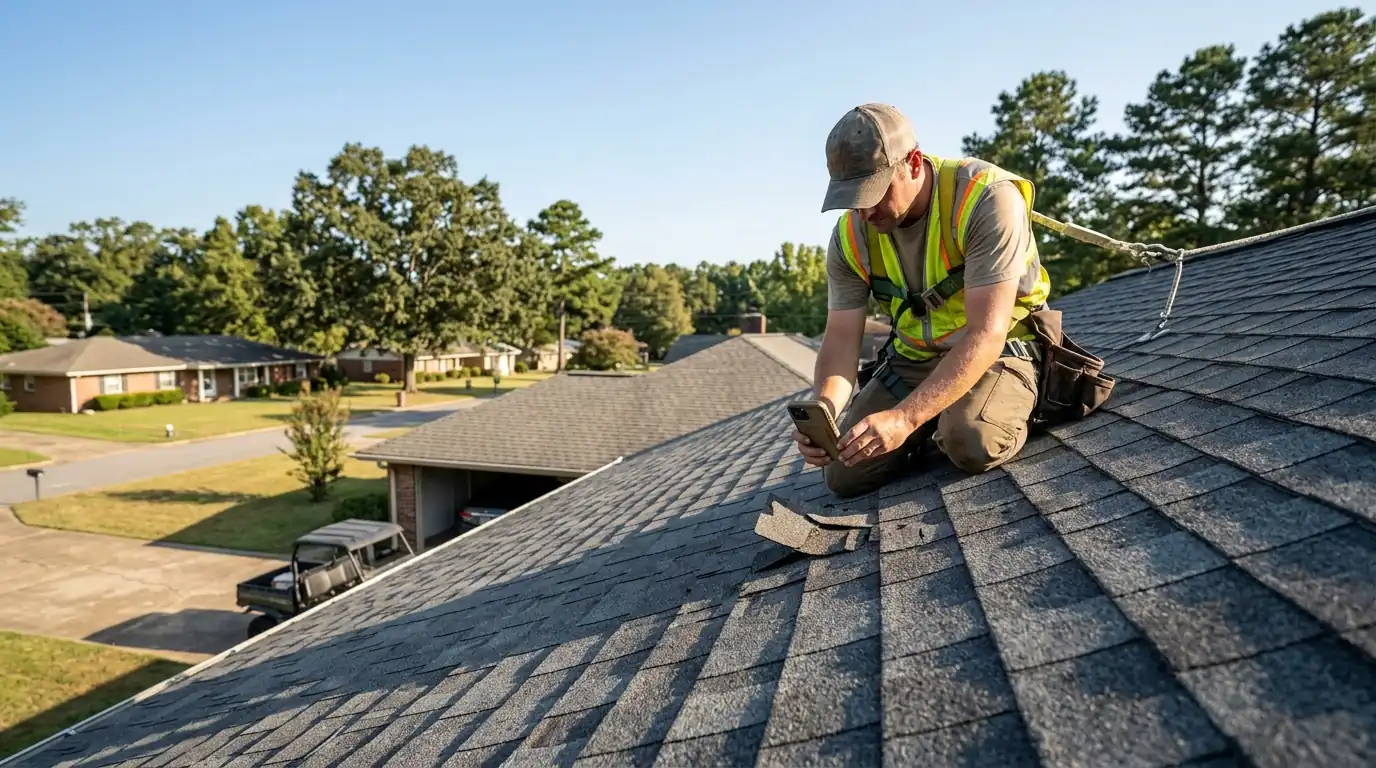
A roof inspection is a full check of the shingles, flashing, vents, valleys, gutters and attic, with photos of every issue. In Little Rock, a standard inspection typically runs $145 to $285 depending on size and pitch. Most visits take 45 to 90 minutes, and you usually get the written photo report within one to two days.
A roof inspection from O'Dell Roofing is a hands-on walk of the whole roof, not a glance from the driveway with binoculars. One of our own crew members climbs up when the pitch and weather allow it, checks every slope, and photographs each problem with a wide shot for location and a close shot for detail.
We look at the roof as a system. Shingles get the most attention from homeowners, but most leaks in central Arkansas start at the parts that hold the shingles together: flashing, pipe boots, valleys and the edges where the roof meets the gutters.
On steep or wet roofs we stay off the surface and use a camera pole and ladder views at each eave instead, then come back for a walk once it is safe.
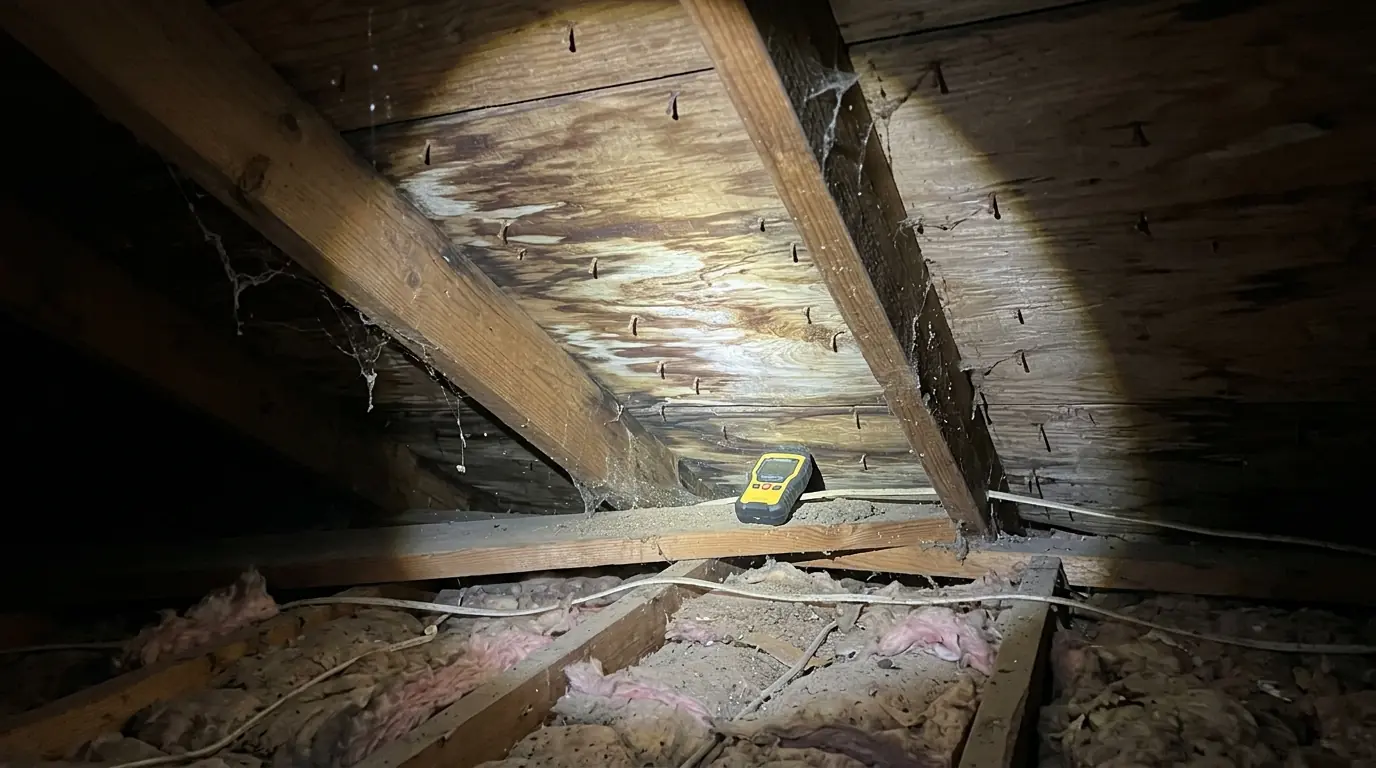
Plenty of roof problems are easier to see from below. With your permission, we go into the attic with a flashlight and a moisture meter and look at the underside of the decking, the rafters and the insulation.
Dark rings on the plywood, rusty nail tips and damp insulation tell us where water has been getting in, sometimes months before a ceiling stain shows up. We also check whether the attic is breathing. A hot, stuffy attic with blocked soffit vents cooks shingles from underneath, and that kind of damage shows up on the roof years before it should.
If your home has no attic access or a sealed cathedral ceiling, we tell you that up front and note which areas we could not see.
Weather here is hard on a roof in several ways at once. Spring storms between roughly March and June bring hail and straight-line winds that bruise shingles and lift tabs. Long humid summers bake the asphalt, and that heat speeds up granule loss on the south and west slopes first.
Trees add their own wear. Pine needles and oak leaves pack into valleys and behind chimneys, holding moisture against the shingles, and falling limbs leave punctures that are easy to miss from the ground. Black streaks from algae are common too, and while they are mostly cosmetic, heavy growth can hold dampness on the north side.
Occasional ice storms and winter freeze and thaw cycles round things out by working into small cracks around flashing and sealant. Homes on heavily wooded lots usually need valleys cleared more often than homes on open lots, and we note that in the report.
Most homeowners call us at one of a few moments. Each one asks a slightly different question, so we tailor the report to what you need to decide.
For buyers, we can usually get on the roof within a few days of your call, which helps when an option period is ticking.
Within a day or two, you get a written report with the photos, a plain description of each issue and where it sits on the roof. We sort the findings into three groups: fix now, watch, and fine for now.
We also give you our honest read on remaining life. A 12-year-old roof with a few lifted shingles is a repair job, and we will say so. When a roof truly is near the end, we explain why with photos rather than asking you to take our word for it.
Need the report for a home sale or an insurance company? We can lay it out with an address header, the inspection date and labeled photos so it is easy to forward.
Every repair we recommend comes with a written price before any work starts, so you can compare it against other options at your own pace.
Some homeowners hesitate to call because they expect a push toward a new roof. Our view is simple: most roofs we look at need repairs, maintenance or nothing at all, and saying so is how we earn the calls that come later.
If the inspection turns up storm damage, we explain how our insurance claim help works and leave the decision to you. If it turns up minor items, we can often fix them the same week. Call (501) 387-1152 any time, day or night, and we will set a time that works.
Inspection pricing depends on roof size, pitch and what the report needs to cover. These are typical 2026 ranges in Little Rock, not quotes.
| Job | Typical range | What drives it |
|---|---|---|
| Standard roof and attic inspection | $145 to $285 | Roof size, pitch and attic access |
| Pre-purchase inspection with detailed report | $195 to $365 | Report detail and turnaround time |
| Post-storm damage inspection | $135 to $245 | Number of slopes and test squares documented |
| Camera pole or drone inspection for steep roofs | $165 to $310 | Pitch and the number of hard to reach areas |
Steep pitches, multiple stories and complex rooflines with many valleys take more time and push the price toward the upper end. See the full roof pricing guide.
How the job goes
Call (501) 387-1152 and tell us what prompted the inspection. We set a visit time and ask about attic access.
We check the gutters and walls from the ground, then walk each slope when it is safe and photograph every issue.
We look at the decking underside, insulation and ventilation for moisture stains, rusty nails and heat buildup.
You get labeled photos and findings sorted into fix now, watch and fine for now, usually within two days.
If anything needs work, we give you a written price before starting, and you decide if and when.
Most single-family homes take 45 to 90 minutes on site, including the attic. Large two-story homes with many valleys and dormers can take closer to two hours. We send the written photo report within one to two days, and sooner when you are working against a home purchase deadline.
Yes, when there is safe access. The attic shows things the roof surface cannot, like stained decking, rusty nail tips, damp insulation and poor airflow. If your home has a sealed ceiling or no hatch, we note that in the report and focus on the areas we can reach.
We give you an honest estimate based on the shingle type, granule loss, flexibility, flashing condition and attic ventilation. It is a range, not a promise, because one hail storm can change the picture. The report explains what we based the estimate on so you can judge it yourself.
Yes. Pre-purchase inspections are common for us, and we try to get on the roof within a few days so you stay inside your option period. The report covers condition, likely repairs with typical costs and anything the seller may want to address before closing.
We show you the photos and explain whether the damage looks significant enough to report. Whether to file is your decision. If you do, our roof insurance claim help service covers documentation and meeting the adjuster, while you handle the claim with your insurer directly.
Related work
Targeted fixes for worn shingles, failed flashing, cracked pipe boots and soft spots, priced in writing before our crew touches the roof.
How we handle itA yearly or twice-yearly tune-up that clears debris, reseals weak spots and fixes small problems before they turn into ceiling stains.
How we handle itWe document storm damage, meet your adjuster on the roof and write a line-item scope, while you keep control of your own claim.
How we handle itSlope-by-slope hail inspection with marked test squares, soft-metal checks and photos that show exactly where the stones hit.
How we handle itTalk to a roofer nowCall and describe what you are seeing. We answer around the clock.
Call (501) 387-1152