Metal Roofing
Ribbed exposed-fastener metal panels for homes, porches, barns and shops, a durable and budget-friendly choice for central Arkansas.
How we handle itNew roofs & materials
Most metal roof leaks come from a small number of places, and most are fixable without new panels. Our crew finds the source, fixes it properly and shows you photos of what we did.
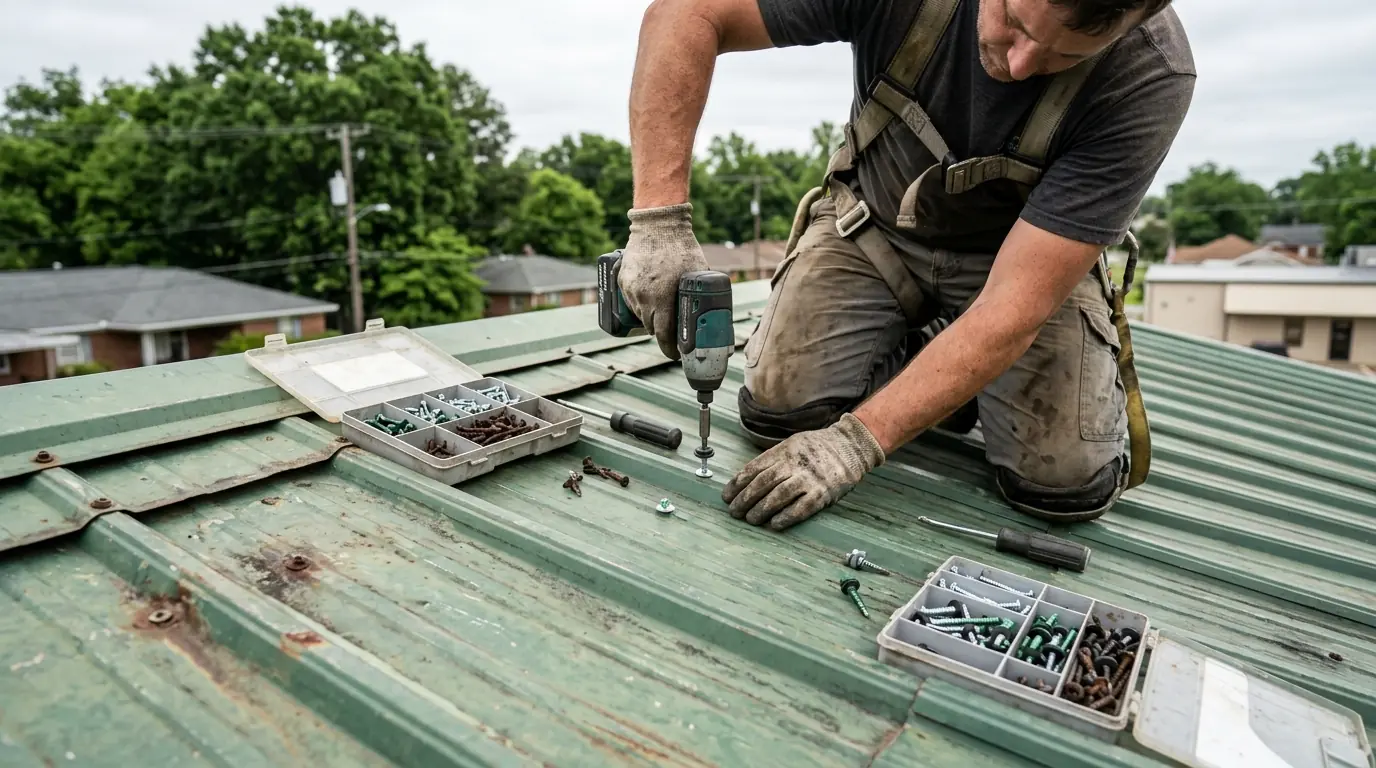
Metal roof repair fixes leaks and wear on existing metal roofs: replacing loose or worn screws, resealing laps and seams, treating rust, replacing damaged panels and repairing flashing. In Little Rock, typical repairs run $285 to $1,450, with full rescrew jobs higher. Many repairs are done in a few hours, and we can usually be on site within a day or two.
Metal panels rarely fail in the middle. Leaks almost always start at the points where something passes through or joins the metal, and on exposed-fastener roofs, that means thousands of screws.
We trace the leak from the attic or underside first, looking for drip marks, rust stains and wet insulation, then match it to the spot on the roof. Water often travels along a panel rib before dripping, so the stain inside may be several feet from the real source.
Condensation can look like a leak, too. On outbuildings with metal over open framing and no barrier, warm humid air meets the cold underside of the panels on cool mornings and drips. We check for that before chasing screws, since the fix is ventilation or a condensation barrier, not sealant on the roof.
On exposed-fastener roofs, aging screws are the number one repair we do. Daily heating and cooling makes the panels grow and shrink, and over years that motion slowly loosens screws and wears the hole. Summer sun dries out the rubber washers until they crack.
The fix is to remove worn screws and replace them with new ones that have fresh washers, usually a size larger so they bite into solid wood or steel. We drive them straight and snug, seating the washer without crushing it, which is the mistake behind many of the leaks we see.
On older roofs where many screws are worn, a full rescrew of the roof costs much less than new panels and can add many years of service. We count failed fasteners on a few test areas and show you photos before recommending a full rescrew.
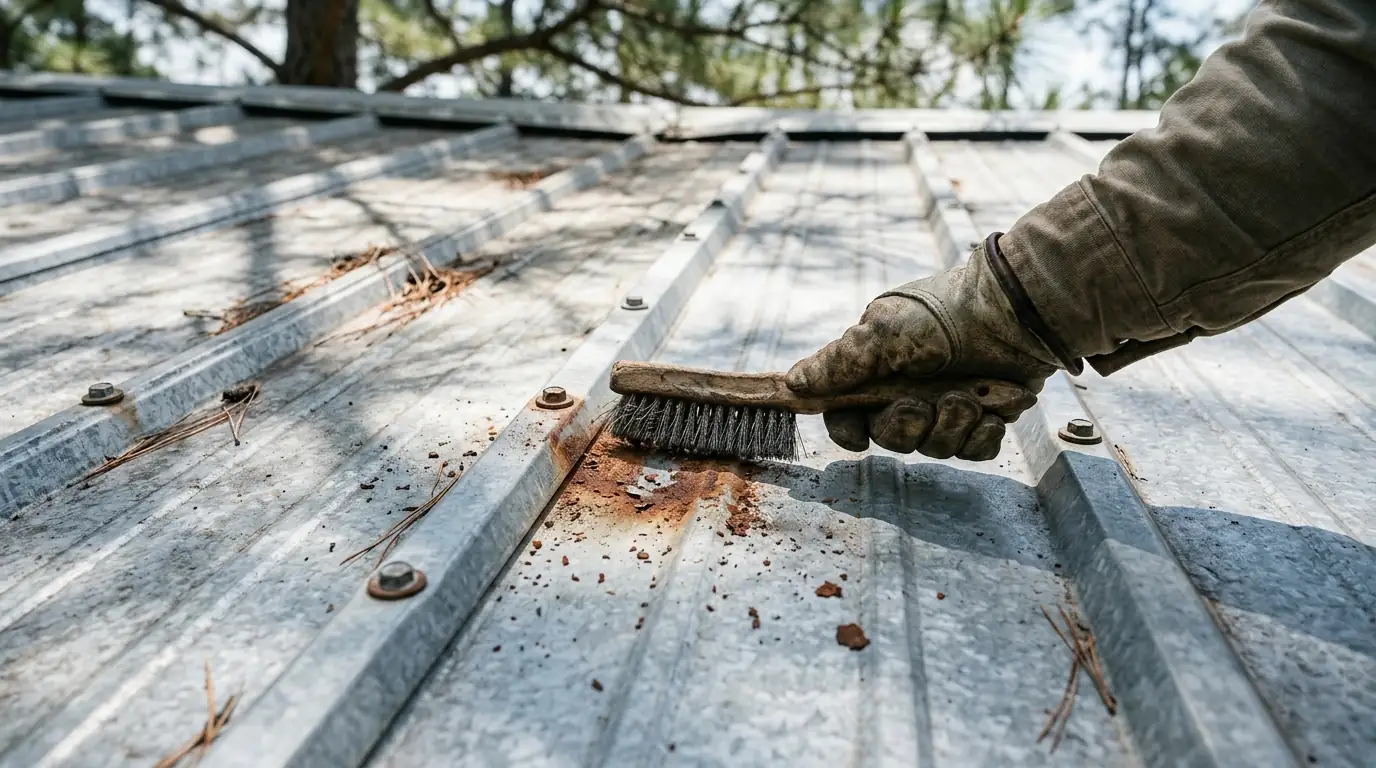
Surface rust usually starts at cut edges, scratches, around screws, or where metal sits under constant moisture, like under leaves or a rubbing branch. Caught early, we wire brush the area, treat it with a rust converting primer and apply a matching topcoat.
When rust has eaten through or a falling limb has torn a panel, we replace that panel or section. Matching an older panel profile and color can take some searching, and we tell you how close the match will be before ordering.
Dissimilar metals cause trouble too. Copper flashing or pipes against Galvalume, or the wrong type of screws, can speed corrosion. We swap those for compatible parts during repair.
Foot traffic causes its own damage. Satellite installers, HVAC techs and holiday light hangers sometimes walk in the flat part of the panels instead of on the ribs or over the purlins, leaving dents that hold water. We flatten what we can, seal any cracked paint and replace panels that are creased badly enough to pond.
Standing seam roofs have far fewer weak points, but they still need care. Seams can open after high winds, clips can loosen, and sealant at end laps, ridges and penetrations can fail with age. We reseam, reseal or replace trim as needed, using parts that match the panel system.
We also repair metal shingles and older tin or terne roofs on some historic homes, though those often need more specialized materials and careful matching.
Coatings are another option on large or aging metal roofs. A silicone or acrylic coating system over properly cleaned and repaired panels can add years, and we explain when that makes more sense than spot repair.
Our summers are hard on fasteners. Long stretches of hot days followed by cooler nights mean the metal moves a lot, and that movement is what works screws loose. South and west slopes usually show the most wear because they heat up the most.
Spring storms are the other big factor. Straight-line winds can lift loose panel edges and peel ridge caps, and hail can dent panels or crack old washers. After a strong storm, a quick check of the ridge, eaves and rake trim is worth the call.
Humidity and shade add rust risk on north slopes and under trees, where leaves and needles hold moisture against the metal.
Ice storms are rare but rough on metal roofs here. Sheets of ice can slide off steep panels all at once and tear gutters loose or bend eave trim on the way down. After a freeze, we check gutter hangers, eave trim and any snow guards along with the fasteners.
Most metal roofs with leaks are good candidates for repair, since the panels themselves usually have plenty of life left. Replacement makes sense when rust has spread across many panels, when panels are badly damaged by hail or wind, or when a low-cost thin panel roof keeps failing in new places.
We give you an honest read with photos, and when it is close, a written price for both repair and replacement. Emergency leaks get a fast response, since we answer 24/7. Call (501) 387-1152 and we will get a crew to your roof.
Metal roof repair cost depends on what failed and how much of the roof is affected. These are typical 2026 Little Rock ranges.
| Job | Typical range | What drives it |
|---|---|---|
| Leak trace and spot repair | $285 to $685 | Number of leak points and roof access |
| Full roof rescrew with new fasteners | $1,450 to $4,350 | Roof size and screw count |
| Replace one damaged metal panel | $395 to $1,180 | Panel length, profile and color match |
| Rust treatment and touch-up paint | $265 to $940 | Extent of rust and number of panels |
| Reseal or replace ridge cap and closures | $345 to $1,240 | Ridge length and trim condition |
Steep pitches, hard to match older panels and widespread rust push costs toward the higher end. See the full roof pricing guide.
How the job goes
We check the attic or underside for drip marks and rust, then match the stain to the spot on the roof.
You get photos of the failed screws, seams or flashing and a written price before we fix anything.
We replace worn screws with new washered screws and reseal laps, seams and trim.
Rust spots are cleaned, primed and painted, and badly damaged panels are replaced.
Where practical, we water test the repaired area, then collect old screws and metal scraps.
Daily heat expansion slowly loosens the screws and wears the holes, and summer sun dries out the rubber washers until they crack. Overdriven screws from the original install can also crush washers. Replacing worn screws with new washered screws, usually a size larger, fixes most of these leaks.
We suggest a fastener check every several years, plus after strong spring storms. Look for screws that stick up, spin loose or have cracked washers. Catching a few early is cheap. Waiting until many fail can mean water damage to the deck and ceiling below.
Surface rust usually can. We wire brush it, treat it with a rust converting primer and apply a matching topcoat. If rust has eaten through the steel or covers most of a panel, replacing that panel is the better fix. We show you photos so you can see which applies.
Yes. Standing seam repairs usually involve reseaming opened seams, replacing loose clips, resealing end laps and penetrations, or fixing trim after wind. We use parts compatible with your panel system. Since there are no exposed screws in the field, standing seam repairs are usually less frequent.
Most metal roofs are worth repairing because the panels often have decades left even when screws and washers are worn. A full rescrew costs far less than new panels. Replacement makes sense when rust or storm damage covers many panels. We give you written prices for both when it is close.
Related work
Ribbed exposed-fastener metal panels for homes, porches, barns and shops, a durable and budget-friendly choice for central Arkansas.
How we handle itConcealed-fastener standing seam panels with clean raised seams, built to move with heat and last for decades on central Arkansas homes.
How we handle itWe follow the water back to where it actually gets in, fix that spot and stop the stain from coming back.
How we handle itSilicone and acrylic coatings that restore sound flat and metal roofs, applied by our crews after proper cleaning and repairs.
How we handle itTalk to a roofer nowCall and describe what you are seeing. We answer around the clock.
Call (501) 387-1152