Roof Leak Repair
We follow the water back to where it actually gets in, fix that spot and stop the stain from coming back.
How we handle itRoof repair
Every roof valley carries the runoff of two slopes at once, so it sees more water than any other part of the roof. When a valley wears out or clogs with needles, leaks follow fast.
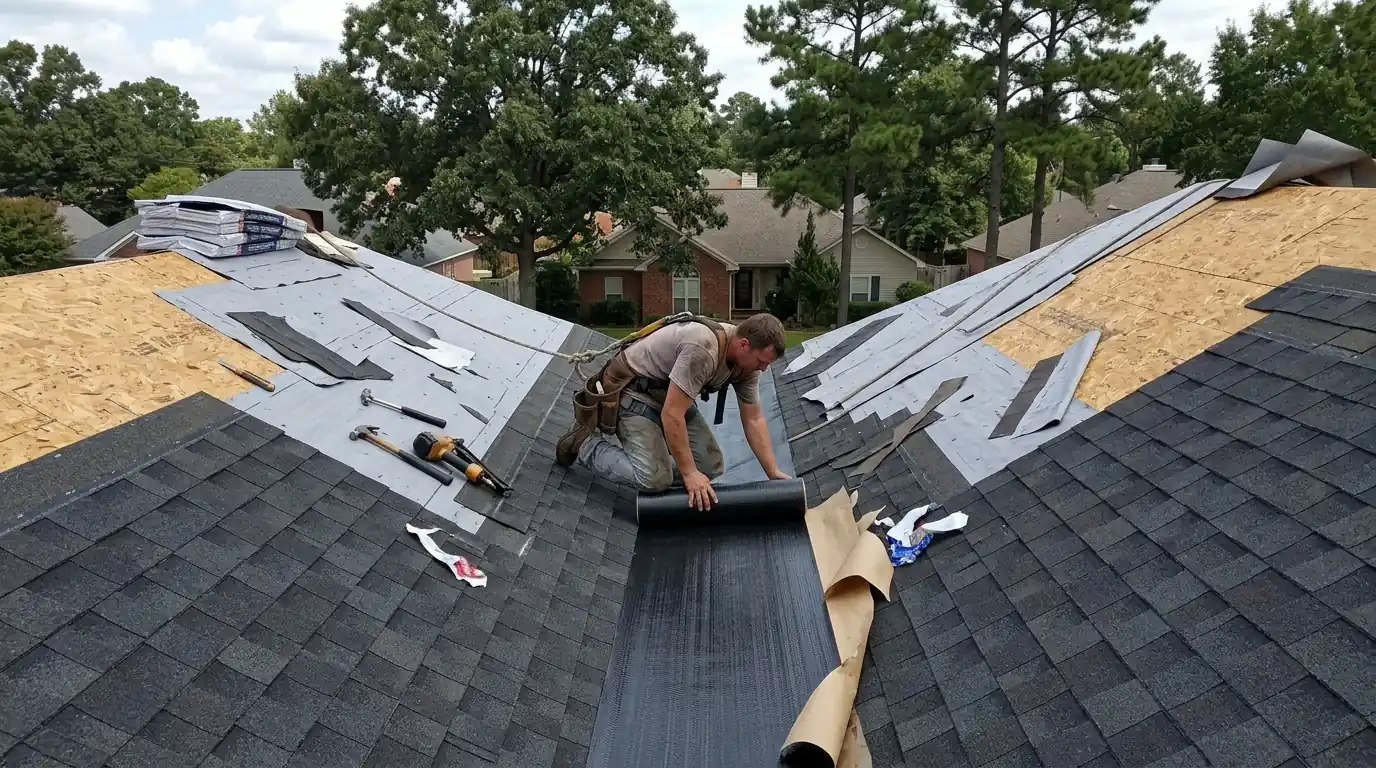
Roof valley repair rebuilds the channel where two roof slopes meet, replacing worn shingles, underlayment and valley metal so water flows off cleanly. In Little Rock, valley repairs typically cost $640 to $2,180 per valley depending on length, pitch and decking condition. Most single-valley jobs are finished in one day.
A valley is a concentrated drain. Rain from two slopes funnels into one narrow line, and the water moves faster and in greater volume than anywhere else on the roof. That constant flow wears down granules, softens sealant and finds any weak spot in the underlayment.
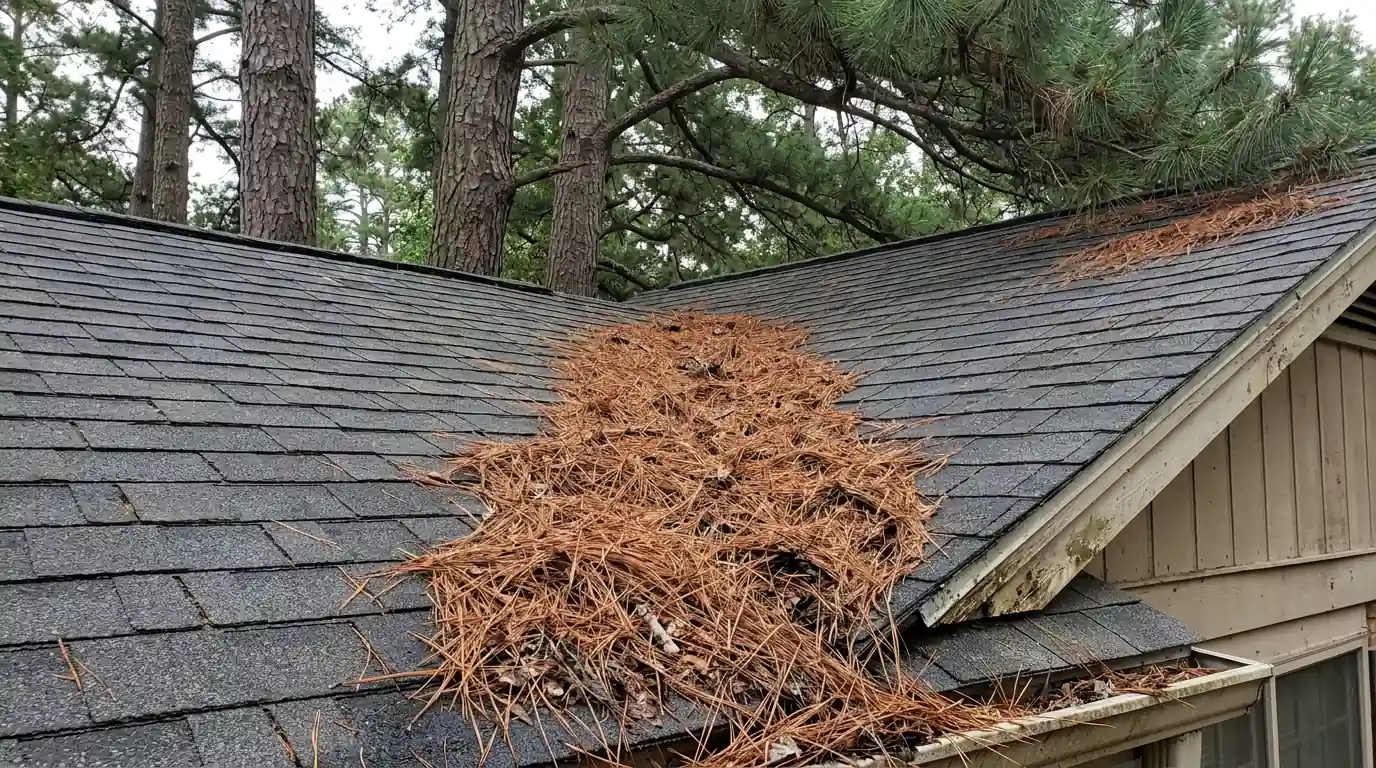
Valleys are also where debris settles. Leaves, pine needles and small twigs slide down both slopes and pile up in the valley, especially where it meets a lower roof or a gutter corner. Wet debris holds moisture against the shingles and slows drainage, so water backs up under shingle edges.
Shingle layout makes a difference too. Shingles cut too close to the valley centerline, nails placed too near the center and missing underlayment are common installation problems that cause valley leaks years before the rest of the roof fails.
Where a valley ends matters too. A valley that empties onto a lower roof section, rather than straight into a gutter, sends a heavy stream of water across a small patch of shingles. Without extra protection there, that patch wears through long before the rest of the lower roof.
Most homes in the Little Rock area have one of three valley types, and each tends to wear out in its own way. Knowing which you have helps explain the repair.
Central Arkansas is full of tall pines and mature oaks, and both send a steady stream of debris onto roofs. Pine needles in particular knit together into dense mats in valleys, where they act like a dam. After a few months, the shingles under a needle mat can be soft and stained while the rest of the roof looks fine.
Rain here often comes hard and fast. Spring storm season, roughly March to June, brings heavy rain bursts that can drop a lot of water in a short time, and a valley that handles a light shower without trouble may overflow its edges in a severe thunderstorm. Water forced sideways under shingle edges is a classic valley leak.
Winter adds a smaller risk. In occasional ice storms, slush and ice can sit in a valley longer than on open slopes, and meltwater can back up under the lower courses. Valleys on the north side of a house, which stay shaded and cold longer, see this most.
A lasting valley repair rebuilds the valley from the deck up. We remove the shingles along both sides of the valley, take out the old valley metal or woven shingles and pull back the underlayment. Then we inspect the decking, since valleys that leaked for a while often have soft wood along the center.
After any rotten decking is replaced, we install a self-adhering ice and water membrane down the full length of the valley. That membrane seals around nails and gives a watertight base even if water gets under the shingles. On top, we install new valley metal or rebuild the closed-cut valley with shingles cut on a clean line, keeping nails out of the water path.
Finally, we tie the new shingles back into the surrounding roof, hand-seal the cut edges and clear the valley and gutter corner below so water has an open path off the roof.
If you are repairing an existing valley, we usually match the style already on the roof so it looks consistent. When a woven valley has failed on an older three-tab roof, we sometimes recommend switching to a closed-cut or open metal valley, which handles heavy flow better and is easier to repair later.
Open metal valleys work well under heavy tree cover because debris washes through the smooth channel more easily. Closed-cut valleys give a cleaner look on architectural shingle roofs. We talk through the choice with you before work starts and include it in your written price.
Metal choice affects lifespan. Painted steel and aluminum valley metal are both common here, and we match the metal to your drip edge and flashing so dissimilar metals are not touching, which can cause corrosion over time.
The best thing you can do for a valley is keep it free of debris. If your home sits under pines or oaks, valleys and the gutters below them may need clearing several times a year, especially in fall and after spring storms. Gutter guards at the valley's outlet can help, though they do not replace a clear valley.
We clean the valley and the gutter corner as part of every repair and can point out trees whose limbs hang directly over the roof. Trimming those back cuts debris and reduces the risk of limbs falling during storms.
Valley repair cost depends mostly on the valley's length, the roof pitch and what we find underneath. These are typical 2026 Little Rock ranges.
| Job | Typical range | What drives it |
|---|---|---|
| Short valley rebuild, under 15 feet | $640 to $1,180 | Shingle type and pitch |
| Full-length valley rebuild | $1,060 to $2,180 | Valley length and story height |
| Open metal valley replacement | $890 to $1,960 | Metal type and length |
| Valley decking replacement | $345 to $1,240 | Square footage of soft or rotted wood |
Steep pitches, multiple intersecting valleys and rotted decking along the centerline raise the price most. See the full roof pricing guide.
How the job goes
We check the valley, both adjoining slopes and the attic below for stains or soft decking.
We remove shingles along both sides, old valley metal and worn underlayment.
Our crew replaces soft wood and installs ice and water membrane the full valley length.
We install valley metal or a closed-cut line, tie shingles back in and hand-seal cut edges.
We clear the valley and gutter corner, clean up debris and run a magnet sweep for nails.
The underlayment is the last line of defense in a valley, which carries more water than any other part of the roof. Old underlayment is often torn, brittle or was skipped entirely. Installing a self-adhering ice and water membrane down the full valley gives a watertight base that seals around nails, so the repair holds through heavy rain.
Not bad, but they wear in a particular way. Shingles bent across a woven valley can crack over time, especially older three-tab shingles that have dried out in Arkansas heat. When a woven valley fails, we often recommend rebuilding it as a closed-cut or open metal valley, which handles heavy runoff better and is easier to repair.
Homes under heavy pine or oak cover may need valleys and gutters cleared several times a year, often in fall and again after spring storms. Needle mats hold moisture against shingles and act like dams in heavy rain. If you see needles piling up in a valley from the ground, it is time to have it cleared.
Yes, in most cases. Valleys often wear out before the rest of the roof, so rebuilding just the valley is common and cost effective. We remove and replace the shingles along both sides and tie the new work into the existing roof. If the surrounding shingles are too brittle to tie into, we tell you.
Leaks at the bottom of a valley often come from debris piling up at the gutter corner, water overflowing where two gutter runs meet or a valley that dumps onto a lower roof without proper flashing. Ice can back up there in winter too. We check the valley outlet and the gutter corner as part of every valley inspection.
Related work
We follow the water back to where it actually gets in, fix that spot and stop the stain from coming back.
How we handle itMicro-mesh, perforated and screen gutter guards matched to the pines, oaks and sweetgums around your home.
How we handle itA yearly or twice-yearly tune-up that clears debris, reseals weak spots and fixes small problems before they turn into ceiling stains.
How we handle itTargeted replacement of cracked, curled, blistered or missing asphalt shingles, color matched and nailed the way the manufacturer specifies.
How we handle itTalk to a roofer nowCall and describe what you are seeing. We answer around the clock.
Call (501) 387-1152