Roof Leak Repair
We follow the water back to where it actually gets in, fix that spot and stop the stain from coming back.
How we handle itRoof repair
Flashing is the metal that keeps water out where a roof meets something else: a wall, a dormer, a skylight or a vent. When it fails, leaks start at the seams, and caulk alone will not stop them for long.
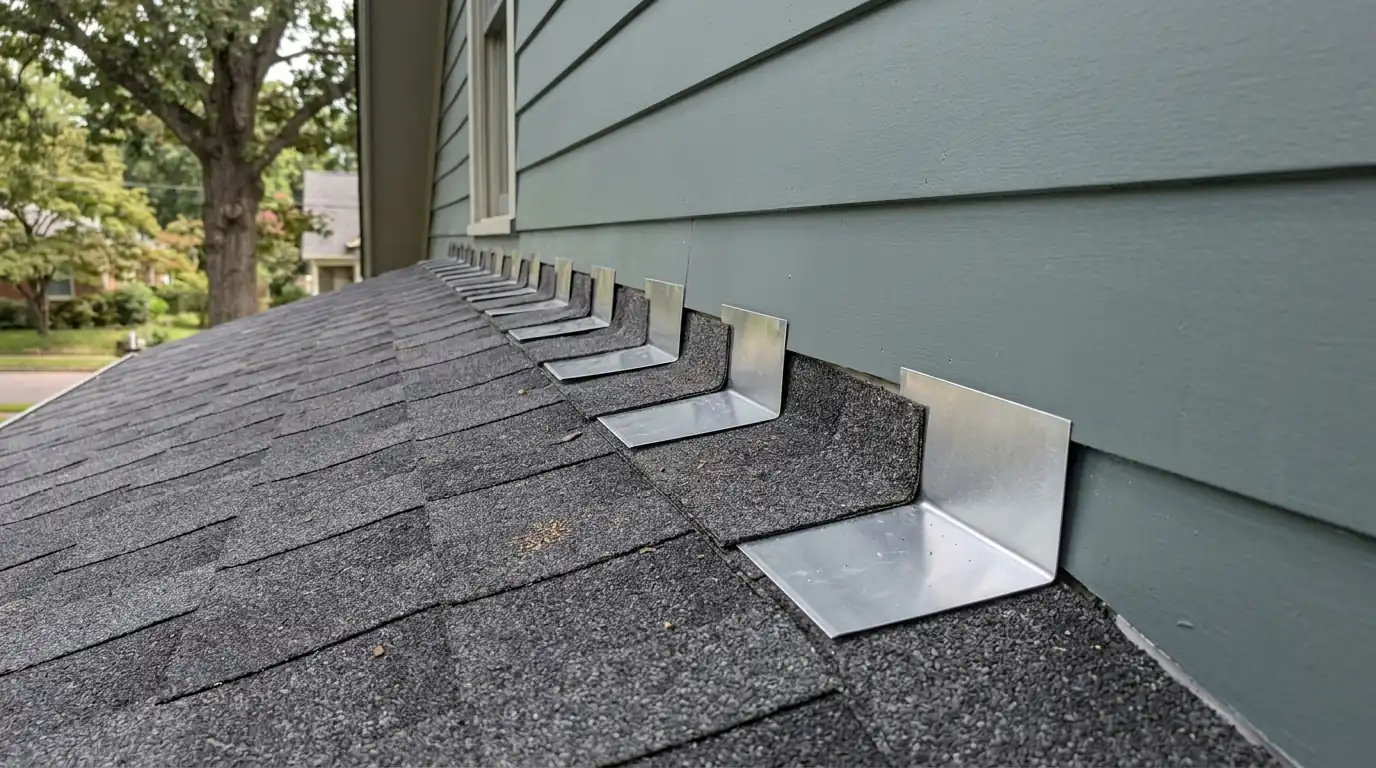
Roof flashing repair replaces or resets the metal pieces that seal roof joints at walls, dormers, skylights, vents and pipes. Typical Little Rock flashing repairs cost $295 to $1,340, depending on the type of flashing and whether siding or trim must come off. Most flashing jobs are finished in one day.
Shingles work well on open slopes, but any place where the roof meets a vertical surface or a penetration needs flashing. These joints are where water is most likely to get in, so they are where the metal has to be lapped and layered correctly to shed water downhill.
On most Little Rock homes, the flashing points are the same handful of spots, and each has a different design for a reason.
Flashing rarely fails because the metal wears out. It fails because something around it changes, or because it was put in wrong to begin with. Missing kickout flashing at the bottom of a wall is one of the most common installation errors we see, and it sends water straight into the wall and siding.
Other common causes include step flashing installed as one long piece instead of individual steps, flashing nailed through the vertical leg so water runs down the nail, siding installed tight to the shingles so water wicks behind it, and old repairs that relied on caulk or roof cement instead of metal.
Roofs that were reshingled without replacing flashing also cause trouble. Old flashing bent and reused during a reroof often has kinks, rust or nail holes that leak as soon as the new shingles are in place.
We also find flashing that was simply painted over or covered with a strip of roofing tape during an earlier repair. Those quick fixes can hold for a while, but they hide what is happening underneath, and the wall behind them is often wetter than anyone realized.
Central Arkansas summers put flashing through constant expansion and contraction. Metal heats up quickly in the afternoon sun and cools overnight, and that movement slowly works sealant joints apart. Caulk-only repairs at flashing lines often crack after a summer or two.
Spring storms then find those gaps. Wind-driven rain from severe thunderstorms, common from roughly March to June, pushes water sideways and uphill into joints that would stay dry in a gentle rain. That is why many flashing leaks show up only in hard, wind-blown storms.
Humidity matters too. Wood trim and siding near a slow flashing leak stay damp in the muggy Arkansas climate, and rot spreads faster than many homeowners expect. By the time a stain appears inside, the sheathing behind the siding can already be soft.
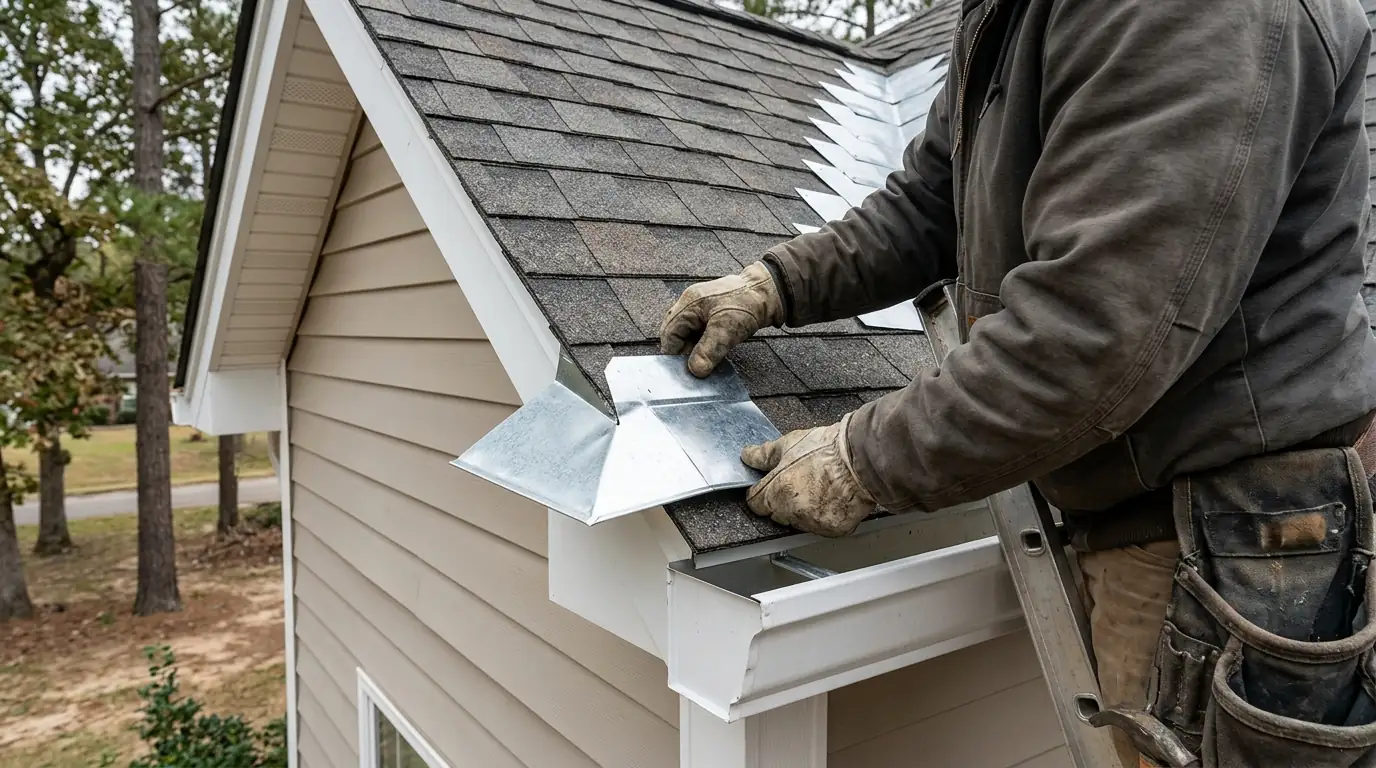
A real flashing repair means removing the shingles and sometimes the siding or trim around the joint, taking out the failed metal and installing new pieces layered in the right order. Step flashing goes in one piece per shingle course. Kickout flashing gets added where a wall ends above a gutter. Counterflashing on brick is cut into a mortar joint and sealed, not just glued to the face.
We check the sheathing and wall framing behind the old flashing, because water that ran down the wall for years often leaves rot hidden under the siding. If wood needs replacing, we show you in photos before we proceed.
Where siding has to come off, our own crew handles it and puts it back, so you are not left coordinating a separate siding contractor.
Valleys and chimneys are handled differently from walls and vents, and each has its own repair page. Here, the focus is on the joints along walls, dormers, skylights and roof penetrations, which together make up most flashing calls we get.
If your roof is close to replacement, it can make sense to fix a flashing leak temporarily and replace all the flashing when the new roof goes on. If the roof has years left, a proper flashing repair now is the better value, and it protects the walls and framing in the meantime.
We look at the age of the shingles around the joint, the condition of the siding and how widespread the flashing problem is before recommending a path. You get a written price for the repair and, if relevant, a note on how the work would fit into a future reroof.
Every flashing repair includes new metal sized and bent for that joint, replacement of any shingles disturbed in the process and resealing of fastener points with the right product for the surface. Where needed, we add kickout flashing, replace damaged trim and reseal siding edges.
Before we leave, you get after photos of the new flashing, a short explanation of what failed and why, and a cleaned-up work area with a magnet sweep for nails.
Flashing repair costs depend on the joint type and how much siding, trim or shingle must be removed. These are typical 2026 Little Rock ranges.
| Job | Typical range | What drives it |
|---|---|---|
| Vent or pipe flashing replacement | $195 to $480 | Vent type and surrounding shingle condition |
| Step flashing along a wall | $520 to $1,340 | Length of wall and siding type |
| Kickout flashing added at a wall end | $185 to $395 | Siding removal and trim repair |
| Skylight reflashing | $445 to $1,160 | Skylight size and curb condition |
| Drip edge replacement | $295 to $970 | Linear footage and fascia condition |
Hidden rot in sheathing or framing, specialty siding and multi-story walls are the biggest price changers. See the full roof pricing guide.
How the job goes
We find the failing flashing from the attic and roof side and check for wall rot.
You see the failed flashing and any hidden damage before work begins.
We remove shingles and siding as needed and install new metal layered in the right order.
Our crew reinstalls shingles and siding, adds kickout flashing where missing and reseals edges.
We photograph the finished joint, clean up and run a magnet sweep for nails.
Usually only partly. Proper step flashing is woven into each shingle course, so the shingles along that joint have to be lifted or replaced to install new pieces correctly. We save and reuse shingles when they are flexible enough, and replace them when they crack on lifting. Caulking over flashing without lifting shingles rarely lasts.
Kickout flashing is a small angled piece at the bottom of a roof-to-wall joint that directs water into the gutter instead of down the wall. Many older homes lack it, and missing kickouts are a common source of rotted siding and wall leaks. We add it during roof flashing repair wherever a wall ends above a gutter.
Caulk is a sealant, not flashing. Central Arkansas heat makes metal expand and contract daily, which pulls caulk joints apart, and sun breaks the caulk down. Within a summer or two it cracks. Lasting roof flashing repair uses layered metal that sheds water by design, with sealant only at fastener points.
Chimney flashing is a specialized type that includes step flashing, a front apron, counterflashing cut into the mortar and often a cricket behind the chimney. Because chimney leaks also come from masonry and the crown, we cover them on our chimney leak repair page. Walls, dormers, vents and skylights are covered here.
Flashing leaks usually show up along walls, at dormers, around skylights and near vents, often worse in wind-driven rain. Shingle leaks are more often in open areas of the slope. Stains near a wall or a joint point toward flashing. We trace the water from the attic to confirm the source before recommending any work.
Related work
We follow the water back to where it actually gets in, fix that spot and stop the stain from coming back.
How we handle itWe find whether the water comes through chimney flashing, the crown, the brick or a missing cricket, then fix that source.
How we handle itNew skylights, replacement units and leak repairs, flashed the way a roofer does it so the opening stays dry for years.
How we handle itHail holes, wind-blown panels, rotted boards and leaks around trim fixed and matched so the wall looks whole again.
How we handle itTalk to a roofer nowCall and describe what you are seeing. We answer around the clock.
Call (501) 387-1152