Flat Roof Repair
Leaks, ponding water, split seams and failed drains fixed on low slope roofs for homes, porches, offices and small commercial buildings.
How we handle itFlat & commercial
A coating can stretch the life of a flat or metal roof that is aging but still sound. We test, clean, repair and coat roofs for homes and businesses across Little Rock and central Arkansas.
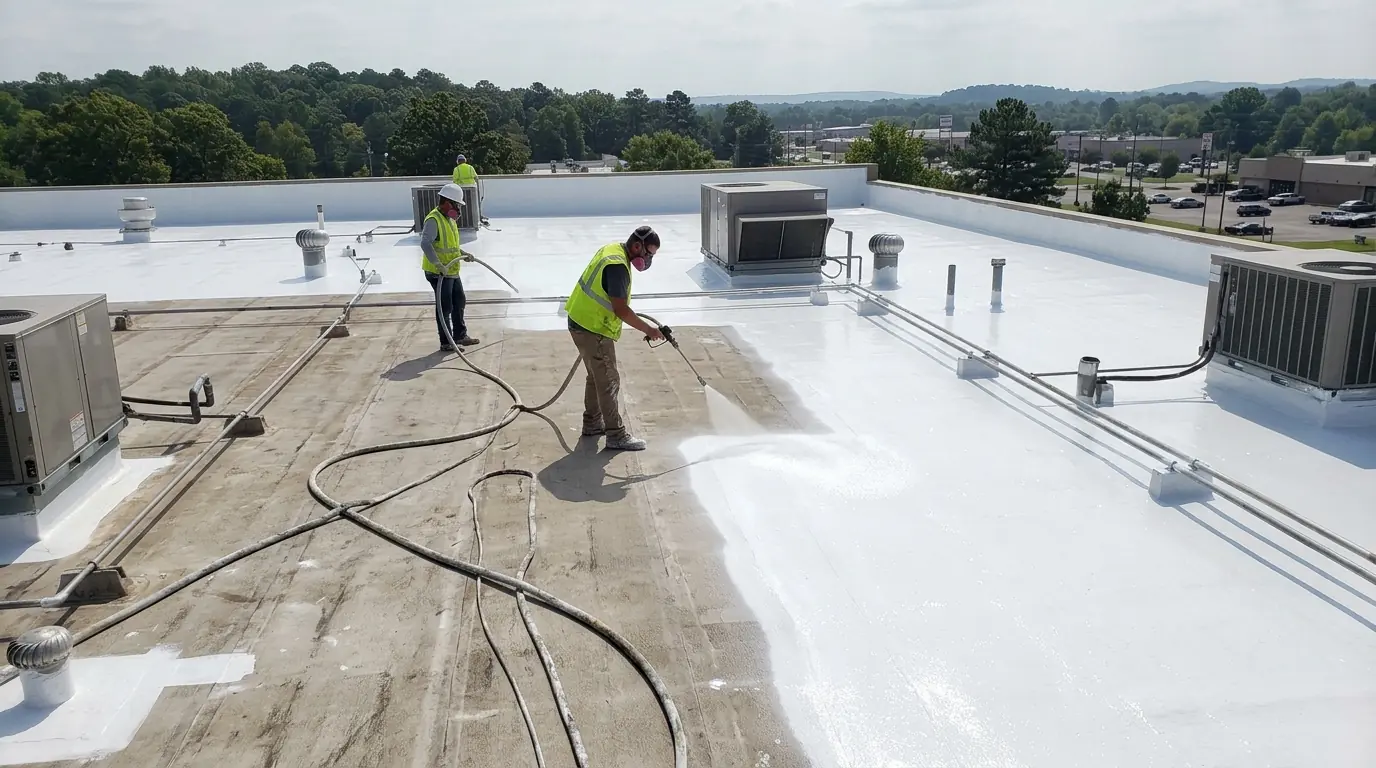
A roof coating is a liquid membrane, usually silicone or acrylic, sprayed or rolled over an existing roof that is still structurally sound. Typical Little Rock costs run $2.35 to $5.40 per square foot depending on the product and prep. Small residential roofs are often coated in one or two dry days, and larger commercial roofs in under a week.
A coating is a restoration, not a cure for a failed roof. It seals small cracks and seams, reflects sunlight, and puts a fresh weathering surface over an older membrane or metal panel so the original roof is protected from further wear.
It cannot fix a deck that is rotten, insulation that is soaked, or a roof that has lost its attachment. Coating over those problems hides them for a short while and then fails along with them. That is why every coating job we take starts with a moisture check and repairs, not with a sprayer.
Think of it like repainting a house with sound siding. The paint protects good material and makes it last longer, but it would never fix boards that have rotted through. Coatings work the same way on a roof.
Silicone handles standing water better than most coatings and holds its color and flexibility under strong sun. It is a common choice for low-slope commercial roofs and for residential flat sections that pond a little after rain.
Acrylic coatings are water-based, cost less per gallon, and work well on metal roofs and roofs with good drainage. They do not like long-term ponding, so we steer away from acrylic where water sits for days.
There are also polyurethane and specialty coatings for certain foam and metal systems. We match the coating to the existing roof type, the drainage and how much foot traffic the roof sees.
Coatings only stick to a clean, dry, repaired surface. We pressure wash or scrub away dirt, chalking and algae, then let the roof dry fully before anything goes on. On metal, loose rust is wire-brushed and treated with a rust-inhibiting primer.
Next comes detail work. Open seams get reinforced with fabric and base coat, fasteners on metal roofs are tightened or replaced with oversized screws, and soft or wet areas are cut out and replaced with matching material. Only then do we apply the coating at the thickness the manufacturer calls for, measured with a wet mil gauge as we go.
Thickness is where cheap coating jobs fall short. A coat sprayed too thin looks fine on day one and then wears through in a few summers. We record the gallons used against the roof area so the coverage rate matches the product sheet, and we share those numbers with you.
Edges and penetrations get extra attention. Pipe boots, curbs, pitch pans and the outer perimeter take a brushed detail coat before the field coat goes on, because those are the places where leaks start on most flat roofs.
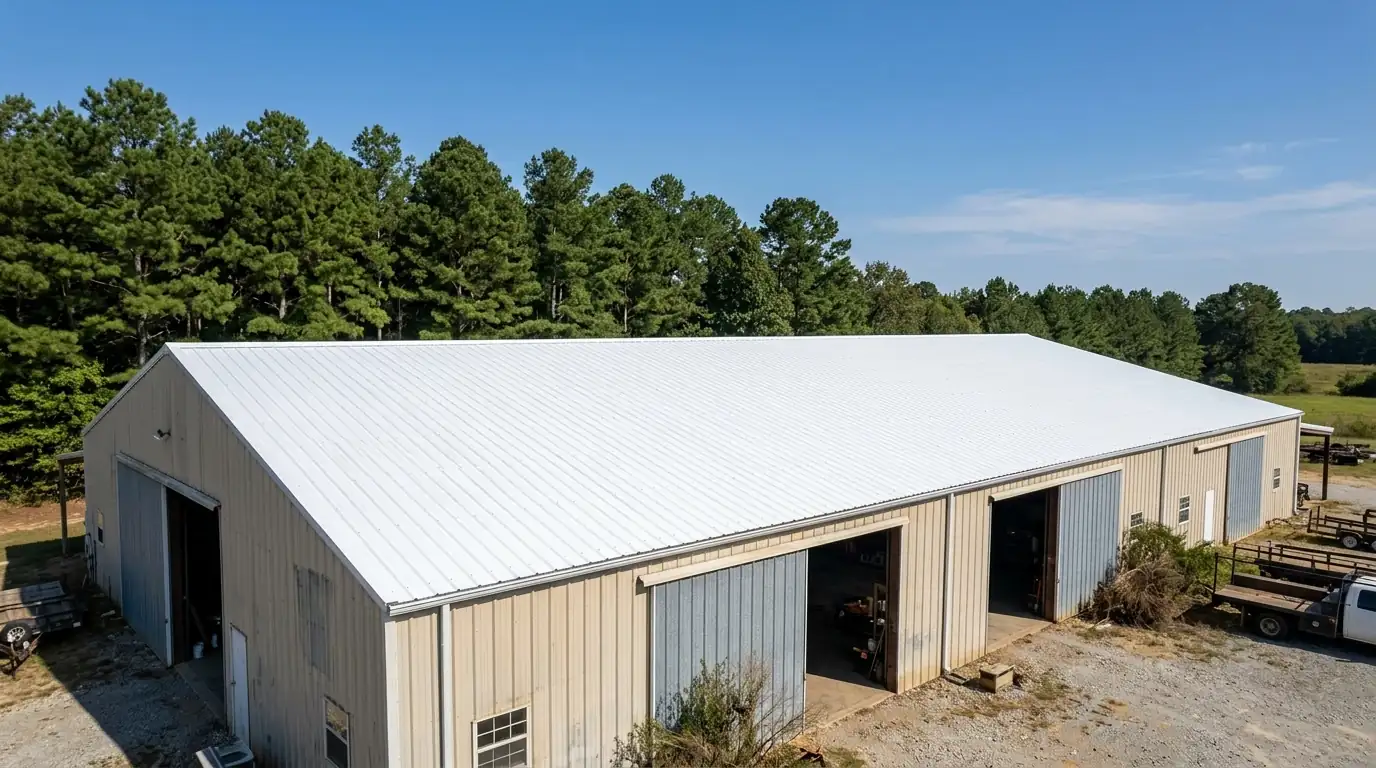
Our long, humid summers are hard on dark flat roofs and on older exposed-fastener metal. A bright white coating reflects a large share of that afternoon sun, which helps the roof surface run cooler and can make the space below a little more comfortable. Results vary by building, so we do not promise a set energy savings.
Humidity also grows algae and mildew on north-facing low roofs, and spring hail and wind loosen fasteners on metal shops and barns from Lonoke County to Saline County. A coating that seals those fastener heads and seams adds a layer of protection the original paint finish no longer gives.
Timing matters here. We plan coating work around dry stretches in late spring, summer and early fall, and avoid days when an afternoon thunderstorm or a cool, dewy night could wash or blush an uncured coat.
On homes, that means flat center sections on mid-century ranches, low porch roofs and older metal roofs on outbuildings and farmhouses. For businesses, it is aging modified bitumen, older TPO and EPDM, and exposed-fastener metal on warehouses and shops.
If a roof has several wet areas, multiple old layers or widespread rust-through, we will tell you a coating is the wrong spend and walk you through replacement options instead.
Church buildings, small medical offices and shop buildings on rural lots are other good candidates. These owners often want to stretch an aging roof a decade while they plan for a larger capital project, and a coating gives them a sound, reflective surface in the meantime.
A coated roof still needs a look once or twice a year and after any major hail event. Clear drains and gutters, keep foot traffic to marked paths, and watch for any spot where a limb has scraped through.
Many coatings can be cleaned and recoated later at a lower cost than the first application, which is a big part of their value over time. Manufacturer warranty terms depend on the product, the thickness applied and registration, and we explain those terms before work begins.
Coating prices in central Arkansas depend heavily on prep. These typical 2026 ranges cover most of the jobs we price.
| Job | Typical range | What drives it |
|---|---|---|
| Acrylic coating on sloped metal per sq ft | $2.35 to $4.10 | Rust treatment, fastener work and roof height |
| Silicone coating on flat membrane per sq ft | $2.85 to $5.40 | Ponding areas, seam reinforcement and coating thickness |
| Small residential flat roof, full coating | $1,480 to $3,960 | Size, wet areas to replace and access |
| Wet area cut-out and replacement | $385 to $1,460 | Square footage of saturated insulation or decking |
The amount of repair before coating, more than the coating itself, usually decides the final price. See the full roof pricing guide.
How the job goes
We probe and take small cores to confirm the roof is dry and sound enough to coat.
The roof is washed of dirt, chalk and algae, then left to dry completely.
Wet areas are replaced, seams are reinforced with fabric, and metal fasteners are tightened or upsized.
Rusted metal and certain membranes get a matching primer so the coating bonds properly.
Coating goes on in one or two passes at the specified thickness, checked with a mil gauge as we work.
Most silicone and acrylic coatings applied at proper thickness last roughly 10 to 15 years before they need cleaning and a recoat. Ponding water, heavy foot traffic and hail can shorten that. The good news is that a recoat on a well maintained surface typically costs less than the first application, because most of the prep and repair work is already done.
A coating seals small cracks and seams, so it often stops minor leaks once the cause is repaired first. It will not fix a leak coming from rotten decking, failed flashing at a wall, or saturated insulation. That is why we find and repair the source before coating, rather than spraying over the problem and hoping it holds.
On sloped metal with good drainage, acrylic is a common and cost-effective choice, as long as it goes on during a dry stretch. Silicone costs more but tolerates any spots where water lingers and resists our strong summer sun well. We check slope, rust level and your plans for the building before recommending either.
A white coating reflects much of the sun that a dark roof absorbs, so the roof surface usually runs cooler. Whether that shows up on your bill depends on insulation, ductwork and how the space below is used. We do not promise a specific savings figure, but many owners notice the room or bay below feels less hot.
Coatings need a clean, dry roof and a forecast clear of rain until the first coat cures. Acrylic is more sensitive to cool nights and heavy dew, while silicone handles moisture a bit better once applied. We plan around dry stretches from late spring into early fall and move dates when afternoon thunderstorms are in the forecast.
Related work
Leaks, ponding water, split seams and failed drains fixed on low slope roofs for homes, porches, offices and small commercial buildings.
How we handle itFixing leaks on existing metal roofs: backed-out screws, cracked washers, loose seams, rust spots and failed flashing or trim.
How we handle itRepair, replacement, coatings and planned maintenance for offices, retail centers, churches and warehouses across central Arkansas.
How we handle itTwo-ply modified bitumen for porches, additions, carports and small commercial roofs, installed and repaired by our own crews.
How we handle itTalk to a roofer nowCall and describe what you are seeing. We answer around the clock.
Call (501) 387-1152