Storm Damage Roof Repair
Full roof assessment after a severe storm, covering debris impacts, mixed hail and wind damage, gutters and the attic below.
How we handle itRoof repair
Hail damage is easy to miss from the ground and easy to exaggerate from a ladder. A careful, slope-by-slope count is what tells you whether your roof needs a few shingles, a slope or a full replacement.
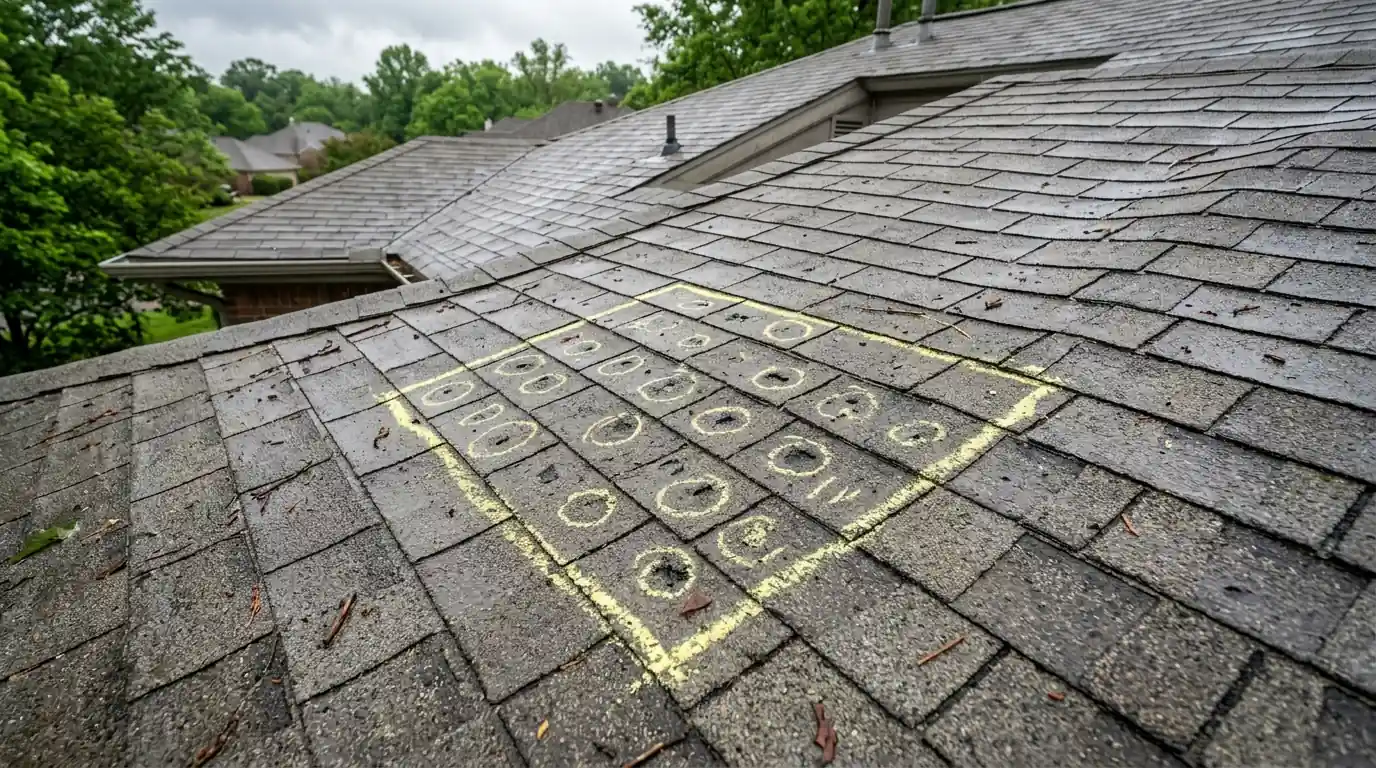
Hail damage roof repair fixes shingles bruised, cracked or stripped of granules by hailstones, plus dented vents, flashing and gutters. In Little Rock, small hail repairs typically run $480 to $1,620, while slope or full replacements after heavy hail cost far more. We usually inspect within a few days of the storm and photograph every slope.
A hailstone does not usually punch a hole in an asphalt shingle. Instead it bruises it. The impact crushes the granule layer and fractures the mat underneath, leaving a dark spot that feels soft, a little like the bruise on an apple. From the street the roof can look perfectly fine.
That bruise is the problem. Without granules, the asphalt below is exposed to UV, and the fractured mat can crack further each summer. Within a year or two, those spots can lose material, open up and start letting water reach the underlayment.
Larger stones can crack shingles outright or tear off corners, especially on roofs that are already dry and brittle. Wind-driven hail tends to hit one or two slopes far harder than the others, which is why every slope needs its own look.
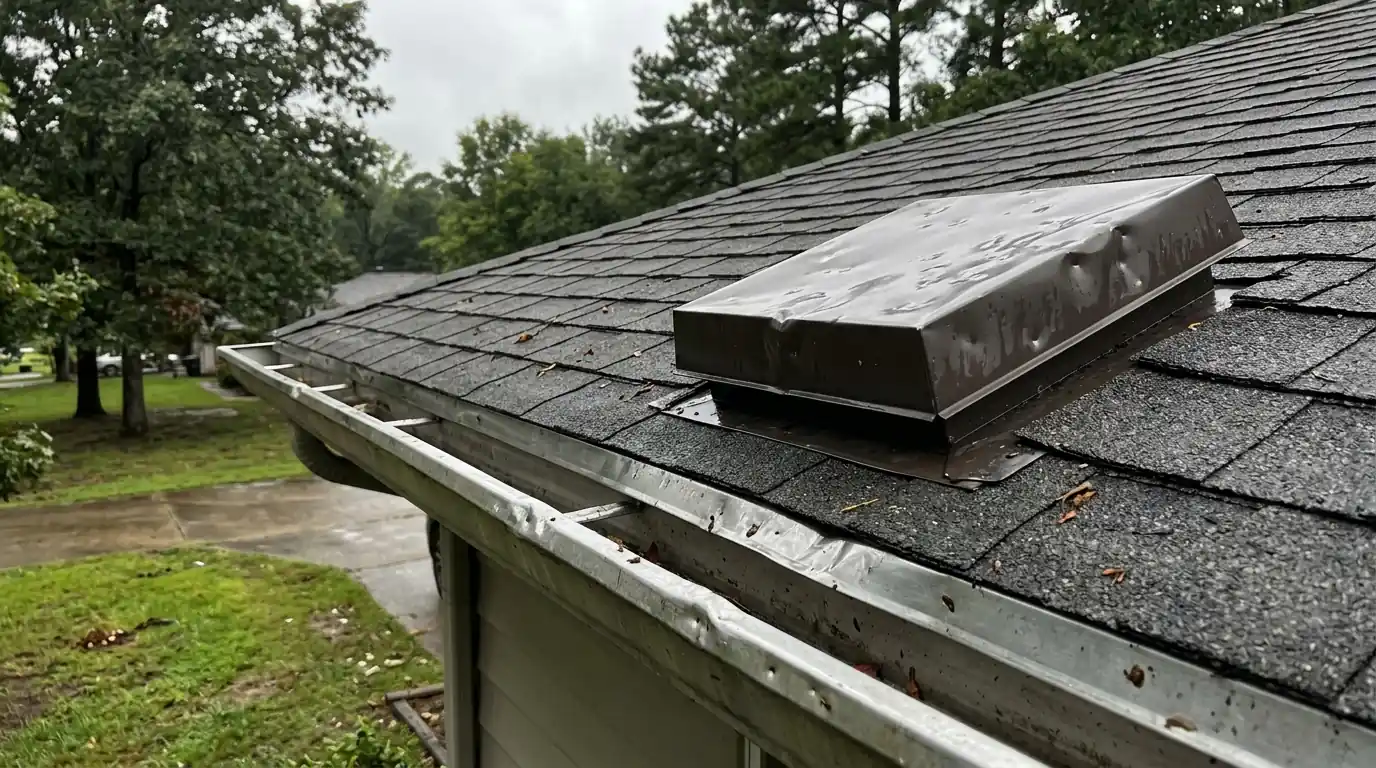
A real hail inspection is methodical. We start on the ground with the soft metals, because gutters, downspouts, window screens and the fins on air conditioning units dent easily and show the size and direction of the hail. That tells us which slopes to look at hardest.
On the roof, we mark a test square on each slope, typically about ten feet by ten feet, and circle every hit inside it with chalk. Counting hits per square gives a fair, repeatable measure of damage instead of an impression. We also check ridge caps, roof vents, pipe jacks, skylights and flashing for dents and cracks.
Each test square is photographed close and wide, labeled by slope. The result is a clear record that shows where the hail hit, how hard and how much of the roof was affected.
Steep roofs or high two-story slopes sometimes need extra safety setup before we can mark test squares properly. We would rather take the extra time to get a fair count on every slope than estimate from the edge of the roof.
Not every mark on a shingle is hail. Blistering from heat, granule loss from age, foot traffic scuffs, manufacturing flaws and old mechanical damage can all look similar at a glance. Adjusters know the difference, and so do we.
Hail bruises are random in pattern, feel soft when pressed and often show a fractured mat. Blisters tend to be small, raised and clustered on sun-facing slopes. Age wear is spread evenly. We point out which is which in your photos, because an honest report holds up far better than one that calls everything hail.
Central Arkansas sees its most active hail from roughly March to June, when warm, humid Gulf air meets strong spring storm systems. Some years bring a single hail event; others bring several within a few weeks. Hail can also show up in fall storms, though less often.
Roof age matters a lot here. After several long Little Rock summers, asphalt shingles lose flexibility, and a dry, brittle shingle cracks under hail that a newer one would absorb. Two houses on the same street, hit by the same storm, can end up with very different damage depending on how old their roofs are.
If your roof has been through more than one hail season since it was last inspected, a careful look is worth it even if you have no leaks. Damage from a storm last spring can still be present, and many policies have limits on how long after an event a claim can be filed.
Hail is one of the most common reasons for roof claims in Arkansas. Many policies here carry a separate wind and hail deductible, and some use a percentage of your dwelling coverage rather than a flat dollar amount. Check your declarations page before deciding how to proceed so you know what you would actually pay.
Adjusters typically look for a certain density of hits per test square, along with damage to the mat rather than just cosmetic granule marks. Our labeled photos make that review easier and help the adjuster see the same evidence we saw. If the adjuster's scope and ours differ, we point out the specific items in question so you can raise them with your carrier.
Some policies pay the full cost of a roof only after the work is done, and some deduct for age. Knowing which type you have helps you plan.
When damage is limited to a few spots, we replace bruised and cracked shingles individually, along with any dented vents or flashing. When hits are spread across a slope, piecemeal replacement can leave a patchwork of mismatched shingles, and a full slope replacement is usually cleaner.
Where hail has hit most slopes, a full roof replacement is often the right answer. If you are replacing anyway, impact-resistant shingles are worth pricing, since some insurers in Arkansas offer premium discounts for them. Ask your carrier before you choose.
Whatever the scope, we replace the damaged soft metals at the same time, including vent caps, pipe jacks and any dented flashing, so the finished roof does not carry hidden weak spots into the next hail season.
Hail repair costs depend on how many slopes were hit and how hard. These are typical 2026 Little Rock ranges before any insurance involvement.
| Job | Typical range | What drives it |
|---|---|---|
| Spot shingle replacement, light hail | $480 to $1,620 | Number of bruised shingles and color match |
| Dented vent, pipe jack and flashing replacement | $215 to $780 | Number and type of roof penetrations |
| Single slope replacement | $2,350 to $5,600 | Slope size, pitch and layers removed |
| Full roof replacement, average home | $9,850 to $18,400 | Roof size, complexity and shingle line chosen |
| Gutter and downspout replacement | $635 to $2,280 | Linear footage and whether dents are cosmetic only |
The number of affected slopes, shingle line, roof pitch and whether you upgrade to impact-resistant shingles change the final price most. See the full roof pricing guide.
How the job goes
We check gutters, vents, screens and AC fins to read hail size and direction.
Each slope gets a chalk-marked test square with every hit counted and circled.
You get close and wide photos for each slope, separating hail hits from age wear.
Our crew replaces bruised shingles and dented metals, or the slope or roof when damage is widespread.
Look at the soft metals first. Dents on gutters, downspouts, the tops of roof vents and the fins of your outdoor AC unit are strong clues. Check window screens for small tears on the storm side. If you see any of those, have the roof inspected, because shingle bruises are rarely visible from the ground and can worsen each summer.
Hail around one inch across can damage asphalt shingles, especially older, sun-dried ones. Smaller hail can still mark soft metals without harming the shingles. Wind matters too, since hail driven at an angle hits harder. Rather than guessing from the size you saw, we count actual hits per test square on each slope and photograph the results.
Many policies set a deadline for reporting storm damage, often measured from the date of the storm. The exact limit depends on your policy, so check it or call your carrier. If you are unsure whether a storm from last spring caused damage, an inspection now with dated photos helps you find out while there may still be time.
It depends on how widespread the damage is and how your policy is written. Adjusters usually look for a certain density of hits per slope and damage to the shingle mat. Some policies pay replacement cost, others deduct for age. We provide labeled photos for each slope so the adjuster can see exactly what we found.
If you are replacing the roof anyway, they are worth pricing. Impact-resistant shingles are built to handle hail better than standard shingles, and some Arkansas insurers offer premium discounts for them. Ask your carrier what discount, if any, applies before deciding. We can price both options side by side so you can weigh the difference.
Related work
Full roof assessment after a severe storm, covering debris impacts, mixed hail and wind damage, gutters and the attic below.
How we handle itClass 4 shingles tested under UL 2218 to resist hail cracking, a smart choice for homes in central Arkansas hail paths.
How we handle itWe document storm damage, meet your adjuster on the roof and write a line-item scope, while you keep control of your own claim.
How we handle itA complete tear-off to the deck with new underlayment, flashing, vents and shingles, finished in a day or two on most homes.
How we handle itTalk to a roofer nowCall and describe what you are seeing. We answer around the clock.
Call (501) 387-1152