Metal Roofing
Ribbed exposed-fastener metal panels for homes, porches, barns and shops, a durable and budget-friendly choice for central Arkansas.
How we handle itNew roofs & materials
Standing seam is the premium metal roof, with no screws through the face of the panels. Clips under the seams let the metal move with Arkansas heat while the roof stays tight and clean looking.
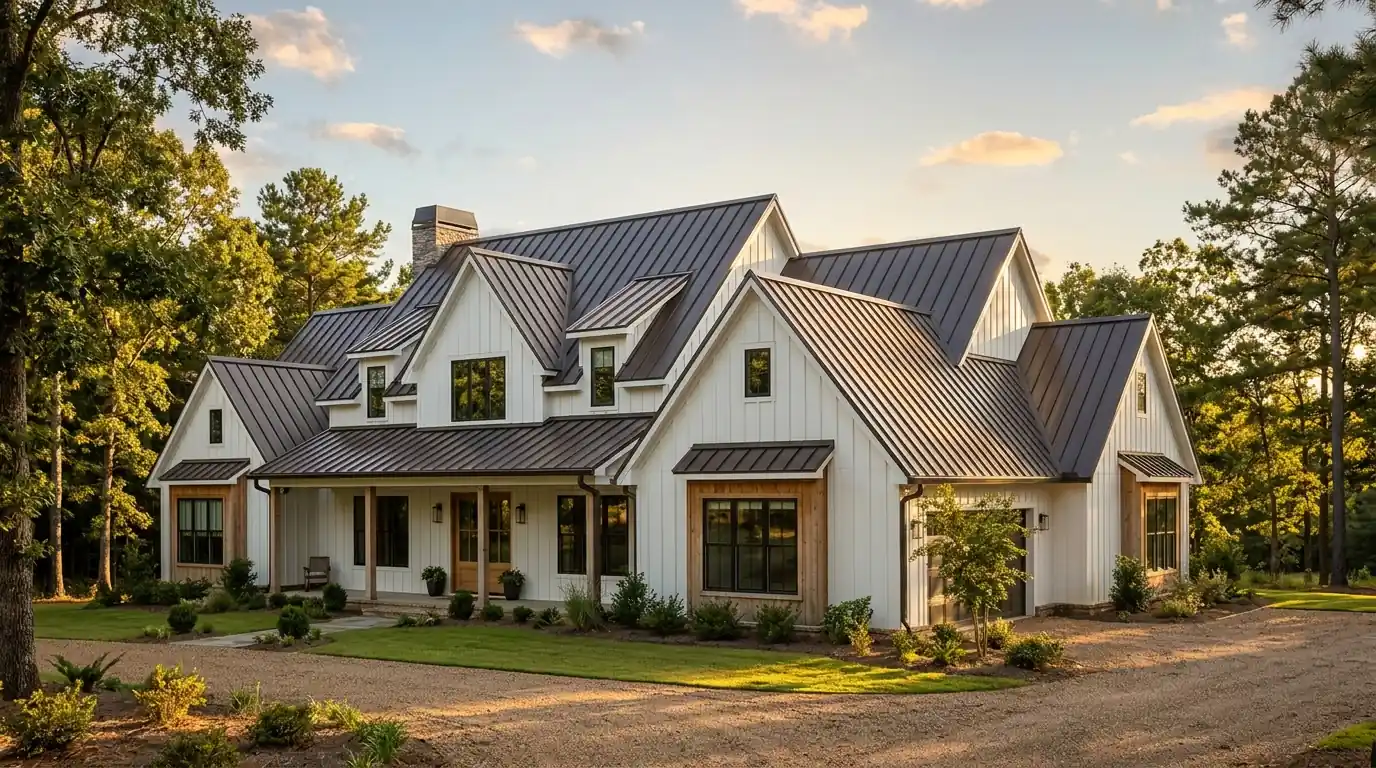
Standing seam metal roofing uses smooth panels joined by raised vertical seams, with clips and fasteners hidden under the seams instead of screwed through the face. In Little Rock, a standing seam roof on a typical home runs $19,600 to $34,800. Installation usually takes three to six days, and a well-installed roof can last 40 to 60 years.
On an exposed-fastener metal roof, hundreds of screws go straight through the panels, and each one depends on a rubber washer to stay dry. Standing seam takes those holes out of the field of the roof. Each panel attaches with clips or fastener flanges along its edge, and the next panel's seam covers them.
That design has two big benefits. There are no washers in the roof surface to wear out, and the clips let the panels slide slightly as they heat and cool. On a long July afternoon, steel grows in length, and standing seam is built to handle that movement without working fasteners loose.
The look is different too: flat panels between crisp vertical lines, popular on modern farmhouses, lake homes and contemporary builds.
There are two main ways the seams come together, and the right one depends on your roof's pitch and exposure.
We help you pick based on pitch, wind exposure and budget, and we explain the trade-offs in writing so you can compare.
Standing seam panels usually run in one piece from eave to ridge. For many roofs, that means panels are cut to exact lengths for each slope, either from a supplier or formed near the site. One continuous panel means no end laps where water could sneak in.
Every panel is measured and ordered for your roof, so accurate measuring is the first real step. We measure each slope, note pitch changes, dormers and penetrations, and plan panel layout so seams line up across the roof.
Penetrations need special attention. Plumbing vents, exhaust caps and skylights get flashed with boots or curbs designed for standing seam, placed between seams wherever possible.
Ordering time is part of planning. Because panels are made to length, we confirm measurements twice before the order goes in, then schedule the tear-off for when the panels are ready. That keeps your home from sitting under underlayment longer than needed, which matters during spring storm season.
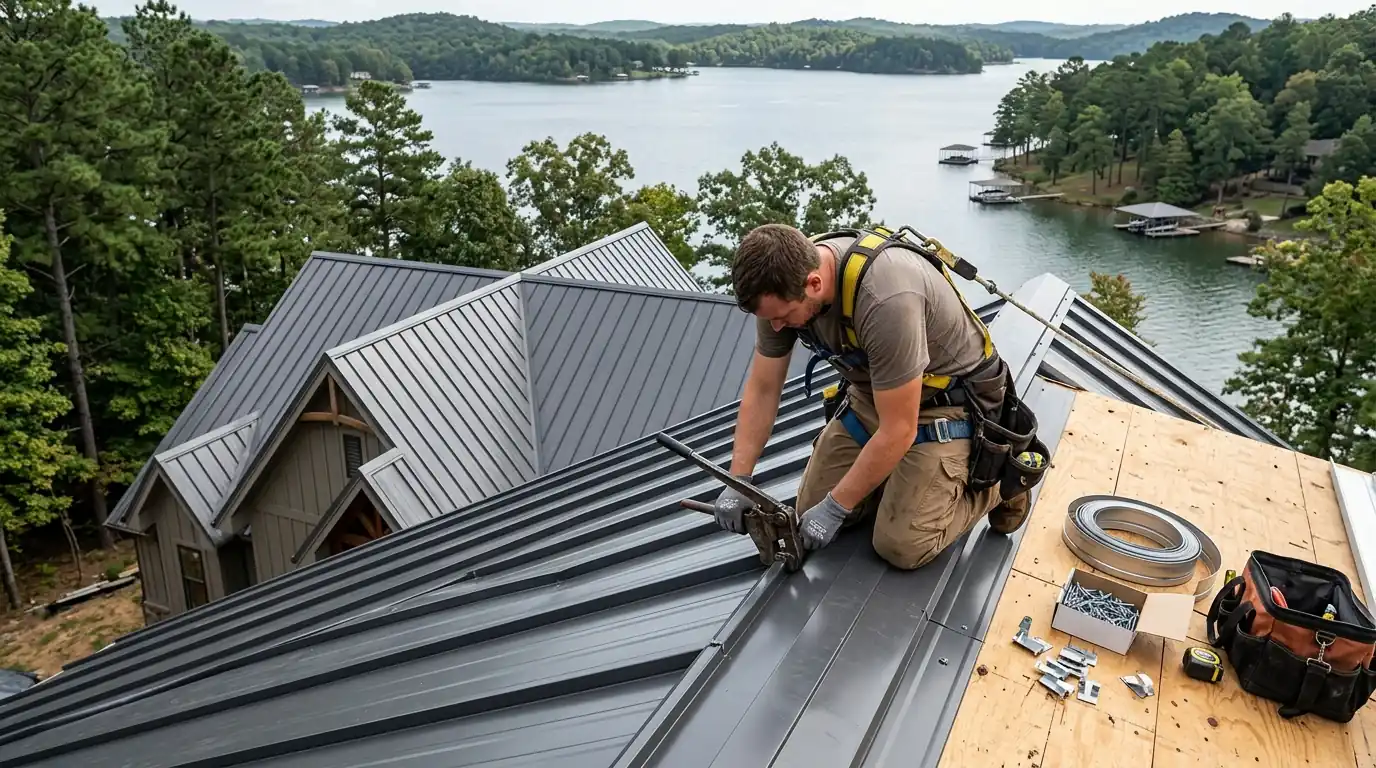
Long summers and big daily temperature swings make standing seam a smart fit here. The floating clip system absorbs that movement, which is the main reason these roofs last so long. Painted finishes with reflective pigments also keep some summer heat out of the attic.
Wind resistance is strong because there are no exposed fastener heads for wind to work on, and the seams lock panels together across the whole roof. During spring storm season, the clips and edge trim are what hold the system down, so we follow the panel maker's clip spacing closely, tighter near eaves, rakes and ridges.
Hail can dent standing seam, as it can any metal roof, though the roof usually keeps shedding water. Pine needles and leaves slide off the smooth panels easily, which keeps valleys clearer under the tall pines common around here.
Underneath the panels, we install a high temperature underlayment rated for metal roofs, since metal surfaces get hotter than shingles. In valleys and at eaves we add ice and water shield. Many standing seam systems also use a slip sheet so the panels can move freely.
Trim is custom bent for your roof: eave, rake, ridge, valley, sidewall and chimney flashing, all in matching finish. These pieces carry as much of the waterproofing as the panels do.
We hem panel ends at the eaves and use closures at the ridge to keep out wind-driven rain and insects. Snow guards are rarely needed in central Arkansas, but over doorways on steep roofs, they help during the occasional ice storm.
Standing seam costs more than shingles or ribbed panels up front, often close to double the price of a shingle roof. In return, it can outlast two or three shingle roofs and needs very little upkeep, with no fasteners in the field to replace.
If you plan to stay in the home for a long time, the math often works in its favor. Manufacturer warranty terms on paint and panels depend on the product and registration, and we explain them in plain language.
You get a written price with panel, trim and labor broken out before any work starts. Call (501) 387-1152 to talk about standing seam for your home.
Solar is worth mentioning here. Standing seam is one of the easiest roofs to mount solar panels on, because clamps attach directly to the seams without drilling holes through the roof. If panels are in your future, standing seam avoids penetrations that would otherwise need flashing.
Standing seam cost depends on panel type, gauge, roof complexity and trim. These are typical 2026 Little Rock ranges.
| Job | Typical range | What drives it |
|---|---|---|
| Standing seam roof, typical 1,600 to 2,200 sq ft home | $19,600 to $34,800 | Roof size, pitch and number of valleys |
| Snap-lock panels, per square installed | $945 to $1,385 | Gauge, seam height and finish |
| Mechanically seamed panels, per square installed | $1,165 to $1,640 | Seaming labor and panel profile |
| Porch or accent roof in standing seam | $2,450 to $7,850 | Size, pitch and tie-in to the main roof |
Hips, valleys, dormers, chimneys and skylights add custom trim and labor, and steep pitches add safety setup. See the full roof pricing guide.
How the job goes
We measure each slope, pitch change and penetration so every panel can be cut to exact length.
You choose snap-lock or mechanically seamed panels, seam height, gauge and color, with a written price.
We tear off, repair decking and install high temperature underlayment and ice and water shield.
Panels go on with concealed clips at the maker's spacing, seamed tight and kept square.
We install bent trim, flashing and ridge closures, then clean up scraps and walk the roof with you.
A well-installed standing seam roof often lasts 40 to 60 years. The concealed clips let panels expand and contract with central Arkansas heat without loosening fasteners, and there are no washers in the roof surface to wear out. Paint finish life depends on the product and its exposure.
The panels are heavier and formed to length, the clips and custom trim take more labor, and seaming takes skill and time. In return you get no exposed screws, better handling of heat movement and much less maintenance. Many owners see the higher cost balanced over the roof's long life.
Oil canning is a visible waviness in the flat area of a metal panel, caused by stresses in the steel and heat movement. It is cosmetic and does not cause leaks. Narrower panels, pencil ribs or striations, thicker gauges and careful installation all reduce how much it shows.
Many mechanically seamed panels are rated for lower slopes than shingles, which makes them a good choice for gently pitched roofs and porch additions. Snap-lock panels usually need more pitch. We check your roof's slope against the panel maker's minimum before recommending a system.
We recommend tearing off the shingles first. That lets us check and repair the deck, install the right underlayment and keep the panels flat. Covering old shingles can trap moisture and leave bumps that show through the smooth panels, which matters more on standing seam than on ribbed metal.
Related work
Ribbed exposed-fastener metal panels for homes, porches, barns and shops, a durable and budget-friendly choice for central Arkansas.
How we handle itFixing leaks on existing metal roofs: backed-out screws, cracked washers, loose seams, rust spots and failed flashing or trim.
How we handle itA complete tear-off to the deck with new underlayment, flashing, vents and shingles, finished in a day or two on most homes.
How we handle itBalanced ridge and soffit ventilation that lets hot, damp attic air out and helps shingles, decking and AC systems last longer.
How we handle itTalk to a roofer nowCall and describe what you are seeing. We answer around the clock.
Call (501) 387-1152