Roof Replacement
A complete tear-off to the deck with new underlayment, flashing, vents and shingles, finished in a day or two on most homes.
How we handle itVillage Roof Replacement
Hot Springs Village is a large gated community spread across wooded hills in Garland and Saline counties. Many homes here are reaching the age where their roofs need full replacement, often under the shade of tall trees.
In Hot Springs Village, the most common roof work is full replacement on homes built in the 1980s through 2000s, plus valley, gutter and tree damage repairs on wooded lots. Replacements typically run $12,640 to $23,180 depending on size and pitch, and repairs $415 to $1,340. We are about an hour from Little Rock and answer 24/7.
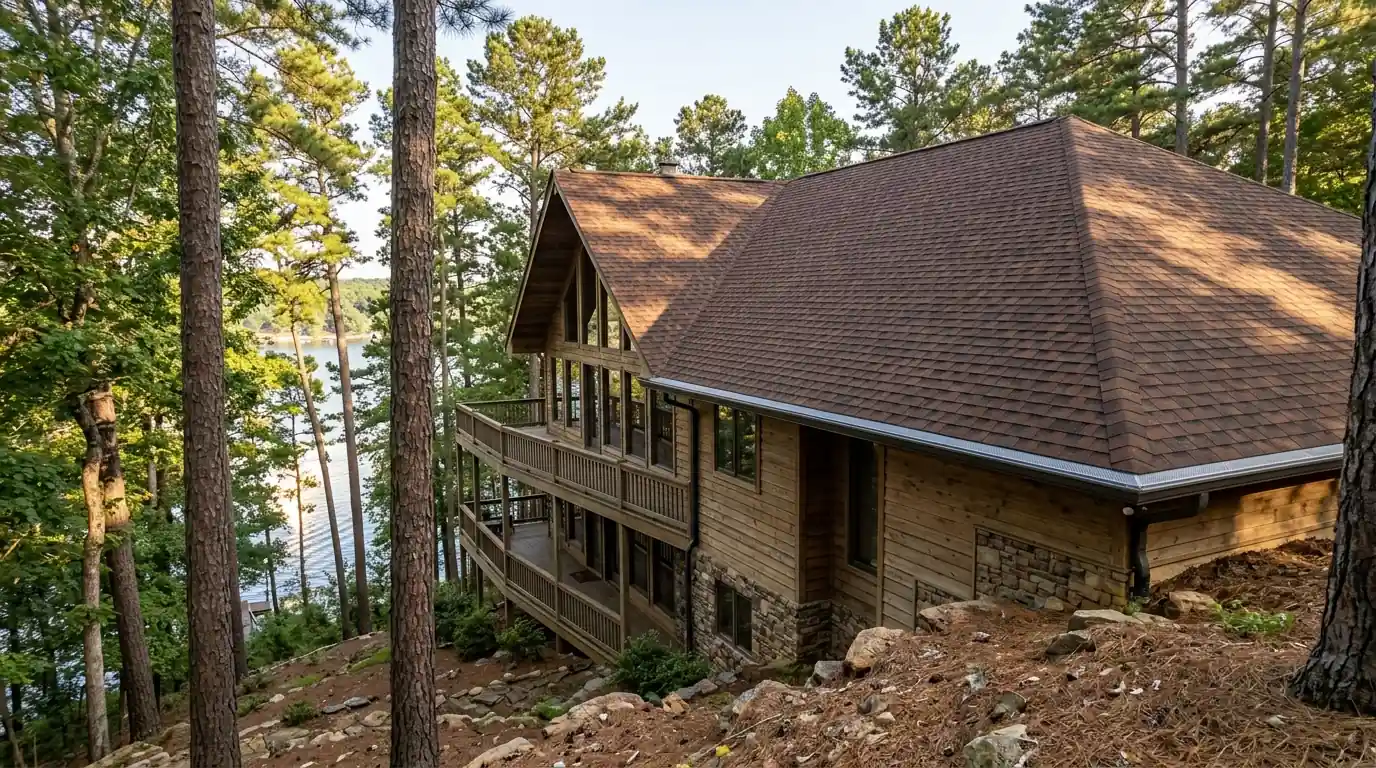
Hot Springs Village was founded in 1970 and has grown into one of the largest gated communities in the country, with eleven recreation lakes, nine golf courses and homes tucked into hills of oak and pine. Its population was 15,861 at the 2020 census, and many residents are retirees.
The homes reflect decades of building. Many went up in the 1980s, 1990s and early 2000s, so a large share of roofs are on their first or second replacement. Lots are often sloped, with steep driveways, walkout basements and decks facing the lakes or golf course.
Shade from tall trees is the defining condition. It keeps roofs cooler in summer, but it also holds moisture, feeds algae and moss, and drops limbs, leaves and needles onto every surface.
The Village is run by a property owners' association, and its Architectural Control Committee reviews building plans and issues permits for new homes and remodeling. A roof replacement, especially one that changes color or material, may need approval before work begins.
We recommend checking with the POA before you sign for a new roof, and we can provide the details you will usually need, such as the shingle or metal product, color name and samples. Rules can change, so the POA's current guidance is always the final word.
Because the Village is gated, we also coordinate entry ahead of time so the crew and material deliveries arrive without delays.
After years of work under heavy tree cover, the problems are consistent. Valleys fill with leaves and needles and hold water under the shingles. Gutters clog and overflow onto fascia and decks. North facing slopes grow dark algae streaks and moss that lift shingle edges.
Limb damage is common after spring storms and the occasional winter ice storm. Even a limb that bounces off can crack shingles or bend gutters. We also see aging pipe boots, worn skylight seals and chimney flashing that has pulled away on homes from the 1980s and 1990s.
Steep lots make some roofs hard to reach, and walkout basements create tall eave heights on the downhill side. We plan ladders, staging and safety lines for each house.
For a Village replacement, we tear off to the deck, replace soft boards, install synthetic underlayment with ice and water barrier in valleys, and put in new flashing, boots and vents. Shaded attics benefit from balanced intake and ridge ventilation, which helps them dry out after damp weather.
Many owners choose algae resistant architectural shingles, and some prefer metal. We bring samples so you can compare colors in the shade of your own trees, which can make shingles look darker than in a showroom.
Fine mesh gutter guards are worth considering on most Village lots, and we can price them with the roof.
Call (501) 387-1152 any time. We schedule an inspection, photograph what we find and give you a written price before work starts. Most replacements take two to three days on Village homes because of pitch and access, and we finish with a magnet sweep for nails across the lot and driveway.
If you are away part of the year, we can send photos of the inspection and the finished roof so you see the work without being on site.
Many Village homes sit along golf course fairways, and stray golf balls do occasionally crack shingles or dent gutters and vents. Damage like that is usually a quick repair, but it is worth having someone look if you hear a hard hit on the roof, since a cracked tab can let water in during the next storm.
Decks and covered porches are also a common source of trouble. Where a deck roof or screened porch ties into the main house, the flashing has to carry water from the upper roof past the joint, and older installations often leak there first. We check those tie ins on every inspection and rebuild them when needed.
If you would rather start with an inspection than a full replacement, that is a good first step. We will tell you how much life the current roof has left and what, if anything, needs attention now.
Most requested in Hot Springs Village
A complete tear-off to the deck with new underlayment, flashing, vents and shingles, finished in a day or two on most homes.
How we handle itRebuilding worn or leaking roof valleys with fresh underlayment, valley metal and properly cut shingles that handle heavy downpours.
How we handle itMicro-mesh, perforated and screen gutter guards matched to the pines, oaks and sweetgums around your home.
How we handle itLow-pressure soft washing that removes black algae streaks, moss and lichen without stripping the protective granules from your shingles.
How we handle itFull roof assessment after a severe storm, covering debris impacts, mixed hail and wind damage, gutters and the attic below.
How we handle itNew skylights, replacement units and leak repairs, flashed the way a roofer does it so the opening stays dry for years.
How we handle itOften, yes. The Hot Springs Village POA's Architectural Control Committee reviews exterior projects and issues permits for remodeling, and a roof that changes color or material may need approval. Check the POA's current requirements before signing. We provide the product details, color name and samples you will usually need for the application.
The Village is gated, so we coordinate entry ahead of time for the inspection, the crew and the material delivery. Let us know your gate and street when you call (501) 387-1152. Planning access in advance keeps the job on schedule and avoids deliveries waiting at the entrance.
Heavy oak and pine shade keeps Hot Springs Village roofs damp long after rain, which lets algae and moss grow, especially on north slopes. Moss lifts shingle edges and holds moisture. We clean roofs gently without pressure washing, and on replacements we suggest algae resistant shingles and better attic ventilation.
Most Hot Springs Village replacements take two to three days. Steep pitches, tall downhill eaves on walkout homes and limited driveway space add time compared with flat lots. Once approvals and gate access are set, we give you a schedule in writing with your price and keep you updated by phone.
Roof trouble in Hot Springs Village?Call any hour. A person answers and books the first open crew.
Call (501) 387-1152