TPO Roofing
White single ply TPO membrane with hot air welded seams for low slope homes, additions and commercial roofs facing hot Arkansas summers.
How we handle itFlat & commercial
Flat roofs leak in different ways than sloped roofs, and the wet spot inside is rarely right under the problem. We trace water to its real entry point and repair it with materials that match your existing membrane.
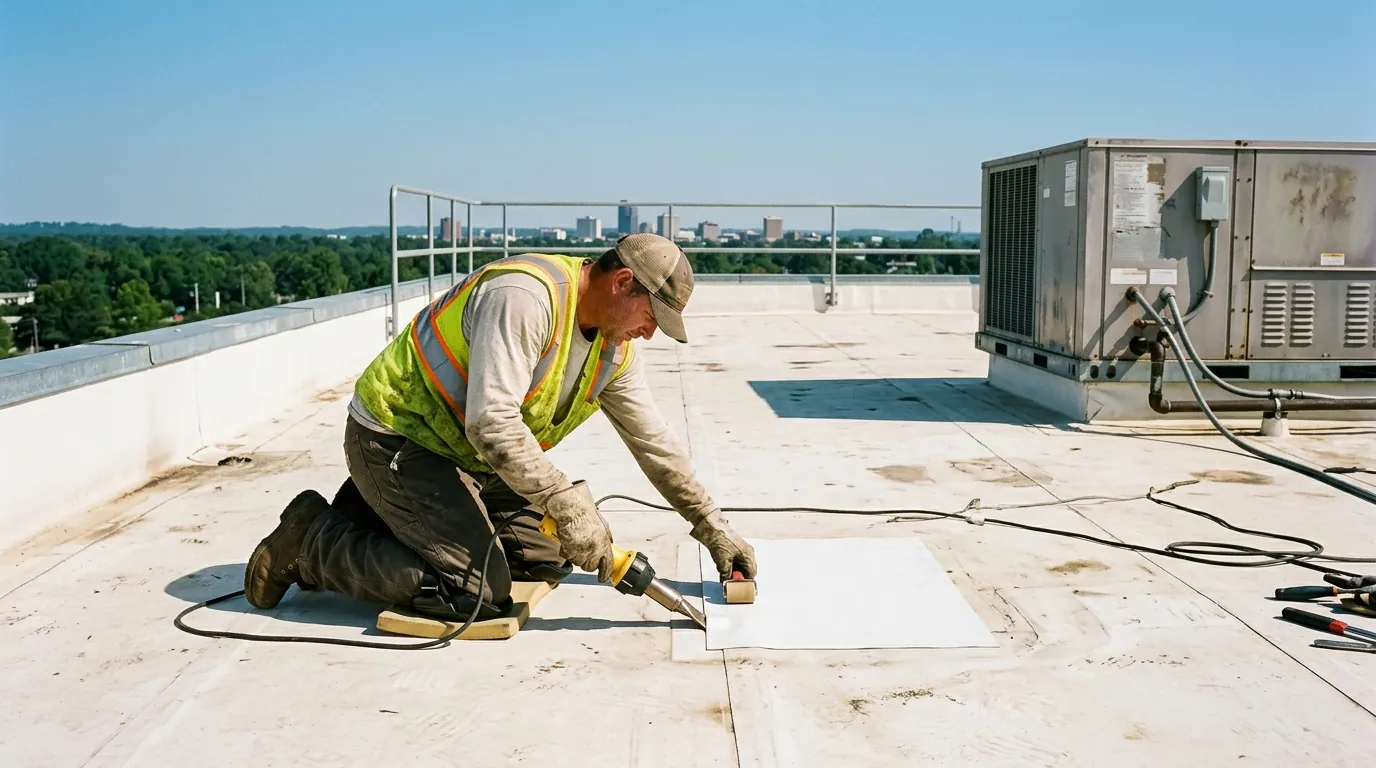
Flat roof repair fixes leaks and damage on low slope roofs covered with TPO, EPDM, modified bitumen, built-up tar and gravel, or coatings. In Little Rock, typical repairs run $395 to $1,180 for seams, punctures and flashing, and $1,650 to $4,800 for larger sections or drain work. Most repairs are done in one visit once the roof is dry enough to work on.
Low slope roofs are not truly flat. They are built with a gentle pitch toward drains, scuppers or gutters, and when that drainage works, water leaves the roof quickly. When it does not, water sits, and standing water finds every weak spot.
The most common leak points are seams between sheets, flashing where the roof meets parapet walls or the house, curbs around HVAC units, pipe boots, and the drains themselves. Punctures from dropped tools, fallen limbs or foot traffic are next on the list.
Inside, water often travels along the deck or insulation before it drips, so the stain on your ceiling can be several feet from the hole. We track it from the roof side using the slope, the membrane condition and, when needed, a careful water test.
Rooftop equipment adds its own leak points. Condensate lines from HVAC units sometimes drain right onto the membrane, service techs leave screws and panels lying on the roof, and curbs around old units that were moved or removed are often patched in a hurry. We check each one while we are up there.
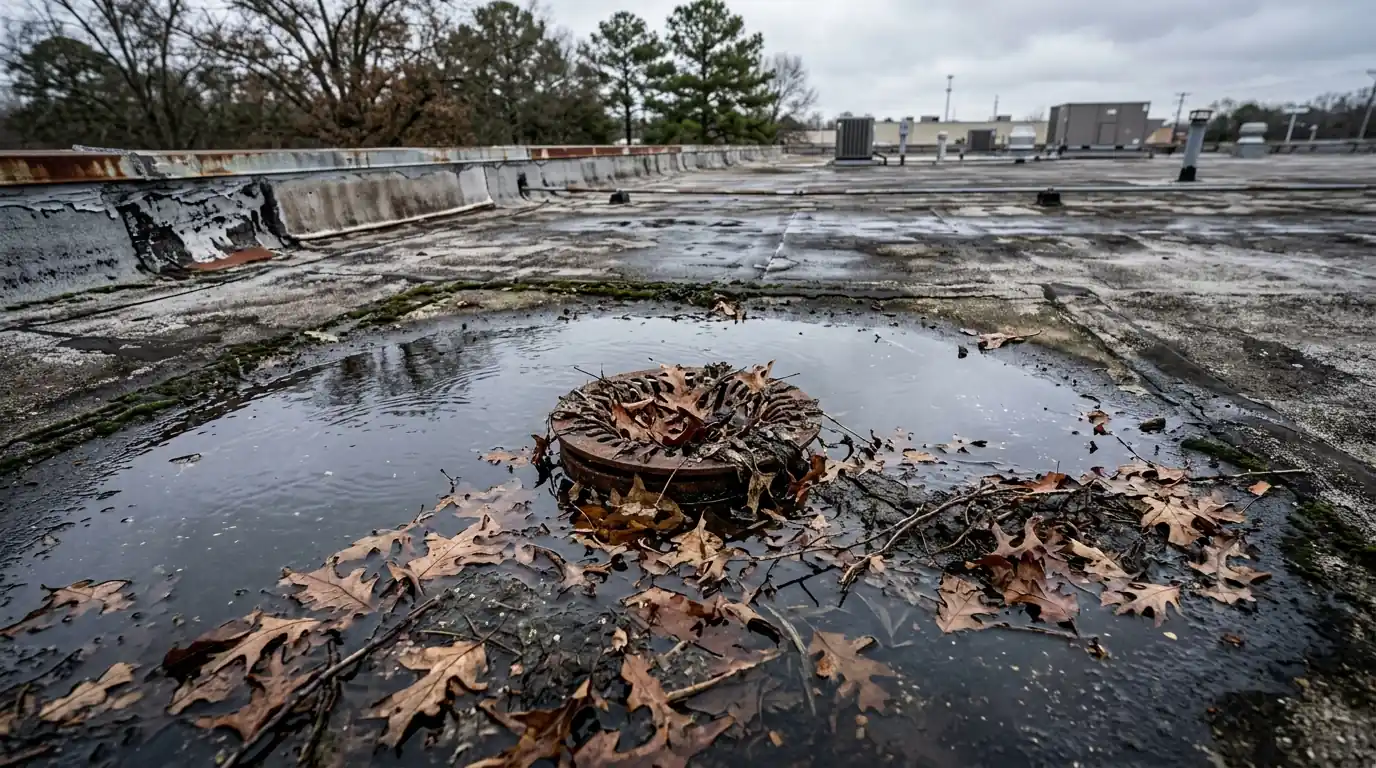
Ponding water is water that stays on the roof well after rain stops. Over time it breaks down membranes and coatings, adds weight to the structure, and collects dirt and leaves that hold even more water.
The cause might be a clogged drain or scupper, a deck that has sagged, or insulation that has crushed and lost its slope. Clearing drains is quick. Fixing a low spot usually means adding tapered insulation or crickets under new membrane so water moves toward the outlet.
A quick way to spot ponding from the ground is to look for rings of dirt or algae on the roof surface after it dries. Those rings mark where water sat, and they tell us exactly where to look first.
A repair should use the same family of material as the roof. TPO is welded with hot air, so we heat weld new TPO patches and seam strips. EPDM rubber is repaired with primed seam tape and cured EPDM patches. Modified bitumen gets torch or cold applied patches of matching cap sheet.
Older built-up tar and gravel roofs, still found on some central Arkansas commercial buildings and older homes with flat additions, need the gravel cleared, the plies cut back, new felt and hot or cold asphalt applied, and the gravel replaced.
Mixing incompatible products causes trouble. Asphalt based cement on EPDM, for example, softens the rubber and fails. We identify the membrane first and use repair materials made for it, which keeps the fix lasting and avoids voiding manufacturer terms on newer roofs.
Blisters show up as raised bubbles in the roof surface, usually where moisture or air got trapped between layers. Small, firm blisters can be left alone and watched, but large or broken ones are cut open, dried, and patched.
Splits and cracks appear as membranes age, often along seams or where the roof meets walls. Shrinkage is common on older EPDM, which pulls away from edges and tents up at corners. Each of these is repairable when caught early, but they tell us the roof is aging, and we will say so.
Summer sun hits flat roofs head on, and dark membranes can get extremely hot. That heat dries out older roofs, speeds up cracking, and causes membranes to expand and contract every day. Reflective coatings or white membranes help on roofs that see full sun.
Spring storms bring hail that can bruise modified bitumen and puncture older single ply membranes, plus heavy rain bursts that overwhelm small drains. After a big storm, it is worth having a flat roof checked even if no leak shows yet, since water can spread under the membrane for weeks before it reaches a ceiling.
Pine needles and oak leaves are the other enemy. They slide to the low points, clog drains, and turn into wet mats that hold water against the roof. Twice a year cleanouts make a real difference on roofs near trees.
Not every flat roof should be patched forever. If the insulation below is soaked across large areas, if the membrane is cracked all over, or if leaks keep showing up in new places, repair money may be better spent on a recover or a new roof.
A recover adds new insulation board and membrane over a sound, dry existing roof, which can cost less than a full tear-off. Building codes limit how many roof layers are allowed, so a recover only makes sense when there is a single existing roof and the deck below is solid. Moisture readings help us tell which areas are dry enough to keep.
We give you a straight answer with photos of what we found, and a written price for the repair before work starts. If a larger fix makes more sense, we price that too, so you can compare.
Flat roof repair pricing depends on the membrane type, how easy the leak is to find, and whether drainage needs work.
| Job | Typical range | What drives it |
|---|---|---|
| Seam or puncture repair | $395 to $1,180 | Membrane type, number of spots and access |
| Flashing repair at wall or curb | $585 to $1,640 | Length of flashing and parapet height |
| Drain or scupper rebuild | $745 to $2,180 | Drain type, size and surrounding damage |
| Section replacement with insulation | $1,650 to $4,800 | Area size and how much wet insulation is found |
| Tapered insulation for ponding area | $1,280 to $3,960 | Size of the low spot and slope needed |
Wet insulation discovered under the membrane is the most common reason a flat roof repair grows beyond the first estimate, and we price it before doing it. See the full roof pricing guide.
How the job goes
We confirm the roof type, check drainage and slope, and look for ponding marks and debris at low points.
We inspect seams, flashing, curbs and drains, and water test if needed to find where water actually enters.
You see photos of each problem area and get a written price before any repair begins.
We weld, tape, patch or rebuild the area using products made for your specific membrane.
Drains and scuppers are cleared, the repair is checked, and the roof is left clean.
On a low slope roof, water often travels along the deck or through the insulation before it drips through. The stain inside can be several feet away from the actual hole. During a flat roof repair visit, we use the slope, the membrane condition and sometimes a water test to track the leak back to its real entry point.
Water that stays on the roof more than about two days after rain is a problem. It breaks down membranes, adds weight, and collects debris that clogs drains further. Common causes are clogged drains, sagging decks or crushed insulation. Clearing drains is quick, while low spots usually need tapered insulation under new membrane to fix the slope.
Each membrane needs its own repair method. TPO is heat welded, EPDM uses primed seam tape and rubber patches, and modified bitumen uses matching cap sheet. Using the wrong product, such as asphalt cement on EPDM rubber, can cause the repair to fail. Our crews identify the membrane first and repair it with compatible materials.
Small, isolated problems like a split seam or a puncture are good candidates for repair. If the insulation underneath is soaked across large areas, the membrane is cracked everywhere, or new leaks keep appearing, replacement or a recover usually makes more sense. We show you photos and price both options so you can decide.
Repairs need a dry roof, so we work between rain events. Spring storm season and fall leaf drop are when the most problems show up, and having the roof checked before summer heat and again after leaves fall catches small issues early. For active leaks, we answer 24/7 and can protect the area until a full repair is possible.
Related work
White single ply TPO membrane with hot air welded seams for low slope homes, additions and commercial roofs facing hot Arkansas summers.
How we handle itFlexible black rubber membrane for low slope roofs, installed in wide sheets with taped seams, plus repairs for aging EPDM.
How we handle itTwo-ply modified bitumen for porches, additions, carports and small commercial roofs, installed and repaired by our own crews.
How we handle itSilicone and acrylic coatings that restore sound flat and metal roofs, applied by our crews after proper cleaning and repairs.
How we handle itTalk to a roofer nowCall and describe what you are seeing. We answer around the clock.
Call (501) 387-1152