Seamless Gutter Installation
New aluminum gutters roll-formed on site in one continuous piece per run, with downspouts placed to move heavy rain away.
How we handle itGutters, siding & exterior
Most gutters fail in a few spots long before the whole system is worn out. We rehang sags, seal leaks, fix pitch and reconnect downspouts on homes across Little Rock and central Arkansas.
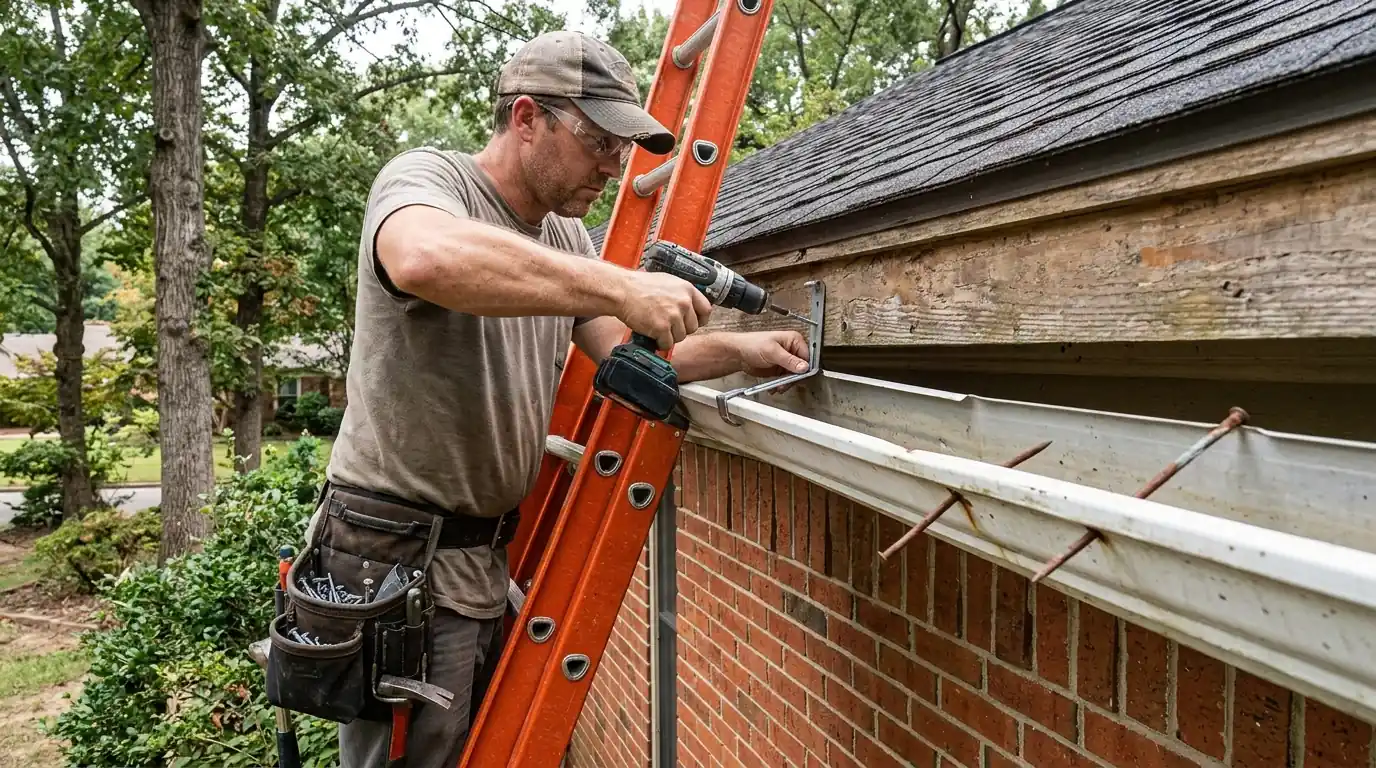
Gutter repair fixes the specific failures on an existing system: sagging sections, leaking corners and end caps, backward pitch, crushed or disconnected downspouts and loose hangers. Typical Little Rock repairs run $165 to $640 for a visit, with larger rehang jobs from $480 to $1,290. Most repairs are finished in a few hours on the same visit.
Gutters rarely fail all at once. A corner starts dripping, one stretch sags under a heavy load of wet leaves, or a downspout gets knocked loose by a lawn mower. Left alone, each of those small failures sends water exactly where you do not want it: down the siding, behind the fascia and against the foundation.
Repair makes sense when the gutters themselves are still in decent shape. If the metal is sound and mostly straight, fixing the weak points costs far less than replacing every run.
Older gutters around Little Rock were often hung with long spikes driven through a ferrule into the fascia. Over years of heat, wind and weight, those spikes work loose and the gutter drops a little more each season until it tips forward and water spills over the front.
We pull the old spikes and replace them with hidden hangers screwed into the fascia and, where possible, into the rafter tails behind it. Hangers are spaced closer together on homes under heavy tree cover, because a gutter full of soaked oak leaves can weigh a surprising amount.
If the fascia behind a sag is soft, no hanger will hold for long. We probe the board, show you any rot we find and price the wood repair before going further.
We also check how the gutter ties into the roof. If the drip edge stops short or the shingles overhang too far, water can run behind the gutter even after every joint is sealed, and that kind of leak needs a roof edge fix rather than more caulk.
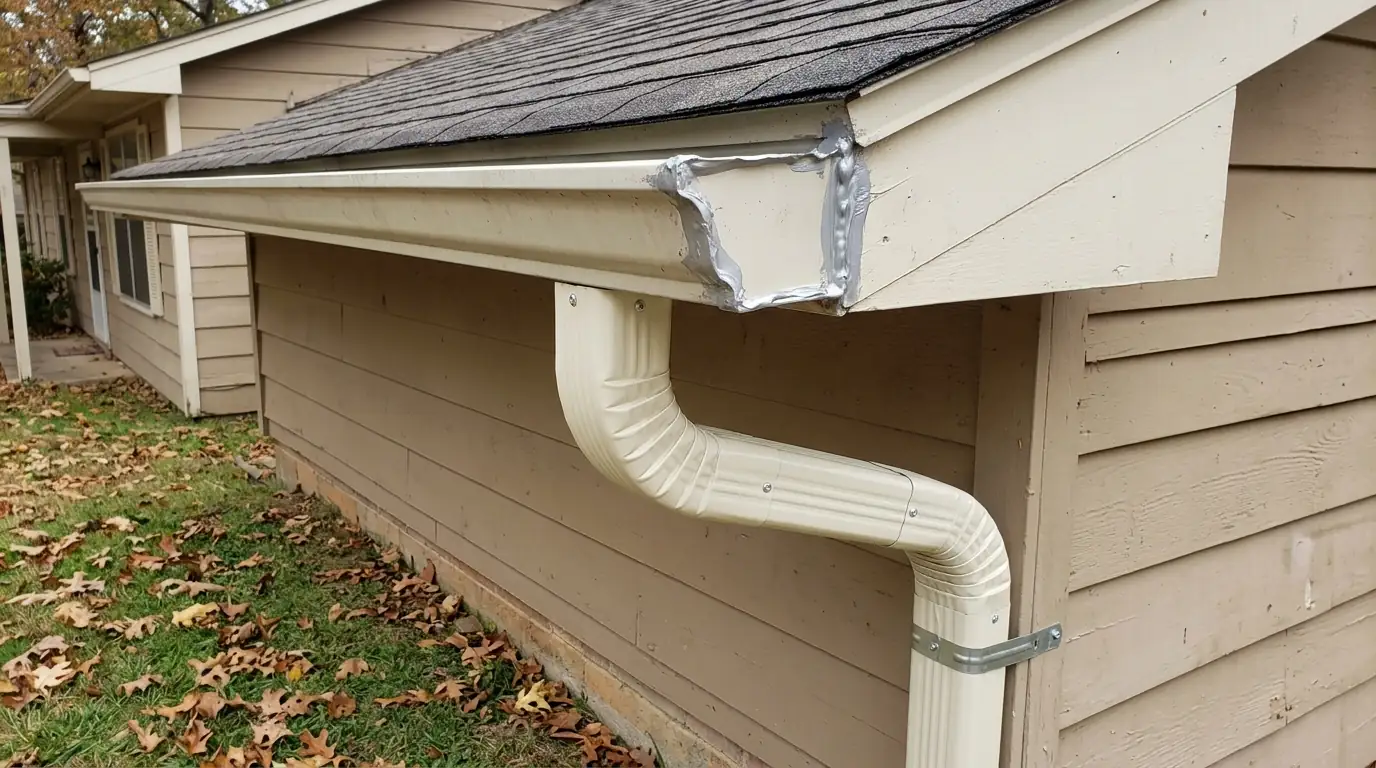
Corners and end caps are where most gutter leaks start. The sealant used at the factory or by the original installer dries, shrinks and cracks after a few summers of strong sun, and then every rain drips through.
A proper reseal is more than smearing caulk over the old bead. We scrape out the failed sealant, clean the metal, rivet any loose joints tight and apply a gutter-grade sealant that stays flexible as the metal expands and contracts. On sectional gutters with many joints, we reseal each connector along the run.
Small holes from limbs or nails get a patch of matching metal set in sealant. Larger tears or long cracked sections are usually better handled by replacing that one length rather than patching over it.
Standing water in a gutter is a sign the pitch is off. It might have been installed level, or the hangers settled unevenly over time. That water holds debris, breeds mosquitoes in our humid summers and adds weight that makes sagging worse.
We run a line along the run, measure the drop toward the downspout and reset hangers to give a gentle, steady slope. Sometimes a long run works better with a second downspout added in the middle, so water has a shorter trip off the roof during a heavy rain.
Pitch problems often show up after other work on the house. A new roof, fresh fascia paint or a contractor leaning a ladder on the gutter can all knock hangers out of line, so we check the full run, not just the visible low spot.
Downspouts take a beating from mowers, trash cans and kids. Crushed elbows choke flow, and a downspout that has come loose at the top lets water pour straight down the wall.
We replace damaged elbows and sections, reattach straps to the wall and make sure each downspout connects tightly at the outlet. At the bottom, we check where the water lands. Extensions or splash blocks that carry water several feet from the foundation matter a lot on central Arkansas clay soil, which holds water and can keep a crawlspace damp for days.
Clogged downspouts are cleared during the visit, and if one keeps clogging under pine trees, we may suggest a larger size or a guard at the outlet.
Spring storms bring the hardest tests. Straight-line winds can pull a loose gutter right off the fascia, hail dents thin aluminum, and the heavy rain bursts that follow overload every weak joint at once. We see a jump in gutter repair calls every March through June.
Trees are the year-round factor. Pines shed needles in fall and again in spring, oaks drop leaves and acorns, and sweetgum balls roll into downspouts and lodge at the elbow. The weight of all that debris, soaked with rain, is a main reason gutters sag in older Little Rock neighborhoods with mature trees.
Winter ice storms are less common here but hard on gutters when they hit. Ice that fills a gutter adds heavy weight to hangers that are already loose. A quick repair visit in fall helps gutters handle whatever winter brings.
These typical 2026 gutter repair ranges reflect jobs around Little Rock. Two-story work and fascia repairs add to the total.
| Job | Typical range | What drives it |
|---|---|---|
| Reseal corners and end caps, per visit | $165 to $440 | Number of joints and home height |
| Rehang a sagging run with hidden hangers | $215 to $640 | Length of the run and fascia condition |
| Whole-house rehang and pitch reset | $480 to $1,290 | Total footage and number of stories |
| Downspout section or elbow replacement | $95 to $285 | Height and number of pieces replaced |
| Replace a single damaged gutter length | $245 to $720 | Length, color match and corner work |
Rotten fascia behind the gutters and second-story access are the two things that raise repair prices most. See the full roof pricing guide.
How the job goes
We check hangers, joints, pitch and downspouts, then photograph each problem spot for you.
You get a written price for the repairs, with any fascia rot shown and priced separately.
Gutters are cleaned out, old spikes replaced with hidden hangers, and pitch reset toward the downspouts.
Corners and seams are resealed, holes patched and downspouts reattached and extended.
We run a hose through the system to confirm flow and check for drips before leaving.
If the metal is straight, rust-free and only failing at a few joints or hangers, repair is usually the better value. Once you have leaks at many seams, widespread rust on old steel gutters, or rot along most of the fascia, replacement starts to make more sense. We show you photos of the condition so you can decide with clear facts.
Corner drips almost always come from sealant that has dried and cracked or from a joint that has worked loose. Hot Arkansas summers make metal expand and contract daily, which wears sealant out. We scrape out the old bead, rivet the joint tight and reseal it with a flexible gutter sealant that holds up to that movement.
Usually, yes. If the gutter is bent but not torn, we can straighten it, replace the hangers and reattach it to sound fascia. If the run is kinked or torn, we replace that length to match. Storm damage to gutters is common in spring around central Arkansas, and we photograph it in case you are filing a claim.
Pooling means the pitch is off, so water has no slope toward the downspout. We measure the run, then reset the hangers to give a steady drop. On long runs, adding a second downspout shortens the distance water has to travel. Clearing debris that dams the gutter is part of the same visit.
Yes. We cannot properly check pitch, joints and hangers on a gutter full of leaves and needles, so cleanout is part of the repair. Downspouts are flushed too. If your gutters fill quickly because of nearby pines or oaks, we can talk about gutter guards to cut down how often that cleanout is needed.
Related work
New aluminum gutters roll-formed on site in one continuous piece per run, with downspouts placed to move heavy rain away.
How we handle itMicro-mesh, perforated and screen gutter guards matched to the pines, oaks and sweetgums around your home.
How we handle itRotted fascia and soffit boards replaced, vents restored and gaps sealed so water, squirrels and birds stay out of the roof edge.
How we handle itFull roof assessment after a severe storm, covering debris impacts, mixed hail and wind damage, gutters and the attic below.
How we handle itTalk to a roofer nowCall and describe what you are seeing. We answer around the clock.
Call (501) 387-1152