Siding Installation
New vinyl, fiber cement and engineered wood siding installed over a proper weather barrier with flashed windows and trim.
How we handle itGutters, siding & exterior
New windows only perform as well as the install around them. Our crews replace windows with careful flashing, sealing and trim work as part of exterior projects across Little Rock and central Arkansas.
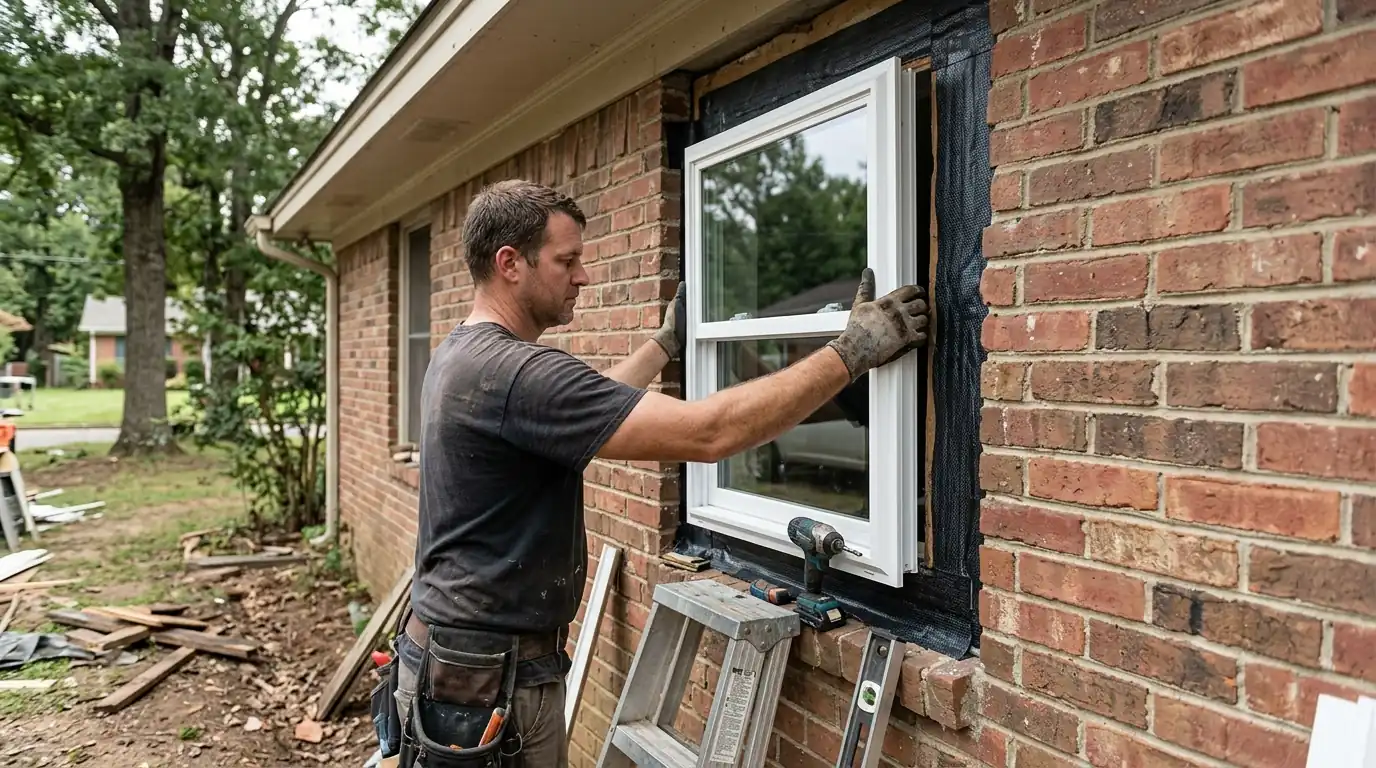
Window replacement swaps old, drafty or failed windows for new units, either as inserts in the existing frame or as full-frame installs down to the rough opening. Typical Little Rock costs run $640 to $1,180 per vinyl insert window and $1,060 to $2,240 for full-frame installs. A typical house takes one to three days.
Insert windows, sometimes called pocket replacements, fit inside the existing window frame. The old sashes come out, the new unit slides in and is sealed and trimmed. It is quicker and costs less, and it works well when the old frame is square, dry and solid.
Full-frame replacement removes everything down to the rough opening. That lets us inspect the framing, fix rot, install new flashing and choose a window size that is not limited by the old frame. It costs more, but it is the right choice when the frame is damaged or water has been getting in around the window.
Mixed approaches are common. A home might get inserts on most windows where the frames are sound, and full-frame replacement on the two or three where rot or leaks have shown up. We decide window by window rather than applying one method to the whole house.
Vinyl windows are the most common choice for homes around Little Rock because they are affordable, need no painting and handle humidity well. Composite and fiberglass frames cost more but are stiffer, hold dark colors better and expand less in summer heat.
Style matters as much as material. Double-hung windows suit most ranch and traditional homes, sliders fit wide openings, and casements catch breezes and seal tightly when closed. Picture windows bring in light where you do not need to open the window at all.
Egress matters in bedrooms. Current building codes call for bedroom windows large enough to serve as an emergency exit, and some older windows are smaller than that. When we replace bedroom windows, we check sizes and talk through options if an opening falls short.
Little Rock sits in IECC climate zone 3A, a warm, humid zone where summer cooling is the bigger concern for most households. Glass with a low-E coating reflects much of the sun's heat while still letting light through, which helps rooms with west and south windows feel less hot on summer afternoons.
ENERGY STAR rates windows by climate region, and the label on each unit shows where it qualifies along with its U-factor and solar heat gain numbers. We help you read those labels so you can compare products. How much any window changes your bills depends on the house, the HVAC system and how you use the rooms, so we do not promise a set savings.
Double-pane glass with an insulating gas fill is standard on most replacement windows. Triple pane is available but rarely needed in our climate.
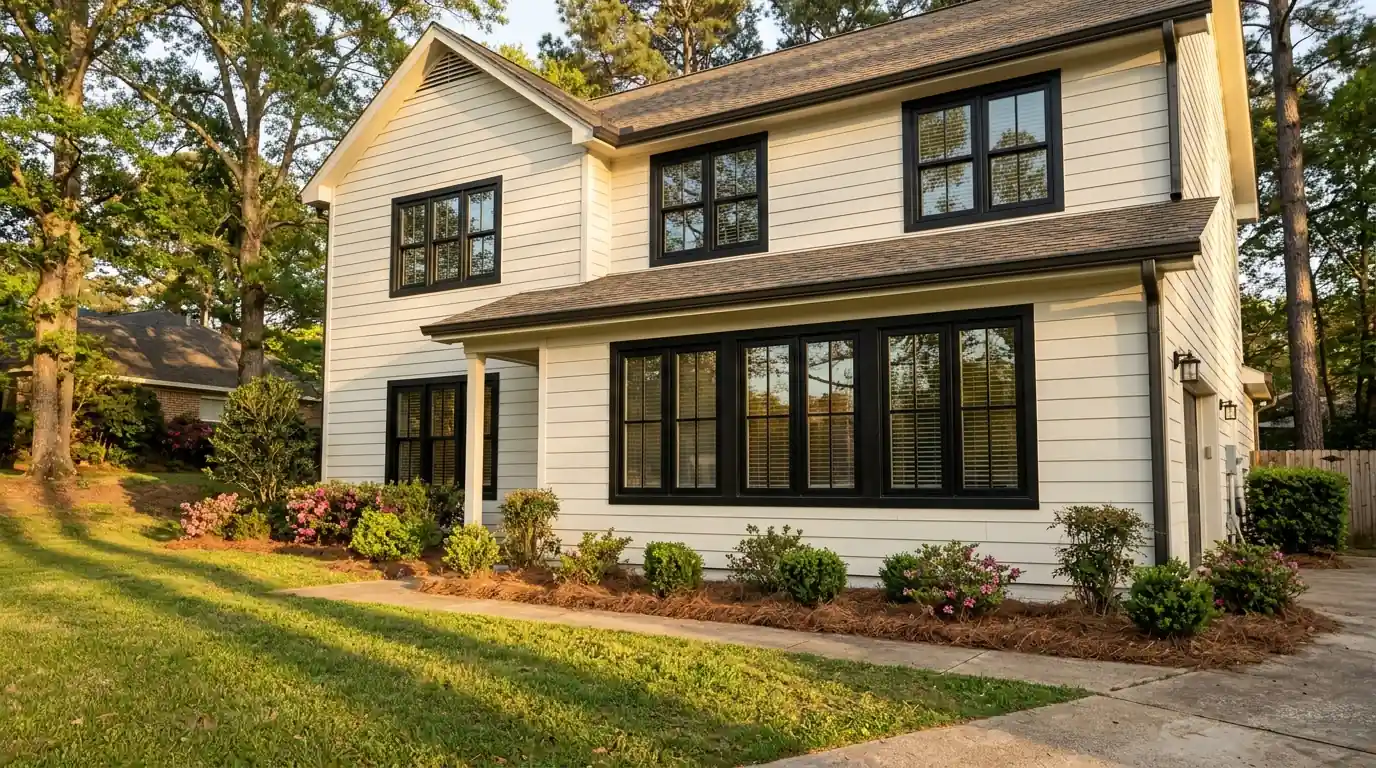
Most window leaks come from the installation, not the window. Water finds its way around a poorly flashed unit and into the wall, often without any visible sign until the drywall stains or the sill rots.
On full-frame installs, we inspect the rough opening, replace any rotted framing, add a sloped sill pan and flashing tape in the right order, and set the window level and square. The gap around the frame gets low-expansion foam, then exterior trim and sealant shed water away. On inserts, we check the existing frame for rot and seal both inside and out.
Where windows sit in brick walls, we take extra care at the sill and head so water running down the brick does not get behind the new unit.
Sliding glass and patio doors are a related job we can handle the same way, with sill pans and flashing that keep wind-driven rain from soaking the subfloor below the door track.
Window replacement fits naturally with siding work. When siding comes off, full-frame replacement is easier and lets us integrate flashing with the new house wrap. Doing both at once usually costs less than doing them years apart.
We also look at the trim and the wall around each window. Soft sills, failed caulk and rotted exterior casing often explain drafts and leaks, and those are fixed as part of the job.
If only a few windows are failing, we can replace those and leave the rest for later. Matching style and color across the front of the house is something we plan for so later windows fit in.
We protect floors and furniture near each window, remove the old unit and clean the opening. Each new window is set, checked for level and plumb, foamed and trimmed inside and out.
Most homes are done in one to three days, depending on the number of windows and whether they are inserts or full-frame. Before we leave, we check that each window opens, closes and locks smoothly, haul away the old units and debris, and walk you through care and cleaning. Manufacturer warranty terms depend on the product and registration, and we give you the paperwork that comes with each window.
We also go over simple care. Keeping weep holes at the bottom of the frame clear, wiping out the tracks on sliders and checking exterior caulk every couple of years helps new windows keep working in our humid climate.
These are typical 2026 window replacement ranges around Little Rock. Sizes, styles and wall type all affect the price.
| Job | Typical range | What drives it |
|---|---|---|
| Vinyl double-hung insert window | $640 to $1,180 | Size, glass package and interior trim |
| Full-frame vinyl window replacement | $1,060 to $2,240 | Rough opening repairs and exterior trim |
| Composite or fiberglass window | $1,240 to $2,690 | Frame material, color and size |
| Large picture or sliding window | $1,380 to $3,140 | Width, tempered glass and installation access |
| Rotted sill or framing repair per window | $165 to $540 | Extent of rot found when the window comes out |
Window size and material, full-frame versus insert, and hidden rot in the opening affect the price the most. See the full roof pricing guide.
How the job goes
We measure each opening and check frames for rot to decide insert or full-frame.
You pick style, material and glass, with a written price for each option.
Old units come out carefully and the opening is cleaned and inspected.
New windows are flashed, set level and square, foamed and trimmed inside and out.
Every window is opened, closed and locked, and old units and debris are hauled away.
Insert windows cost less and install faster when the existing frame is square, dry and solid. Full-frame replacement is better when the frame is rotted, water has been getting in, or you are also replacing siding. We check each window frame before recommending, and some homes end up with a mix of both.
Little Rock and most of central Arkansas fall in IECC climate zone 3A, a warm, humid zone where cooling is the bigger concern. ENERGY STAR labels show which climate regions a window qualifies for, along with its U-factor and solar heat gain. We help you read those labels so you can compare windows on the same terms.
New windows with low-E glass and a tight installation often make rooms more comfortable, especially rooms with strong afternoon sun. Whether bills drop, and by how much, depends on your home, insulation, ductwork and HVAC system. We do not promise a specific savings number, but we explain what each glass option is designed to do.
Fog between the panes means the seal on that insulated glass unit has failed and moist air has gotten in. The window no longer insulates as designed and the fog usually gets worse over time. Depending on the window, the glass unit or the whole window may need replacement. We look at the frame condition to decide which.
Yes. Many central Arkansas homes are brick veneer, and we replace windows in them regularly. Insert windows are common in brick walls because they avoid disturbing the masonry. For full-frame work in brick, we take extra care with sill flashing and sealant so water running down the brick sheds away from the new window.
Related work
New vinyl, fiber cement and engineered wood siding installed over a proper weather barrier with flashed windows and trim.
How we handle itHail holes, wind-blown panels, rotted boards and leaks around trim fixed and matched so the wall looks whole again.
How we handle itBlown-in insulation, air sealing and vent baffles that help attics in hot, humid central Arkansas summers.
How we handle itRotted fascia and soffit boards replaced, vents restored and gaps sealed so water, squirrels and birds stay out of the roof edge.
How we handle itTalk to a roofer nowCall and describe what you are seeing. We answer around the clock.
Call (501) 387-1152