Roof Replacement
A complete tear-off to the deck with new underlayment, flashing, vents and shingles, finished in a day or two on most homes.
How we handle itNew roofs & materials
When a roof under solar panels needs work, the panels have to come off first. We plan the detach and reset with your solar company or an electrician where required, and our crews handle the roofing and the mount flashing.
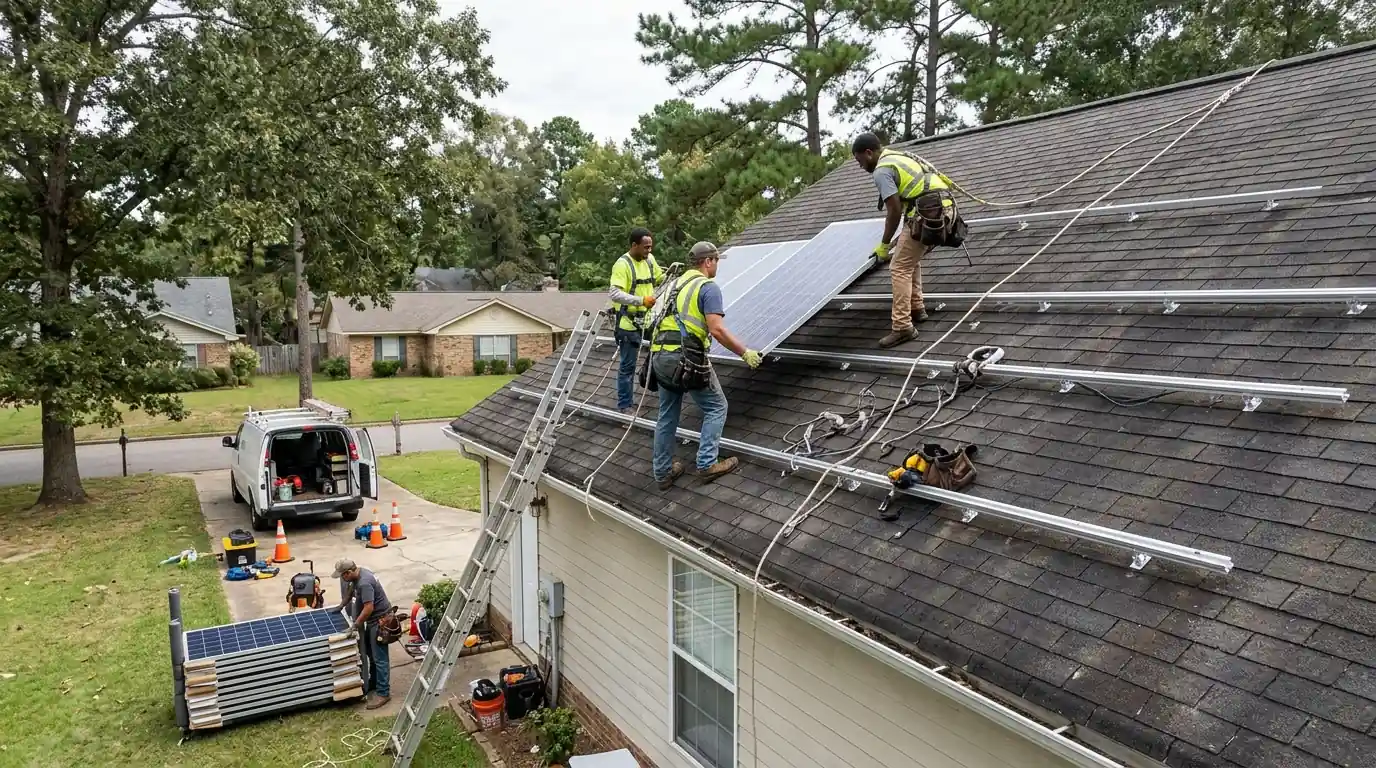
Solar panel removal and reinstall means detaching the array, storing panels safely, doing the roof work, then flashing new or existing mounts and resetting the racking. In Little Rock, typical detach and reset runs $95 to $165 per panel plus the roofing cost. Electrical disconnect and reconnection is handled by your solar company or an electrician where required. Most jobs take three to six days start to finish.
Solar arrays usually last a long time, but the roof under them may not. If shingles are near the end of their life, hail has damaged the roof, or a leak has started around a mount, the panels must be lifted so the roof can be repaired or replaced properly.
Some owners try to patch around the array, but that rarely works for long. Crews cannot reach the shingles under the panels, and sealant smeared around mounts from above tends to crack within a season or two. A planned detach and reset is the way to give the roof underneath a real fix.
If your roof is older and you are only now thinking about solar, it is usually smart to replace the roof first. Paying to remove and reset panels a few years after installing them adds cost that a well timed re-roof avoids.
Solar work touches both the roof and the electrical system, and we keep those roles clear. Our crews handle the roofing side: removing panels and racking once the system is shut down, protecting and storing the panels, doing the roof work, and flashing every mount into the new roof.
The electrical side, including shutting the system down safely, disconnecting and reconnecting wiring, and confirming the system is producing again, is handled by your solar company or an electrician where required. Many solar installers offer this service, and some leases and warranties require that their own technicians handle it.
We coordinate the dates with them so the array is not left disconnected longer than it needs to be. Before work begins, it helps to look over your solar paperwork or call your provider so everyone knows the warranty and lease terms.
Panels are large, heavy and easy to scratch or crack if they are handled carelessly. We number each panel and its position, lower them carefully, and store them on padded racks or flat on blankets in a dry spot on site or in a secure area you agree to.
Racking rails and clamps are bagged and labeled so the array goes back up in the same layout. We also photograph the array before removal, including wire routing and the location of every mount, so the reset matches the original as closely as the new roof allows.
Wiring stays with the electrical side. We do not cut, splice or reconnect any conductors, and panels stay unplugged until your solar company or electrician returns to bring the system back online.
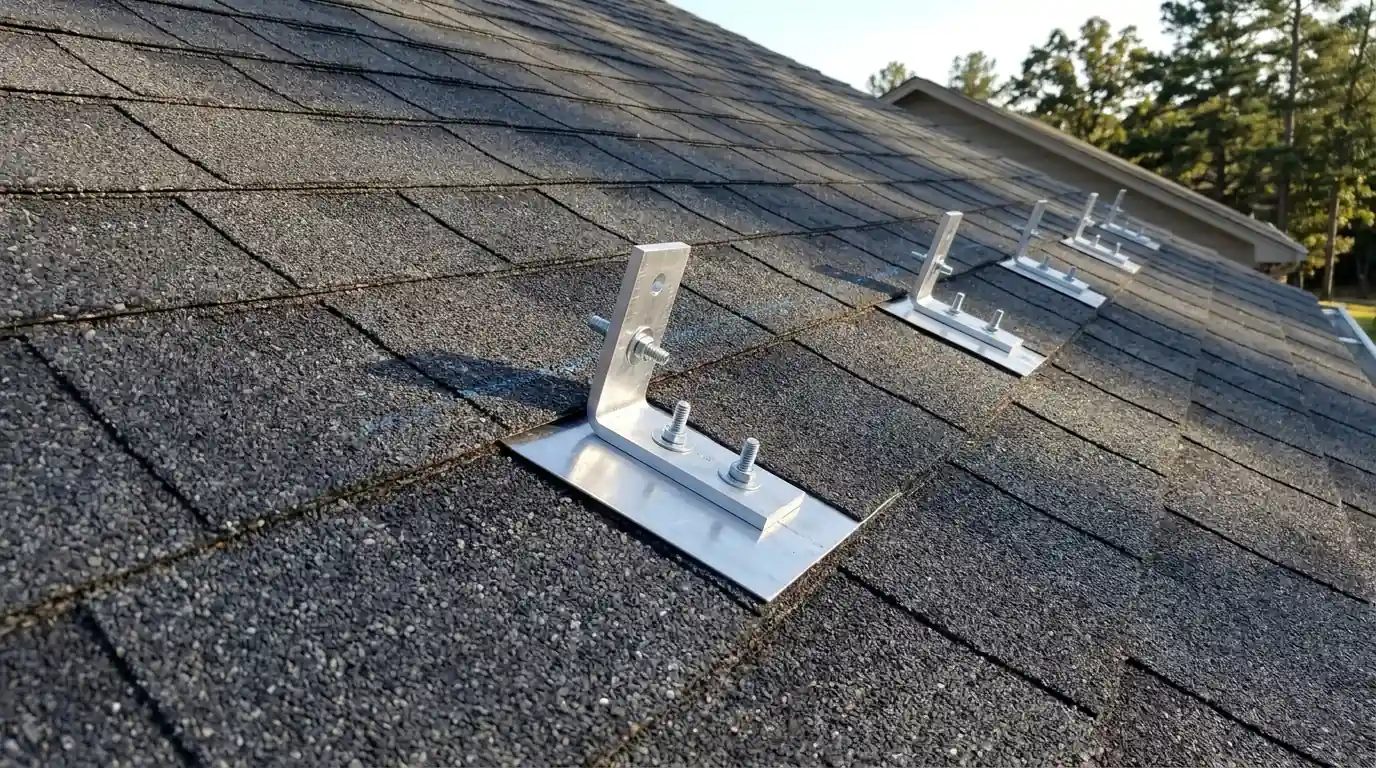
Mounts are the most common source of leaks on solar roofs. Each one is a bolt or lag screw driven through the roof into a rafter, and it needs a proper flashing that laps under the shingle course above and over the course below.
During the reset, we install new flashed mounts or reuse compatible ones with new flashing, set each lag into solid framing, and seal it according to the mount maker's instructions. We do not rely on a blob of sealant over a bolt head, because that is the shortcut behind many leaks we are called to fix.
Where the new roof layout allows, mounts go back in the same rafters so the array returns to the same footprint. If any rafter shows damage or the decking around a mount is soft, we replace that wood before setting the mount.
Squirrels and birds like to nest under arrays, and their chewing can damage wiring. If your array had a critter guard or screen, we reinstall it around the perimeter after the reset.
Spring hail season is when many of these jobs start. Hail that damages shingles often leaves panels intact, since most panels use tempered glass, but the roof underneath still needs replacing. If an insurance claim is involved, ask your adjuster how detach and reset costs are handled under your policy.
Straight-line winds put real load on an array, which is another reason every mount must be fastened into rafters and not just decking. Hot, humid summers also make the shaded roof under the panels slower to dry after rain, so pine needles and leaves trapped under the array can hold moisture against the shingles. We clear that debris during every reset.
A typical job runs in stages. The solar provider or electrician shuts the system down, our crew removes and stores the panels in a day, the roof replacement or repair takes one to three days, and the reset with new flashed mounts takes another day. Then the system is reconnected and checked by the electrical side.
You get a written price before work starts, covering detach, storage, roofing and reset. Any extras found once the roof is open, such as rotted decking around old mounts, are priced before we do them. We clean the site and run a magnet sweep when the work is done, and we share photos of every mount flashing before the panels go back on.
Detach and reset pricing is mostly per panel, with roofing priced separately based on the roof work needed.
| Job | Typical range | What drives it |
|---|---|---|
| Detach and reset, per panel | $95 to $165 | Array size, roof pitch and racking type |
| New flashed mounts, per mount | $38 to $72 | Mount type and roof material |
| On-site panel storage and protection | $185 to $460 | Number of panels and storage time |
| Critter guard or debris screen reinstall | $345 to $890 | Array perimeter length and screen type |
| Decking repair at old mount locations | $165 to $520 | Number of soft spots found once the roof is open |
Electrical disconnect and reconnection by your solar company or an electrician is billed by them and is not included in these ranges. See the full roof pricing guide.
How the job goes
We inspect the roof, count panels and mounts, and photograph the layout and wire routing before anything moves.
We set dates with your solar company or an electrician, who handles shutdown and electrical disconnection where required.
Panels and racking are removed, numbered, padded and stored safely on site.
The roof is repaired or replaced, and new flashed mounts are lagged into rafters on the new roof.
Racking and panels go back in the original layout, then the electrical side reconnects and checks the system.
No. Our crews handle the roofing work, including detaching, storing and resetting the panels and racking and flashing every mount. Shutting the system down, disconnecting and reconnecting wiring, and confirming the system is working again are handled by your solar company or an electrician where required. We coordinate dates with them so the array is off for as little time as possible.
Most jobs take three to six days from removal to reset, depending on the roof work and the weather. Removal usually takes one day, the roof work one to three days, and the reset another day. The electrical reconnection then depends on when your solar company or electrician can return, which we try to line up in advance.
It can, depending on the terms. Some leases and warranties require the solar company's own technicians to handle the shutdown, wiring or even the full removal. Check your paperwork or call your provider before work begins. We are glad to work alongside their crew and handle the roofing and mount flashing while they handle their part.
That depends on your policy and your adjuster. When hail damages the roof under an array, the panels have to come off for the roof to be replaced, and some policies include that cost as part of the claim. We document the roof damage and the array with photos so you can share them and ask your adjuster how it applies.
Each mount gets a proper flashing that laps under the shingle course above and over the course below, and every lag goes into a solid rafter. We follow the mount maker's sealing instructions rather than relying on a blob of sealant over a bolt. We also photograph each flashed mount before the panels go back on so you can see the work.
Related work
A complete tear-off to the deck with new underlayment, flashing, vents and shingles, finished in a day or two on most homes.
How we handle itSlope-by-slope hail inspection with marked test squares, soft-metal checks and photos that show exactly where the stones hit.
How we handle itWe document storm damage, meet your adjuster on the roof and write a line-item scope, while you keep control of your own claim.
How we handle itWe follow the water back to where it actually gets in, fix that spot and stop the stain from coming back.
How we handle itTalk to a roofer nowCall and describe what you are seeing. We answer around the clock.
Call (501) 387-1152