Roof Leak Repair
We follow the water back to where it actually gets in, fix that spot and stop the stain from coming back.
How we handle itRoof repair
Most roofs in central Arkansas do not need replacing the first time they cause trouble. They need someone to find the weak point, fix it properly and tell you honestly how much life the rest of the roof has left.
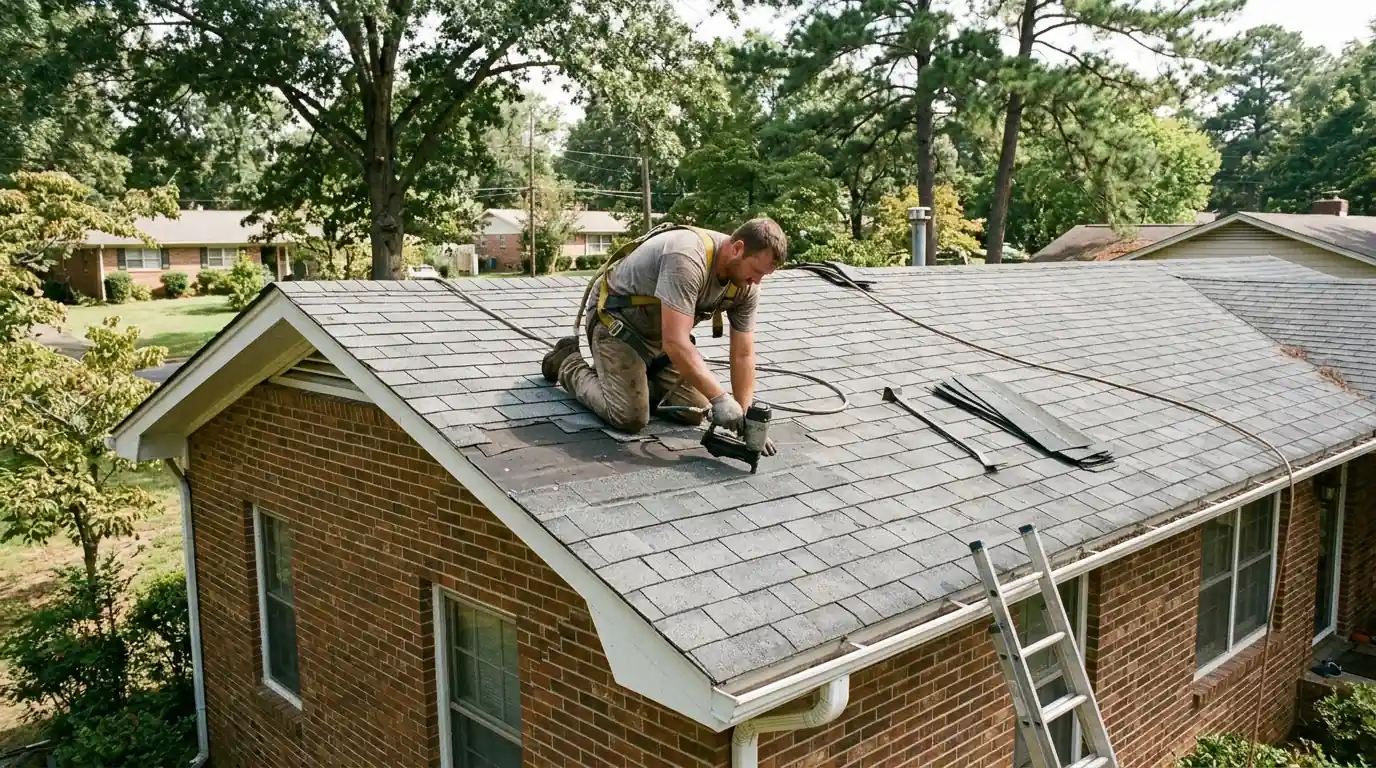
Roof repair means fixing a specific failure, such as missing shingles, a cracked pipe boot, loose flashing or a soft patch of decking, without replacing the whole roof. Typical Little Rock repairs run $285 to $1,580, with larger section repairs reaching $3,900. Most small and mid-size repairs are finished in a single visit once materials are on hand.
A good repair starts on the roof and in the attic, not on a price sheet. Our crew walks every slope, checks the penetrations and flashing, and then looks at the underside of the decking for stains, rot or daylight. That combination tells us whether a problem is isolated or a sign of something larger.
Once we know the cause, the fix is built to match how the roof was put together. Shingles get lifted and replaced in courses, not glued over. Flashing gets reset or replaced, not buried in caulk. If decking is soft, we cut it out back to solid wood before anything goes back on top.
You get photos of what we found and a written price before work starts. If the honest answer is that a repair would only buy you a season, we say that too and explain why.
We also check the parts of the roof you cannot see from the ground: the underlayment edge at the eaves, the drip edge, and the condition of the sealant strips on shingles near the problem. A repair that ignores those details tends to fail at its edges within a year.
Roof trouble tends to collect in the same handful of places. These are the jobs that make up most of our repair calls across Little Rock and the surrounding towns.
Plenty of calls turn out to involve two of these at once. A cracked pipe boot that leaked for a year, for example, usually leaves a soft patch of decking beside it, and fixing only the boot would leave the shingles nailed into wood that no longer holds a nail.
Age is only one part of the answer. A 12-year-old roof with one bad pipe boot is a straightforward repair. A 20-year-old roof with brittle shingles, granules piling up in the gutters and leaks in three places is a different conversation, because every repair will disturb shingles that are already near the end.
We look at how the shingles bend when lifted, how much granule cover is left, whether the decking is sound and how many areas are failing at once. If repairs still make financial sense, we price them. If they do not, we show you the evidence and give you a separate price for a new roof so you can compare the two side by side.
There is no pressure in that comparison. Plenty of homeowners choose a solid repair to get a few more years while they plan, and that is a reasonable choice when the roof supports it.
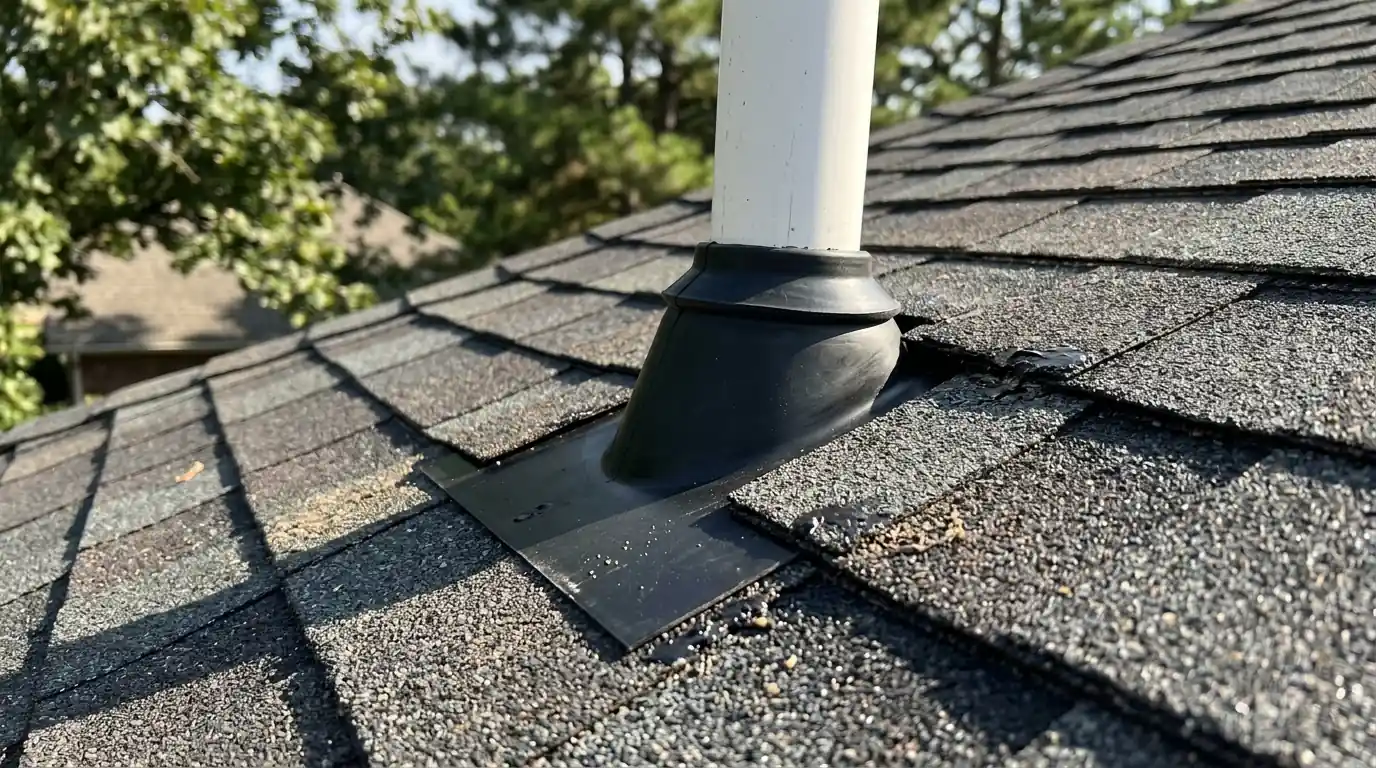
Little Rock summers are long, hot and humid, and that heat bakes asphalt shingles from the top down. Over time the oils dry out, the shingles stiffen and the sealant strips that hold tabs down lose their grip. A roof that looked fine in April can start shedding tabs after one strong July thunderstorm.
Spring brings the other half of the problem. Hail and severe storms are common from roughly March to June, and straight-line winds can work loose shingles that heat has already weakened. Add pine needles and oak leaves packing into valleys and gutters, and water starts backing up where it was never meant to sit.
Winter is quieter but not harmless. Occasional ice storms and freeze-thaw cycles open small cracks in sealant and flashing, and those cracks become spring leaks. We plan repairs with all three seasons in mind.
Shade matters as well. Slopes under heavy tree cover stay damp longer after rain, grow moss and algae, and wear differently from sun-facing slopes on the same house. We often find the north side of a roof in better shingle shape but worse decking shape than the south side, and the repair plan reflects that.
Color and profile matching is one of the most common worries we hear. Shingle lines get discontinued, and even the same color fades differently after years in the Arkansas sun. We bring samples, compare them on the roof in daylight and tell you plainly how close the match will be.
On a back slope, a near match is usually fine. On the front of the house, some homeowners would rather wait and replace a full slope. We give you both options and the price difference so you can choose.
Our own crew arrives with the materials already pulled for your job. We protect landscaping and patios below the work area, complete the repair, and then check the surrounding shingles to make sure nothing was disturbed in the process.
Before we leave, we clean up debris, run a magnet sweep for nails across the driveway and lawn, and send you after photos of the finished work. If anything about the repair changed once we opened the roof, you hear about it before we proceed, not after.
If the repair is related to storm damage, we keep the photos organized by slope and date so they are easy to hand to an adjuster. For everyday wear repairs, the photos are simply yours to keep, which helps the next time anyone works on the roof.
Most Little Rock roof repairs fall into a few predictable price bands. These are typical 2026 ranges, not quotes, and your written price comes after we see the roof.
| Job | Typical range | What drives it |
|---|---|---|
| Pipe boot or single vent reseal | $185 to $445 | Number of boots, roof pitch and whether surrounding shingles need replacing |
| Shingle replacement, small area | $285 to $640 | Shingle type, color match and access |
| Flashing repair at a wall or chimney | $465 to $1,280 | Linear footage and whether counterflashing must be cut into brick |
| Decking and shingle section repair | $1,180 to $3,900 | Square footage of rotted wood and roof steepness |
| Ridge cap and hip repair | $340 to $960 | Length of ridge and ridge vent condition |
Steep pitches, multiple stories, discontinued shingle lines and hidden decking damage are the biggest reasons a repair price moves. See the full roof pricing guide.
How the job goes
We inspect every slope, penetration and flashing line, then look at the decking from the attic side.
You see what we found and get a written price before any repair work begins.
Our crew replaces shingles in courses, resets or replaces flashing and cuts out any soft decking.
We inspect the surrounding area, clean up debris and run a magnet sweep for nails.
Most small and mid-size roof repairs are done in one visit, usually a few hours on site. Jobs that involve replacing rotted decking or matching a hard-to-find shingle can take longer because of material ordering. We tell you the expected timeline when we give you the written price, and we let you know right away if weather pushes the schedule.
Often it is, as long as the shingles still bend without cracking and the problem is limited to one or two areas. If the shingles are brittle and leaks are showing up in several places, repairs start chasing each other. We test the shingles on site, show you what we see, and price both a repair and a replacement so you can compare honestly.
A repair done with compatible materials and proper installation methods usually does not affect coverage, but manufacturer warranty terms depend on the product and whether it was registered. If you have your original paperwork, we can look at it with you. Using the same shingle line where it is still available is the safest approach, and we tell you if it is not.
Yes. We often start early in the day during July and August, because hot shingles are soft and scuff easily under foot traffic. Heat actually helps new shingles seal down to the ones around them. On the hottest afternoons we adjust the work so we are not damaging the healthy shingles next to the repair area.
Yes. We photograph the problem areas and the attic side of the decking, then walk you through the photos along with a written price. No repair work begins until you have seen what we found and agreed to the price. If we uncover more once shingles are lifted, we stop and show you before going further.
Related work
We follow the water back to where it actually gets in, fix that spot and stop the stain from coming back.
How we handle itTargeted replacement of cracked, curled, blistered or missing asphalt shingles, color matched and nailed the way the manufacturer specifies.
How we handle itReplacement of failed step, apron, counter and vent flashing where roofs meet walls, dormers, skylights and pipes.
How we handle itA hands-on roof and attic check with labeled photos, an honest remaining life estimate and a written price for any repair needed.
How we handle itTalk to a roofer nowCall and describe what you are seeing. We answer around the clock.
Call (501) 387-1152