Roof Repair
Targeted fixes for worn shingles, failed flashing, cracked pipe boots and soft spots, priced in writing before our crew touches the roof.
How we handle itRoof repair
The stain on your ceiling is almost never directly under the hole in your roof. Water runs along decking and rafters before it drops, so a real leak repair starts with careful tracing, not guesswork.
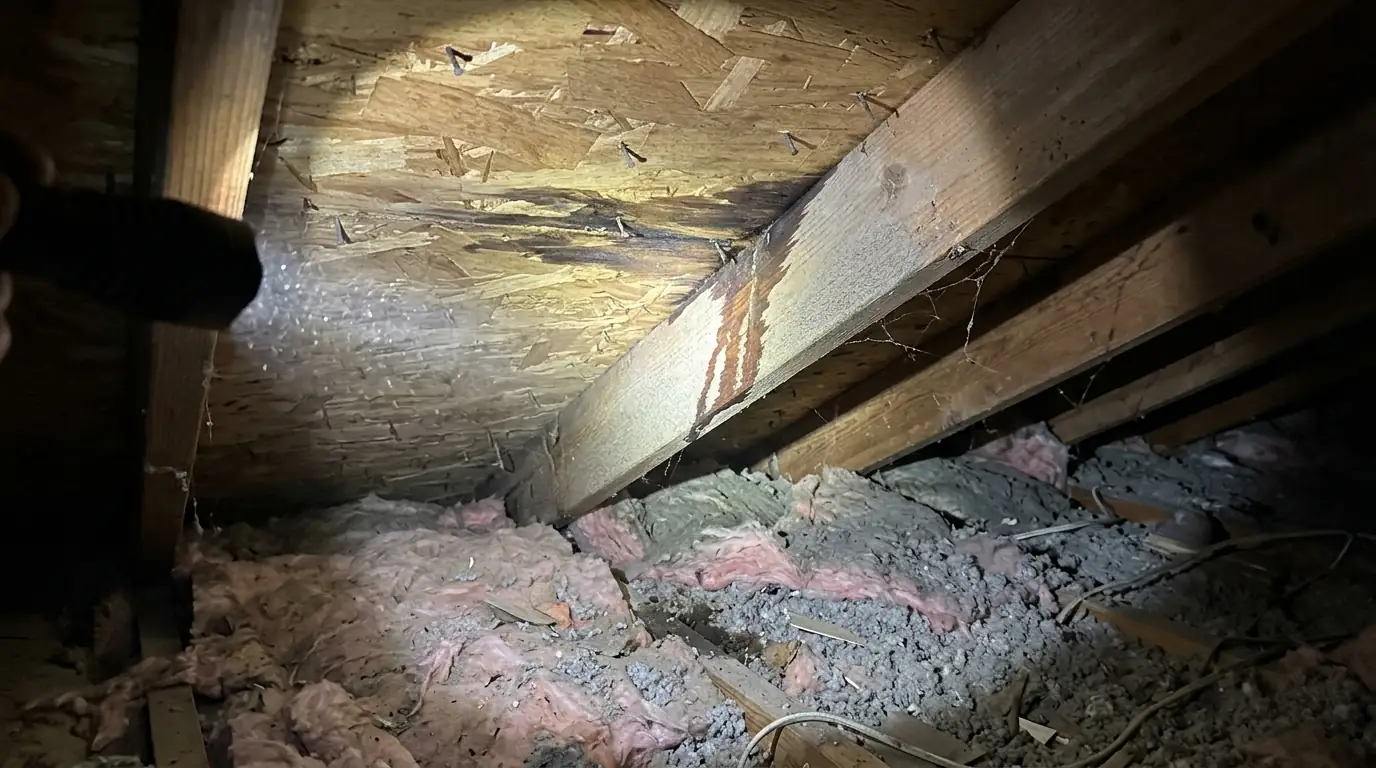
Roof leak repair means finding the exact point where water enters the roof system and fixing that failure, whether it is a pipe boot, flashing seam, nail hole or valley. Most Little Rock leak repairs cost $245 to $1,190 once found. Tracing usually takes one visit, and the repair is often done the same day.
Water entering a roof rarely drops straight down. It runs along the underside of the decking, follows a rafter or a truss, and finally drips wherever gravity wins, sometimes six or eight feet from where it got in. That is why patching the shingles above a ceiling stain so often fails.
Intermittent leaks make it harder. A leak that only shows up in wind-driven rain from the southwest, or only after an hour of heavy downpour, points to a very different cause than one that appears every time it rains.
Roof shape adds to the confusion. Leaks near a dormer, a second-story wall or a chimney can show up on a ceiling in a completely different room, especially in homes with vaulted ceilings or finished attic spaces where the water path is hidden behind drywall.
Some leaks also stop on their own for a while, which leads homeowners to hope the problem has fixed itself. In reality the water is usually still getting in, soaking insulation or decking until it saturates and shows again.
Tracing starts in the attic. We look for water trails, darkened wood, rusty nail tips and stained insulation, then follow those marks uphill to the highest wet point. That spot usually sits close to the entry.
On the roof, we check the penetrations and seams directly above it. If the source is still unclear, we run a controlled water test, wetting one small section at a time from the bottom up while someone watches inside. It is slow, but it isolates the leak instead of guessing.
Every finding gets photographed, so you can see the cracked boot, the gap in the flashing or the backed-out nail for yourself before we price the fix.
Finished spaces like bonus rooms and vaulted ceilings take more care. When we cannot get into the attic directly above the stain, we look for access points nearby, use a moisture meter on the drywall to map the wet area and work from the roof side with closer inspection of every seam above it.
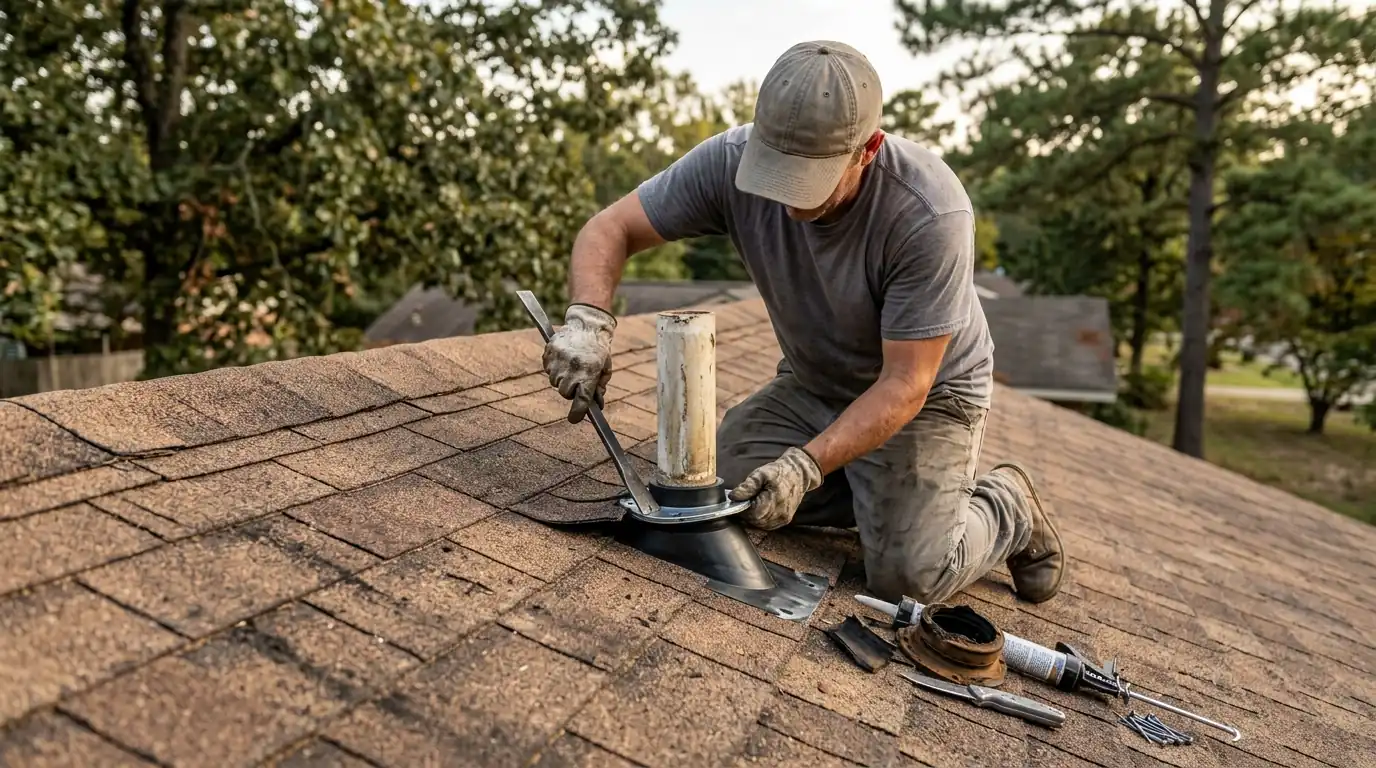
After tracing hundreds of leaks, the same sources come up again and again. Shingles in the middle of a slope are actually one of the least common causes.
Little Rock summers are hard on rubber and sealant. The neoprene collars on pipe boots dry out and split, often within ten to fifteen years, and caulk-only repairs at flashing lines crack after a couple of hot seasons. Those failures stay hidden until the first heavy storm of the year.
Humidity plays a part too. A damp attic with poor ventilation can produce condensation that drips from nail tips on cold mornings and looks exactly like a roof leak. We check for that before replacing anything, because the fix for condensation is ventilation, not shingles.
Spring storm season, roughly March to June, brings heavy rain bursts that overwhelm small weak points. If your stain only appears during those downpours, the source is often a valley or a low spot where water stacks up faster than it drains.
Ice storms are less common but leave their own mark. When ice and slush sit along the eaves for a day or two, meltwater can back up under the lower shingle courses, producing leaks along exterior walls that never show up in a normal rain.
Once we know the source, we repair the failed part instead of smearing roof cement over it. A cracked pipe boot gets replaced with a new boot woven into the shingle courses. Loose step flashing gets pulled, replaced piece by piece and properly lapped. Exposed nails get sealed or replaced and covered.
We also check the decking around the entry point. Wood that has been wet for months can be soft, and a new boot or flashing nailed into rotten decking will not hold. If the wood needs replacing, you see it in photos first.
Before we leave, we explain what caused the leak and what to watch for, so you know whether this was a one-time failure or a sign the roof is aging overall.
If the roof has more than one weak point, we tell you about the others too, even if they are not leaking yet. A second pipe boot starting to crack or a flashing line beginning to pull away can often be handled in the same visit for far less than a separate trip later.
Inside, we let you know whether wet drywall or insulation should be dried or replaced. That part of the work is often small, but skipping it can leave a stain that bleeds through new paint or a damp pocket that grows mildew.
Leak repair cost depends on what the tracing finds. These are typical 2026 ranges in Little Rock for the most common sources.
| Job | Typical range | What drives it |
|---|---|---|
| Leak tracing with water test | $165 to $385 | Attic access and how many areas need testing |
| Pipe boot replacement | $185 to $445 | Number of boots and roof pitch |
| Step flashing repair at a wall | $465 to $1,190 | Length of wall line and siding removal needed |
| Vent or skylight reseal and reflash | $310 to $860 | Vent type and curb condition |
| Leak repair with decking replacement | $790 to $2,240 | Square footage of soft or rotted wood |
Leaks that require removing siding, opening a finished attic or water testing several areas cost more to trace. See the full roof pricing guide.
How the job goes
We follow water marks on rafters and decking uphill to the highest wet point.
We inspect penetrations, flashing and seams directly above the trail.
If needed, we wet small sections from the bottom up while watching inside to isolate the source.
You see the exact failure point in photos and get a written price before the repair.
We fix the failed part properly, check surrounding decking and tell you what caused it.
Usually because the patch went on the shingles above the ceiling stain, not at the actual entry point. Water can travel several feet along decking before it drips. Caulk or roof cement over a flashing seam also cracks after a hot Arkansas summer or two. We trace from the attic first and replace the failed part instead of covering it.
Yes, especially in humid weather with a poorly ventilated attic. Moisture collects on cold nail tips and decking and drips down, leaving stains that look like a leak. The giveaway is wetness spread across many nail tips rather than one trail. We check ventilation before replacing anything, because a roof leak repair will not fix condensation.
Most tracing is done in one visit of an hour or two. Simple leaks with clear attic trails can be found in minutes. Intermittent leaks that only appear in wind-driven rain may need a controlled water test, which takes longer because we wet one small section at a time and wait to see where water shows up inside.
On asphalt roofs in central Arkansas, cracked pipe boots are one of the most frequent causes we find. The rubber collar dries out in summer heat and splits, letting water run down the vent pipe into the attic. It is also one of the less expensive leak repairs, which is good news if that turns out to be your source.
No. Call while it is leaking, because active water makes the trail easier to trace. We answer 24/7 at (501) 387-1152. If the leak is steady, we may treat it as an emergency visit. If it is a slow drip, we help you protect the room and schedule tracing for the next dry window.
Related work
Targeted fixes for worn shingles, failed flashing, cracked pipe boots and soft spots, priced in writing before our crew touches the roof.
How we handle itReplacement of failed step, apron, counter and vent flashing where roofs meet walls, dormers, skylights and pipes.
How we handle itWe find whether the water comes through chimney flashing, the crown, the brick or a missing cricket, then fix that source.
How we handle itBalanced ridge and soffit ventilation that lets hot, damp attic air out and helps shingles, decking and AC systems last longer.
How we handle itTalk to a roofer nowCall and describe what you are seeing. We answer around the clock.
Call (501) 387-1152