Impact-Resistant Shingles
Class 4 shingles tested under UL 2218 to resist hail cracking, a smart choice for homes in central Arkansas hail paths.
How we handle itRoof & Home Tips
Class 4 shingles hold up better to hail, but the discount question is more tangled in Arkansas. Here is what the rating means, what state law covers and what to ask your agent.
By Lonnie Gatlin, Roof & Home Tips EditorUpdated October 17, 20267 min read
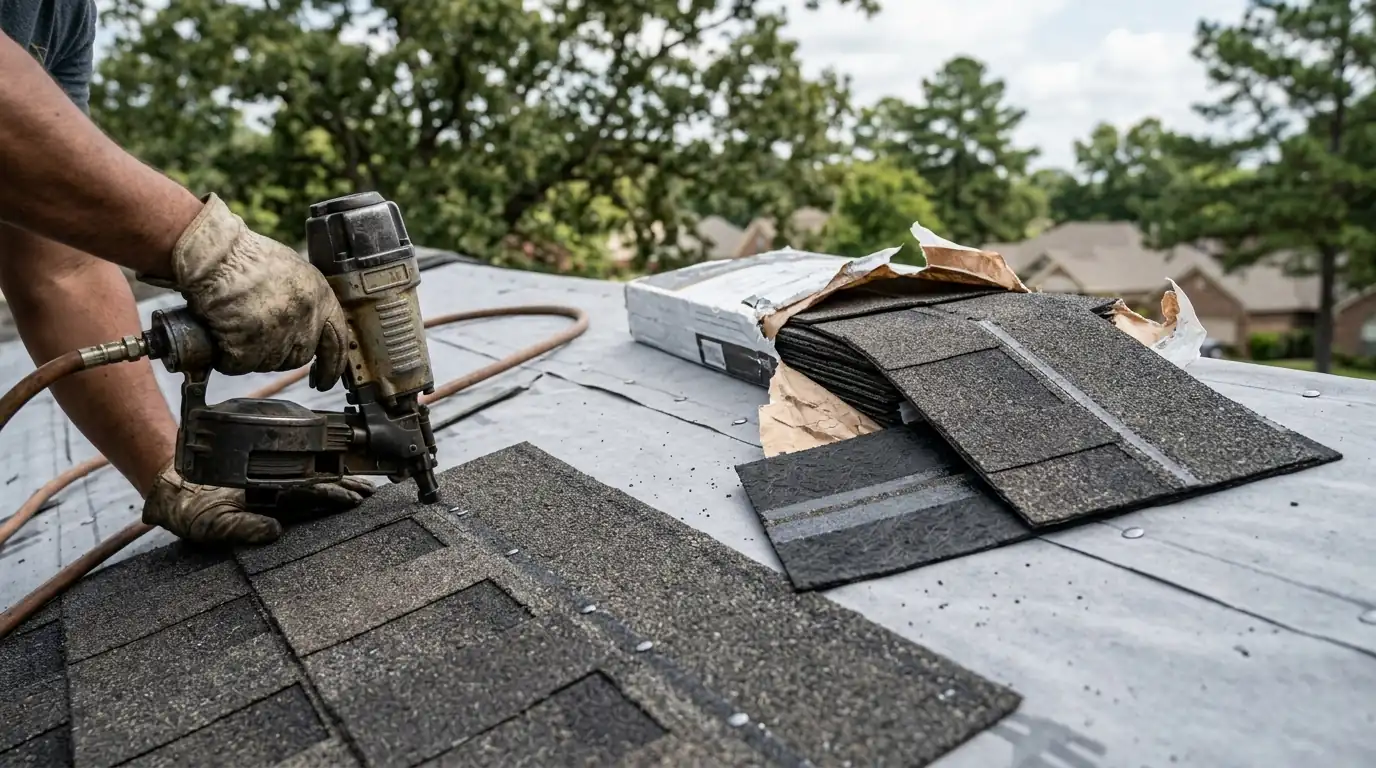
After a few hail seasons, a lot of central Arkansas homeowners start asking about Class 4 shingles and whether they cut the insurance bill. The honest answer has two parts. The shingle rating is a clear, tested standard. The discount side depends on your insurer, your policy and, in some cases, a newer Arkansas program built around FORTIFIED roofs. Here is how the pieces fit, and what to ask before you choose a shingle.
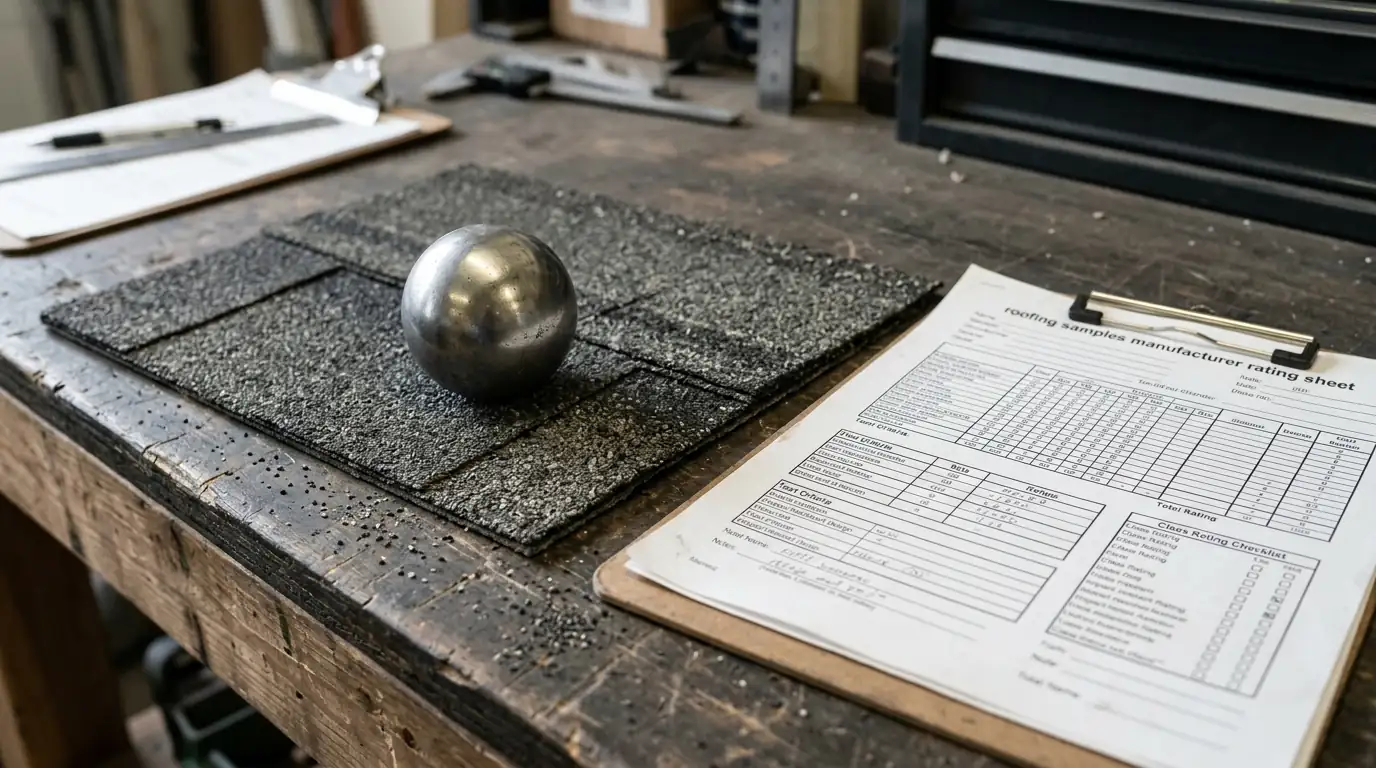
UL 2218 is a lab test for impact resistance of roofing. Steel balls of increasing size are dropped onto roofing samples from set heights, and the sample is then checked for cracks or breaks that would let water through. The largest ball used is 2 inches across.
Class 1 through Class 4 mark how big a ball the product survived. Class 4 is the top rating: the sample took two strikes on the same spot from the 2 inch ball without cracking through. Some products are also tested to FM 4473, a different impact standard, so you may see that on product literature too.
The rating tells you how the shingle did in a controlled test. It does not promise how it will handle every storm, and it says nothing about cosmetic marks, granule loss or wind.
Wind ratings are a separate matter. Shingles carry their own wind classifications from different tests, and a Class 4 product is not automatically rated higher for wind than a standard one. If straight-line winds are your bigger worry, check both ratings on the product sheet.
Impact-resistant shingles are built to flex instead of fracture. Many use a rubberized asphalt blend, often called SBS modified, while others add a reinforcing layer or a tougher mat on the back. The goal is the same: keep the mat from cracking when hail hits.
That does not make the roof hailproof. Very large hail can still damage a Class 4 shingle, and smaller hail can still knock granules loose or dent metal vents and gutters. What these shingles tend to do is hold up to moderate hail that would bruise a standard architectural shingle.
There is a trade-off people miss. Some policies treat cosmetic damage, like dents or scuffs that do not affect how the roof sheds water, differently from functional damage. If your policy has a cosmetic exclusion, a Class 4 roof with only surface marks may not qualify for a claim. Ask your agent how your policy treats it.
We searched Arkansas legislative records and insurance sources and did not find a state law that requires insurers to discount a home simply because it has Class 4 shingles. Some states have such rules. In Arkansas, as far as we could confirm, whether you get a discount for impact-resistant shingles alone depends on your insurer.
Some companies offer a credit for a Class 4 roof, some do not, and the size of the credit varies. It can also change when rates are refiled. The only reliable answer is the one your agent gives you for your policy, at your address, in writing.
Be careful with numbers you see online or hear from a neighbor. A credit one carrier gave a house in Benton last year says little about what your carrier offers today in Little Rock. Discounts are filed by each company and can be tied to territory, roof age and the rest of the policy.
Arkansas did pass a program aimed at stronger roofs. Act 427 of 2025, the Strengthen Arkansas Homes Act, created a grant program run by the Arkansas Insurance Department for upgrades built to the FORTIFIED standards from the Insurance Institute for Business and Home Safety (IBHS).
Sources tracking the law report that it also requires insurers writing wind or hail coverage to offer an actuarially justified discount for homes with a FORTIFIED designation, for policies issued or renewed on or after July 1, 2026, plus an endorsement to upgrade to a FORTIFIED Roof after a covered loss. When we checked in October 2026, grant applications were reported as not yet open. Confirm current details with the Arkansas Insurance Department.
The key point: a FORTIFIED Roof is not the same as Class 4 shingles. It is a full roof system with a sealed deck, specific nailing and edge details, documented with photos and reviewed by an independent evaluator before IBHS issues a designation. Class 4 shingles can be part of it, but the shingles alone do not earn it.
Call before the job is priced, not after it is finished. The answers can change which product makes sense and what paperwork you need on install day.
On a typical 1,600 to 2,200 square foot home in the Little Rock area, a Class 4 shingle roof runs about $12,300 to $21,600 in 2026, and the upgrade over standard architectural shingles is often $1,840 to $4,650. Those are typical ranges, not quotes.
Say your upgrade costs $3,180 and your insurer offers a credit of $214 a year. That alone would take about 15 years to pay back. If the same roof avoids even one hail claim, though, you may skip a wind and hail deductible that could run several thousand dollars on a percentage policy.
If the credit is zero, the case rests on durability and fewer storm repairs. For homes in hail-prone stretches of Pulaski, Saline and Faulkner counties, many owners still choose Class 4 for that reason alone.
Timing changes the math as well. If your roof is being replaced on a storm claim anyway, the upgrade cost is the only out of pocket difference, and some insurers will not pay for it unless your policy carries an upgrade endorsement. Ask before the adjuster finalizes the estimate so you know what you are paying for.
A discount you cannot prove is a discount you do not get. We put the exact product line and impact rating on the invoice, keep the manufacturer's rating sheet for your file, and photograph the install from deck to ridge.
Install details still matter. Class 4 shingles need correct nailing, starter strips and sealed edges just like any other shingle, and the manufacturer warranty terms depend on the product and registration. Pairing the shingles with impact-rated ridge cap keeps the weak point off the top of the roof.
Keep the file somewhere you will find it in ten years. If you sell the house, a buyer and their insurer may ask the same questions, and a clear record of the product and install date helps the roof count at resale.
If you are weighing Class 4 shingles or a full FORTIFIED-style system, call (501) 387-1152. We will walk the roof, give you a written price for both options before work starts, and leave the coverage questions to you and your agent.
No. Class 4 is a lab rating for how well a shingle resists impact. A FORTIFIED Roof is a full system standard from IBHS that covers the sealed deck, nailing, edges and documentation, and it requires a designation after independent review. Class 4 shingles can be part of a FORTIFIED Roof, but installing them alone does not qualify a home for that designation.
It varies by company. Many ask for an invoice naming the exact shingle line, the manufacturer's sheet showing the UL 2218 Class 4 rating and the install date. Some want photos or an inspection. Ask your agent what they need before the job starts so the invoice and photos match their list, then send it in after the roof is finished.
Yes. The largest steel ball in the UL 2218 test is 2 inches, so the rating does not cover larger stones, and real hail strikes at angles and speeds a lab drop does not copy. Class 4 shingles tend to survive moderate hail much better than standard shingles, but a severe storm can still crack or puncture them.
Class 4 shingles tested under UL 2218 to resist hail cracking, a smart choice for homes in central Arkansas hail paths.
How we handle itA complete tear-off to the deck with new underlayment, flashing, vents and shingles, finished in a day or two on most homes.
How we handle itSlope-by-slope hail inspection with marked test squares, soft-metal checks and photos that show exactly where the stones hit.
How we handle it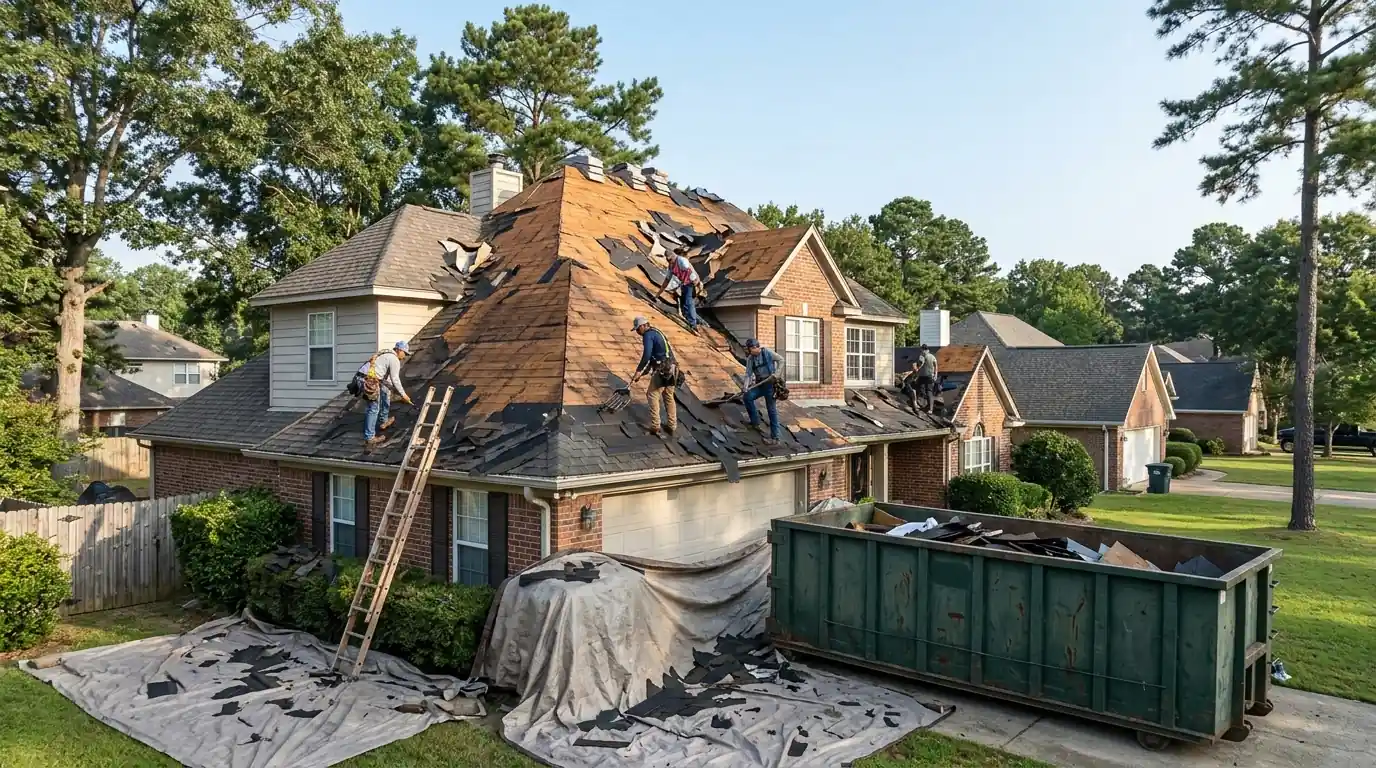
Permit rules for a new roof in Little Rock are not spelled out in one simple public line. Here is what we confirmed, what we could not, and how to get a clear answer for your address.
October 18, 2026 · 7 min read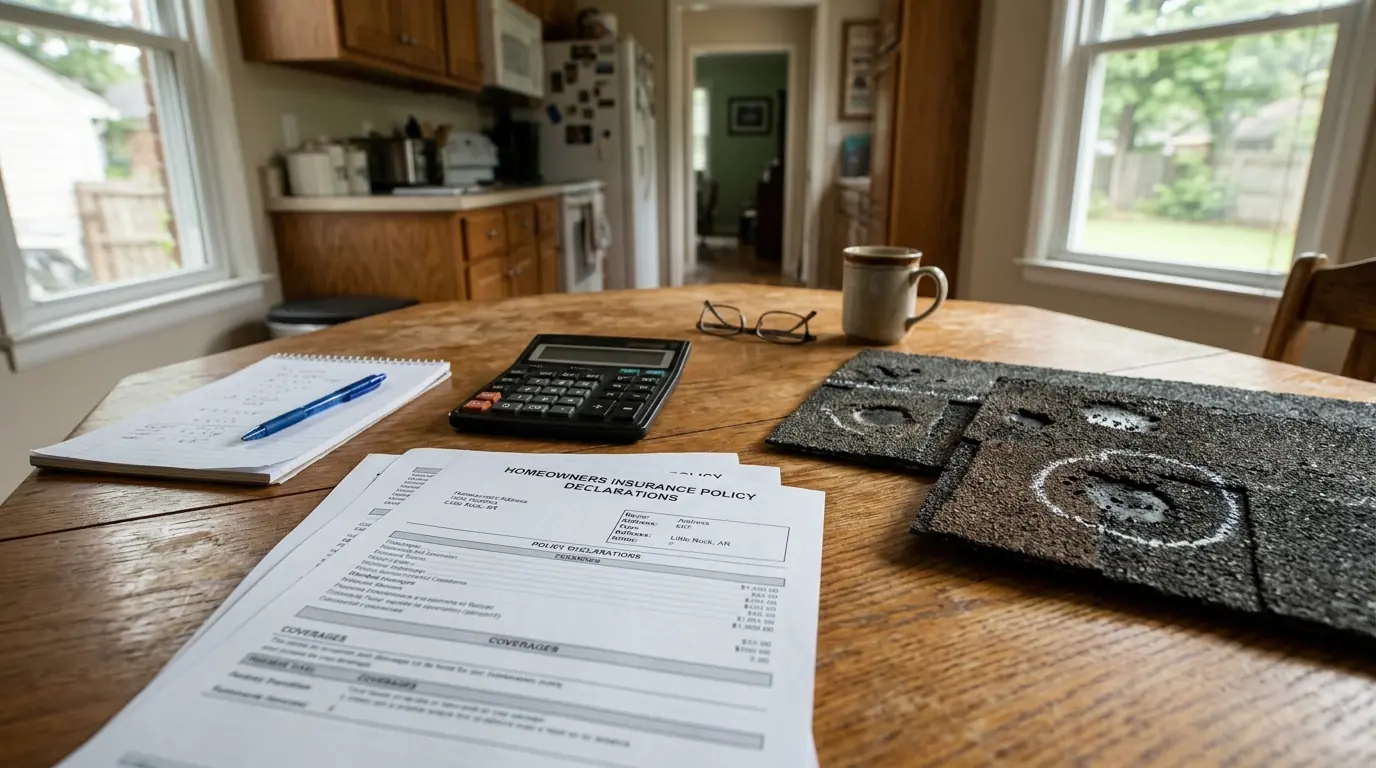
A 2% wind and hail deductible can mean thousands out of pocket on a roof claim. Here is how flat and percentage deductibles work and how to find yours before the next storm.
October 16, 2026 · 7 min read
Typical 2026 price ranges for a new roof in Little Rock, broken out by material and home size, with the hidden line items that push one quote above another.
October 15, 2026 · 7 min readWant a roofer to look at it?Call any hour. We inspect, photograph and give you a written price.
Call (501) 387-1152