Roof Repair
Targeted fixes for worn shingles, failed flashing, cracked pipe boots and soft spots, priced in writing before our crew touches the roof.
How we handle itRoof & Home Tips
A leak does not always mean a new roof, and a new roof is not always the smart buy. Here is how we weigh age, damage, decking and your own plans.
By Lonnie Gatlin, Roof & Home Tips EditorUpdated July 14, 20267 min read
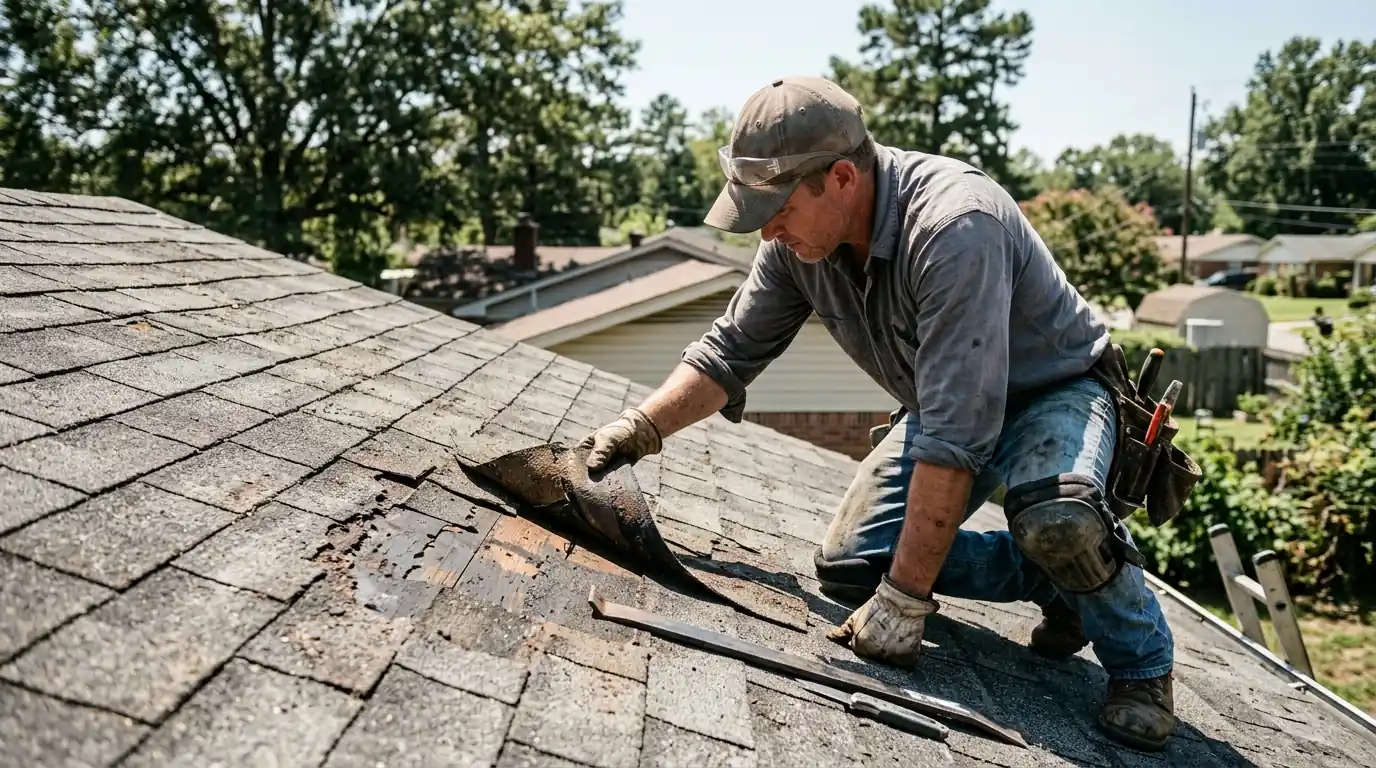
The question usually shows up as a brown ring on a bedroom ceiling. Is this a patch, or is the whole roof done? Plenty of roofs in central Arkansas have years left after a good repair, and plenty of others are past saving no matter how many patches go on. This guide walks through the same checks we use on a roof before we recommend either path, so you can make the call with real information.
Age is the first clue. Architectural shingles in the Arkansas sun usually give 20 to 25 good years, and older three tab shingles often wear out closer to 15 to 20. If you do not know the age, check your closing papers, ask a neighbor who has lived on the street a while, or look for a date stamped on the underside of the decking in the attic.
Still, age alone does not decide anything. A 17 year old roof under shade trees with good attic ventilation can look better than a 12 year old roof facing west with a hot, stuffy attic. The roof surface itself tells the real story.
Look at the gutters too. A steady pile of granules at the bottom of downspouts after every rain means the shingles are shedding their protective layer. A little loss in the first year is normal; heavy loss on an older roof means the shingles are near the end.
One leak at a pipe boot is a repair. A few shingles torn loose on one slope in a wind storm is a repair. When problems show up on several slopes at once, the math changes, because you will be paying for repeat visits on a roof that is wearing out everywhere.
A rough rule many roofers use: if more than about a quarter to a third of the roof needs work, replacement usually makes more sense. The cost of a large repair starts to approach a real share of a new roof, and the untouched areas are often close behind.
Also think about where the damage sits. A leak in the middle of an open slope is usually simple. Leaks where the roof meets a wall, a chimney or a dormer are often flashing problems, and those can be fixed on an older roof without replacing the shingles around them, as long as the shingles still have life in them.
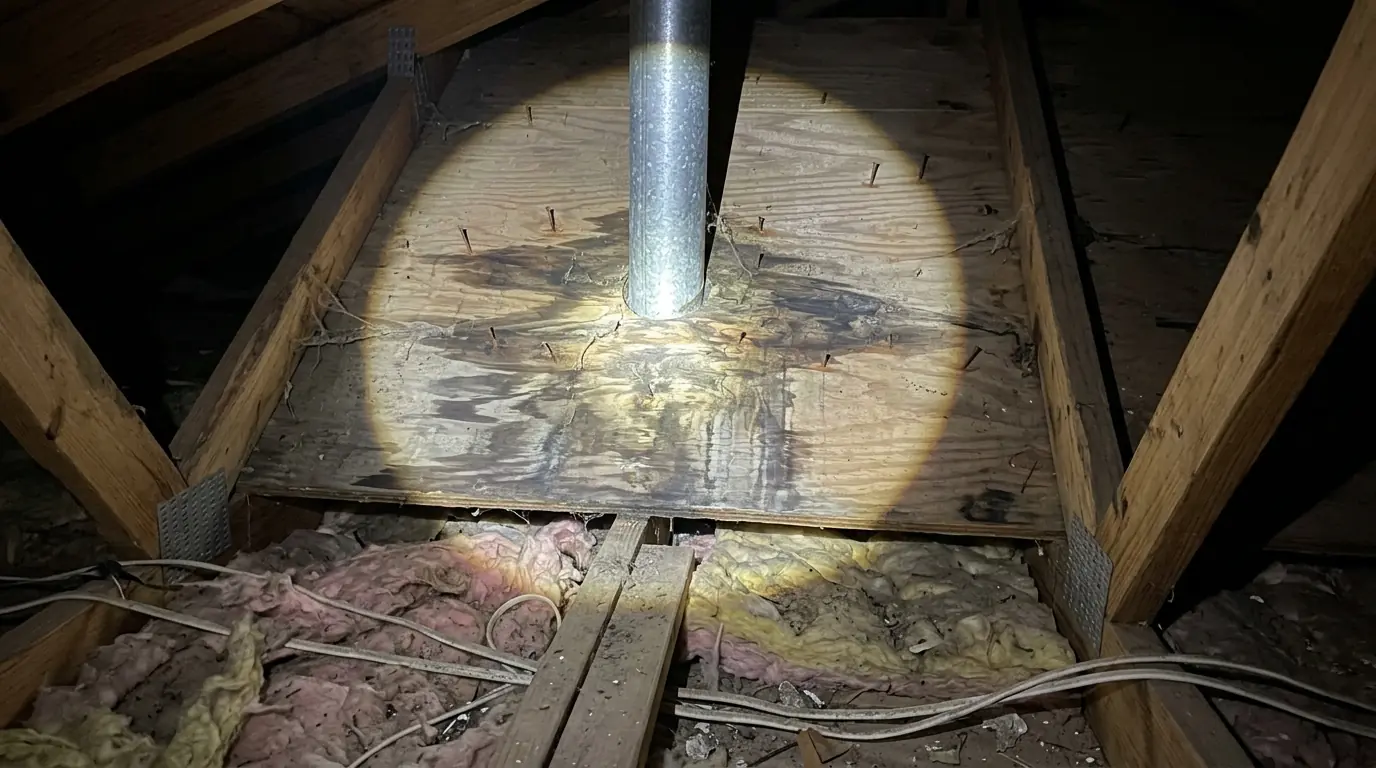
We always go into the attic before giving advice. Dark stains on the decking, damp insulation or daylight around nails tell us where water has been getting in and for how long. A single stain near a vent points to a repair, while widespread staining along the eaves suggests a roof that is failing in many places.
On the roof itself, soft or spongy spots mean the decking has started to rot. A repair can replace a few sheets, but if the decking is soft in several areas, the shingles over it are not going to hold nails well for long. That is often the point where a new roof saves money compared with chasing problems.
Some older homes in Little Rock already have two layers of shingles. A second layer adds weight and holds heat, and it hides decking problems. Most roofers will not add a third layer, so a roof with two layers and widespread wear is usually a tear off.
Matching is the other practical limit. Shingle lines get discontinued, and sun fades the old ones. A repair on a 15 year old roof may show as a patch of darker color on the front slope. That does not hurt performance, but it matters if curb appeal is part of your plan.
Ventilation problems also tilt the decision. If the attic has no real intake at the soffits, a repair will not fix the heat that is cooking the shingles from below. A replacement is the cleanest time to fix the airflow, since the ridge is already open.
Here are typical 2026 ranges we see in central Arkansas, so you can compare the price of a repair with the life it buys. These are ranges, not quotes, and the actual number depends on access, pitch and what turns up once the area is opened.
A useful way to think about it: divide the repair cost by the number of years it is likely to buy, then do the same for a new roof. A $740 repair that buys two years costs about $370 a year. A $12,000 roof that lasts 22 years costs about $545 a year but ends the repair cycle and adds resale value.
If you plan to sell within a year or two, buyers and their inspectors will look closely at the roof. A roof near the end of its life often comes up in negotiation, and a clean new roof can remove that issue entirely. On the other hand, a solid repair on a roof with five good years left may be all that is needed.
If you plan to stay for decades, a new roof with better underlayment, flashing and ventilation will usually cost less over time than three or four repair visits. It is also the right moment to consider impact-resistant shingles or metal, since central Arkansas sees hail most springs.
Insurance plays a part as well. Some carriers change coverage on older roofs, paying only actual cash value after a certain age. Check your policy so a future storm claim does not catch you by surprise.
When you call (501) 387-1152, we inspect the roof and the attic, photograph what we find and walk you through the photos. If a repair will do the job, we price the repair. If the roof is past it, we explain why with pictures, not guesses, and give you a written price before work starts for either path.
Many homeowners choose a repair now and plan a replacement in a year or two. That is a reasonable plan, as long as the repair is done right and you know what to watch for in the meantime. We will tell you which signs mean the plan needs to move up.
Whatever you choose, keep the photos and the paperwork. They help when you sell, when you file a future storm claim and when a new roofer needs to know what was done before.
Sometimes. If the leak comes from one pipe boot or a short run of flashing and the shingles still hold granules and lie flat, a repair can buy several years. If the shingles are curling, losing granules on many slopes or the decking feels soft, money spent on repairs usually goes further toward a new roof.
It is possible on some roofs, especially when one slope took storm damage or faces the hot afternoon sun and wore out first. The new shingles may not match the faded ones, and the joint at the ridge needs careful work. We will tell you honestly whether a partial replacement makes sense for your roof or just delays the full job.
Look at the edge of the roof at the gutter line or a rake. If you see two stacked shingle edges, or the drip edge sits unusually high, there are likely two layers. A roofer can confirm it by lifting a shingle at the edge. Two layers usually mean a full tear off is needed at replacement time.
Targeted fixes for worn shingles, failed flashing, cracked pipe boots and soft spots, priced in writing before our crew touches the roof.
How we handle itA complete tear-off to the deck with new underlayment, flashing, vents and shingles, finished in a day or two on most homes.
How we handle itWe follow the water back to where it actually gets in, fix that spot and stop the stain from coming back.
How we handle it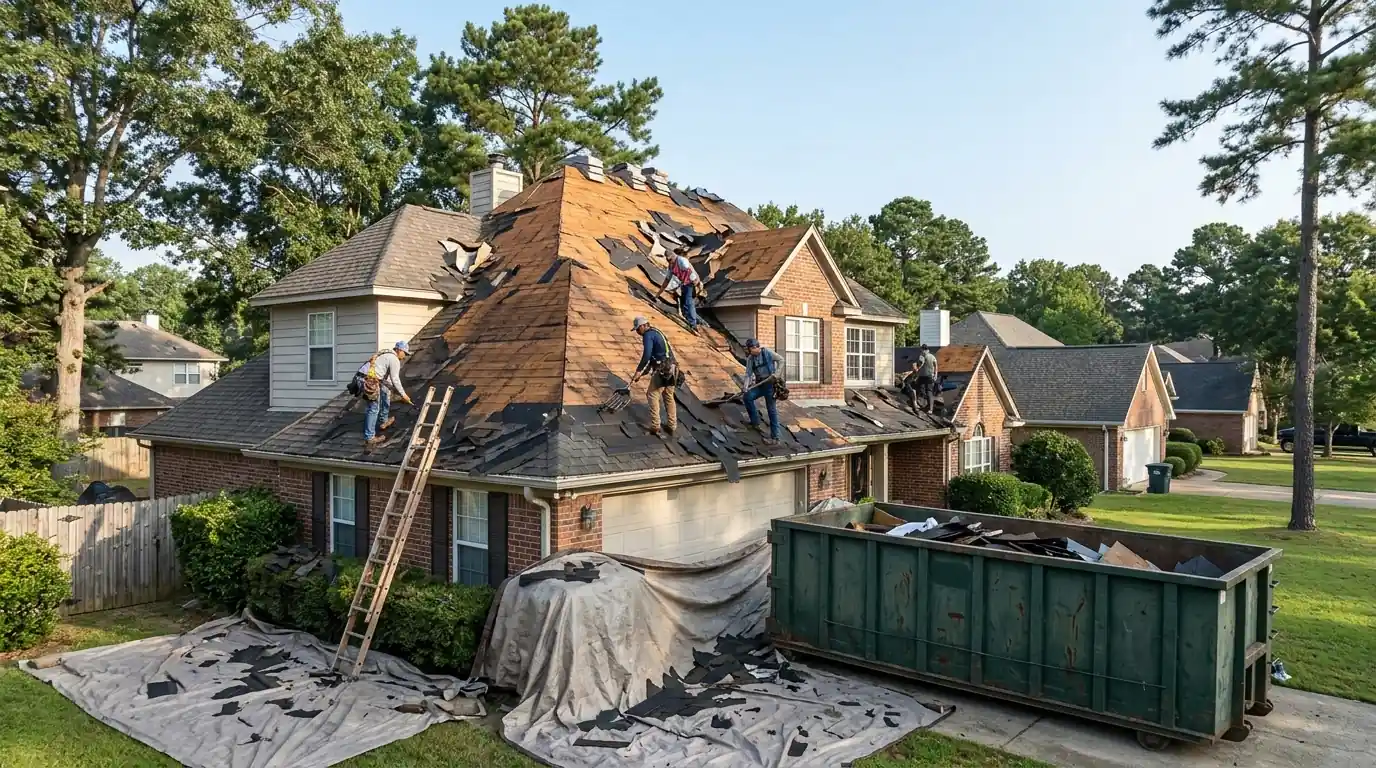
Permit rules for a new roof in Little Rock are not spelled out in one simple public line. Here is what we confirmed, what we could not, and how to get a clear answer for your address.
October 18, 2026 · 7 min read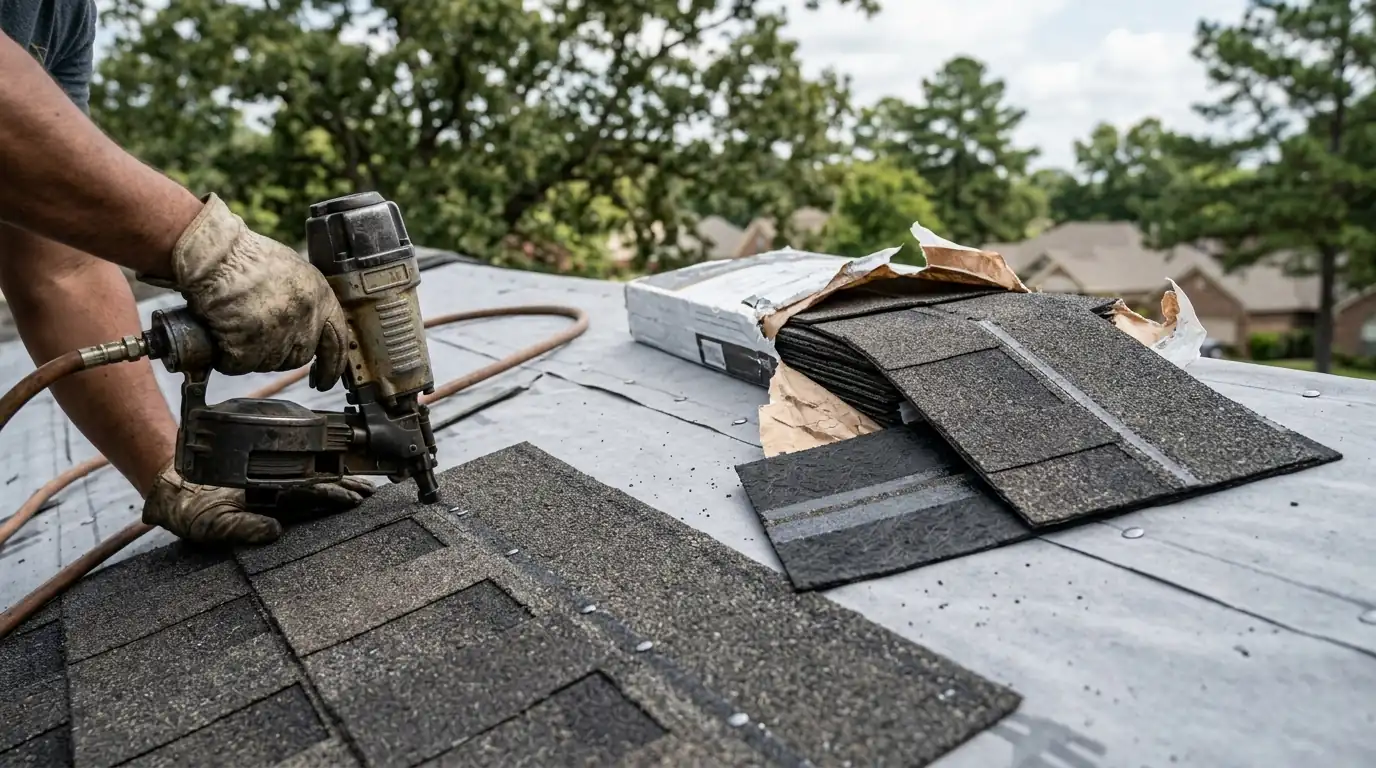
Class 4 shingles hold up better to hail, but the discount question is more tangled in Arkansas. Here is what the rating means, what state law covers and what to ask your agent.
October 17, 2026 · 7 min read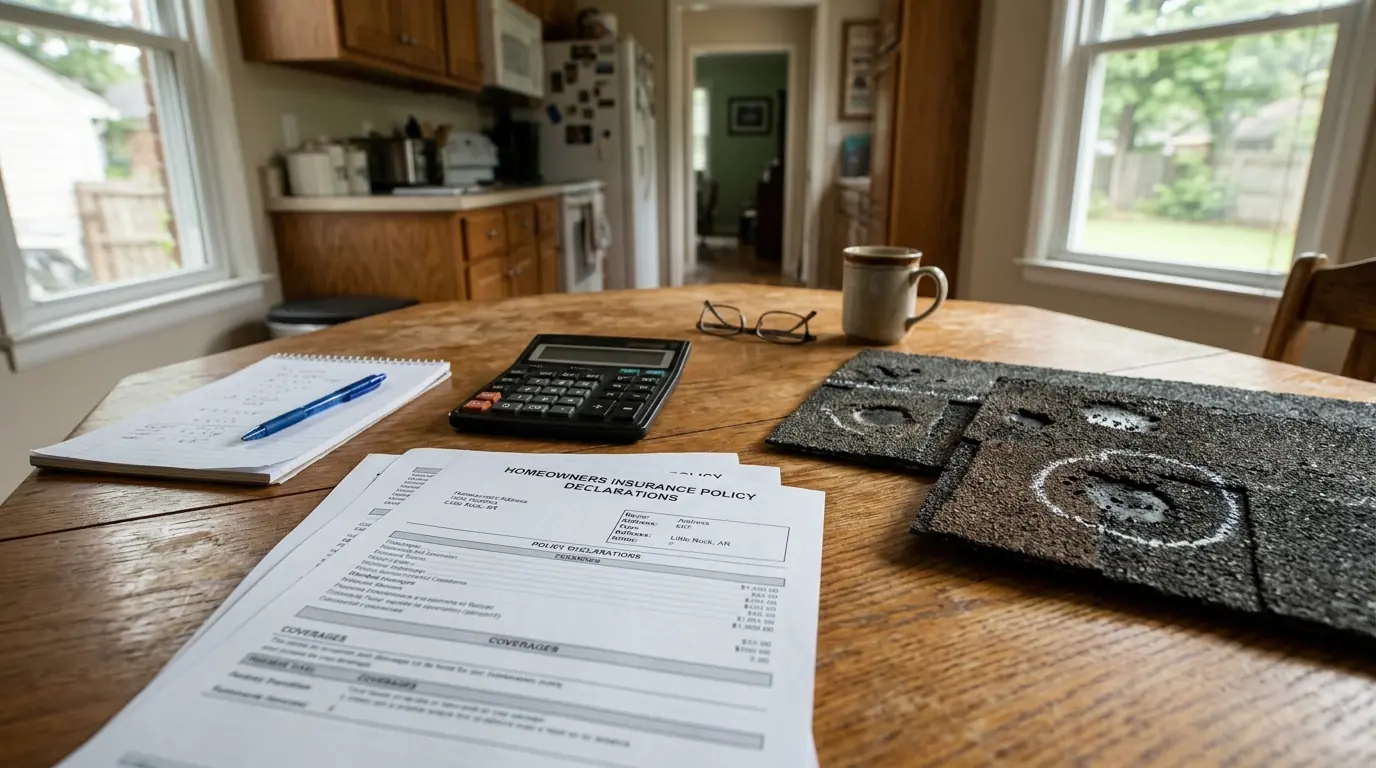
A 2% wind and hail deductible can mean thousands out of pocket on a roof claim. Here is how flat and percentage deductibles work and how to find yours before the next storm.
October 16, 2026 · 7 min readWant a roofer to look at it?Call any hour. We inspect, photograph and give you a written price.
Call (501) 387-1152