Roof Replacement
A complete tear-off to the deck with new underlayment, flashing, vents and shingles, finished in a day or two on most homes.
How we handle itRoof & Home Tips
Older Little Rock homes bring plank decking, steep gables, slate and sometimes design review. Here is what to expect when the roof over a Quapaw Quarter or Hillcrest house needs replacing.
By Lonnie Gatlin, Roof & Home Tips EditorUpdated October 3, 20267 min read
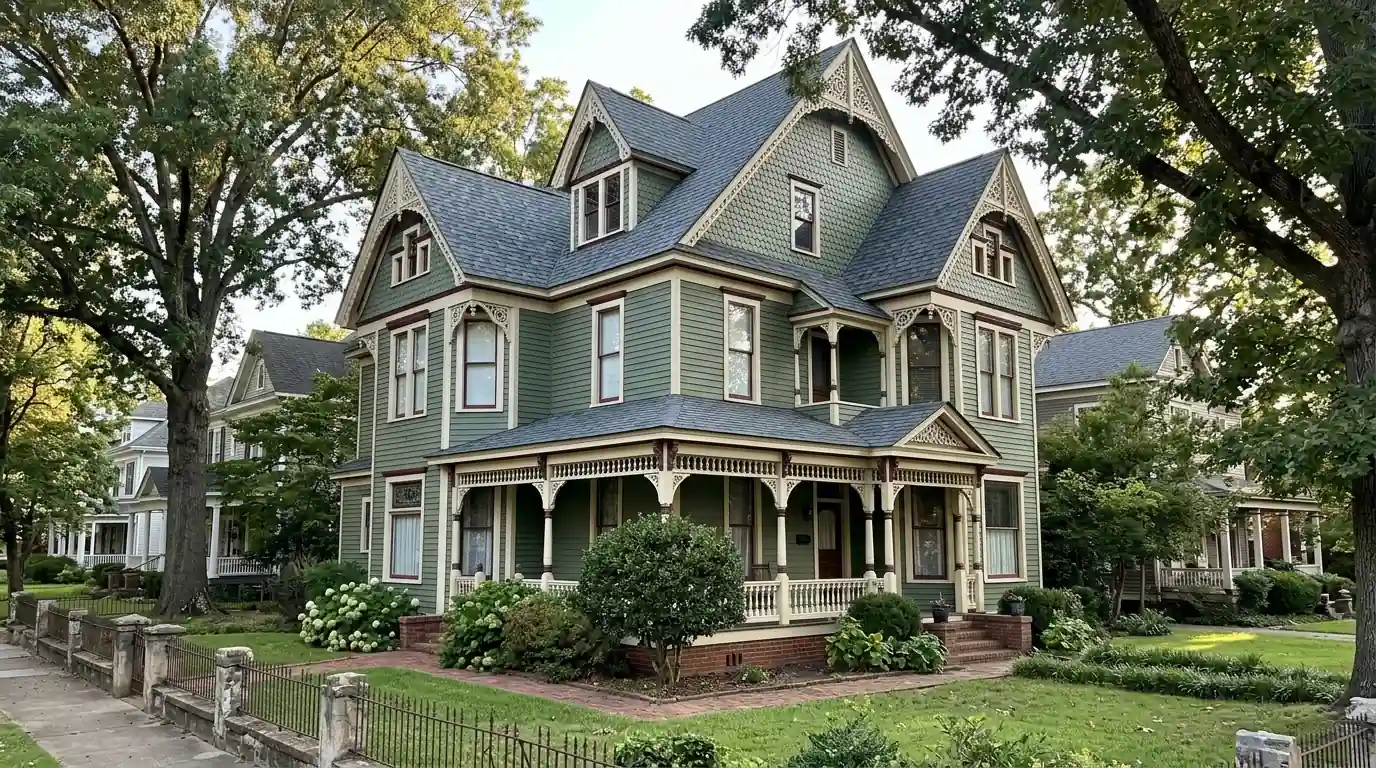
The Quapaw Quarter and Hillcrest hold some of the oldest homes in Little Rock, from Victorian houses near downtown to bungalows and Tudor style homes on the hills around Kavanaugh Boulevard. Their roofs are steeper, older and more layered than most, and some sit in areas with design rules. Re-roofing one takes more planning than a typical ranch. Here is what we look at before starting on an older home.
Historic status in Little Rock is not one single thing. Some areas are listed on the National Register of Historic Places, which is an honor and a record, not a set of rules for private homeowners by itself. Other areas fall under a local ordinance district with its own design review.
According to the City of Little Rock, the MacArthur Park Historic District, which sits within the broader Quapaw Quarter area, is the locally regulated district. Exterior changes there can require a Certificate of Appropriateness from the Little Rock Historic District Commission before work begins. Homes near the State Capitol may also fall under the separate Capitol Zoning District.
Hillcrest is listed on the National Register, and parts of it fall under a city design overlay district that deals mainly with zoning items. Rules change and district lines matter house by house, so before you change visible roof materials, colors or rooflines on any older home, check with the City of Little Rock Planning and Development Department about what review applies to your address.
Many homes built before the 1950s have plank decking: boards laid across the rafters with small gaps between them. That decking was made for wood shingles, which needed airflow. Modern shingles need a solid surface, so plank decks are often covered with new plywood or OSB during a reroof.
Older roofs also tend to carry more than one layer. We often find two layers of asphalt shingles, and sometimes old wood shingles under them. Every layer comes off in a proper tear off, which adds labor and disposal but lets us see and fix the decking.
Rafters on older homes are sometimes undersized or spaced wider than today's standard, and a few have sagged over a century. We check the framing from the attic before recommending a heavier material.
A National Register listing can matter if you plan to use historic tax credits for a larger rehab. Those programs come with their own review standards, so ask about them before you choose materials.
Victorian homes in the Quapaw Quarter often have steep gables, towers, dormers and decorative trim. Hillcrest bungalows usually have lower pitches but deep overhangs and exposed rafter tails, while Tudor style houses there can have very steep front gables.
Steep, cut up roofs take longer and need more safety setup. Crews use roof jacks, harnesses and planks on every run, and they work carefully around trim that cannot be easily replaced. Expect the cost per square to run higher than on a simple ranch roof.
Valleys, wall flashing and chimney flashing are where most older roofs leak. On these jobs we replace flashing rather than reusing it, and we pay close attention to where roof planes meet walls and dormers.
Older homes also have more surprises once the roof is open. We price likely items like decking per sheet and extra layers per square in the written price, so you know how any changes will be handled before the crew starts.
For most older homes, a quality architectural shingle in a color that suits the era looks right and costs the least. Some lines are made to resemble slate or wood shakes, which can work well on Tudor and Victorian homes.
Homes that already have real slate deserve a careful look before replacing it. Good slate can last a very long time, and the problem is often failed nails or flashing rather than the stone itself. Repairing slate takes a roofer experienced with it, since walking on slate can crack it.
Metal can suit some older homes, especially porch roofs and farmhouse styles. In any area with design review, check with the city before switching from shingles to metal or making other visible changes.
Older chimneys need special attention. Many in these neighborhoods were built with soft lime mortar, and old flashing was often patched over with tar instead of being replaced. New step flashing with counterflashing cut into the mortar joints holds far longer than another coat of sealant.
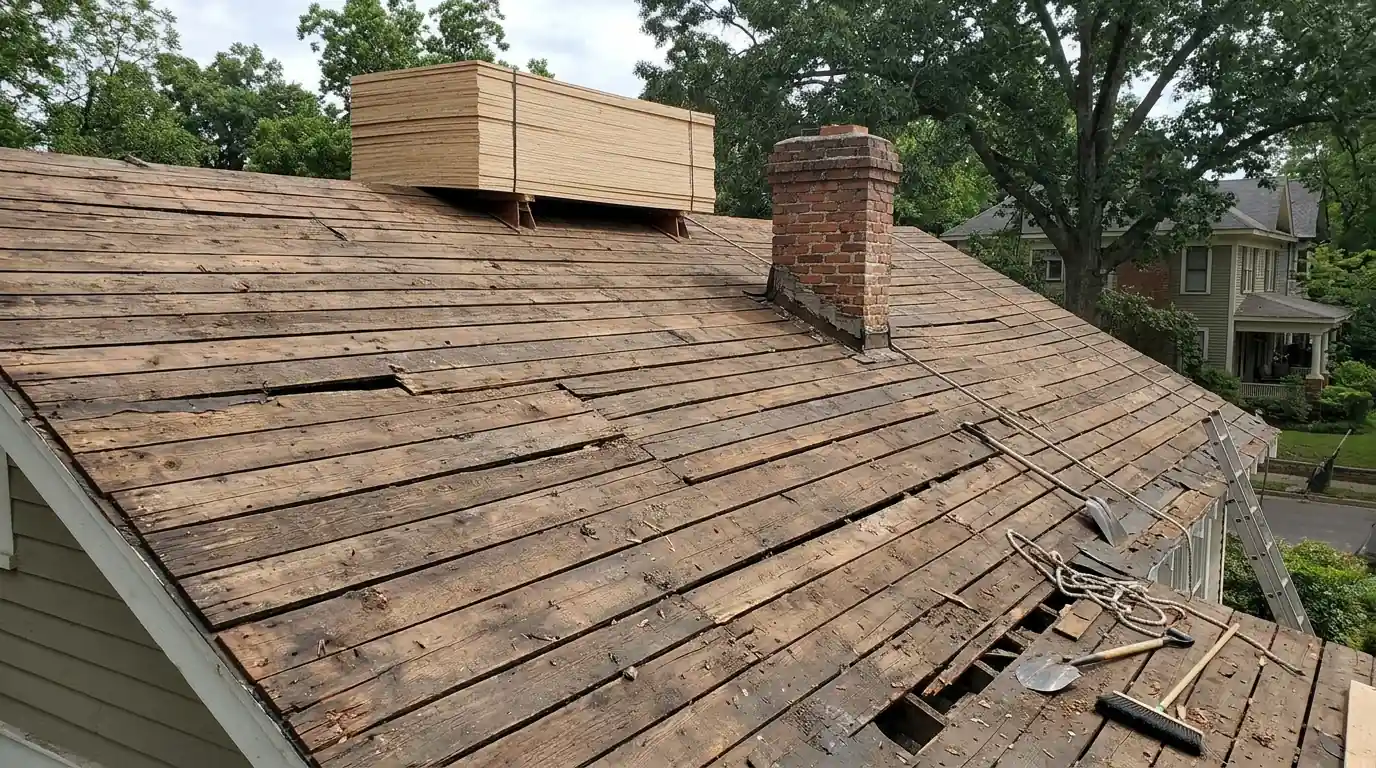
On older homes, the roof edge is a big part of the look. Box gutters, half round gutters, deep cornices and decorative fascia are common. A reroof is the right time to repair rot in fascia and soffits and to reline or replace failing box gutters.
We match the roof edge details to the house where possible, and we photograph the existing trim before work starts. That gives you and any reviewer a clear record of what was there.
Ventilation is another detail. Many older attics have little or no soffit venting. Adding intake carefully, without changing the look of the eaves, helps protect the new shingles in Arkansas heat.
Color matters on these homes. A warm brown, weathered gray or muted green shingle often suits a 1920s bungalow better than stark black. We bring samples out so you can see them against your brick, siding and trim in daylight.
These are typical 2026 ranges for central Arkansas, not quotes. Older homes vary widely, and the final number depends on layers, decking and the amount of flashing and trim work.
Porch roofs deserve their own look. Many older homes have low slope porch roofs that were covered with roll roofing decades ago. A modern membrane or a standing seam porch roof can stop the leaks without changing the look much.
Give yourself time. If design review applies, approval can add weeks before work begins, so start the conversation with the city early. Even without review, older homes benefit from a careful inspection before a price is set.
We walk the roof, check the attic and framing, photograph the decking, flashing and trim, and walk you through what we find. Call (501) 387-1152 and you will get a written price before work starts that lists layers, decking and flashing so there are no surprises once the old roof comes off.
Neighbors on these streets often live close, so we plan staging and cleanup carefully. Dumpsters, ladders and material deliveries are placed to keep sidewalks and narrow streets clear, and the magnet sweep for nails covers the yard, drive and walk.
It depends on the exact address. Homes inside the MacArthur Park Historic District can need a Certificate of Appropriateness for exterior changes, and homes near the State Capitol may fall under the Capitol Zoning District. Other parts of the Quapaw Quarter may not have the same review. Check with the City of Little Rock before changing visible roof materials.
National Register listing by itself generally does not control what a private homeowner puts on a roof. Hillcrest does have a city design overlay that deals mainly with zoning items. Rules can change, so call the City of Little Rock Planning and Development Department about your address before changing roofing materials or rooflines.
Older Hillcrest homes often have plank decking that needs a solid layer, multiple old shingle layers to remove, steep gables, deep overhangs and aging chimney flashing. Each of those adds labor and material. A careful inspection before pricing lets us list those items upfront so the written price reflects the real job.
A complete tear-off to the deck with new underlayment, flashing, vents and shingles, finished in a day or two on most homes.
How we handle itCracked or slipped slates replaced one at a time, flashing reworked, and the original stone roof kept in service for decades more.
How we handle itWe find whether the water comes through chimney flashing, the crown, the brick or a missing cricket, then fix that source.
How we handle it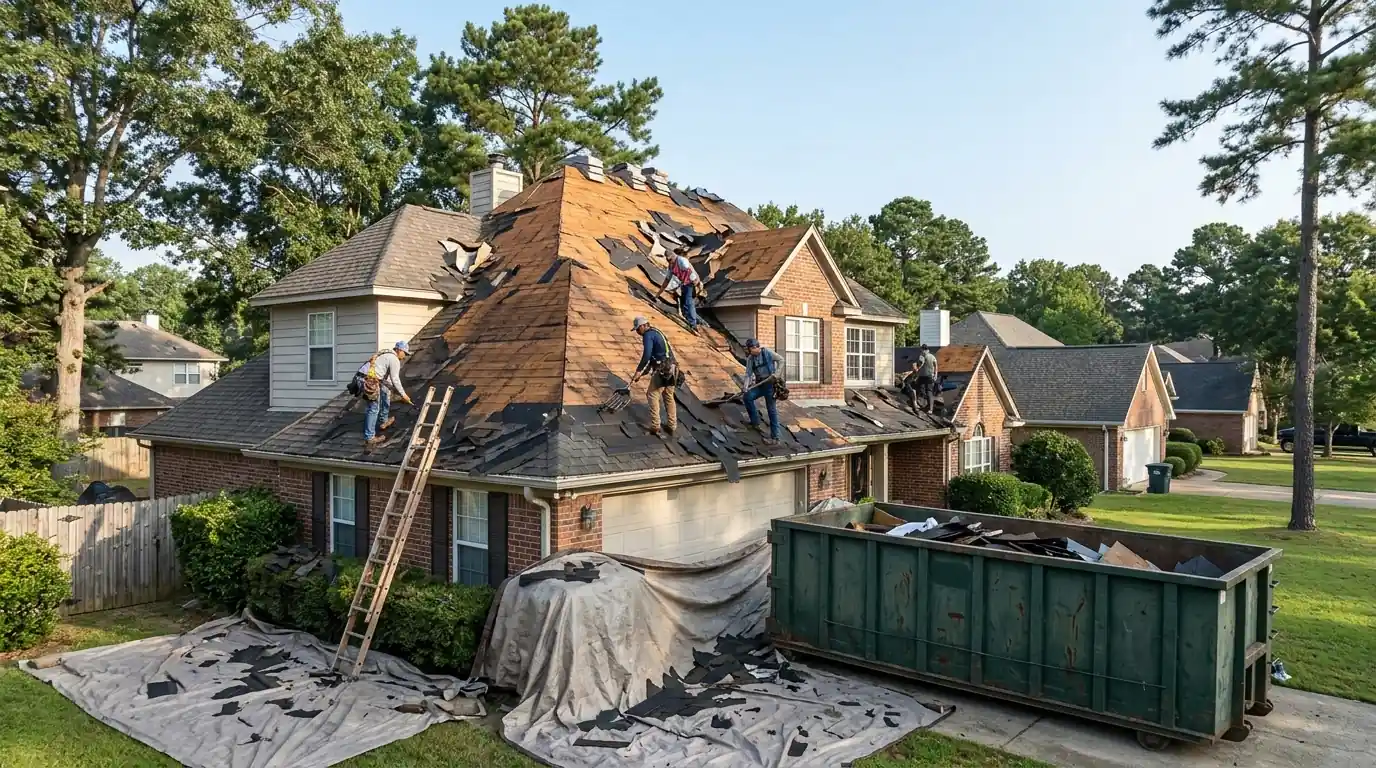
Permit rules for a new roof in Little Rock are not spelled out in one simple public line. Here is what we confirmed, what we could not, and how to get a clear answer for your address.
October 18, 2026 · 7 min read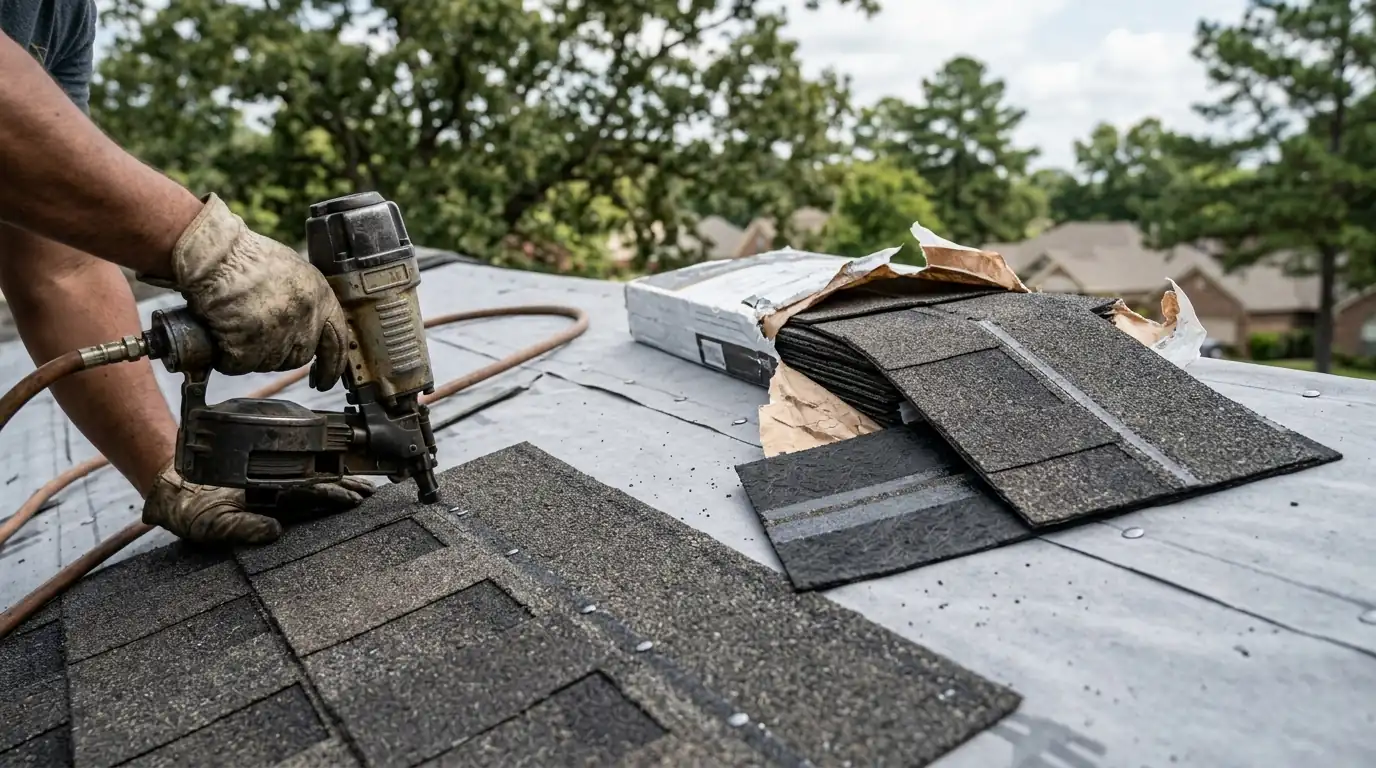
Class 4 shingles hold up better to hail, but the discount question is more tangled in Arkansas. Here is what the rating means, what state law covers and what to ask your agent.
October 17, 2026 · 7 min read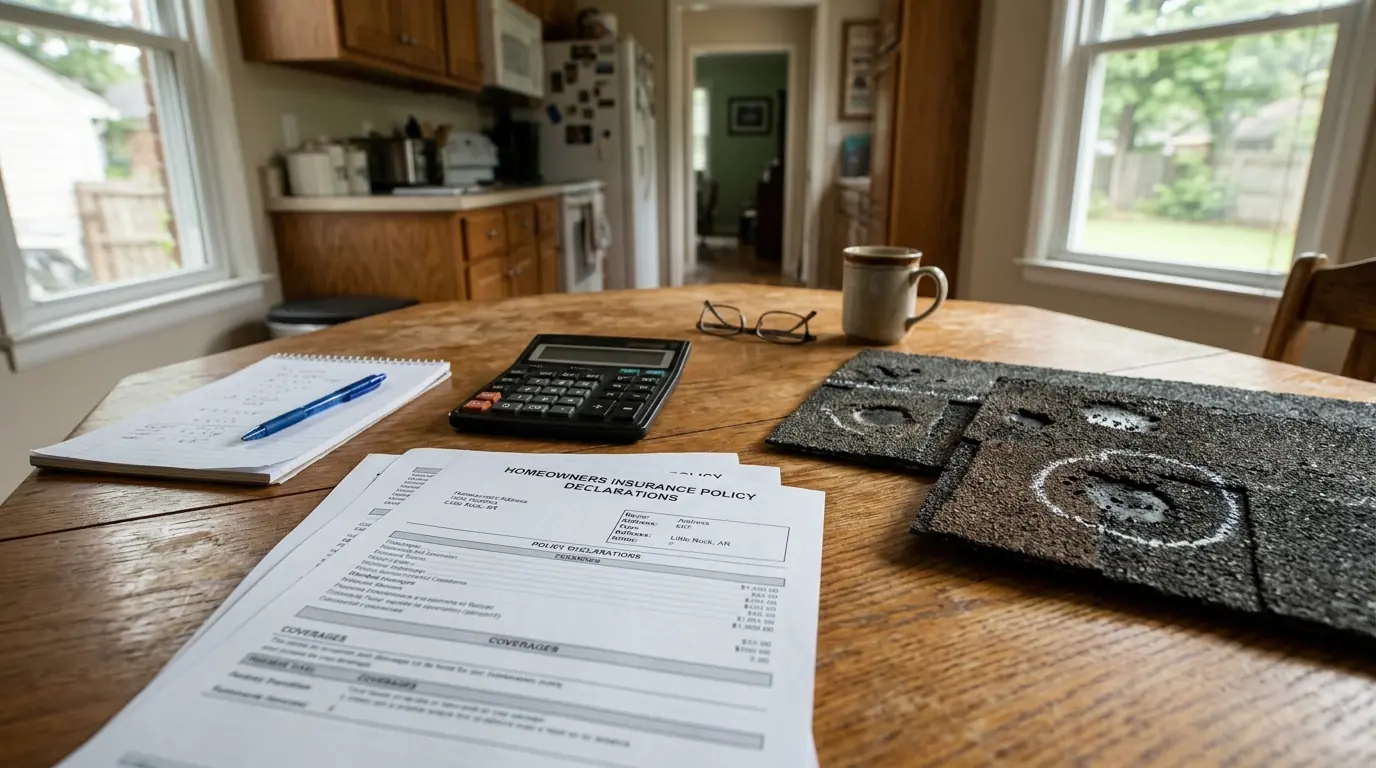
A 2% wind and hail deductible can mean thousands out of pocket on a roof claim. Here is how flat and percentage deductibles work and how to find yours before the next storm.
October 16, 2026 · 7 min readWant a roofer to look at it?Call any hour. We inspect, photograph and give you a written price.
Call (501) 387-1152