Metal Roofing
Ribbed exposed-fastener metal panels for homes, porches, barns and shops, a durable and budget-friendly choice for central Arkansas.
How we handle itRoof & Home Tips
Metal lasts longer and handles heat well. Shingles cost less and repair easily. Here is how the two compare on a real Little Rock house, from price to hail to resale.
By Lonnie Gatlin, Roof & Home Tips EditorUpdated September 22, 20267 min read
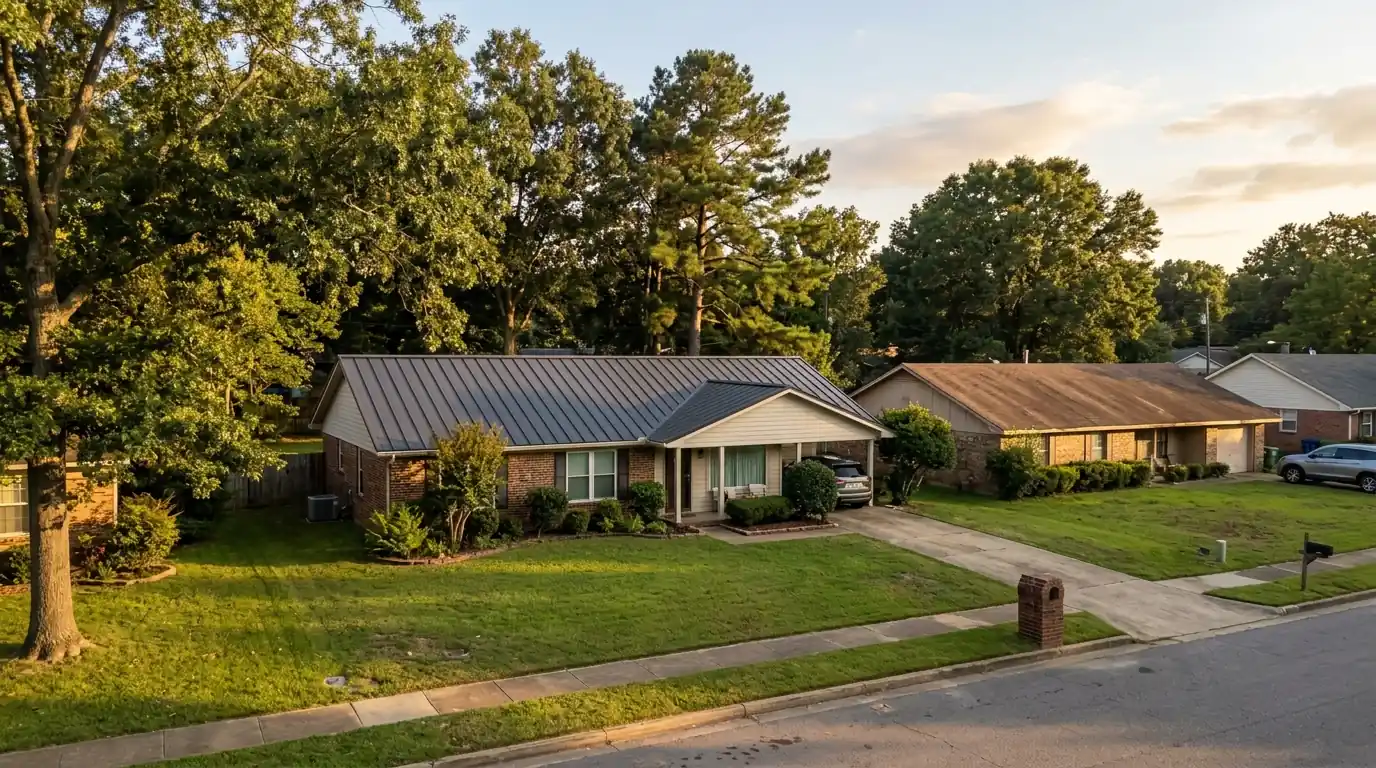
More Little Rock homeowners are asking about metal roofs than a few years ago, often after a neighbor puts one on or a hail storm forces a replacement. Metal is not automatically the better choice, and shingles are not just the cheap option. The right answer depends on your house, your budget and how long you plan to stay. Here is a side by side look at the factors that matter most in central Arkansas.
For a typical single story Little Rock home of about 1,600 square feet, an architectural shingle roof usually lands around $8,600 to $13,900 in 2026, depending on pitch, layers and decking. A Class 4 impact-resistant shingle on the same house often runs $10,300 to $16,800.
Exposed fastener metal panels on that same roof typically fall between $12,100 and $19,500. Standing seam, the style with raised seams and hidden fasteners, usually comes in around $20,400 to $34,300. These are typical ranges, not quotes, but they show the gap clearly.
Metal also costs more for the extras. Flashing, trim pieces and ridge caps are custom bent from matching metal, and the labor is more specialized. Simple rooflines narrow the gap, while roofs with many valleys and dormers widen it.
Tear off is the same for both in most cases. The old shingles still have to come off, and rotted decking still needs replacing, so those line items do not change much between materials. The gap comes from the roofing itself and the trim.
Architectural shingles in central Arkansas typically last 20 to 25 years. Standing seam metal commonly lasts 40 to 60 years, and quality exposed fastener panels can last decades with fastener care.
That changes the math if you plan to stay. A homeowner who stays 30 years may buy one standing seam roof or two shingle roofs, plus the tear off and disposal twice. Over that span, metal can come out even or ahead. A homeowner planning to sell in five to seven years rarely gets that payback.
Resale value is harder to pin down. Some buyers value a metal roof highly, while others care mainly that the roof is in good condition. In most Little Rock neighborhoods, a roof that is newer and well documented matters more to a buyer than the material itself.
Think about how roofs age, too. A shingle roof looks its best in year one and slowly fades and loses granules. A quality metal finish changes very little over the first couple of decades, so the roof looks close to new for much longer.
Wind is where metal clearly shines. Properly fastened panels hold up well to the straight-line winds that come with summer storms, and standing seam has no exposed edges to lift.
Hail is more mixed. Metal rarely leaks from hail, but large stones can leave dents. Some insurers write cosmetic damage exclusions for metal, which means dents that do not cause leaks may not be covered. Thicker gauge panels and textured or ribbed profiles show dents less.
Class 4 shingles are the shingle answer to hail. They resist cracking far better than standard shingles, and some carriers offer a premium discount for them. Read your policy and ask your insurer about both options before you decide.
Metal roofs with light colored or reflective coatings bounce back a good share of the summer sun. That can lower attic temperatures and take some load off the AC, especially on homes with ducts in the attic. Dark metal reflects less, though many coatings still perform better than dark shingles.
Shingles absorb more heat, which is part of why they age faster in our sun. Lighter shingle colors and good attic ventilation narrow the difference. Either way, ventilation and insulation do more for comfort than the roof surface alone.
Underlayment matters under metal as much as under shingles. A high temperature synthetic underlayment holds up better below metal panels, which can run very hot on a July afternoon. We use it as standard under metal.
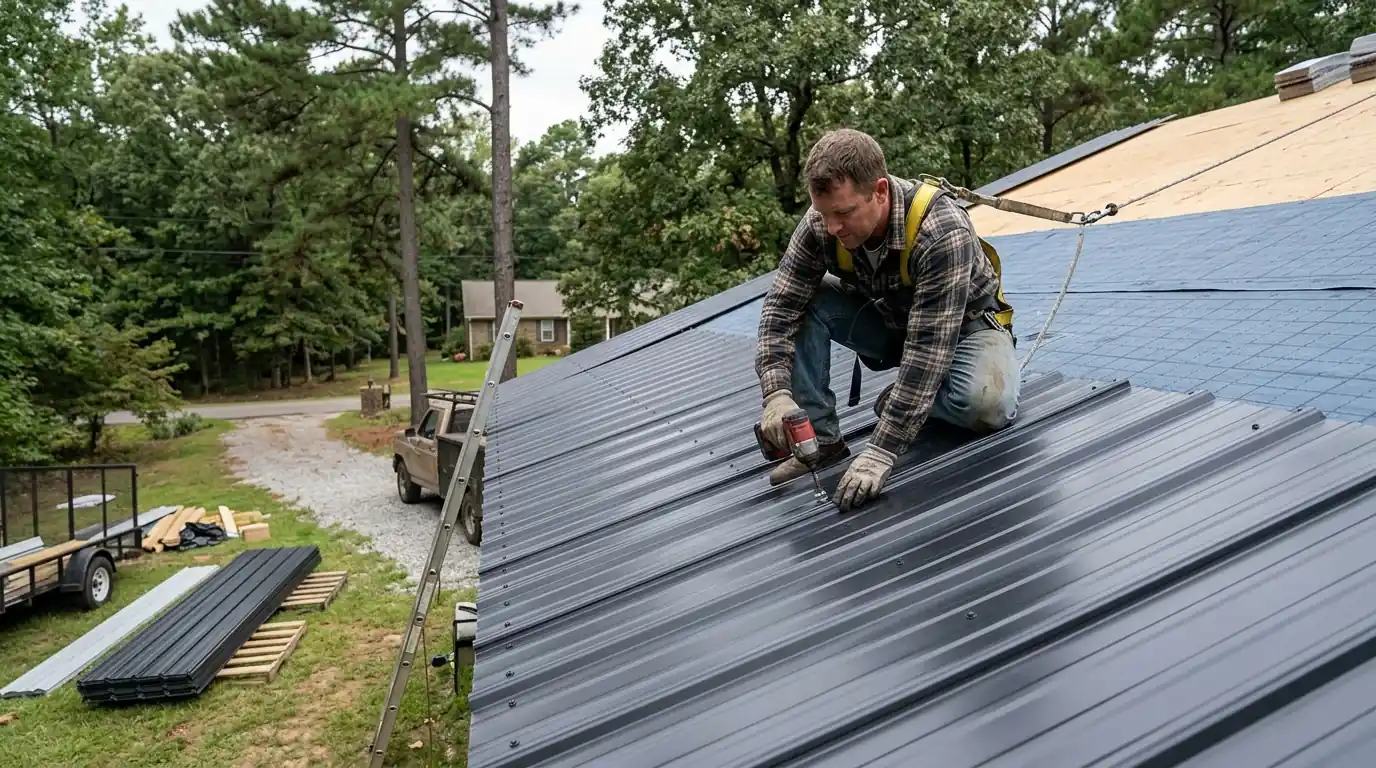
Many people worry that rain on a metal roof will be loud. On a house with solid decking, underlayment and an insulated attic, metal is usually not much louder than shingles. The loud tin roof sound comes mostly from barns and porches with open framing.
Looks matter too. Standing seam fits farmhouse, modern and many ranch styles well. On a brick traditional home in an established neighborhood, shingles may blend better. Some subdivisions in west Little Rock have HOA rules on roofing materials and colors, so check your covenants before you choose.
Historic areas are another consideration. If your home is in a historic district, check with the City of Little Rock about design review before changing to a visibly different roof material.
Pine needles and leaves are worth a thought. They slide off metal more easily than shingles, but they can collect behind chimneys and in valleys on either material. Homes under heavy tree cover still need gutters and valleys cleared each fall.
Shingles are easy to repair. A few blown off shingles or a cracked pipe boot is usually a quick fix, and parts are widely available. Matching an older shingle color can be tricky, but function is easy to restore.
Metal repairs need more care. Damaged panels may need to be replaced whole, and matching color and profile years later can be hard. Exposed fastener roofs need screws and washers checked and replaced over time, while standing seam needs sealant and flashing attention at penetrations.
Walking the roof is another difference. Shingle roofs are easy for service techs, satellite installers and chimney sweeps to walk on. Metal roofs can be slick and are easier to damage with careless foot traffic, so anyone going up should know where to step.
Shingles usually make sense if budget is tight, you may sell within ten years, your roof has many valleys and dormers, or your neighborhood favors a traditional look. Class 4 shingles are a strong middle ground for hail.
Metal usually makes sense if you plan to stay long term, the roofline is fairly simple, you want strong wind performance and lower upkeep, or the home style suits it. Our own crews install both, so we have no reason to push one over the other.
Call (501) 387-1152 and we will look at your roof, show you samples on site and give you a written price for each option before any work starts. Seeing both numbers side by side for your actual house makes the choice much clearer.
If you are still on the fence, look at your roof's shape and the trees around it. A long, simple gable in full sun is an easy fit for metal. A cut up roof with several valleys under big oaks often makes a better case for a good Class 4 shingle.
It often is if you plan to stay 20 years or more, since standing seam can outlast two shingle roofs. If you might sell within a few years, a good architectural or Class 4 shingle roof usually returns more for the money. Comparing written prices for both on your house is the clearest way to decide.
Sometimes, if there is only one layer of shingles, the decking is sound and local rules allow it. Many roofers prefer a full tear off so they can check the decking, fix rot and install proper underlayment and flashing. Going over shingles also hides problems. We inspect first and explain both options before you decide.
Large hail can dent metal, especially thinner panels. Dents usually do not cause leaks, but some insurance policies exclude cosmetic hail damage on metal. Thicker gauge panels and ribbed or textured profiles hide dents better. Read your policy before installing metal, and ask your insurer how they handle cosmetic damage.
Ribbed exposed-fastener metal panels for homes, porches, barns and shops, a durable and budget-friendly choice for central Arkansas.
How we handle itConcealed-fastener standing seam panels with clean raised seams, built to move with heat and last for decades on central Arkansas homes.
How we handle itArchitectural and designer asphalt shingles installed by our own crew, with color, wind rating and algae resistance chosen for your home.
How we handle it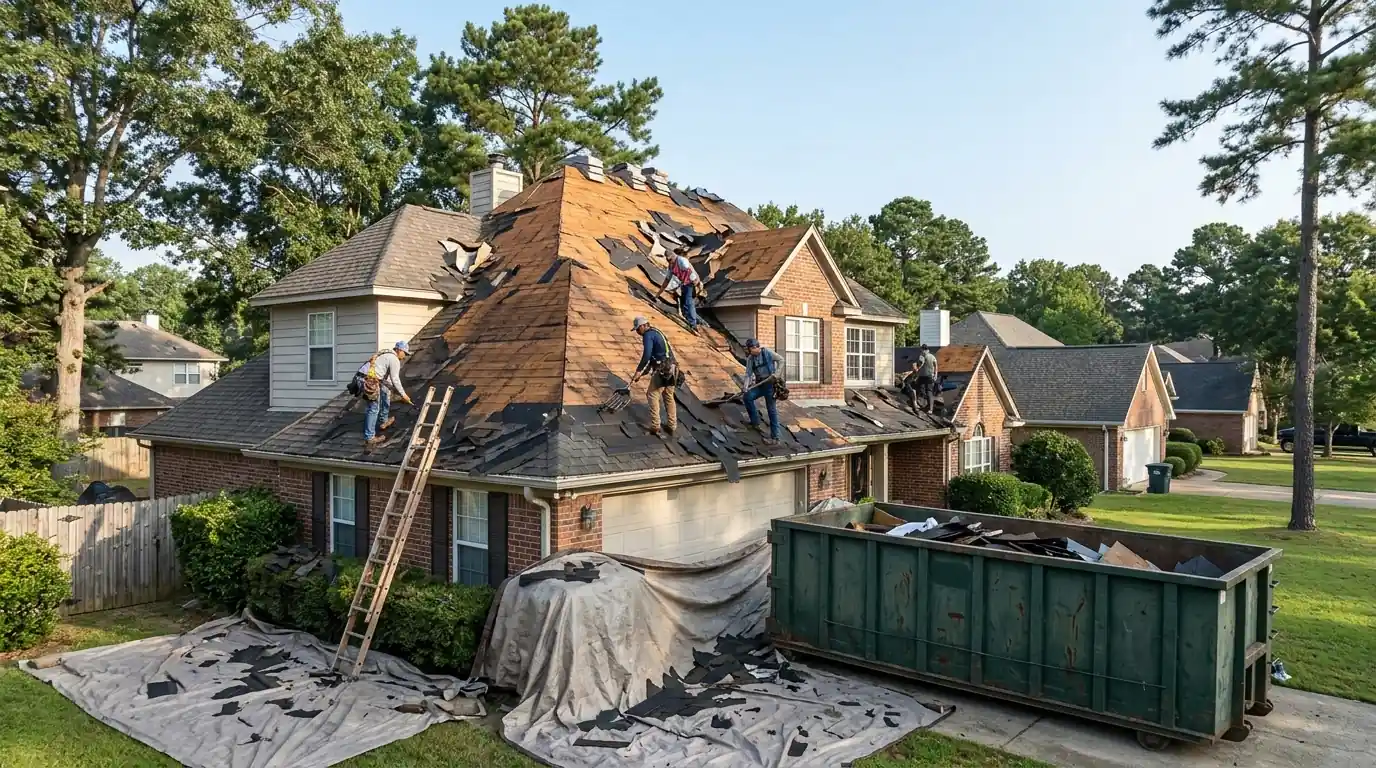
Permit rules for a new roof in Little Rock are not spelled out in one simple public line. Here is what we confirmed, what we could not, and how to get a clear answer for your address.
October 18, 2026 · 7 min read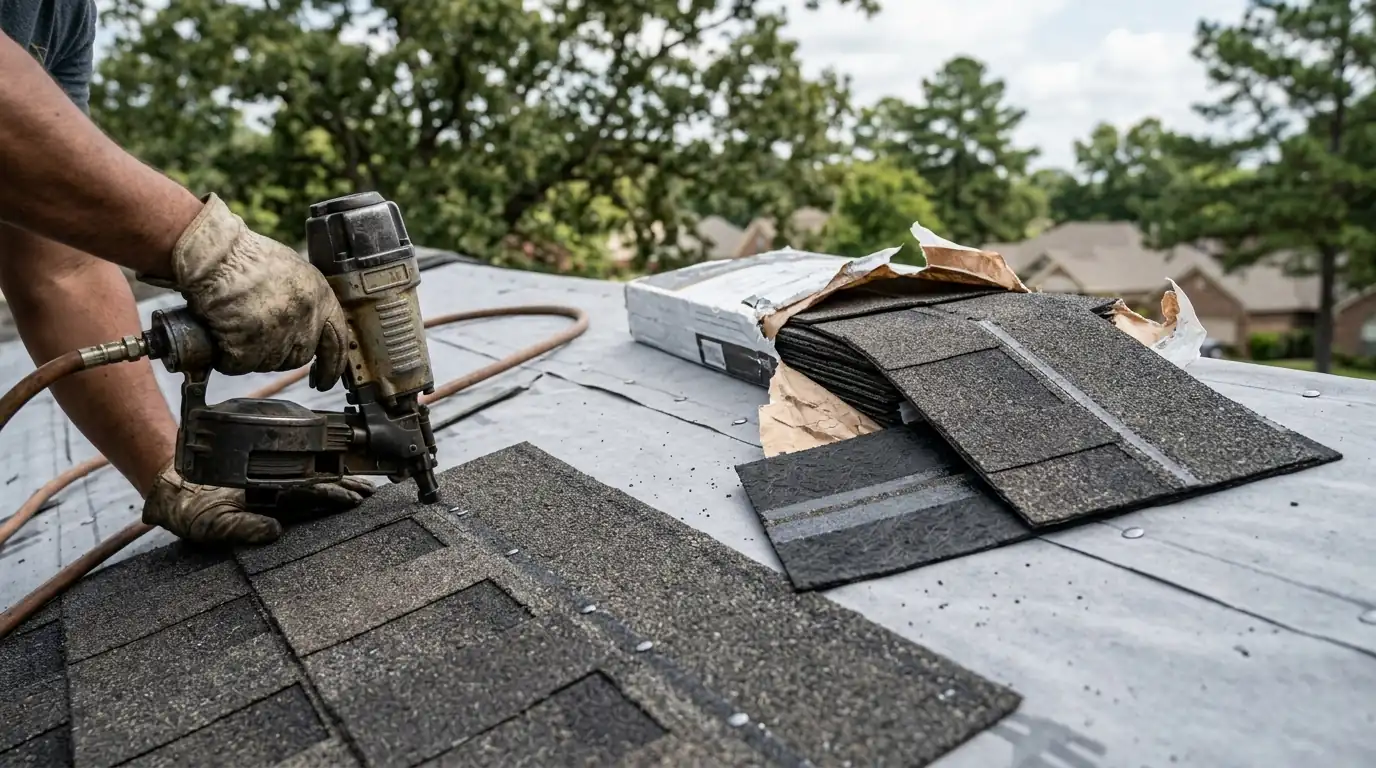
Class 4 shingles hold up better to hail, but the discount question is more tangled in Arkansas. Here is what the rating means, what state law covers and what to ask your agent.
October 17, 2026 · 7 min read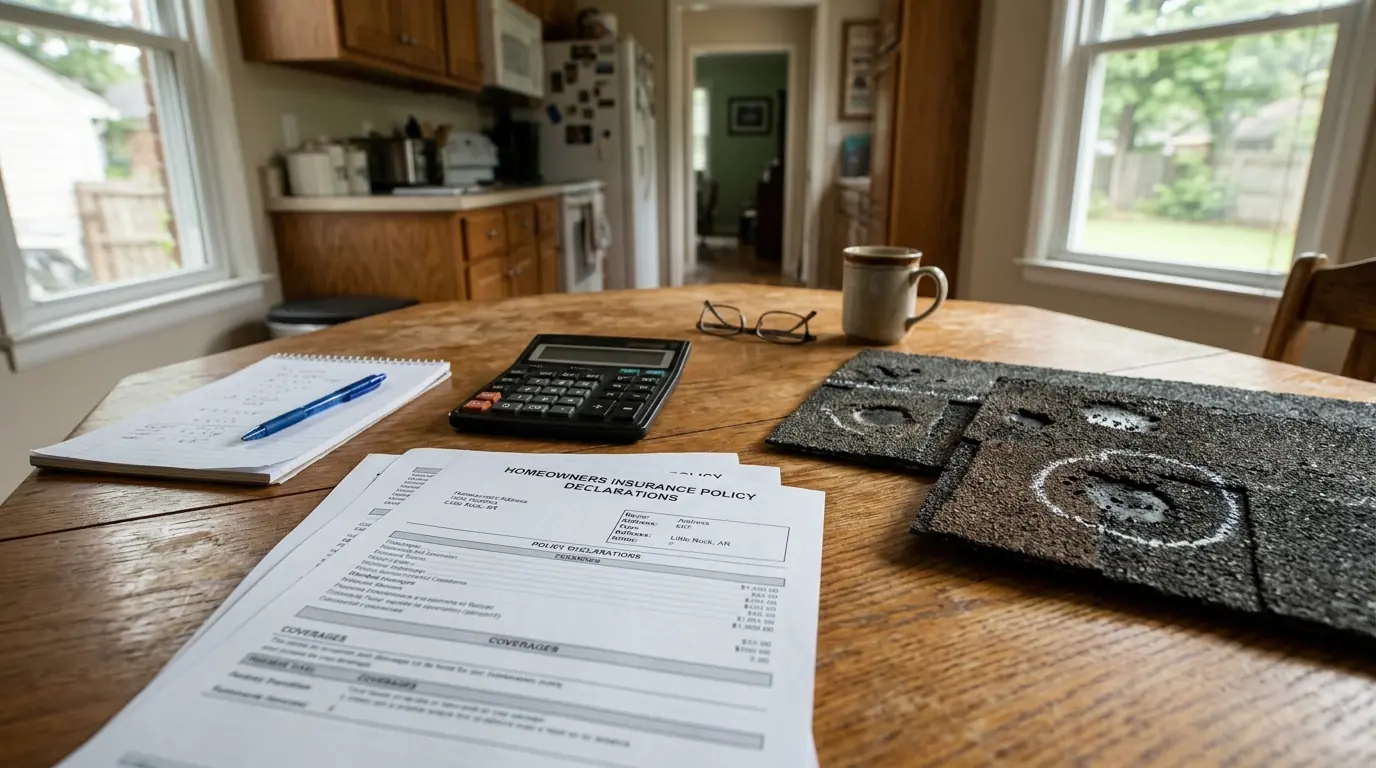
A 2% wind and hail deductible can mean thousands out of pocket on a roof claim. Here is how flat and percentage deductibles work and how to find yours before the next storm.
October 16, 2026 · 7 min readWant a roofer to look at it?Call any hour. We inspect, photograph and give you a written price.
Call (501) 387-1152