Roof Maintenance
A yearly or twice-yearly tune-up that clears debris, reseals weak spots and fixes small problems before they turn into ceiling stains.
How we handle itRoof & Home Tips
A roof rated for 30 years rarely gets 30 here. Here is how long each common roofing material tends to last in Arkansas, and what shortens or stretches that life.
By Lonnie Gatlin, Roof & Home Tips EditorUpdated August 31, 20267 min read
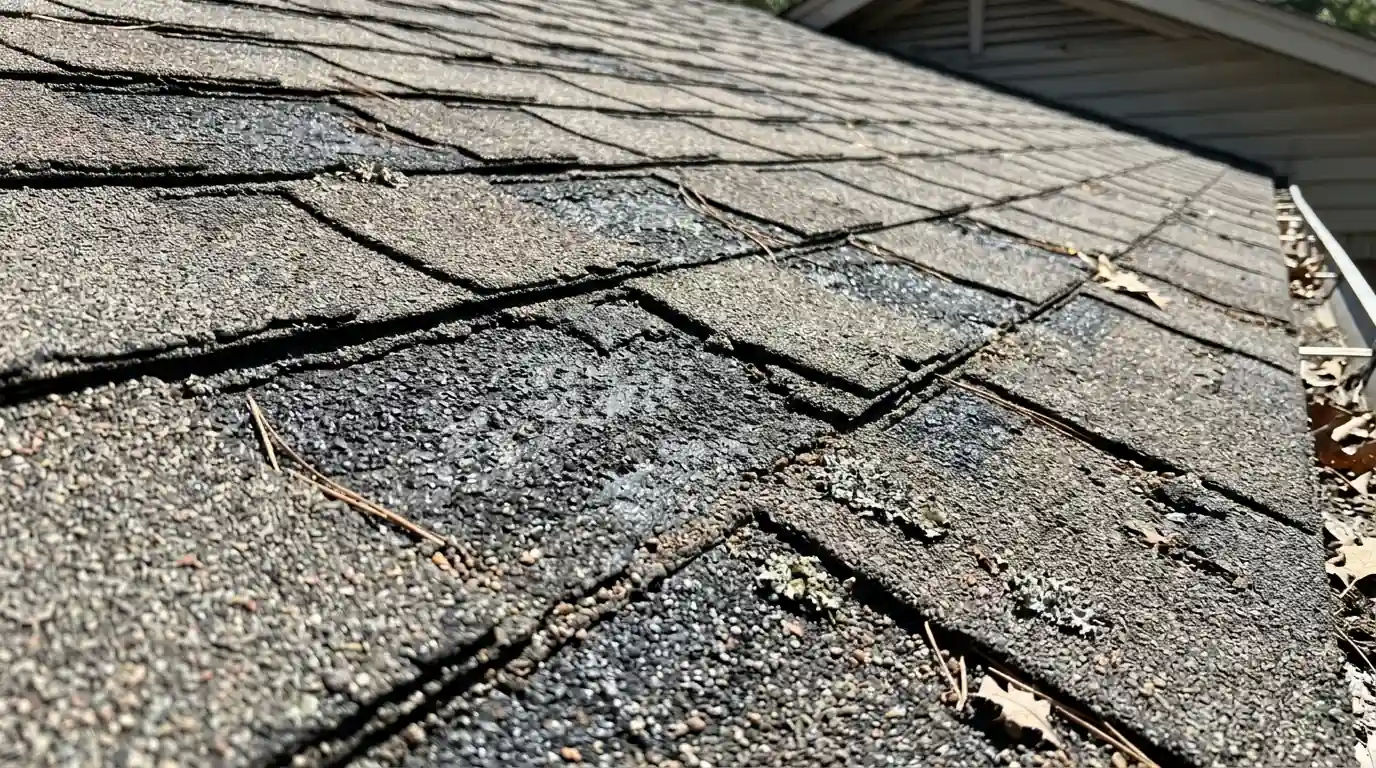
Shingle packaging often mentions 30 years, lifetime or something similar, but those labels describe warranty terms, not how long a roof will really last on a west facing slope in Little Rock. Real lifespan depends on the material, the heat, the storms and how well the roof was installed and ventilated. Here is what we typically see across central Arkansas for each common material, along with the habits that help any roof reach the top of its range.
Manufacturer warranties are legal terms. Many cover defects in the material and step down over time, and they usually do not cover wear from heat, hail or poor ventilation. A lifetime shingle can still need replacing in 20 years if the attic is overheating or a hail storm cracks it.
Warranty terms also depend on the product and on registration. Some enhanced coverage requires the roofer to install specific accessories and register the roof with the manufacturer. Ask for the warranty paperwork in writing and keep it with your house records.
So when we talk about lifespan below, we mean the practical service life we see in central Arkansas: the age when most roofs of that type need replacement because they are worn, not because of one storm.
Three tab shingles, the flat single layer style common before the 2000s, usually last about 15 to 20 years here. They are thinner and lift more easily in wind. Few homes still get them, but many older roofs around Little Rock still wear them.
Architectural shingles are thicker and layered, and they commonly last 20 to 25 years in our climate. Shaded roofs with good ventilation can go longer. West and south facing slopes in full sun often wear out a few years before the rest of the roof.
The sign of age is granule loss. When the gritty surface wears off, the asphalt underneath is exposed to sunlight and begins to dry, crack and curl.
Installation quality changes everything. Shingles nailed too high, with too few nails or at an angle can blow off in the first strong storm, no matter what the package says. Starter strips at the eaves and rakes, the right number of nails per shingle and proper flashing at walls give a roof its best chance of reaching its natural life.
Class 4 impact-resistant shingles age at about the same rate as good architectural shingles in the sun, often 20 to 30 years. Their advantage is that they are less likely to be cut short by hail.
In central Arkansas, where spring storms are common, many standard roofs are replaced after a hail event long before they wear out. A shingle that survives moderate hail has a better chance of reaching its full natural life. That is the real value, along with any insurance discount your carrier may offer.
Color affects shingle life too. Darker shingles absorb more heat and can age slightly faster on sunny slopes, while lighter shades stay cooler. The difference is not huge, but over two decades of Arkansas summers it adds up.
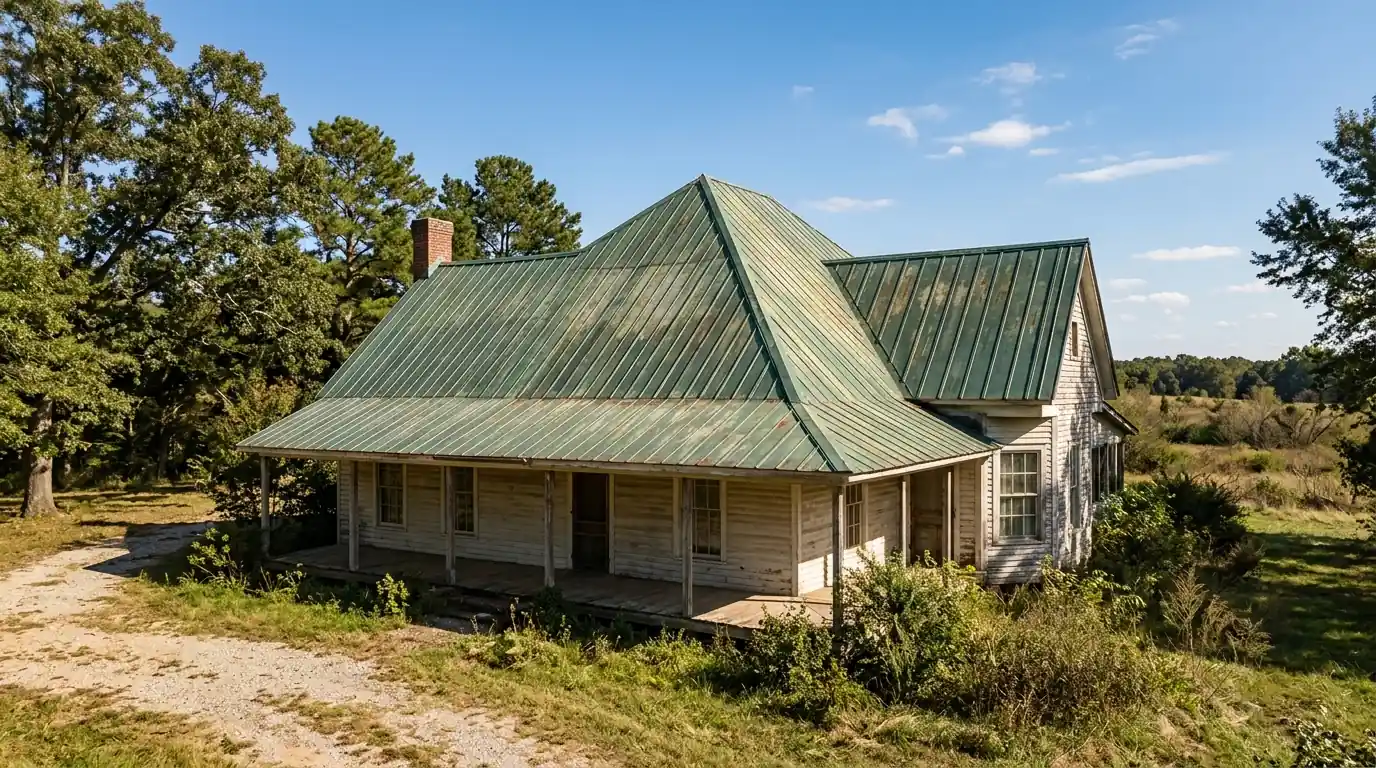
Standing seam metal with a quality paint finish commonly lasts 40 to 60 years. The panels themselves rarely fail. What needs attention over time are sealants at penetrations, flashing details and the paint, which can chalk and fade slowly in strong sun.
Exposed fastener metal panels can also last a long time, but the screws and their rubber washers break down in the heat and UV. Plan on checking and replacing fasteners every 10 to 20 years to keep the roof tight. Many barns and shops around central Arkansas have panels that are fine with screws that are past due.
Keep in mind that a Class 4 roof still needs normal care. Clean gutters, sound flashing and good ventilation matter just as much for these shingles as for standard ones.
Natural slate on older homes can last 75 to 100 years or longer when it is a good stone. The weak points are the nails and flashing, which often wear out before the slate does. Slate repair takes a roofer experienced with it, since walking on slate can crack it.
Clay tile lasts a very long time as well, though individual tiles can crack under hail or foot traffic. Concrete tile usually has a shorter life than clay but still outlasts shingles.
Low slope roofs over porches, additions and commercial buildings vary more. TPO membranes commonly last 15 to 25 years, EPDM rubber 20 to 30 years and modified bitumen 15 to 20 years. Ponding water, foot traffic and poor drainage shorten all of them.
Gauge and finish quality also shape metal roof life. Thicker panels resist denting and flexing, and higher grade paint systems hold their color and protect the steel longer. Cheap, thin panels with a basic finish can rust at cut edges and fastener holes within a couple of decades.
Heat trapped in the attic is the most common hidden cause. Without enough intake at the soffits and exhaust at the ridge, attic temperatures climb and cook the shingles from below. We see roofs on poorly vented homes wearing out years early on every slope.
Hail and wind are the sudden ones. Even when a storm does not cause obvious damage, repeated small hits loosen granules and weaken seals, adding years of wear in a single afternoon.
Trees and debris matter too. Branches rubbing the roof scrape granules away, and leaves or pine needles packed in valleys hold water against the shingles. Clogged gutters let water back up at the roof edge, rotting fascia and the first row of decking.
Have the roof inspected every couple of years and after any serious storm. Small fixes like a new pipe boot or resealed flashing cost far less than the rot that follows when they are skipped.
Keep gutters clear, especially in fall when oaks and pines drop leaves and needles. Trim branches so they do not touch or overhang the roof. Make sure attic vents are not blocked by insulation.
If your roof is near the end of its expected range, call (501) 387-1152. We will inspect it, photograph what we find and give you an honest read on how many years it likely has left, with a written price for any repairs or replacement before work starts.
Regular care does not have to be expensive. A typical roof inspection and minor tune up in central Arkansas, sealing a few spots and replacing a cracked boot, often runs $185 to $540. That is a small cost compared with the decking and ceiling repairs that follow a leak left alone.
The most common reasons are attic heat from poor ventilation, repeated hail and wind, and constant sun on west and south slopes. Installation also matters, since poorly nailed shingles lift and lose their seal early. Tree branches and clogged valleys add wear. A roof with good airflow and clean gutters usually lasts noticeably longer.
Check your home purchase paperwork, the seller disclosure or any old roofing invoice. Some insurers keep a record of roof age. You can also ask neighbors who have lived nearby a while. A roofer can estimate age from shingle style, granule wear and how the roof was built, though that is an estimate rather than an exact year.
Yes, in most cases. Quality standing seam metal commonly lasts 40 to 60 years, while architectural shingles usually last 20 to 25 here. Metal reflects much of the summer sun and does not dry out like asphalt. It does need periodic checks of sealants, flashing and, on exposed fastener panels, the screws and washers.
A yearly or twice-yearly tune-up that clears debris, reseals weak spots and fixes small problems before they turn into ceiling stains.
How we handle itA hands-on roof and attic check with labeled photos, an honest remaining life estimate and a written price for any repair needed.
How we handle itA complete tear-off to the deck with new underlayment, flashing, vents and shingles, finished in a day or two on most homes.
How we handle it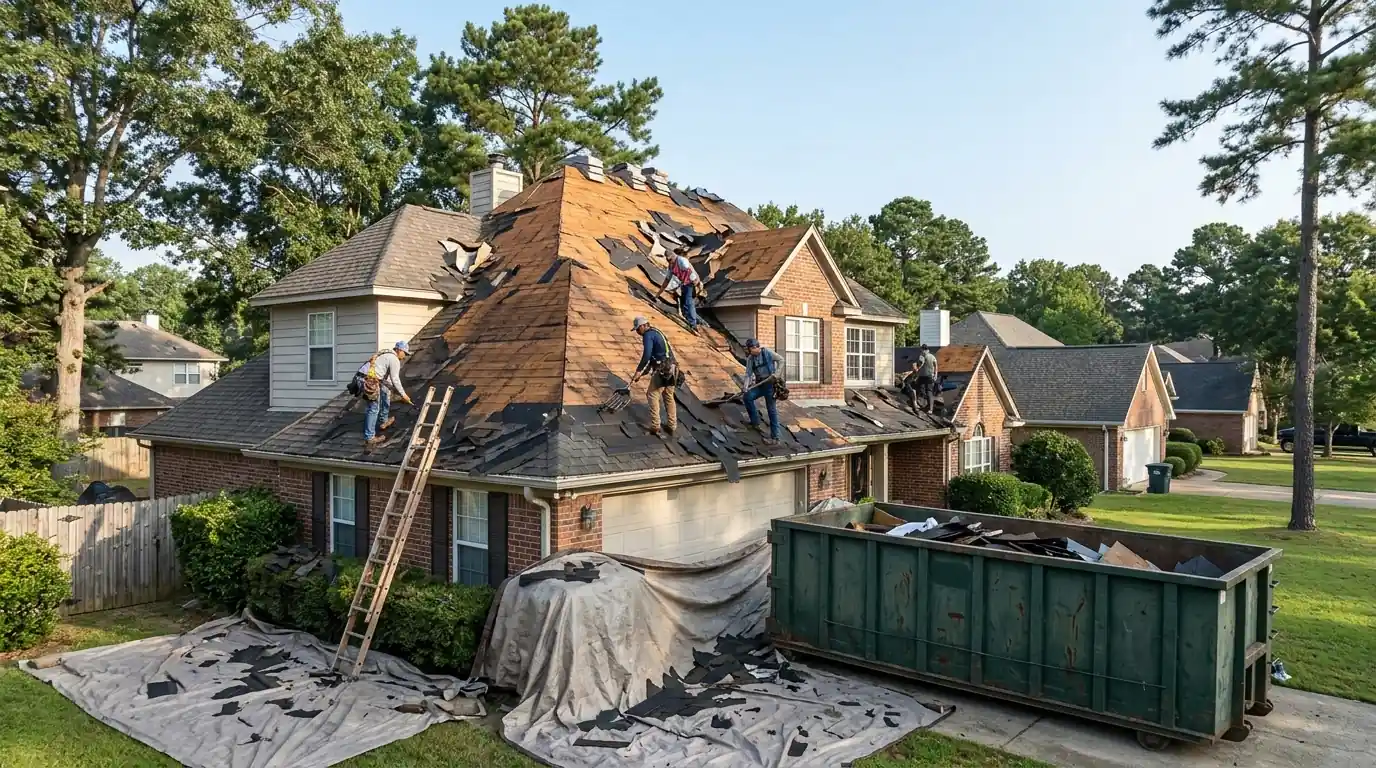
Permit rules for a new roof in Little Rock are not spelled out in one simple public line. Here is what we confirmed, what we could not, and how to get a clear answer for your address.
October 18, 2026 · 7 min read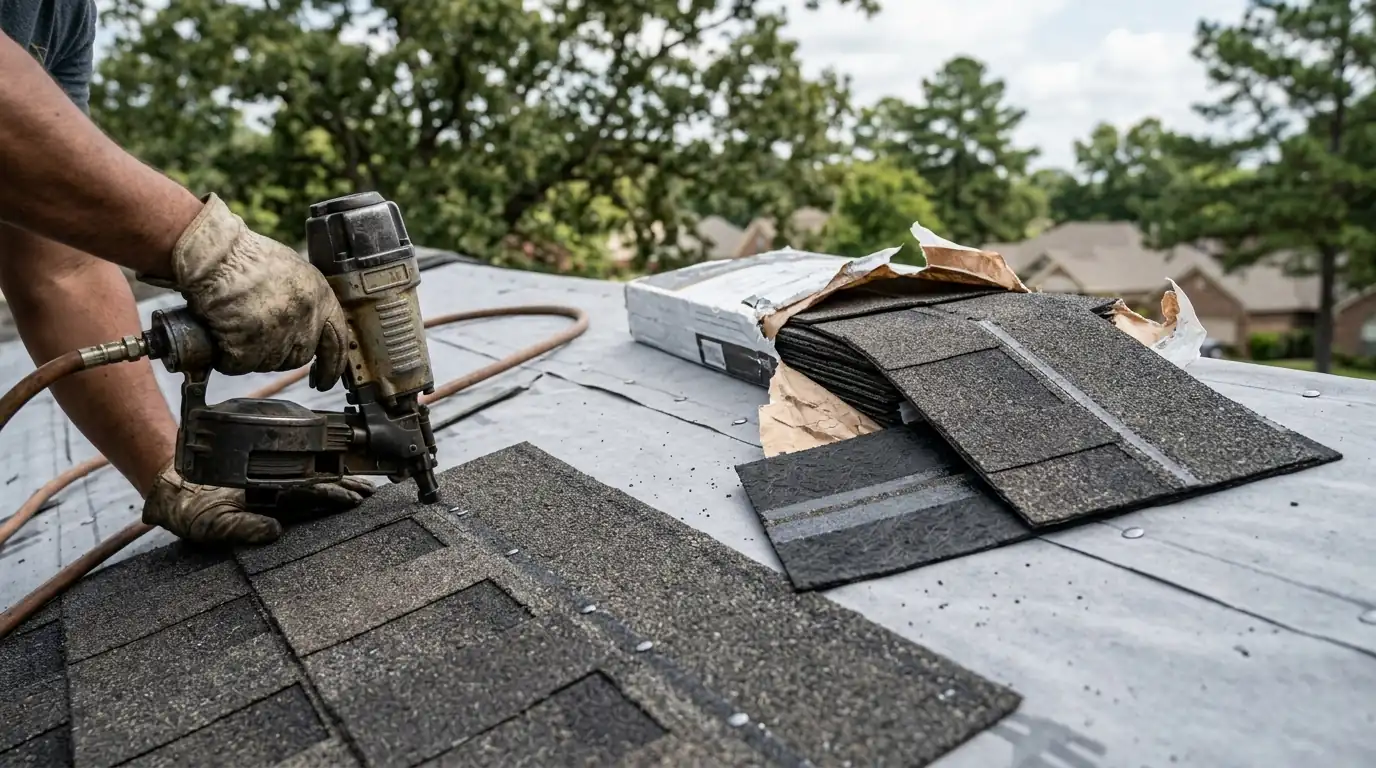
Class 4 shingles hold up better to hail, but the discount question is more tangled in Arkansas. Here is what the rating means, what state law covers and what to ask your agent.
October 17, 2026 · 7 min read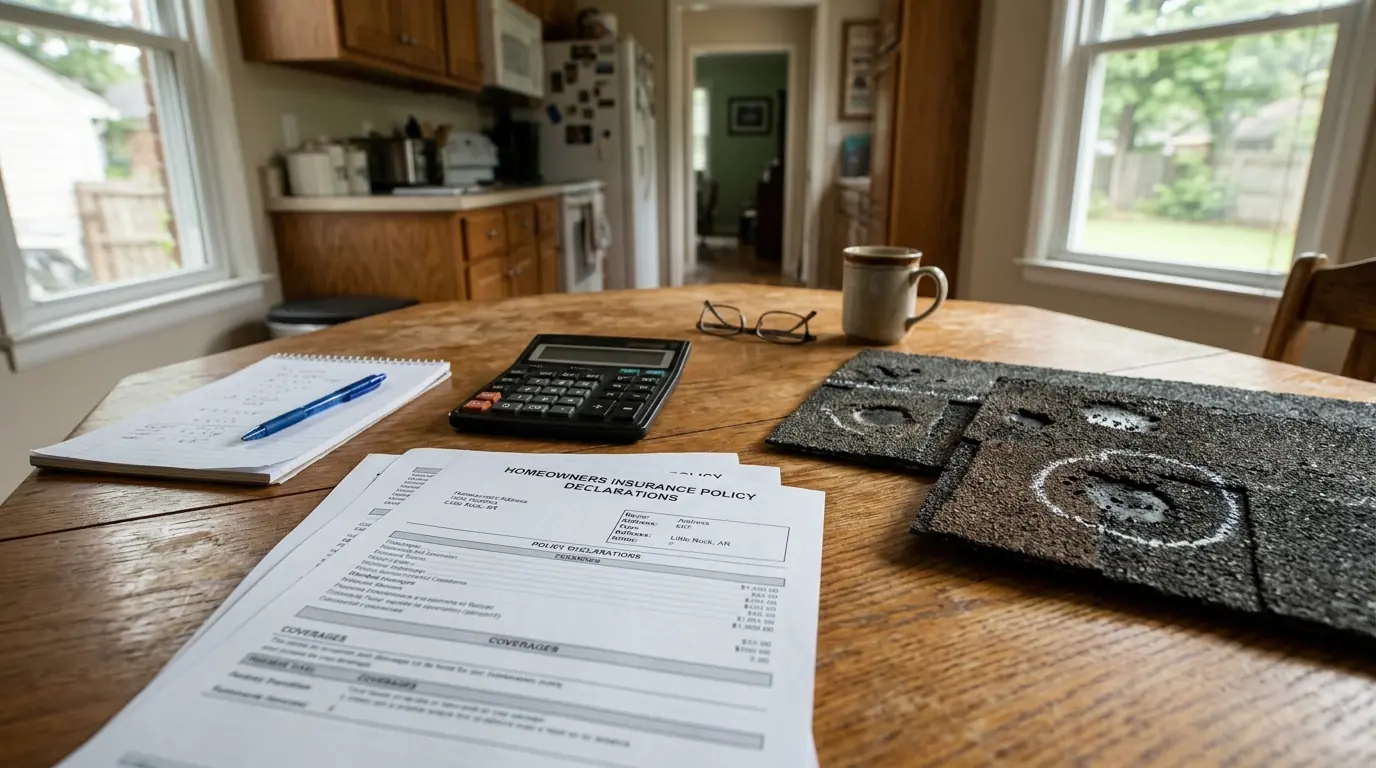
A 2% wind and hail deductible can mean thousands out of pocket on a roof claim. Here is how flat and percentage deductibles work and how to find yours before the next storm.
October 16, 2026 · 7 min readWant a roofer to look at it?Call any hour. We inspect, photograph and give you a written price.
Call (501) 387-1152