Hail Damage Roof Repair
Slope-by-slope hail inspection with marked test squares, soft-metal checks and photos that show exactly where the stones hit.
How we handle itRoof & Home Tips
Hail hit your street and the gutters are dented. Here is the order we suggest for documenting damage, opening a claim, meeting the adjuster and reading the estimate before work starts.
By Lonnie Gatlin, Roof & Home Tips EditorUpdated July 2, 20267 min read
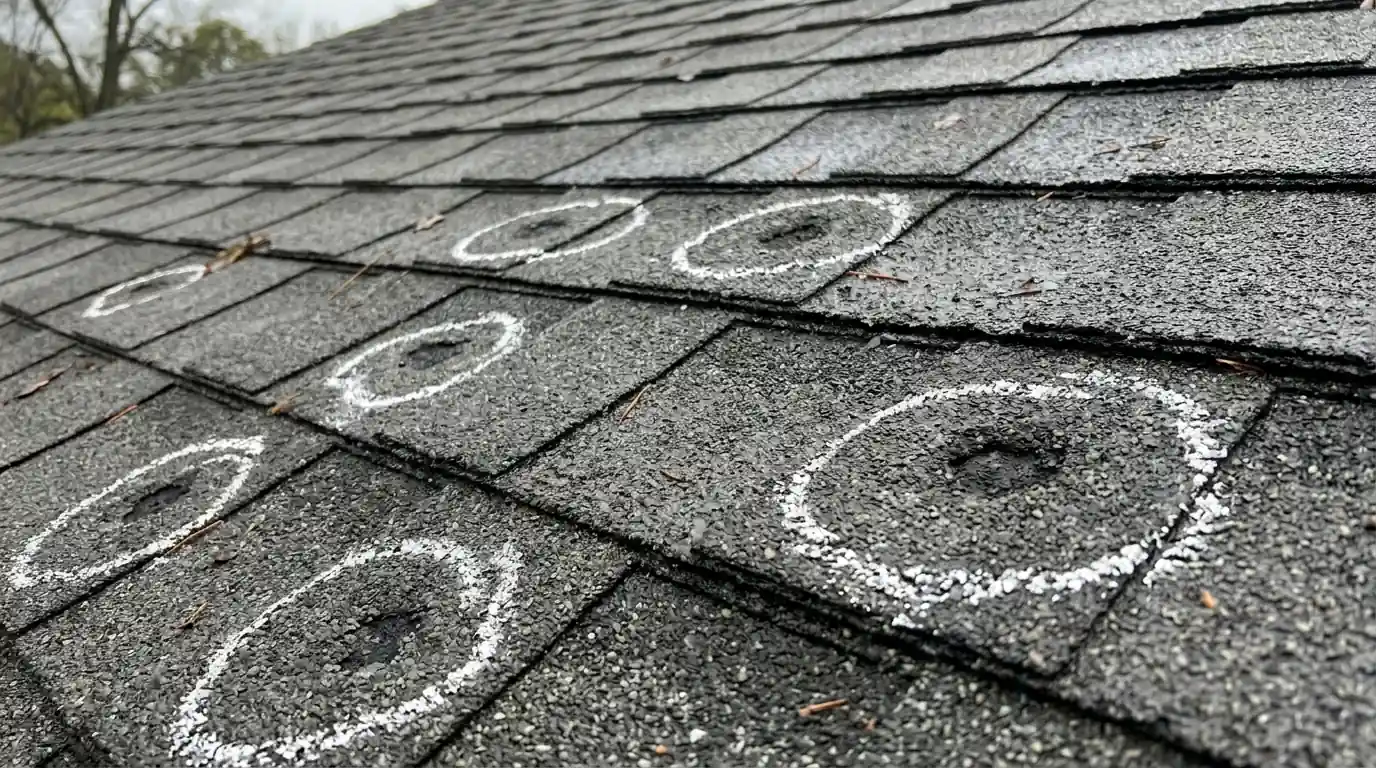
Central Arkansas sees most of its hail between March and June, and a bad afternoon can leave a whole subdivision with bruised shingles. The claim that follows is where many homeowners lose time and money, usually from small missteps in the first week. This is the order we suggest, written from what we see on roofs after storms. It is general guidance, not legal advice, so read your own policy and confirm the details with your insurer.
Claims start with a date of loss, and memory gets fuzzy fast when two or three storms roll through in the same month. Write down the date, the rough time and how long the hail fell. Note the size if you saw it: pea, marble, quarter, golf ball.
Save a screenshot of the weather alert on your phone and any local news report that mentions your part of town. The National Weather Service also keeps public storm reports, and your insurer may check its own weather data against the date you give. Getting the date right keeps the claim from stalling later.
If the storm brought wind as well as hail, note that too. Torn shingles and dented shingles can show up on the same roof, and both belong in the same report when they came from the same event.
Please do not climb a wet or damaged roof to take pictures. Plenty of hail evidence sits at eye level, and adjusters look at it. Walk the house with your phone and photograph anything metal or painted that faces the storm direction.
Shoot wide first so the photo shows which side of the house you are on, then move close. A coin or tape measure next to a dent gives scale. Keep the photos in one album and do not delete the blurry ones until the claim is closed.
Before you call anyone, pull up your homeowners policy and find the declarations page. Look for your deductible and whether wind and hail carry a separate deductible. Some policies use a flat dollar amount and some use a percentage of the dwelling coverage, which can be a much larger number than people expect.
Next, check whether the roof is covered at replacement cost or actual cash value. With replacement cost, the insurer often holds back part of the payment as depreciation and releases it after the work is finished and documented. Actual cash value policies, which some carriers use on older roofs, pay the depreciated amount only.
Also look for any time limit on reporting a loss and any rule about cosmetic damage to metal. Every policy reads differently, so if a clause is unclear, ask your agent or insurer to explain it in writing. We are roofers, not attorneys, and we will not interpret a policy for you.
A roofer who walks the roof can tell you whether the hits actually fractured the shingle mat or just knocked loose granules. That matters, because a claim on a roof with no real damage still lands on your claims history. When you call us at (501) 387-1152, we inspect, photograph every slope and show you what we found before you decide anything.
If the damage is real, call your insurer or use their app to open the claim. Give them the date, a short description and your photos. They will assign an adjuster and a claim number. Write that number on everything you keep from this point forward. Keep a simple log of every call, with the date, the name of the person you spoke with and what they said.
If water is getting in, ask the insurer what temporary repairs they expect. Most policies require you to prevent further damage, so a tarp is usually the right call. Keep the receipt and the photos from before and after the tarp went on.
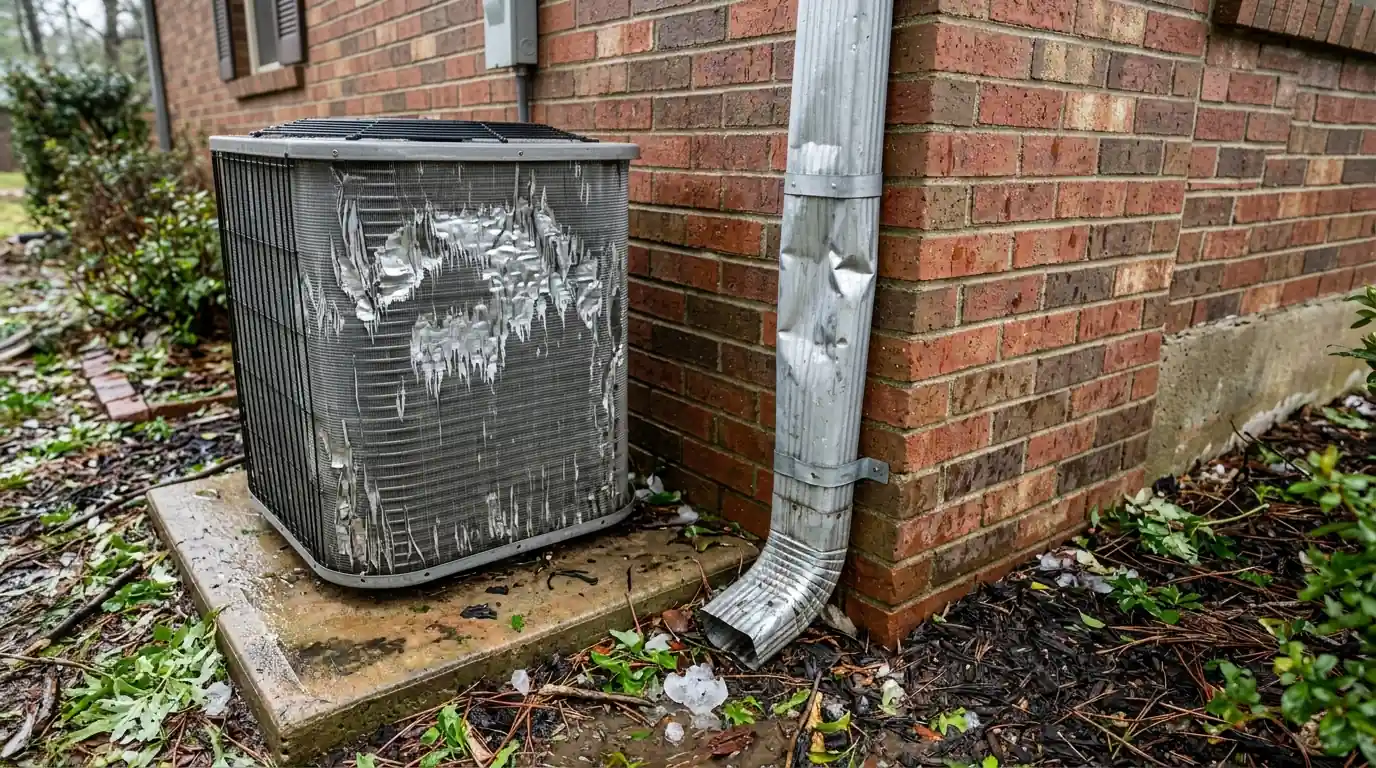
The adjuster will usually climb the roof, mark hits with chalk inside test squares on each slope and photograph the soft metals. Being home for this visit is worth taking a morning off work. You can point out the dents you photographed and ask questions on the spot.
Many homeowners ask their roofer to be there too. We can walk the slopes with the adjuster and point out damage on flashing, vents and ridge cap that is easy to miss. The adjuster makes the coverage decision, not us, but a second set of eyes on the roof helps make sure nothing gets skipped.
Ask the adjuster when you should expect the written estimate and how they prefer to receive questions about it. Some carriers send it within days, others take a few weeks after a big storm when adjusters are covering hundreds of homes.
The insurance estimate arrives as a list of line items with quantities and prices. Compare it against what was actually on your roof. Missing items are common, and they are easier to raise now than after the crew is on site.
If something is missing or a measurement looks short, ask the adjuster for a review and send photos that show the item. This is often called a supplement. Keep your tone factual and your evidence organized. One clear email with labeled photos tends to move faster than several phone calls, and it leaves a record you can point back to.
If you carry a mortgage, the claim check may list both you and your lender. The lender may hold the funds and release them in stages, so call them early and ask what they need. That one phone call can save weeks.
Be wary of anyone who offers to cover or absorb your deductible. The deductible is your share under the policy, and a price that hides it is a red flag. Our written price before work starts shows the full job so you know exactly what you owe.
When the roof is finished, ask your roofer for the final invoice, photos of the completed work and the manufacturer warranty registration details. Send what the insurer asks for to release any held depreciation. If you hit a dispute you cannot settle with your carrier, the Arkansas Insurance Department offers consumer help, and it is worth contacting them before the claim deadline passes.
Many homeowners have a roofer inspect first so they know whether the hail actually damaged the shingles. A claim on an undamaged roof can still show on your history. If water is coming in, call your insurer right away and tarp the leak. Either way, read your own policy and follow your insurer's instructions on timing.
Ask the adjuster to review the estimate and send photos showing each missing item, such as drip edge, pipe boots, a second shingle layer or dented gutters. This request is usually called a supplement. Keep a copy of everything you send, note the date and keep the conversation factual. Your insurer makes the final coverage decision.
It depends on your policy. With replacement cost coverage, insurers often pay the depreciated amount first and release the held portion after the work is done and documented. Actual cash value policies pay only the depreciated amount. Your deductible is subtracted either way. Check the declarations page or ask your insurer how your roof is covered.
Slope-by-slope hail inspection with marked test squares, soft-metal checks and photos that show exactly where the stones hit.
How we handle itWe document storm damage, meet your adjuster on the roof and write a line-item scope, while you keep control of your own claim.
How we handle itA hands-on roof and attic check with labeled photos, an honest remaining life estimate and a written price for any repair needed.
How we handle it
Permit rules for a new roof in Little Rock are not spelled out in one simple public line. Here is what we confirmed, what we could not, and how to get a clear answer for your address.
October 18, 2026 · 7 min read
Class 4 shingles hold up better to hail, but the discount question is more tangled in Arkansas. Here is what the rating means, what state law covers and what to ask your agent.
October 17, 2026 · 7 min read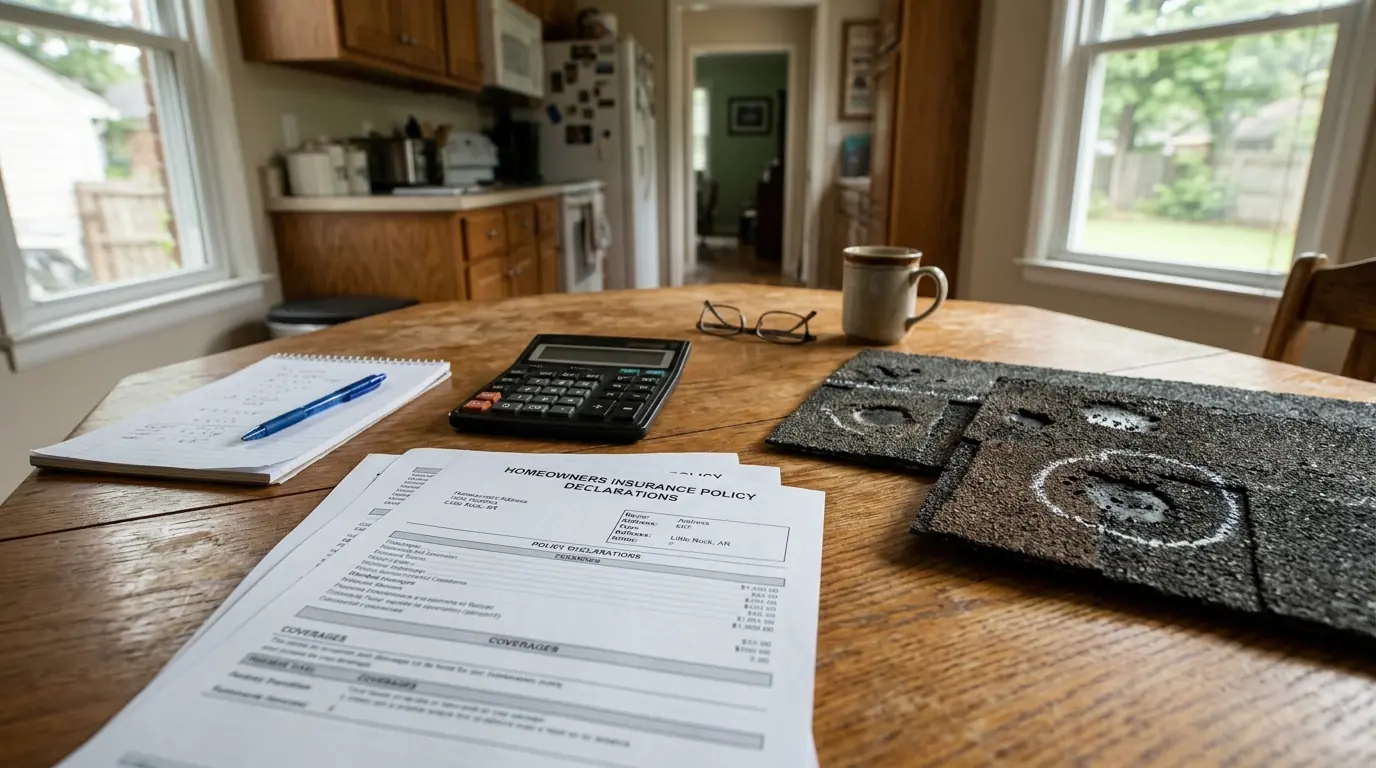
A 2% wind and hail deductible can mean thousands out of pocket on a roof claim. Here is how flat and percentage deductibles work and how to find yours before the next storm.
October 16, 2026 · 7 min readWant a roofer to look at it?Call any hour. We inspect, photograph and give you a written price.
Call (501) 387-1152