Wind Damage Roof Repair
Repairs for shingles that were lifted, creased, unsealed or blown off by straight-line winds and storm gusts.
How we handle itRoof & Home Tips
Straight-line winds can strip shingles without leaving a mess in the yard. Here is a safe, ground level checklist for the hours and days after a central Arkansas windstorm.
By Lonnie Gatlin, Roof & Home Tips EditorUpdated August 19, 20267 min read
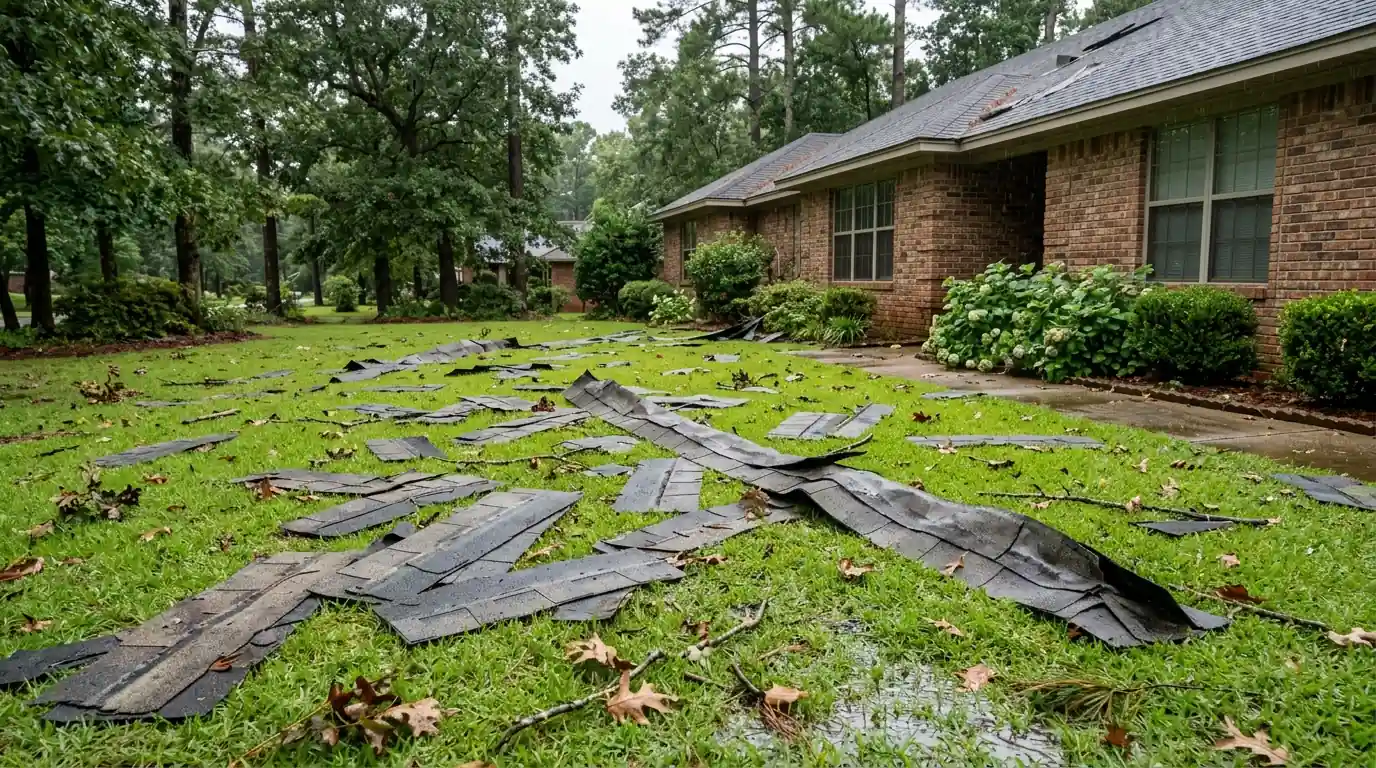
Central Arkansas windstorms often arrive as a line of summer thunderstorms with gusts strong enough to snap limbs and peel shingles. Some damage is obvious, like a pine branch on the porch roof. Much of it is quiet: a lifted row of shingles that will leak at the next heavy rain. This checklist keeps you on the ground and safe while still catching most of what matters before a small problem turns into a stained ceiling.
Stay off the roof. Wind damaged roofs can have loose shingles that slide underfoot, weakened decking and hidden debris. Wet surfaces after a storm are slick, and a fall from even a single story is a serious injury. Nothing you can see from up there is worth that risk.
Look up before you walk around the house. Hanging limbs, called widowmakers by tree crews, can drop hours after the wind dies down. Keep kids and pets away from any area under damaged trees.
Watch for downed or sagging power lines, including the service drop running from the pole to your house. If a line is down or a limb is resting on it, stay well back and call Entergy or your electric provider. Never try to move a branch tangled with any wire.
Before you look at the roof itself, look at the ground around the house. The yard often tells you what the roof lost. Walk a full lap, including the side yards and behind fences where debris collects.
Pick up anything sharp so nobody steps on it, and set roof pieces aside instead of tossing them. Those pieces help a roofer, and your insurer if you file, see what came off and from where.
If your home has a porch, carport or patio cover, check it separately. These lighter roofs often catch the wind like a sail and can lose panels or lift at the connection to the house, even when the main roof came through fine.
Stand far enough back to see each slope, ideally across the street or at the back of the yard. A pair of binoculars or your phone camera zoomed in helps a lot. Take a photo of each side of the roof so you can compare later.
Look for shingles that are missing, which show as darker or lighter patches where the underlayment or an older layer is exposed. Look for shingles that are creased or folded upward, often in a line near the edges. A crease means the wind lifted the shingle and broke its seal, even if it settled back down.
Check the ridge cap along the top. It catches wind from both sides and is often the first thing to go. Also look at the rakes, the sloped edges at the gable ends, where wind gets under the edge row most easily.
Pay extra attention to the side of the house that faced the wind. Storm lines in central Arkansas often push in from the west or northwest, so slopes facing that way and their edges usually take the worst of it. Damage on the sheltered side is less common but still possible when winds swirl around trees and neighboring homes.
Wind works on anything that sticks up or hangs off the roof. Look at pipe vents, turbine vents and exhaust caps for bends or tilts. Turbine vents in particular can be knocked off center and stop spinning, or blown off completely, leaving an open hole.
Next, look at the chimney flashing and any metal where the roof meets a wall. Bent or pulled flashing is easy to miss but a common leak source. Satellite dishes and solar panels can also shift in strong wind and pull on their mounts.
Finally, check the gutters. Sagging sections, gutters pulled away from the fascia or downspouts knocked loose all need attention before the next storm. A gutter hanging by one bracket can tear off the fascia board as it falls.
Look at the soffit and fascia while you are checking edges. Strong wind can pop vinyl soffit panels out of their channels or pull loose aluminum fascia wrap. An open soffit lets rain and animals into the attic, and it is an easy fix when caught early.
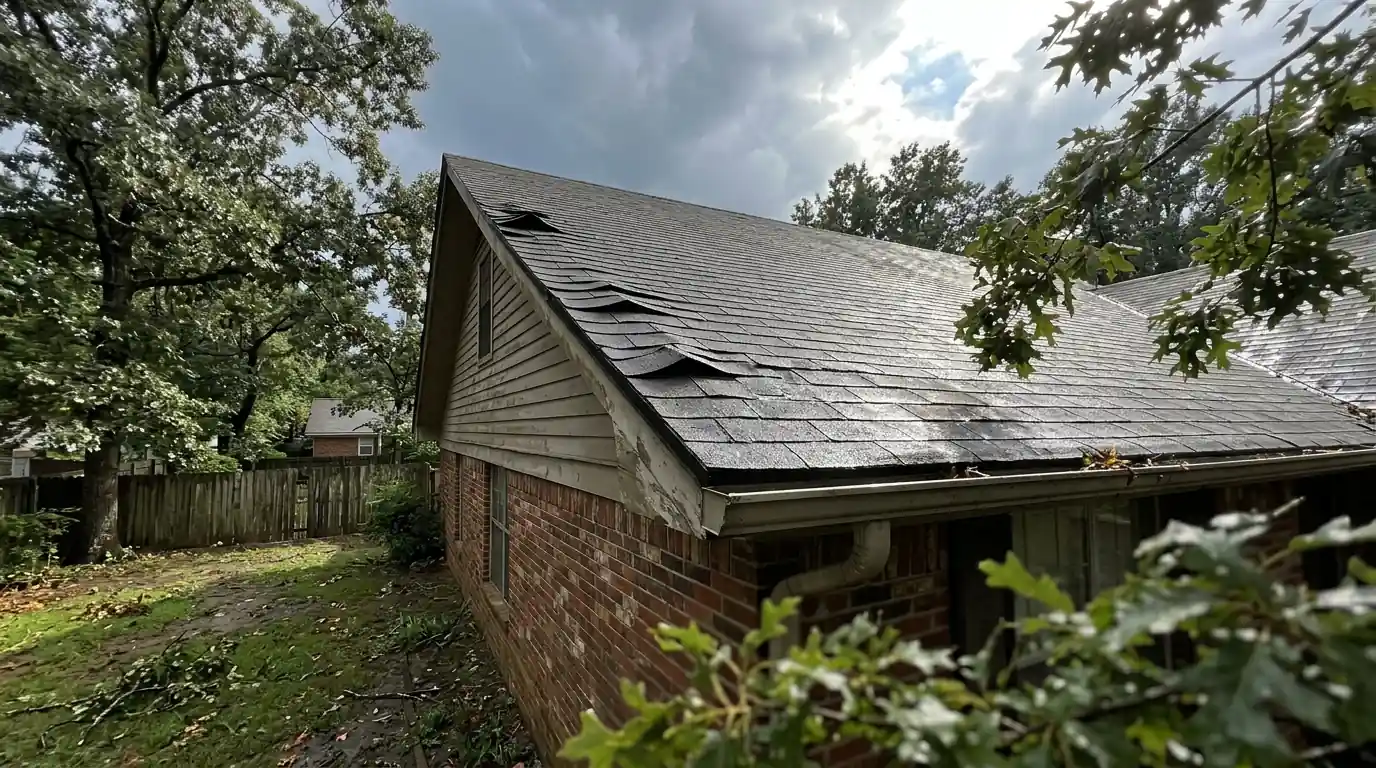
If you can safely reach your attic, go up with a flashlight during the day. Look for daylight showing through the decking, which can mean missing shingles or a lifted vent. Look for wet spots on the underside of the roof deck and damp insulation.
Inside the living space, check ceilings in every room, including closets, for new stains or bubbling paint. Also look at the tops of walls where they meet the ceiling, especially on the side of the house that faced the wind. Wind driven rain can push sideways under shingles and show up far from where it entered.
Check again after the next rain. Some wind damage does not leak until water hits it from the right direction, so a second look a day or two later is worth the time.
If a large limb struck the roof, look at the ceiling directly under the impact point for cracks or sagging drywall. A hard hit can crack rafters or decking even if the shingles look mostly intact from outside. Keep people out of that room until someone has checked the framing.
Photograph everything before it gets cleaned up or patched. Take wide shots that show which side of the house you are looking at, then close ups of each piece of damage. Write down the date and the approximate time the wind came through.
Keep the debris you collected in a bag or bin with a note about where you found it. If you decide to file a claim, read your policy and follow your insurer's instructions. Most policies expect you to take reasonable steps to prevent further damage, such as tarping a hole, so keep receipts for any emergency work.
A note on timing: some policies have limits on how long you have to report damage. If you are not sure, check your policy or ask your agent soon after the storm rather than waiting weeks.
Call right away if you see an open hole, a tree or large limb on the roof, water coming inside or exposed decking. These need a tarp or temporary repair before the next rain, and central Arkansas storms often come in waves. We answer (501) 387-1152 24/7 and our own crews handle emergency tarping.
For smaller issues, like a few creased shingles or a bent vent cap, it still pays to get the roof inspected within a few days. Shingles that lost their seal will keep lifting in every wind until they tear off, and each storm makes the repair bigger.
On a visit, we walk every slope, photograph damage, check the attic and show you the pictures. You get a written price before any work starts, whether it is a few shingles, new flashing or a larger repair after a severe storm.
It depends on the shingle, its age and how well it was nailed. Older shingles that have lost their seal can lift in gusts well below what newer roofs handle. Straight-line winds from summer thunderstorms often gust hard enough to tear ridge cap and edge shingles, so check your roof after any storm that brings down limbs nearby.
A creased shingle shows a straight horizontal line or fold across the tab, often slightly raised. It happens when wind lifts the shingle and bends it back. Even if it lies flat again, the seal strip underneath is broken, so it will keep lifting. From the ground, binoculars or a zoomed phone photo can help you spot a row of them.
We do not recommend it. Climbing a damaged, wet roof is risky, and a poorly fastened tarp can blow off in the next storm or trap water. If water is coming in, place buckets and towels inside, move valuables and call a roofer for emergency tarping. Keep the receipt, since many policies expect you to prevent further damage.
Repairs for shingles that were lifted, creased, unsealed or blown off by straight-line winds and storm gusts.
How we handle itHeavy-duty tarps anchored with wood battens and wrapped over the ridge to keep rain out until permanent repairs are done.
How we handle itFull roof assessment after a severe storm, covering debris impacts, mixed hail and wind damage, gutters and the attic below.
How we handle it
Permit rules for a new roof in Little Rock are not spelled out in one simple public line. Here is what we confirmed, what we could not, and how to get a clear answer for your address.
October 18, 2026 · 7 min read
Class 4 shingles hold up better to hail, but the discount question is more tangled in Arkansas. Here is what the rating means, what state law covers and what to ask your agent.
October 17, 2026 · 7 min read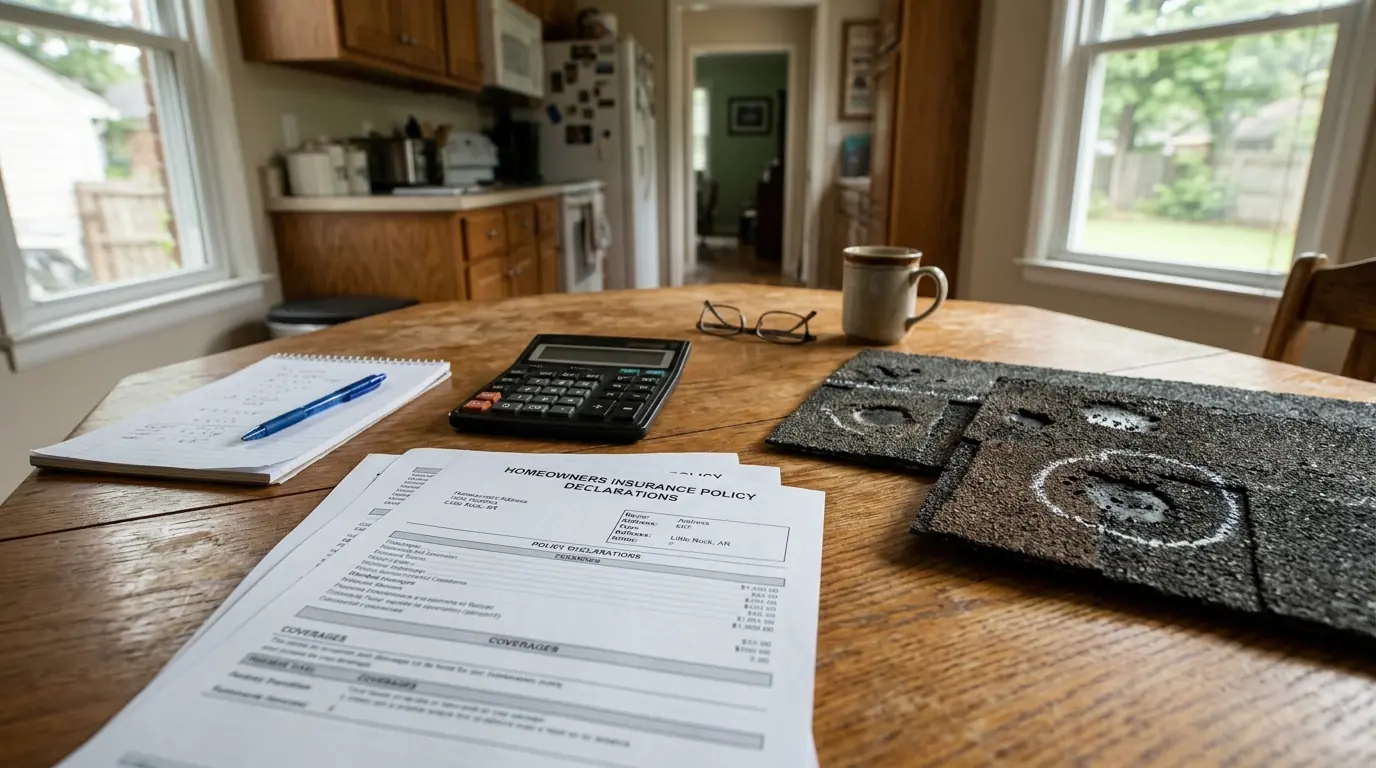
A 2% wind and hail deductible can mean thousands out of pocket on a roof claim. Here is how flat and percentage deductibles work and how to find yours before the next storm.
October 16, 2026 · 7 min readWant a roofer to look at it?Call any hour. We inspect, photograph and give you a written price.
Call (501) 387-1152