Roof Cleaning
Low-pressure soft washing that removes black algae streaks, moss and lichen without stripping the protective granules from your shingles.
How we handle itRoof & Home Tips
Those dark stripes running down your roof are usually algae, not dirt or rot. Here is why they thrive in Little Rock, how to clean them safely and how to slow their return.
By Lonnie Gatlin, Roof & Home Tips EditorUpdated August 6, 20266 min read
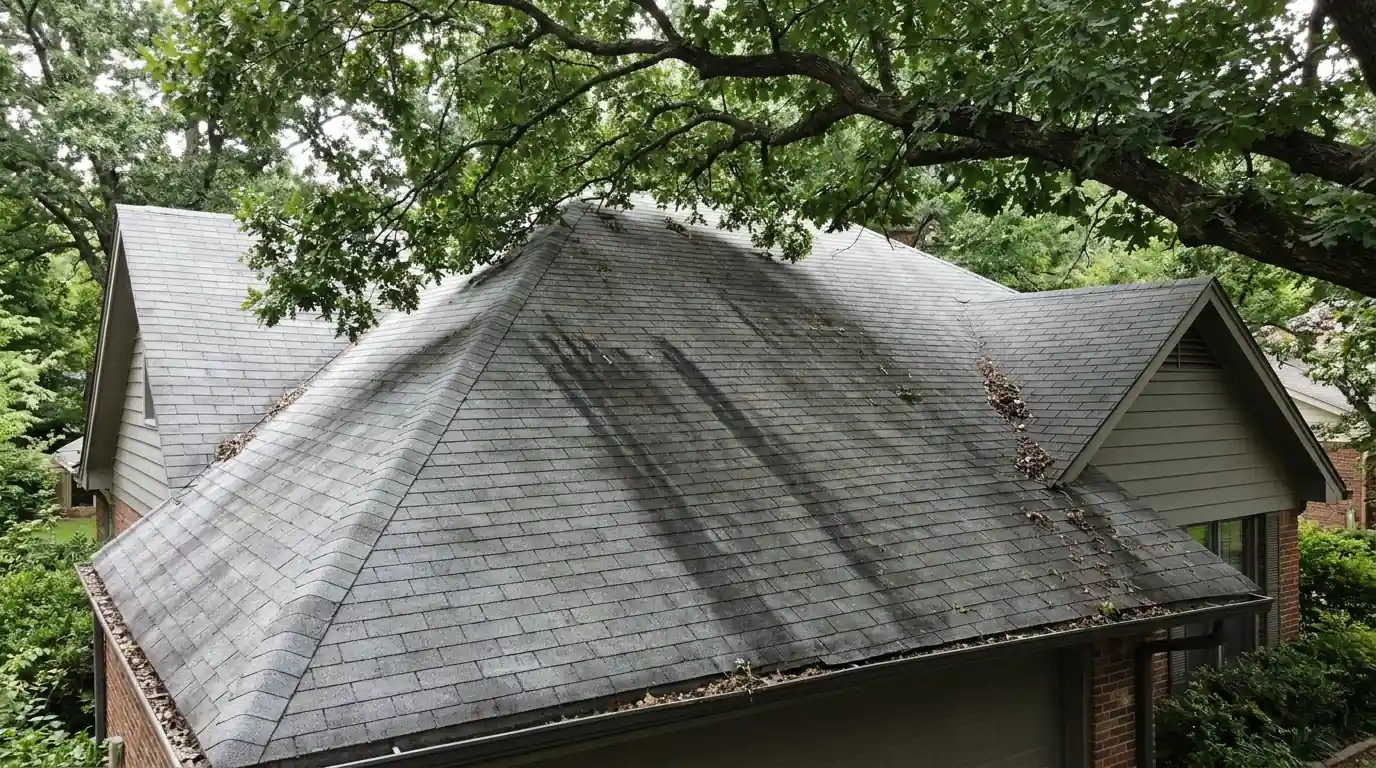
Drive through almost any Little Rock neighborhood and you will see roofs with dark streaks running from the ridge toward the gutters. Many homeowners assume it is dirt, mold or a sign the roof is failing. Most of the time it is a type of algae that loves our humid summers. It is usually more of a looks problem than a leak problem, but it can still shorten roof life if you ignore it or clean it the wrong way.
The usual cause is an airborne algae often identified as Gloeocapsa magma. It lands on the roof, feeds on moisture and the limestone filler found in many asphalt shingles, and grows a dark protective coating to shield itself from the sun. That coating is what you see as black or dark green streaks.
The streaks form in lines because rain carries the algae down the slope. They often start below a ridge or a valley and spread over a few summers. Once the algae gets started, it spreads faster each year.
The algae does feed slowly on the shingle surface, and over many years the streaked areas can hold more heat and moisture than clean ones. That is why it is worth dealing with, even if the roof is not leaking today.
Algae needs moisture and warmth, and central Arkansas has plenty of both for much of the year. Humid nights leave dew on the roof well into the morning, and summer thunderstorms keep the surface wet for days at a time.
Shade makes it worse. Homes under big oaks and pines in neighborhoods like Hillcrest, Pleasant Valley and Rock Creek stay damp longer than roofs in open sun. North facing slopes almost always streak first, since they dry the slowest.
Season plays a role as well. Streaks usually grow fastest in late spring and summer, when warm, damp days stack up. By fall they are often at their darkest, which is when many homeowners first notice them from the street.
Black streaks are a surface stain. They look bad but usually do not lift shingles or open leaks by themselves. Moss is different. It grows in thick green clumps, holds water against the shingles and can work its way under tabs, which can lift them and let water reach the decking.
Lichen shows up as small round, crusty patches, often gray green. It bonds tightly to the shingle surface and can pull granules off when it is removed. Moss and lichen tell you the roof stays wet for long stretches, and they need more care than simple streaks.
If you see thick moss along the lower edge of a north slope or in a shaded valley, have it looked at sooner rather than later. Moss in a valley can slow the flow of water enough to push it sideways under the shingles during a heavy rain.
Never pressure wash an asphalt shingle roof. The force strips granules, which are the shingle's main protection from the sun, and can drive water under the tabs. A roof that looks clean after a pressure wash may have lost years of life in one afternoon.
The safer method is a low pressure soft wash with a cleaning solution designed for roofs, often a diluted bleach mix or a product the shingle maker approves. It is applied gently, left to work and then rinsed lightly. Plants below need to be wetted down and protected, and gutters flushed afterward.
Check your shingle manufacturer's guidance before cleaning, since some list approved methods and products. Walking a wet, slippery roof is dangerous, so this is a job most homeowners hand off. We do roof cleaning with our own crews and follow the manufacturer's recommended approach.
Timing matters for cleaning. A mild, overcast day lets the cleaning solution work without drying too fast, and avoids burning plants in the hot sun. Early fall is often a good window in central Arkansas, after the worst of the summer heat and before leaves start filling gutters.
After a cleaning, the streaks may not vanish the same day. The dead algae often fades over the next few weeks of rain, so give it time before judging the result.
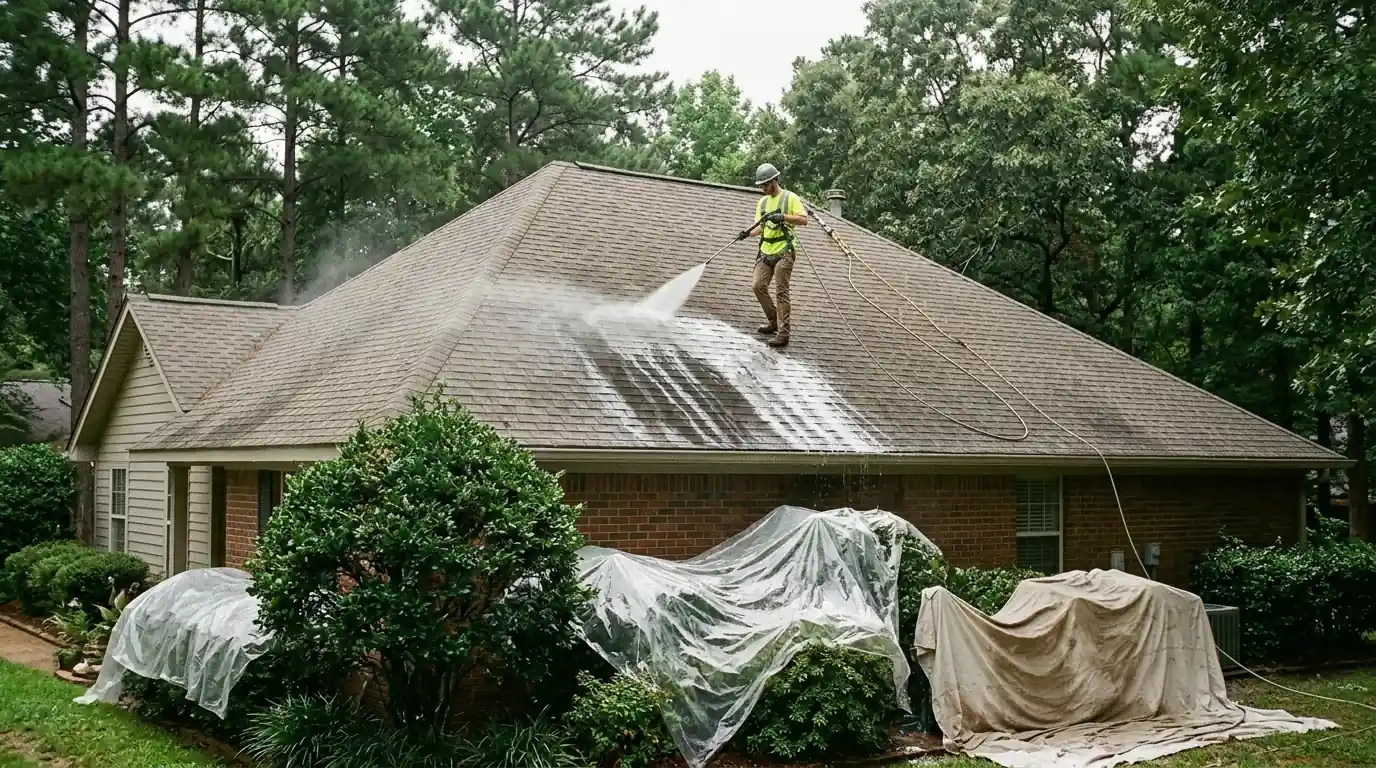
Price depends on roof size, pitch and how heavy the growth is. These are typical 2026 ranges we see in central Arkansas, not a quote for your home.
Cleaning is also a good moment for a quick look at the rest of the roof. While the crew is up there, we check pipe boots, flashing and any lifted tabs, and photograph anything that needs attention so you can decide later.
Zinc or copper strips installed just below the ridge release small amounts of metal each time it rains. That runoff slows algae growth on the slopes below. They work best on the upper part of the roof and less well on very long slopes.
Trimming branches back from the roof lets in more sun and air, which dries the shingles faster after rain. It also cuts down on leaves and needles that hold moisture in valleys and gutters. Clean gutters matter too, since water backing up at the eaves keeps the lower edge damp.
When the roof is due for replacement, choose an algae-resistant shingle with copper treated granules. Most major brands offer these lines, often at little extra cost, and they can keep a roof looking clean for many years.
Gutter guards help on heavily treed lots by keeping wet leaves and pine needles from sitting along the eaves. Less trapped debris means the lowest row of shingles dries out between storms, and that is often where streaks and moss start.
Streaks alone are not a reason to replace a roof. But if you notice them together with curling shingles, bare spots, moss lifting tabs or water stains in the attic, the roof may have bigger problems that cleaning will not fix.
Call (501) 387-1152 and we will inspect the roof, photograph the growth and the shingle condition, and tell you whether cleaning, repairs or replacement makes sense. You will get a written price before any work starts.
If you are buying a home with a streaked roof, ask your inspector to note whether the shingles are algae-resistant and how much life they have left. Streaks on a newer roof are an easy fix; streaks on a worn roof may be a sign that replacement is close.
Not usually. Black streaks are a surface algae stain and rarely cause leaks on their own. They do signal that the roof stays damp, especially on shaded or north facing slopes. If you also see moss, curling shingles or attic water stains, have the roof inspected, since those point to problems that cleaning alone will not solve.
Some homeowners do, but walking a wet, slippery roof is risky, and a strong mix can harm plants and gutters below. Too much scrubbing also pulls off granules. If you try it, work from a ladder at the edge, protect plants and follow your shingle maker's guidance. Most people hand the job to a roofer for safety.
It depends on shade and slope direction. On a sunny roof, results can last several years. On a heavily shaded north slope, streaks may start returning in two or three summers. Adding zinc or copper strips near the ridge and trimming overhanging branches usually stretches the time between cleanings quite a bit.
Low-pressure soft washing that removes black algae streaks, moss and lichen without stripping the protective granules from your shingles.
How we handle itA yearly or twice-yearly tune-up that clears debris, reseals weak spots and fixes small problems before they turn into ceiling stains.
How we handle itA hands-on roof and attic check with labeled photos, an honest remaining life estimate and a written price for any repair needed.
How we handle it
Permit rules for a new roof in Little Rock are not spelled out in one simple public line. Here is what we confirmed, what we could not, and how to get a clear answer for your address.
October 18, 2026 · 7 min read
Class 4 shingles hold up better to hail, but the discount question is more tangled in Arkansas. Here is what the rating means, what state law covers and what to ask your agent.
October 17, 2026 · 7 min read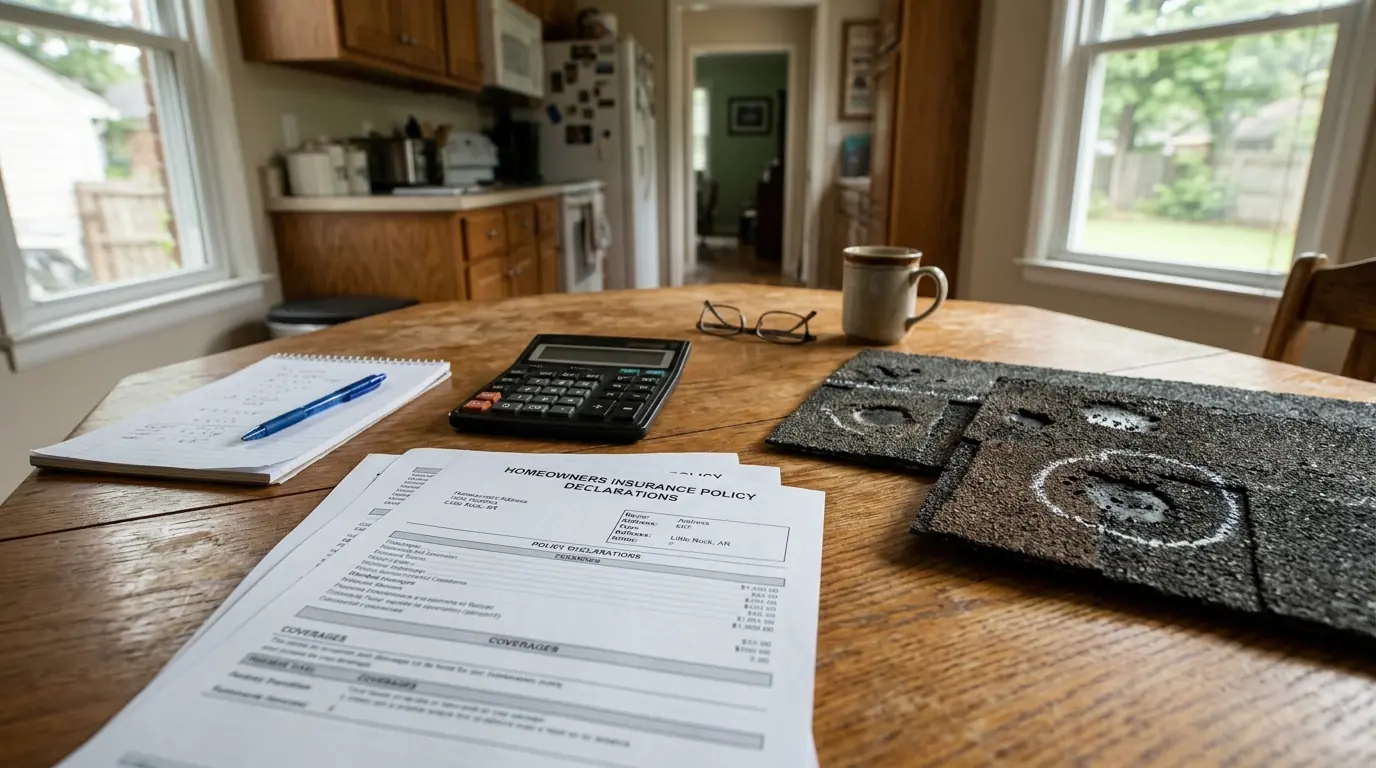
A 2% wind and hail deductible can mean thousands out of pocket on a roof claim. Here is how flat and percentage deductibles work and how to find yours before the next storm.
October 16, 2026 · 7 min readWant a roofer to look at it?Call any hour. We inspect, photograph and give you a written price.
Call (501) 387-1152