Impact-Resistant Shingles
Class 4 shingles tested under UL 2218 to resist hail cracking, a smart choice for homes in central Arkansas hail paths.
How we handle itRoof & Home Tips
Central Arkansas roofs face spring hail, July heat and damp air that grows algae. Here is how the main roofing materials stand up to each of those, and where each one fits best.
By Lonnie Gatlin, Roof & Home Tips EditorUpdated July 27, 20267 min read
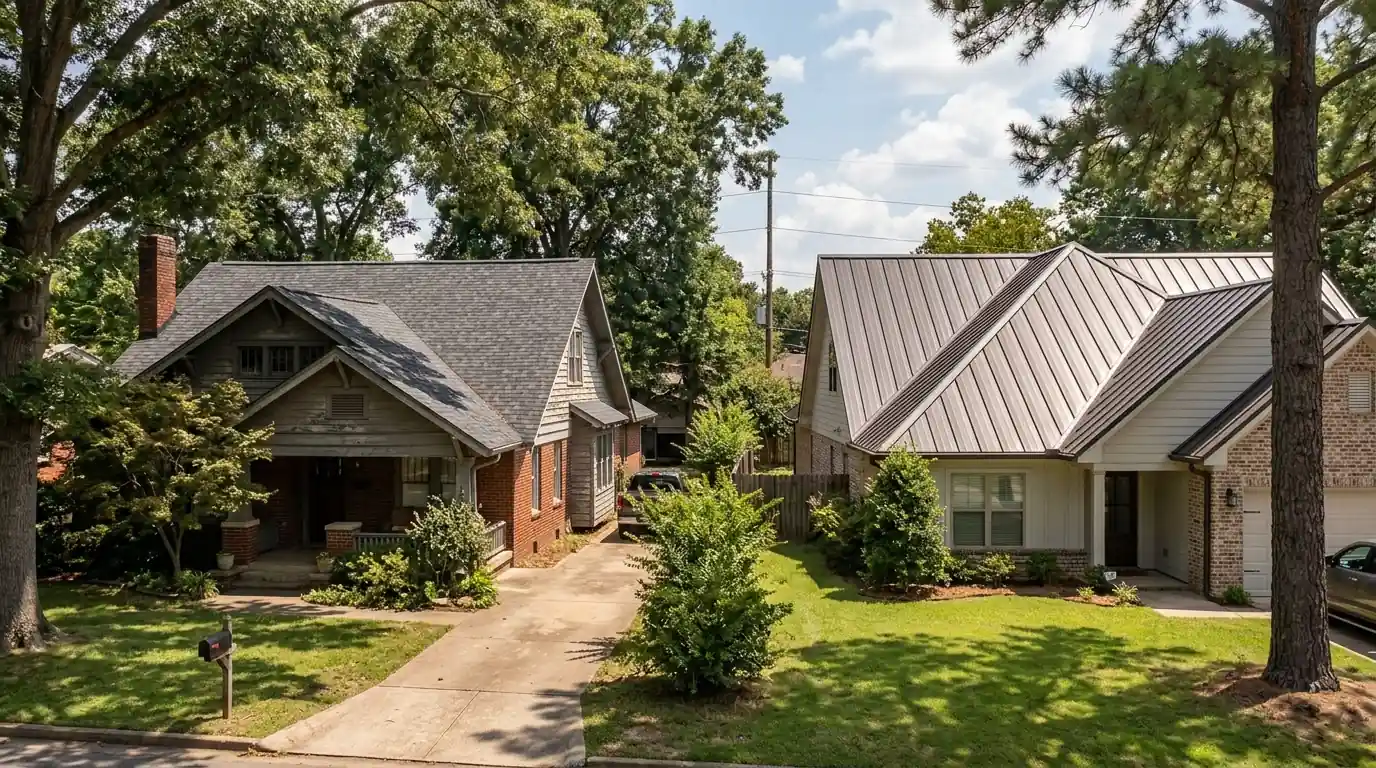
No roof material wins on every count in Arkansas. Spring storms throw hail, summers bake the surface for months, and the damp air grows algae on north slopes. A material that shrugs off hail may hold more heat, and one that stays cool may dent. Below, we compare the options we install around Little Rock against the three conditions that wear roofs out fastest here, so you can pick the right trade for your house.
Hail is the sudden threat. Central Arkansas sees most of its hail from March through June, and stones the size of quarters or bigger can fracture the mat of a standard shingle. Many roofs here get replaced after a storm, not after reaching old age.
Heat is the slow one. Long stretches of 90 degree days push attic and shingle temperatures far higher, which dries out the asphalt and speeds granule loss. Humidity is the third, feeding the algae that leaves black streaks and keeping shaded wood damp longer after each rain.
Wind rounds out the list. Straight-line winds from summer storms and the occasional tornado warning push hard on roof edges and ridges. Shingle wind ratings, nailing patterns and the quality of the starter strip at the eaves all play into how well a roof keeps its shingles through a rough night.
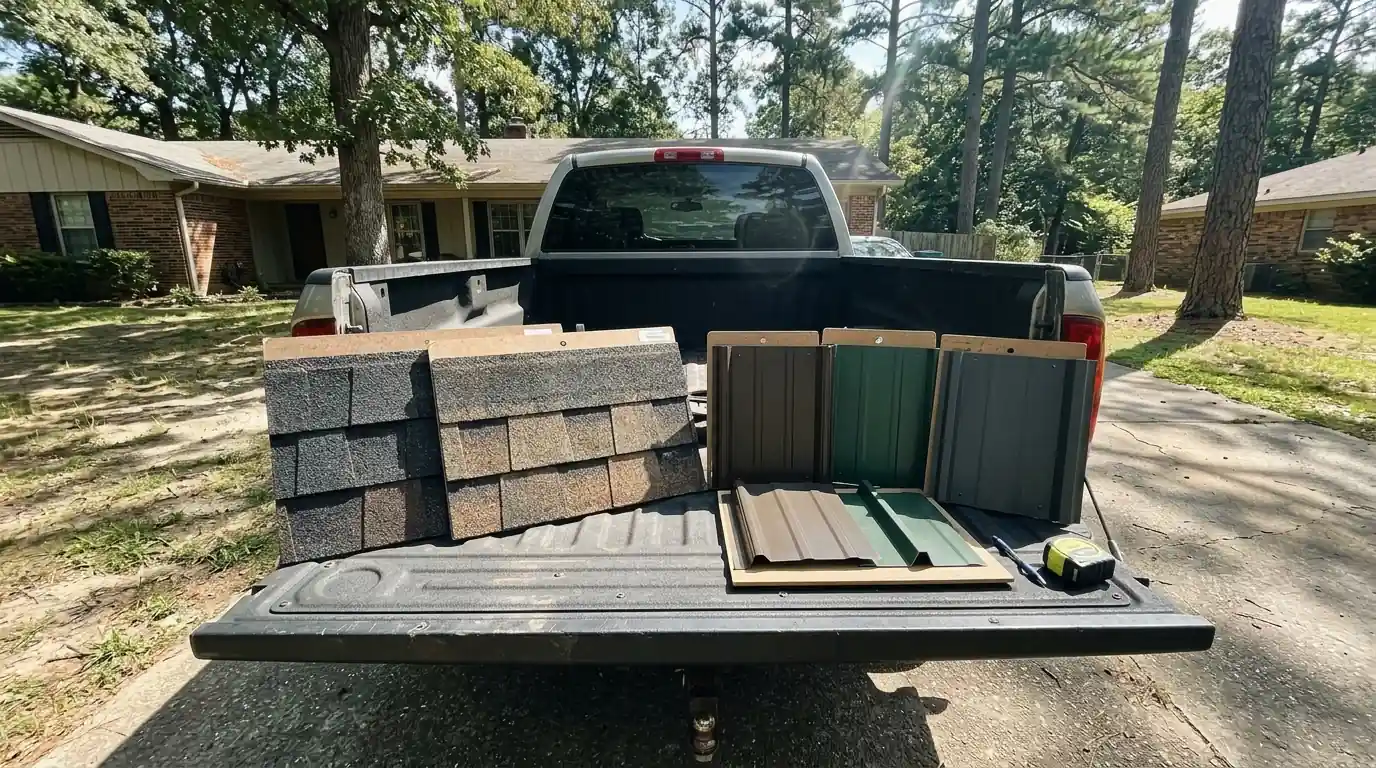
Most Little Rock homes wear architectural shingles, and for good reason. They cost less than metal, look good on nearly any style of house and are easy to repair. Their thicker, layered build handles wind better than old three tab shingles did.
Their weakness is hail. A standard architectural shingle can bruise or crack under large stones, and repeated hail seasons add up. If you go this route, ask for an algae-resistant line with copper treated granules and a full synthetic underlayment with self adhering membrane in the valleys.
Color matters more than many people expect. Dark shingles absorb more heat, which can raise attic temperatures on a west facing slope. Medium grays and weathered wood tones are popular around Little Rock because they hide dust and pine pollen while running a little cooler than black.
Impact-resistant shingles are tested under the UL 2218 standard, where steel balls are dropped on the shingle. A Class 4 rating is the highest in that test. These shingles use a rubberized asphalt or reinforced mat that flexes instead of cracking.
They are not hail proof. Very large stones can still damage them, and the granules can scuff. But they hold up far better than standard shingles in the moderate storms that hit central Arkansas most years. Some insurers offer a premium discount for Class 4 roofs, so ask your carrier before you choose.
Many Class 4 lines also include algae resistance, which makes them a strong fit for shaded lots in older neighborhoods with big oaks.
Metal handles wind and heat very well. Light colored or coated panels reflect a good share of the summer sun, which keeps the attic cooler. Standing seam metal hides its fasteners and can last 40 years or more with little upkeep.
Hail is more complicated with metal. Large stones can dent panels without causing leaks. Some insurance policies exclude cosmetic dents on metal, so read your coverage before you buy. Thicker gauge panels and textured finishes show dents less.
Exposed fastener panels cost less than standing seam, but the screws and their rubber washers wear out and need checking and replacing over the years. They work well on shops, barns, porches and simple rooflines.
Color and finish choices are broad now. Many homeowners in central Arkansas pick charcoal, bronze or a muted green standing seam to suit a brick or stone house, and the factory finish on quality panels resists fading for years. Ask about the paint system on any panel you consider, since that is what keeps the color true under the summer sun.
Back porches, carports, additions and many commercial buildings have roofs too flat for shingles. Water sits longer on these surfaces, so they need a membrane. In Arkansas heat, a white TPO membrane reflects sun and keeps the space below cooler, which is helpful over a living area.
EPDM is a black rubber membrane that handles temperature swings well and is easy to patch. Modified bitumen is a layered, asphalt based sheet that stands up to foot traffic. Each one can work in central Arkansas when it is installed with proper slope to the drains and good flashing at the walls.
Gutter and drain design is part of the choice here. A flat roof that sheds water toward a single scupper can back up during a heavy summer downpour, so we look at where the water goes before we recommend a membrane.
Wood shakes look great on the right house, but the humidity here keeps them damp and invites rot, moss and insects. They also carry fire concerns and can affect insurance. We rarely suggest them for a central Arkansas home.
Clay and concrete tile are heavy and need a framing check before installation, and hail can crack individual tiles. Real slate lasts a very long time and belongs on the historic homes built for it, but it is costly and needs a roofer experienced with slate repair. For most homes, shingles or metal make more sense.
If you love the look of shakes or tile, there are shingle and metal lines styled to resemble them that handle humidity and hail far better.
Whatever goes on top, the layers below decide how well it handles Arkansas weather. Synthetic underlayment holds up better than old felt if a storm hits mid job. Self adhering membrane along the eaves and in valleys protects against wind driven rain and ice dams in the rare winter ice storm.
Ventilation is the other half. Balanced intake at the soffits and exhaust at the ridge lets summer heat escape, which keeps shingles from cooking from below. A great shingle on a hot, unvented attic will still age early.
Call (501) 387-1152 and we will look at your roof, your attic and your lot, then walk you through which material fits best and what it costs in writing.
Your lot plays a part too. A house on an exposed hilltop in west Little Rock catches more wind than one tucked among trees, while a shaded home in an older neighborhood fights moisture and algae more than heat. Matching the material to the site is half the decision.
Class 4 impact-resistant shingles and heavier gauge standing seam metal both handle typical central Arkansas hail well. Class 4 shingles resist cracking and cost less than metal. Metal resists punctures but can show cosmetic dents, which some policies exclude. Check your insurance terms and ask about premium discounts before deciding which fits your home.
Lighter shingles reflect more sunlight than dark ones and can lower attic temperatures somewhat, especially on west facing slopes. The bigger gain usually comes from good attic ventilation and insulation. Some manufacturers make reflective shingle lines in darker shades too. We can show you samples in the sun before you pick a color.
For most Little Rock homes, yes. The humid climate grows the algae that causes black streaks, especially on north facing and shaded slopes. Algae-resistant shingles use copper treated granules that slow that growth. The extra cost is usually small compared with the price of cleaning streaks off the roof later.
Class 4 shingles tested under UL 2218 to resist hail cracking, a smart choice for homes in central Arkansas hail paths.
How we handle itRibbed exposed-fastener metal panels for homes, porches, barns and shops, a durable and budget-friendly choice for central Arkansas.
How we handle itArchitectural and designer asphalt shingles installed by our own crew, with color, wind rating and algae resistance chosen for your home.
How we handle it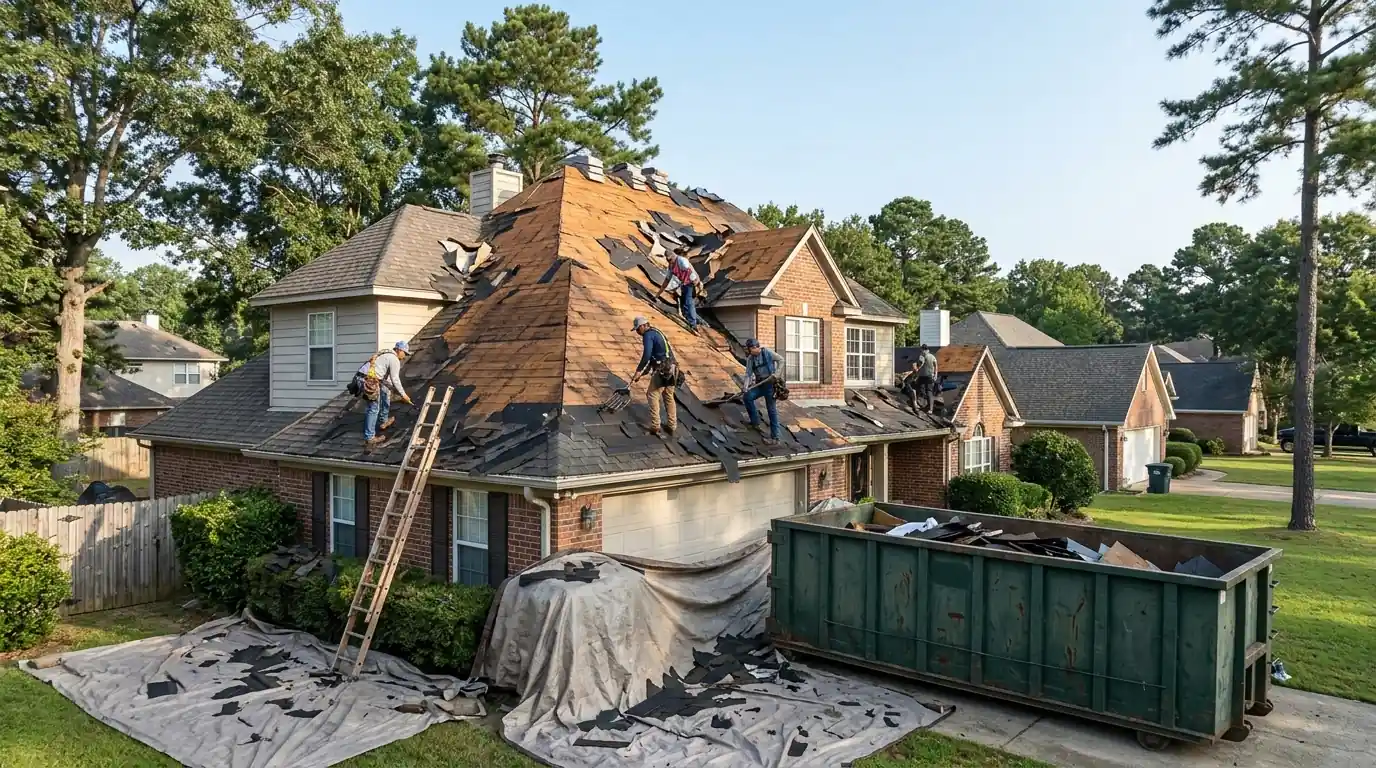
Permit rules for a new roof in Little Rock are not spelled out in one simple public line. Here is what we confirmed, what we could not, and how to get a clear answer for your address.
October 18, 2026 · 7 min read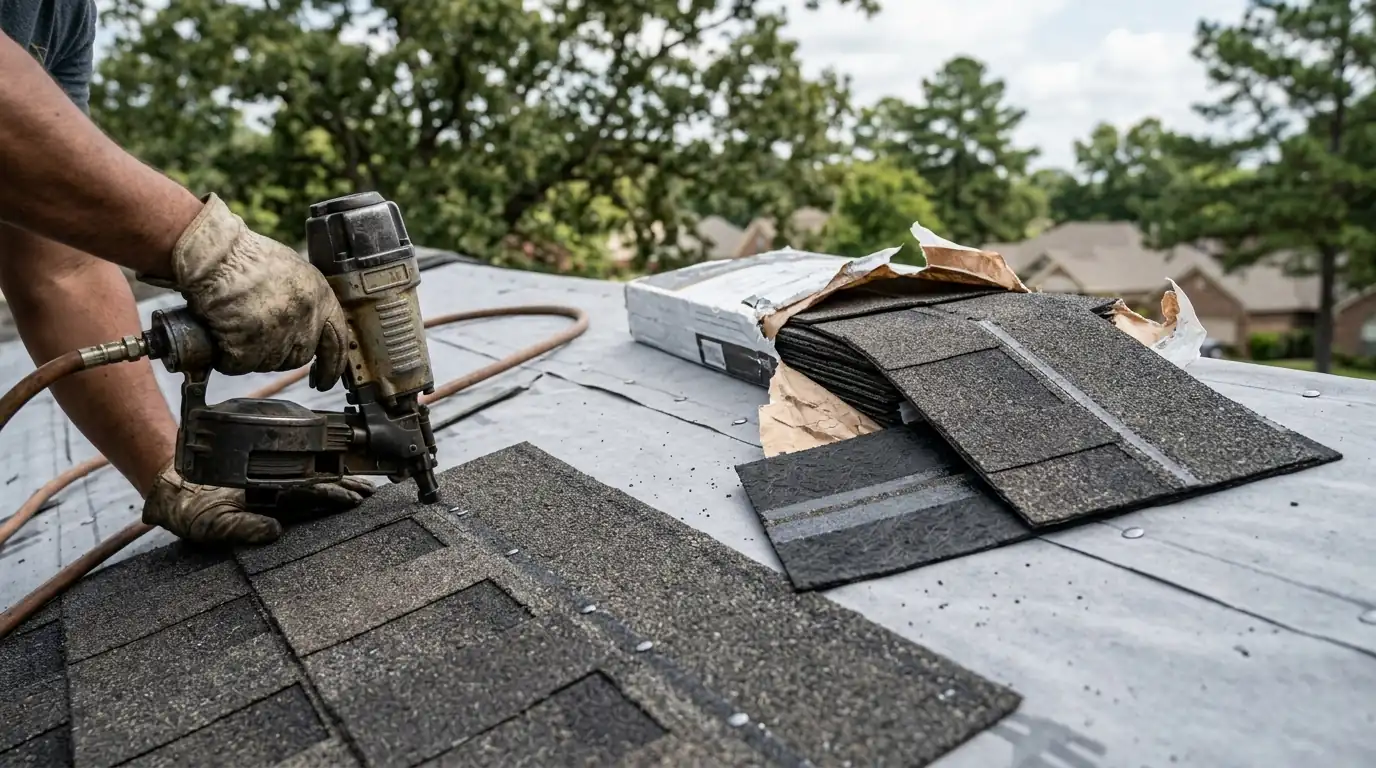
Class 4 shingles hold up better to hail, but the discount question is more tangled in Arkansas. Here is what the rating means, what state law covers and what to ask your agent.
October 17, 2026 · 7 min read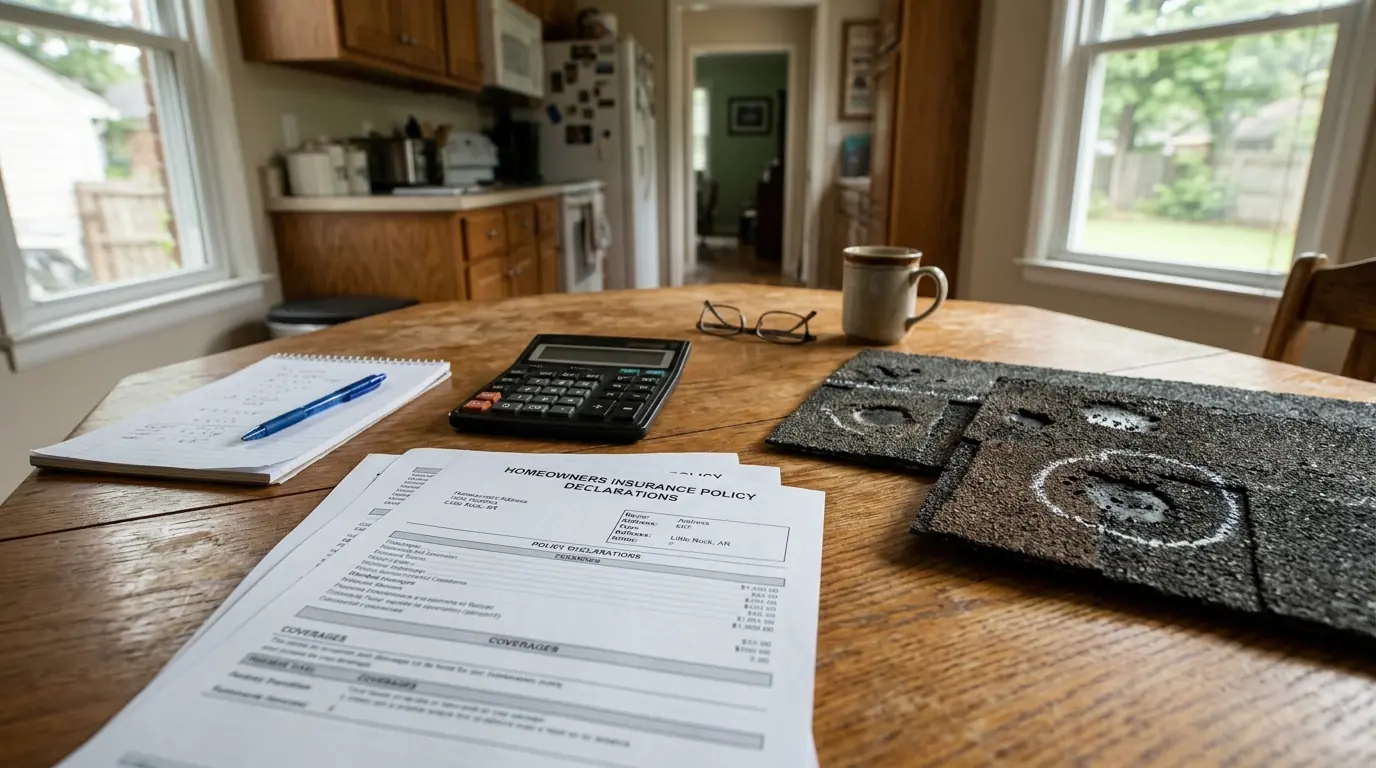
A 2% wind and hail deductible can mean thousands out of pocket on a roof claim. Here is how flat and percentage deductibles work and how to find yours before the next storm.
October 16, 2026 · 7 min readWant a roofer to look at it?Call any hour. We inspect, photograph and give you a written price.
Call (501) 387-1152