Roof Ventilation
Balanced ridge and soffit ventilation that lets hot, damp attic air out and helps shingles, decking and AC systems last longer.
How we handle itRoof & Home Tips
A hot, stuffy attic shortens shingle life and makes your AC work harder. Here is how attic ventilation should work in an Arkansas summer, and how to tell if yours is falling short.
By Lonnie Gatlin, Roof & Home Tips EditorUpdated September 10, 20267 min read
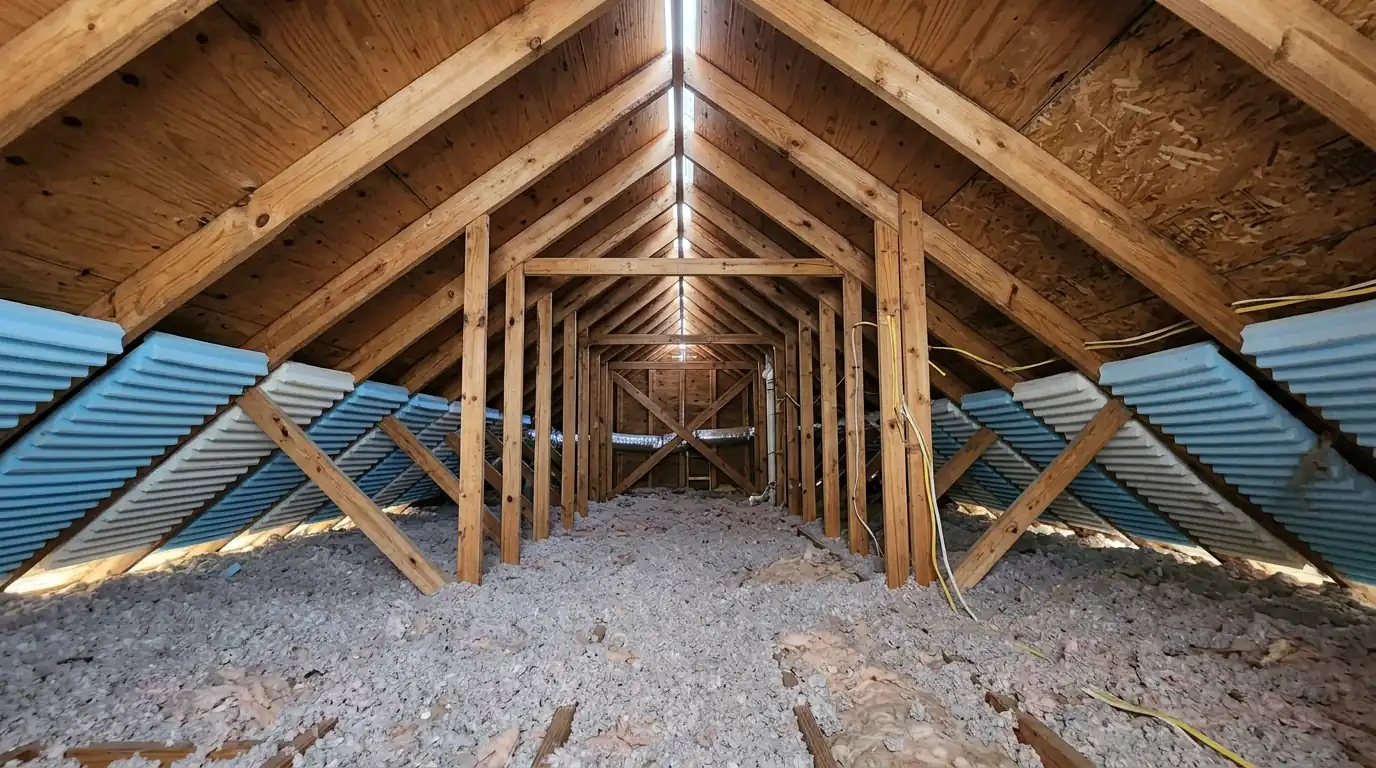
On a July afternoon in Little Rock, the air in a poorly vented attic can get far hotter than the air outside. That heat bakes the shingles from below, pushes into the rooms underneath and keeps the AC running long after sunset. Good ventilation does not make an attic cool, but it keeps the heat moving out. Here is how a balanced system works, the warning signs of a weak one and what it typically costs to fix.
A good attic system works like a chimney. Cooler air enters low, at vents in the soffits under the eaves. It moves up along the underside of the roof deck, picks up heat and moisture, and leaves high, through a ridge vent or other exhaust vents near the peak.
The key word is balance. You need enough intake and enough exhaust, roughly matched. A common building rule calls for about 1 square foot of net free vent area for every 150 square feet of attic floor, or 1 per 300 when certain conditions are met, split between high and low vents. Your roofer can measure what you have now against that target.
Ventilation also works with your roofing warranty. Many shingle manufacturers list proper attic ventilation as a condition of their coverage, and a roof that fails early because the attic was overheating may not be covered. Check the warranty terms for the product on your roof.
Heat is the obvious reason. Long runs of hot days and strong sun mean an unvented attic stays hot well into the night. Shingles sitting on an overheated deck age faster, curling and losing granules years before they should.
Humidity is the other half. Warm, damp air from the house drifts into the attic through ceiling gaps, light fixtures and the attic hatch. Without enough airflow, that moisture condenses on the cool underside of the roof deck in winter and lingers in summer, which can grow mold on the decking and rusted nails.
Energy use rounds it out. A hot attic radiates heat through the ceiling, so the AC fights the attic as well as the sun. Better airflow, combined with proper insulation, helps the system run less.
Older homes add another twist. Many houses built before modern codes have little or no soffit venting, and some older bungalows have only a pair of small gable vents. Retrofitting intake on these homes takes some care, but it often pays off in shingle life and comfort upstairs.
Some signs show up on the roof, some in the attic and some in the house. Any one of these is worth a closer look, and two or three together usually mean the system needs work.
You can do a simple test on a hot afternoon. Stand in the attic for a moment near the soffits, then near the peak. If the air near the eaves feels as stale and heavy as the air at the top, intake is probably not working.
The most common problem is blocked intake. Blown insulation often covers the soffit vents, or the soffit was never cut open behind the vented panels. From the street the soffit looks vented, but no air moves through it.
The second is mixing exhaust types. A ridge vent plus a few box vents and a gable vent can work against each other, with one exhaust pulling air in through another instead of from the soffits. The attic ends up with dead zones that stay hot.
Power attic fans can cause their own trouble. If intake is weak, a fan pulls cooled air up from the house through ceiling gaps, which costs more in cooling than it saves. Some homes also have bathroom fans that dump moist air into the attic instead of venting outside, which adds moisture right where it hurts.
Gable vents and ridge vents together are one of the most common mismatches. The ridge vent may pull air in through the nearest gable vent instead of from the soffits, leaving the lower attic stagnant. Closing off the gable vents from inside often fixes the flow once soffit intake is in place.
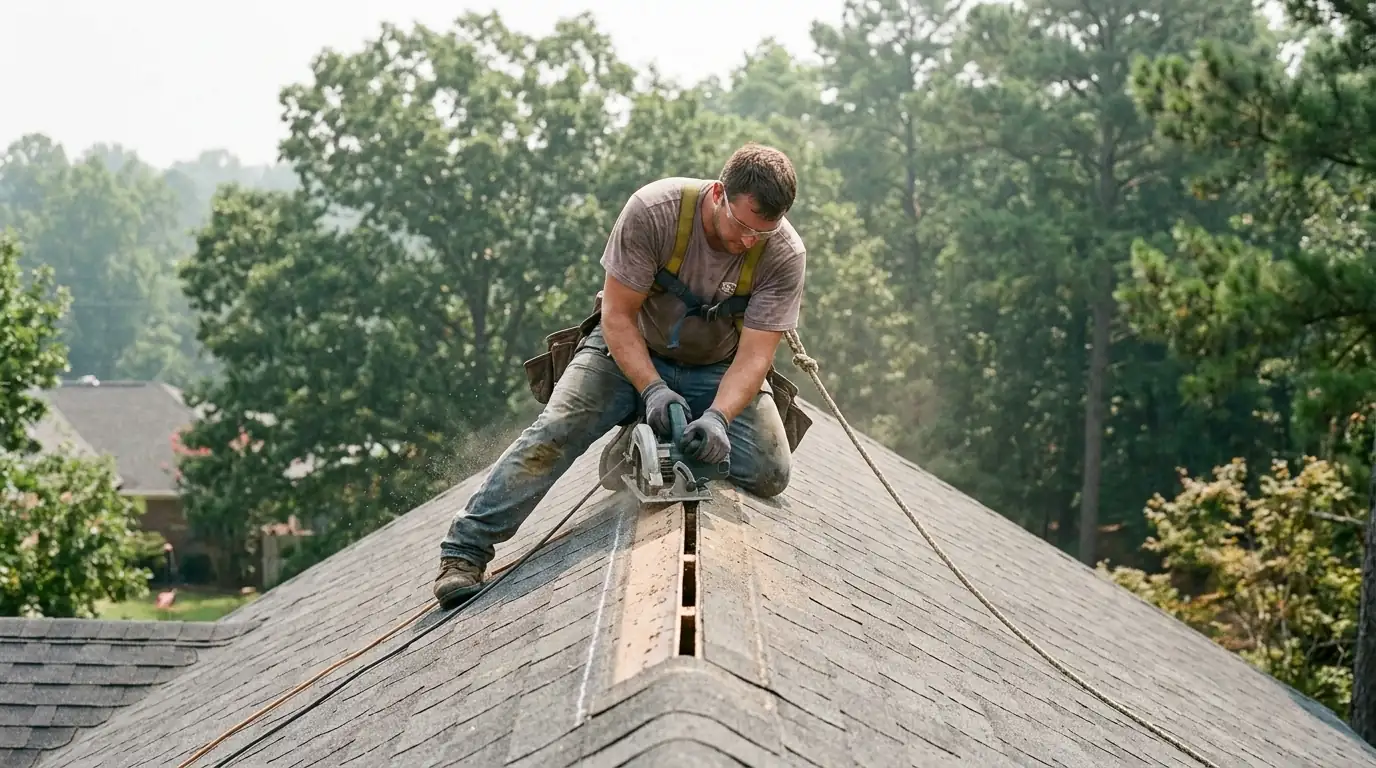
Most fixes are straightforward. The goal is clear intake low, a single type of exhaust high and nothing blocking the path in between. These are typical 2026 ranges in central Arkansas, not quotes.
Sometimes the fix is simple. Clearing insulation from the eaves and adding baffles can open up intake that was there all along. Other times, a home needs both new intake and a new exhaust plan. We photograph the attic so you can see what is there before deciding.
A roof replacement is the easiest moment to correct ventilation. The old shingles are off, the ridge is open and the crew can cut a continuous ridge vent and add intake where it is missing. It adds little to the overall job.
We also look at the attic insulation while we are there. Many older homes in Little Rock have thin or settled insulation. Adding insulation to the right depth, with baffles at the eaves, works hand in hand with good ventilation.
Ask any roofer you talk to how they plan to handle ventilation. If the quote just says new shingles with no mention of intake or exhaust, ask why.
If your home has a complex roof with hips and few ridges, there may not be enough ridge length for a ridge vent alone. Low profile roof vents or off ridge vents can fill the gap, as long as they are the only exhaust type in that attic space.
Fall and winter are good times to look at attic ventilation, since the attic is comfortable to work in and there is time to plan before the heat returns. A quick visit can tell you whether the vents are balanced and whether insulation is blocking the soffits.
Call (501) 387-1152 and we will check your attic, photograph the vents, insulation and decking, and explain what we find. You will get a written price before any work starts, whether the fix is a few baffles or a full ridge vent.
Homes with HVAC equipment or ductwork in the attic benefit the most. Ducts running through a superheated attic pick up heat before air reaches the rooms, so a cooler attic helps the whole system work better.
An attic will always run hotter than outdoor air in summer, but a well vented one stays much closer to it than a poorly vented one. If your attic feels unbearable within seconds or the upstairs stays hot at night, the airflow is likely weak. A roofer can check intake, exhaust and insulation to find where heat is getting trapped.
A continuous ridge vent usually spreads exhaust more evenly along the peak, which helps the whole attic. Box vents can work too when there are enough of them and they are not mixed with other exhaust types. Either system only works with matching intake at the soffits, so the bigger question is often whether air can get in.
It can help, especially paired with proper insulation. Good airflow keeps the attic from radiating as much heat into the rooms below, so the AC runs less. Results vary by house, duct location and insulation level. The more certain benefit is longer shingle life, since a cooler roof deck slows heat wear.
Balanced ridge and soffit ventilation that lets hot, damp attic air out and helps shingles, decking and AC systems last longer.
How we handle itBlown-in insulation, air sealing and vent baffles that help attics in hot, humid central Arkansas summers.
How we handle itRotted fascia and soffit boards replaced, vents restored and gaps sealed so water, squirrels and birds stay out of the roof edge.
How we handle it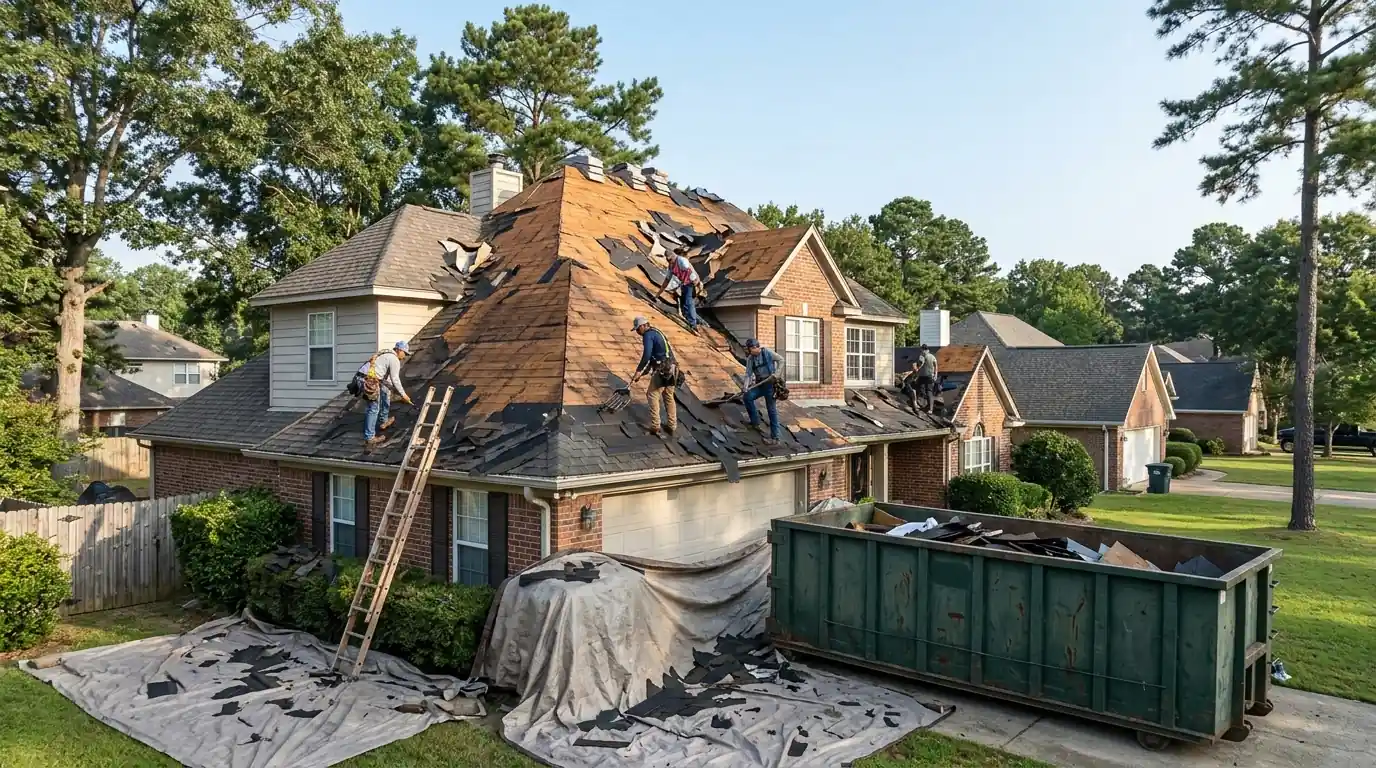
Permit rules for a new roof in Little Rock are not spelled out in one simple public line. Here is what we confirmed, what we could not, and how to get a clear answer for your address.
October 18, 2026 · 7 min read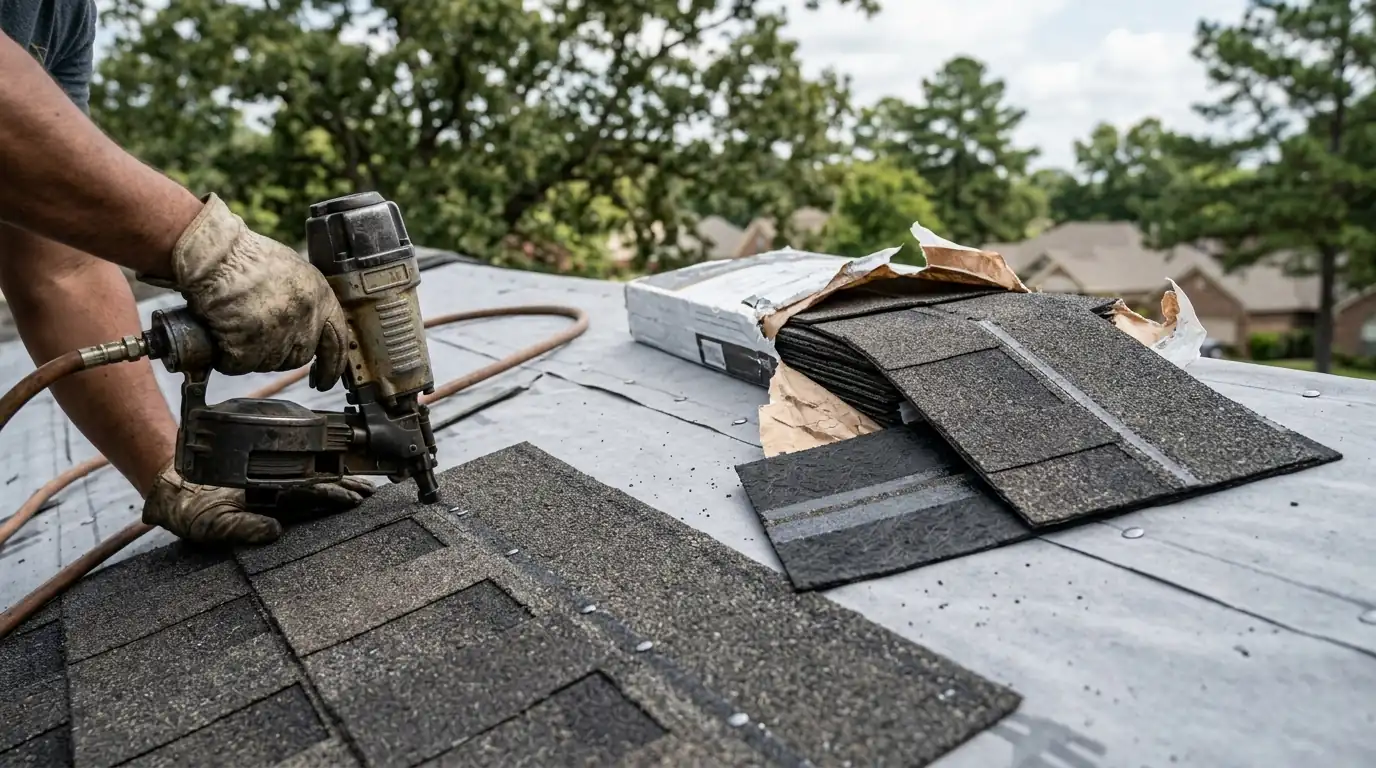
Class 4 shingles hold up better to hail, but the discount question is more tangled in Arkansas. Here is what the rating means, what state law covers and what to ask your agent.
October 17, 2026 · 7 min read
A 2% wind and hail deductible can mean thousands out of pocket on a roof claim. Here is how flat and percentage deductibles work and how to find yours before the next storm.
October 16, 2026 · 7 min readWant a roofer to look at it?Call any hour. We inspect, photograph and give you a written price.
Call (501) 387-1152